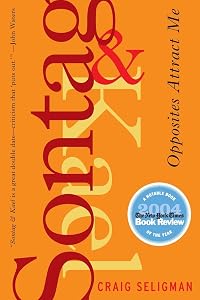
Sontag and Kael: Opposites Attract Me
by Craig Seligman
On This Page
Description
A witty dual portrait of two influential critics who shaped the cultural ideals of a generation looks at the lives and careers of Susan Sontag and Pauline Kael as exemplified by their work, discussing the similarities and differences within their approach to writing while attempting to answer the question of whether or not criticism can be art.Tags
Recommendations














Member Reviews
Members
- Recently Added By
Published Reviews
ThingScore 75
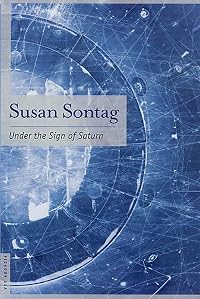
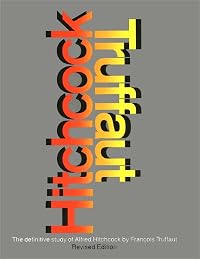
Sontag has lived in her own head, but in the larger political panorama, too. Yes, she has written about a few current things, notably Hans-Jürgen Syberberg and his 1978 film Our Hitler, but her real subjects are matters of eternal intellectual debate. She said rock-and-roll changed her, but who could feel that? Kael, on the other hand, spurned by fate for so long, hit a lucky streak beyond show more equal in that she came to The New Yorker just as adult, tough, new films were being made in America. She was there for Coppola, Altman, Scorsese, and so on—but they were there for her too. It was also the moment when film education took off in America, when suddenly millions of kids were ready to read film criticism that had the smack of good sportswriting.
Seligman dotes on that Kael, and rightly so. His book ends with a touching flash of memoir as he recalls where he was (and how he was) as he read different Kael reviews. That experience is shared by many, and it captures why Kael is still being read decades after the immediate impact has gone from "her" movies: that immediacy wowed her. It was why she started writing the reviews as she watched the films, and it was the reason behind her dotty habit of seeing a film only once. show less
Seligman dotes on that Kael, and rightly so. His book ends with a touching flash of memoir as he recalls where he was (and how he was) as he read different Kael reviews. That experience is shared by many, and it captures why Kael is still being read decades after the immediate impact has gone from "her" movies: that immediacy wowed her. It was why she started writing the reviews as she watched the films, and it was the reason behind her dotty habit of seeing a film only once. show less
added by SnootyBaronet
Author Information
3+ Works 142 Members
Awards and Honors
Awards
Common Knowledge
- First words
- I didn't want to write a book with a hero and a villain, but Sontag kept making it hard for me.
- Quotations
- Her books are as dense with characters as novels are-- denser--and she handles them with a novelist's curiosity, palpating, evaluating. She became the omniscient narrator movies don't have, posing and elaborating motives with... (show all) such an impassioned empathy that sometimes she drew more out of the characters than the filmmakers did.
Virtually all great writing flows from an initial narrowing. The most important thing a writer has to learn is what he can't do. Eventually he finds his subject and he finds his style and then off he goes, and we seldom miss ... (show all)what's not there. Sontag is an exception.
Kael flourished with a consistency unmatched by any American writer since Henry James. Sontag's work is the opposite: a jumbled landscape of peaks and valleys. There's no more unity to it than there is to the world. - Last words
- (Click to show. Warning: May contain spoilers.)She made only one request regarding the book, and it was really less a request than a piece of advice. She said, "Keep it short."
Classifications
- Genres
- Nonfiction, Literature Studies and Criticism, Biography & Memoir
- DDC/MDS
- 818.5409 — Literature & rhetoric American literature in English American miscellaneous writings in English 20th Century 1945-1999
- LCC
- PS3569 .O6547 .Z88 — Language and Literature American literature American literature Individual authors 1961-
- BISAC
Statistics
- Members
- 116
- Popularity
- 279,868
- Rating
- (3.56)
- Languages
- English
- Media
- Paper
- ISBNs
- 3
- ASINs
- 2