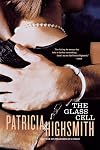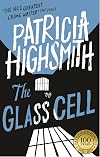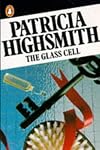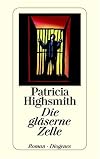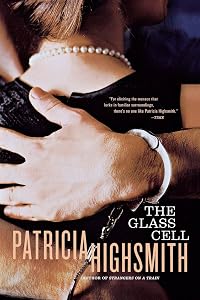
The Glass Cell
by Patricia Highsmith
On This Page
Description
Rife with overtones of Dostoevsky, The Glass Cell, first published in 1964, combines a quintessential Highsmith mystery with a penetrating critique of the psychological devastation wrought by the prison system. Falsely convicted of fraud, the easygoing but naive Philip Carter is sentenced to six lonely, drug-ravaged years in prison. Upon his release, Carter is a more suspicious and violent man. For those around him, earning back his trust can mean the difference between life and death. The show more Glass Cell's bleak and compelling portrait of daily prison life-and the consequences for those who live it-is, sadly, as relevant today as it was when the book was first published. show lessTags
Recommendations

















Member Reviews
The latter half of this novel was so intriguing and gripping, I had to talk about it to anyone who would listen (thanks to my friend Lucy). It is an older novel, so the style of writing and how the world worked took me (a 21 year old) a while to get into. But once I was there, I was there!
I’ll be the first one to
I think it feels like I read two novels, with the first half being a prequel to the second half. They take place in such drastically different worlds, with different characters and rules to live by. This is not a critique against the novel, mainly because I think it fully aids and supports the narrative. Going from prison to the outside world is jarring! That's the point!
I think it was smart of Highsmith to start the novel where she did. You can follow the trail of events back to the first chapter, and connect the pieces like Hansel and Gretel. All of this because some guards strung up his thumbs. Now, 3 people died at the hands of Philip Carter.
I like the open ending. Will they or won’t they get him? It’s up to us to decide and ponder. But something to note is that after O’Brian died, Carter said that he would never kill again, because if Hazel betrayed him again, he’d rather kill himself. This happens so late in the novel, but by God, what a statement! I wish we were able to explore the hopelessness and suicidal ideation, but alas, that would defeat the purpose of the novel. To leave you guessing, about the story, about Carter and Gail, and about the world’s judicial system.
Philip Carter, an engineer who has done nothing wrong other than naïvely signing some papers for his business partner without checking them properly, finds himself carrying the can after the partner dies and details of his crooked deals emerge. In prison, he is assaulted by sadistic guards, and becomes addicted to morphine as a result of the injuries he sustains. Meanwhile, he suspects that his wife is having an affair with his friend and lawyer, Sullivan.
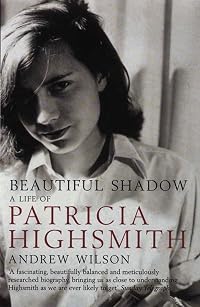
Highsmith worked on this book between 1962 and 1964, around the time when she made the permanent move from the USA to Europe, and at a time when she was involved in an unhappy affair with a married woman. The original inspiration seems to have come from correspondence she had with a show more reader in prison, and she got further background material for the prison part of the story from various non-fiction accounts of prison life and a visit she made to a prison in Doylestown in 1962 (See Beautiful shadow : a life of Patricia Highsmith by Andrew Wilson, Chapter 20).
This is very much the familiar Highsmith world, in which neither good nor evil has any real meaning. When the conventions of society no longer apply, as becomes the case for Carter in prison, our actions are regulated only by purely selfish, emotional considerations (interestingly, Wilson lists Golding's Lord of the Flies as one of the books Highsmith read whilst working on The Glass Cell). Just as the inmates have no compunction in killing a cruel guard when they get the chance, the respectable engineer who loves French literature can turn into a remorseless killer, if killing is the way to obtain what he wants.
The prose style reflects the unsettling subject matter, with short, jerky sentences. We don't have a cozy, detached narratorial voice to distance us from Carter, but at the same time the narrator separates us a little bit from the events going on around him -- we sense that the morphia is playing a role, but we aren't allowed to decide what is Carter's responsibility and what is due to the drugs. In Highsmith's world, this has to be a pointless question.
As always, deeply unsettling and uncomfortable to read, but rewarding at the same time. With Highsmith I usually feel after finishing a book that it will be a little while before I tackle another, but I do keep coming back to her... show less
Highsmith worked on this book between 1962 and 1964, around the time when she made the permanent move from the USA to Europe, and at a time when she was involved in an unhappy affair with a married woman. The original inspiration seems to have come from correspondence she had with a show more reader in prison, and she got further background material for the prison part of the story from various non-fiction accounts of prison life and a visit she made to a prison in Doylestown in 1962 (See Beautiful shadow : a life of Patricia Highsmith by Andrew Wilson, Chapter 20).
This is very much the familiar Highsmith world, in which neither good nor evil has any real meaning. When the conventions of society no longer apply, as becomes the case for Carter in prison, our actions are regulated only by purely selfish, emotional considerations (interestingly, Wilson lists Golding's Lord of the Flies as one of the books Highsmith read whilst working on The Glass Cell). Just as the inmates have no compunction in killing a cruel guard when they get the chance, the respectable engineer who loves French literature can turn into a remorseless killer, if killing is the way to obtain what he wants.
The prose style reflects the unsettling subject matter, with short, jerky sentences. We don't have a cozy, detached narratorial voice to distance us from Carter, but at the same time the narrator separates us a little bit from the events going on around him -- we sense that the morphia is playing a role, but we aren't allowed to decide what is Carter's responsibility and what is due to the drugs. In Highsmith's world, this has to be a pointless question.
As always, deeply unsettling and uncomfortable to read, but rewarding at the same time. With Highsmith I usually feel after finishing a book that it will be a little while before I tackle another, but I do keep coming back to her... show less
This one had me creeped out right from the first few pages, where the innocent main character is hung by his thumbs and beaten, then left for days. There isn't' anything quite as brutal after that, but it lets you know what kind of book it's going to be right away.
The first half of the book is what you would expect from the description, an innocent man is put through the unfair rigors of the prison system. He clings to his wife, who dutifully comes every week for a visit, and he clings to the hope of an appeal that never comes.
After serving out his full sentence, the second half of the book is about the man re-joining society and coming to terms with how his wife and son have changed in seven years. This isn't quite as warm, fuzzy, and show more heartbreaking as it seems though, since there's the possibility his wife has had and still is having an affair. This part of the story is sort of structured as a mystery around the affair, and the good and the bad slowly come to light.
The way events play out at the end are kind of unexpected, and the story uses the traditional Highsmith device of making you sympathize with the reasons someone is doing a bad thing, but as much as she uses it, I still love it every time. She's a fantastic writer, and this was a really quick, compelling read with great characters. show less
The first half of the book is what you would expect from the description, an innocent man is put through the unfair rigors of the prison system. He clings to his wife, who dutifully comes every week for a visit, and he clings to the hope of an appeal that never comes.
After serving out his full sentence, the second half of the book is about the man re-joining society and coming to terms with how his wife and son have changed in seven years. This isn't quite as warm, fuzzy, and show more heartbreaking as it seems though, since there's the possibility his wife has had and still is having an affair. This part of the story is sort of structured as a mystery around the affair, and the good and the bad slowly come to light.
The way events play out at the end are kind of unexpected, and the story uses the traditional Highsmith device of making you sympathize with the reasons someone is doing a bad thing, but as much as she uses it, I still love it every time. She's a fantastic writer, and this was a really quick, compelling read with great characters. show less
An innocent man imprisoned. Beaten down (literally) by the authorities, addicted to painkillers, helplessly watching his wife create a life on her own—and then freed, to do what?
Highsmith was inspired to write this book by a fan who wrote to her from prison, and the book does feel at times like an expose, not merely of poor prison conditions (though these come into play) but of the psychological trauma that prison can inflict and the impossibility of getting past it. Prison life changes main character Philip Carter—it causes him to doubt human nature in a way he never had before. (Indeed, his earlier tendency to trust is what landed him there.) It also causes him to doubt the system, as it obviously didn’t work for him. show more Authorities, promises, relationships—none of it means what it did. And without that grounding, how can he get along in the world? Upon his release from prison, he has every financial and material advantage one might want in his situation, but the psychological damage has been done. Can he be healed?
I was surprised to find that I wanted Philip to get away with terrible acts—some against innocent people. Such is the beauty of Highsmith’s characterization and her framing of the situation. Philip does plenty of things that are clearly wrong, but he’s been pushed to a point where he can’t operate logically anymore. I had to take pity and want his suffering to end.
See my complete review at Shelf Love. show less
Highsmith was inspired to write this book by a fan who wrote to her from prison, and the book does feel at times like an expose, not merely of poor prison conditions (though these come into play) but of the psychological trauma that prison can inflict and the impossibility of getting past it. Prison life changes main character Philip Carter—it causes him to doubt human nature in a way he never had before. (Indeed, his earlier tendency to trust is what landed him there.) It also causes him to doubt the system, as it obviously didn’t work for him. show more Authorities, promises, relationships—none of it means what it did. And without that grounding, how can he get along in the world? Upon his release from prison, he has every financial and material advantage one might want in his situation, but the psychological damage has been done. Can he be healed?
I was surprised to find that I wanted Philip to get away with terrible acts—some against innocent people. Such is the beauty of Highsmith’s characterization and her framing of the situation. Philip does plenty of things that are clearly wrong, but he’s been pushed to a point where he can’t operate logically anymore. I had to take pity and want his suffering to end.
See my complete review at Shelf Love. show less
Andy Dufresne:
"The funny thing is, on the outside, I was an honest man, straight as an arrow. I had to come to prison to be a crook." That quote is from the 1982 Stephen King novella "Rita Hayworth and Shawshank Redemption". It could also have been a quote from this book!
Carter is in prison for a crime he didn’t commit. He is beaten and hung by the thumbs by the guards for not following directions he didn’t know about. He becomes addicted to morphine. He thinks his wife is seeing another man on the outside. He does six long years.
When he is released, things don't get any easier. Adjusting to 'freedom' is harder than he thought. And his questions about his wife eat at him constantly.
I really enjoyed this book, as I have so many of show more Patricia Highsmith's. And the connections to "Shawshank" are unmistakable. Carter is just the wrong person at the wrong place at the wrong time. And his tale is a tragedy. Heck, MY thumbs still hurt - and I finished reading this hours ago! show less
"The funny thing is, on the outside, I was an honest man, straight as an arrow. I had to come to prison to be a crook." That quote is from the 1982 Stephen King novella "Rita Hayworth and Shawshank Redemption". It could also have been a quote from this book!
Carter is in prison for a crime he didn’t commit. He is beaten and hung by the thumbs by the guards for not following directions he didn’t know about. He becomes addicted to morphine. He thinks his wife is seeing another man on the outside. He does six long years.
When he is released, things don't get any easier. Adjusting to 'freedom' is harder than he thought. And his questions about his wife eat at him constantly.
I really enjoyed this book, as I have so many of show more Patricia Highsmith's. And the connections to "Shawshank" are unmistakable. Carter is just the wrong person at the wrong place at the wrong time. And his tale is a tragedy. Heck, MY thumbs still hurt - and I finished reading this hours ago! show less
The Glass Cell may be the best example of Highsmith's habit of transforming her characters over the course of the book. This, like many of her others, starts with a protagonist that is a law-abiding, decent member of society and by the end of the book we are left with a morally ambiguous anti-hero. As the basic formula for her novels goes, the change in character is usually brought on by circumstances outside their control. There is usually a major turning point where they can no longer be called innocent. All of this is true of Phillip Carter, the main character in The Glass Cell, and at the beginning he is a man caught up in someone else's crime and has been wrongly imprisoned. He is at first described almost solely by his innocence show more and by the end of the book he has committed several senseless murders.
Though this is often thought of as a prison novel, only the first sixty or so pages take place inside and other then his initial acclamation to the system his incarceration is somewhat skimmed over. All that is really established of him while he is there is that he is undergoing change. He is injured within his first few months, and develops a subsequent morphine addiction which only compounds the development of his new personality.
Most of the book takes place after his parole and covers his acclamation to being free. He finds that while he was in prison his wife had an affair and he tries to decide what his reaction is, all the while trying to reconnect with his preteen son and trying to decide if he is the person he was before or someone totally different.
The entire book reads as very supportive of prison reform, and though it was written over four decades ago issues are mentioned that are still major problems. Overcrowding is discussed, along with the brutality towards prisoners from guards. The penal system is really the antagonist and can be seen as the facilitator of change in Phillip's life, turning him from a framed man to an actual criminal.
One of Highsmith's best and most indelible novels, very enjoyable for a fan or a first time reader. show less
Though this is often thought of as a prison novel, only the first sixty or so pages take place inside and other then his initial acclamation to the system his incarceration is somewhat skimmed over. All that is really established of him while he is there is that he is undergoing change. He is injured within his first few months, and develops a subsequent morphine addiction which only compounds the development of his new personality.
Most of the book takes place after his parole and covers his acclamation to being free. He finds that while he was in prison his wife had an affair and he tries to decide what his reaction is, all the while trying to reconnect with his preteen son and trying to decide if he is the person he was before or someone totally different.
The entire book reads as very supportive of prison reform, and though it was written over four decades ago issues are mentioned that are still major problems. Overcrowding is discussed, along with the brutality towards prisoners from guards. The penal system is really the antagonist and can be seen as the facilitator of change in Phillip's life, turning him from a framed man to an actual criminal.
One of Highsmith's best and most indelible novels, very enjoyable for a fan or a first time reader. show less
I begin this post with a warning to the many devoted Goldfinch fans who evidently put the latest Tartt magnum opus on a par with the Bible. You won’t like this, not one little bit. You see, I put down The Goldfinch smack bang in the middle of it and picked up The Glass Cell, which I didn’t stop reading until I finished it. ‘OMG, How COULD you? The greatest book in the whole history of books ever and you did THAT????’ I can hear them all, as I write. Well, I did, so there.
I needed to take something to an afternoon of film noir and the only goldfinch in existence which weighs two ton was not what I was going to take with me. For a start, what if it pooed in the cinema? That alone would weigh more than this petite offering from show more Highsmith.
Rest here:
http://alittleteaalittlechat.wordpress.com/2014/05/06/the-glass-cell-by-patricia... show less
I needed to take something to an afternoon of film noir and the only goldfinch in existence which weighs two ton was not what I was going to take with me. For a start, what if it pooed in the cinema? That alone would weigh more than this petite offering from show more Highsmith.
Rest here:
http://alittleteaalittlechat.wordpress.com/2014/05/06/the-glass-cell-by-patricia... show less
Members
- Recently Added By
Lists

Fiction Set Primarily in a Prison
52 works; 24 members
Author Information

302+ Works 33,094 Members
Patricia Highsmith wrote twenty-one novels including "Strangers on a Train" & the "Ripley" series. She died in 1995 in Switzerland, where she resided much of her life. (Publisher Provided) Patricia Highsmith (January 19, 1921 -- February 4, 1995) was an American novelist and short story writer, most widely known for her psychological thrillers, show more which led to more than two dozen film adaptations. She was born in Fort Worth, Texas. Highsmith grew up with her maternal grandmother in Astoria, Queens, and attended Barnard College. Her first novel, Strangers on a Train (1950), was adapted for stage and screen numerous times, notably by Alfred Hitchcock in 1951. In addition to her acclaimed series about murderer Tom Ripley, which was made into a film in 1955, she wrote many short stories, often macabre, satirical or tinged with black humor. Highsmith liked to examine the ways in which people can get to the point where they are capable of murder, as well as who they become after they have committed a crime. In carefully constructed stories and novels, she integrated this scrutiny of the human psyche into complex plots that often took unexpected twists. In Strangers on a Train, architect Guy Haines meets Charles Bruno on a train. Bruno conceives a plan to have Haines kill Bruno's father, while Bruno will kill Haines's wife. The effect that this plan has on Haines is the focus of the story. Highsmith's awards include: O. Henry Award for best publication of first story, for "The Heroine" in Harper's Bazaar (1946), Grand Prix de Littérature Policière, for The Talented Mr. Ripley (1957), and the Dagger Award -- Category Best Foreign Novel, for The Two Faces of January from the Crime Writers' Association of Great Britain (1964). Highsmith died of aplastic anemia and cancer in Locarno, Switzerland, at age 74. Her last novel, Small G: A Summer Idyll, was published one month after her death in 1995. (Bowker Author Biography) show less
Some Editions
Series
Belongs to Publisher Series
Common Knowledge
- Canonical title*
- Die gläserne Zelle
- Original title
- The Glass Cell; Sov godt, Mr Carter
- Original publication date
- 1964
- People/Characters*
- Philip Carter
- Related movies
- Die gläserne Zelle (1978 | IMDb)
- Dedication
- to my dear cat
SPIDER
born in Palisades, New York,
now resident of Positano,
my cellmate for most of these pages - First words
- It was 3:35 pm, Tuesday afternoon, in the State Penitentiary, and the inmates were returning from the workshops.
- Last words
- (Click to show. Warning: May contain spoilers.)It was 3:35 P.M., Tuesday afternoon, in the State Penitentiary, and the inmates were returning from the workshops.
- Original language*
- Amerikanisch
*Some information comes from Common Knowledge in other languages. Click "Edit" for more information.
Classifications
Statistics
- Members
- 419
- Popularity
- 74,226
- Reviews
- 10
- Rating
- (3.69)
- Languages
- 14 — Danish, Dutch, English, Finnish, French, German, Greek, Italian, Norwegian (Bokmål), Norwegian, Portuguese, Spanish, Swedish, Turkish
- Media
- Paper, Audiobook, Ebook
- ISBNs
- 39
- ASINs
- 12