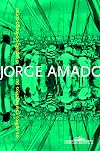
Home Is the Sailor
by Jorge Amado, Жоржи Амаду
On This Page
Description
An novel of adventure, love and seafaring from one of the finest Brazillian novelists of the twentieth century. The sleepy Brazilian beach resort of Periperi needs a hero. As if in answer to their calll, Captain Vasco Moscosco de Aragao (newly retired) arrives and soon has the townspeople enthralled with his tales of ocean-going daring and romance.Only his rival, Chico Pacheco, delves into the captain's past and discovers that he has never in his life sailed beyond the harbour bar. But just show more as Vasco is about to be unmaksked the Ita limps into port with her flag at half mast and her captain dead at the wheel. Pressed into service, Vasco goes to meet his destiny and so begins an adventure in love and seamanship that surpasses even his wildest fantasies. show lessTags
Recommendations



































Member Reviews
Not the best Amado I've read, this brief novel was still a fun and thought-provoking read. In the 1920s, Captain Vasco Moscosco de Aragão arrives in the seaside town of Periperi, quickly enlivening the daily routines of the mostly retired people who live there with his wild tales of his seafaring and romantic exploits. But is he really a captain?
In addition to the 1920s, this story takes place at two other times: the 1960s, when a would-be historian is trying to sort out the truth about the captain, and the turn of the century when the "captain" was a young man with a vastly different history. While the reader comes to have little doubt that the captain is a master at telling tall tales, the novel explores the stories we tell ourselves show more and others, varying views of what is necessary to be respected, how we overcome the sameness of daily life, the role of fantasy and what happens when a fantasy becomes real, and ideas of what is right and wrong -- as well as, being a work by Amado, a romantic view of prostitutes and brothels, a fair amount of carousing, and some political jibes.
I read this book quickly and enjoyed it, and I'll continue to read Amado, but I'm glad I read more complex and interesting works by him first. show less
In addition to the 1920s, this story takes place at two other times: the 1960s, when a would-be historian is trying to sort out the truth about the captain, and the turn of the century when the "captain" was a young man with a vastly different history. While the reader comes to have little doubt that the captain is a master at telling tall tales, the novel explores the stories we tell ourselves show more and others, varying views of what is necessary to be respected, how we overcome the sameness of daily life, the role of fantasy and what happens when a fantasy becomes real, and ideas of what is right and wrong -- as well as, being a work by Amado, a romantic view of prostitutes and brothels, a fair amount of carousing, and some political jibes.
I read this book quickly and enjoyed it, and I'll continue to read Amado, but I'm glad I read more complex and interesting works by him first. show less
Fun little novel that I have toted around for YEARS and finally read. I'm sure there is no connection between my current reading binge and being smartphoneless for a week.
This is an interesting take on memory, stages of life, and the stories we tell ourselves. I'd have gone for eight doubled hawsers...
This is an interesting take on memory, stages of life, and the stories we tell ourselves. I'd have gone for eight doubled hawsers...
Loved it, enjoyed it, totally engrossed. It seems stupid (even to me) to have a bookshelf labelled "Latin American" but the reason I do so is b/c 11 yrs ago I organized a Latin American Festival at Chatham College that stimulated me to read a shitload of Latin American novels - so I tend to lump them all together: not w/ any sortof nationalizing intentions but more geographic/lingual/whatever. Anyway, it never ceases to amaze me how many great Latin American novelists there are. This is the 1st one I've read by Jorge Amado - whose "Dona Flor and Her Two Husbands" was very popular.
This ISN'T "magic realism" - let's get that out of the way: not every Latin American novel is magic realism - that's just become a pseudo-critical show more catchphrase. It IS fanciful, though. The basic story is of a man who poses as a retired sea-captain in order to 'enoble' himself & the trouble he gets into as a result. There's a more general philosophical thrust here & most or all of the characters are deluded in some way or another. show less
This ISN'T "magic realism" - let's get that out of the way: not every Latin American novel is magic realism - that's just become a pseudo-critical show more catchphrase. It IS fanciful, though. The basic story is of a man who poses as a retired sea-captain in order to 'enoble' himself & the trouble he gets into as a result. There's a more general philosophical thrust here & most or all of the characters are deluded in some way or another. show less
A wonderful book! Reminiscent of a story out of the Decameron - extended to encompass a whole colourful life and world – were it not much better told (!!!). No need to say more: just read and enjoy it! (IV-14)
Contiene las novelas "La muerte y la muerte de Quincas berro de agua" (hasta la pagina 64) y "La completa verdad sobre las discutidas aventuras del comandante Vasco Moscoso de Aragon, capitan de altura¨..
«Los viejos marineros» narra la historia del capitán Vasco Moscoso de Aragão, un personaje extravagante que llega a una pequeña ciudad costera brasileña y despierta la fascinación de sus habitantes con relatos grandilocuentes de aventuras marítimas. Su figura provoca la envidia del práctico del puerto, Chico Pacheco, quien se empeña en demostrar que las hazañas del capitán son pura invención. La novela contrapone así la imaginación y el mito frente a la rigidez de la vida cotidiana, en un juego continuo entre verdad y fantasía.
Esta obra pertenece a la etapa más humorística y satírica de Jorge Amado. El autor despliega una prosa cálida, irónica y profundamente brasileña, donde la oralidad y el ritmo narrativo evocan show more la tradición popular del nordeste. La novela funciona como una reflexión sobre el poder del relato: la capacidad de las historias para transformar la percepción de la realidad y para construir identidades, incluso cuando se sustentan en exageraciones o invenciones.
Desde el punto de vista técnico, Amado utiliza una estructura dual que alterna la voz colectiva del pueblo con episodios centrados en los protagonistas. El contraste entre el capitán fabulador y el práctico racionalista genera una tensión narrativa que sostiene el humor y la crítica social. La traducción de Basilio Losada conserva la musicalidad del portugués brasileño y respeta el tono festivo y satírico del original. La novela es un ejemplo representativo del realismo mágico brasileño y de la maestría de Amado en la creación de personajes memorables. show less
Esta obra pertenece a la etapa más humorística y satírica de Jorge Amado. El autor despliega una prosa cálida, irónica y profundamente brasileña, donde la oralidad y el ritmo narrativo evocan show more la tradición popular del nordeste. La novela funciona como una reflexión sobre el poder del relato: la capacidad de las historias para transformar la percepción de la realidad y para construir identidades, incluso cuando se sustentan en exageraciones o invenciones.
Desde el punto de vista técnico, Amado utiliza una estructura dual que alterna la voz colectiva del pueblo con episodios centrados en los protagonistas. El contraste entre el capitán fabulador y el práctico racionalista genera una tensión narrativa que sostiene el humor y la crítica social. La traducción de Basilio Losada conserva la musicalidad del portugués brasileño y respeta el tono festivo y satírico del original. La novela es un ejemplo representativo del realismo mágico brasileño y de la maestría de Amado en la creación de personajes memorables. show less
May 5, 2026Spanish
Una gran novel·la d'un dels millors narradors brasilers contemporanis.
El comandant Vasco Moscoso arriba a Periperi, un barri de Bahia, al Brasil, amb seixanta-un anys. De seguida, tots els veïns el coneixeran i ell ho aprofitarà per explicar-los les seves aventures navegant pels mars del món: que si dones exòtiques, territoris desconeguts, mariners rudes... Amb aquestes històries enlluernadores, Vasco es guanyarà tot el barri excepte Chico Pacheco, que en desconfia i decideix investigar quina és la veritable història del vell mariner. Però qui pot dir on acaba la veritat i comença la mentida? Els vells mariners té ingredients de la novel·la d’aventures, però també és un brillant retrat dels costums relaxats de la show more burgesia del Brasil. Jorge Amado, un autèntic clàssic del segle XX, articula en aquesta obra una fascinant història d’històries, on exhibeix com mai el seu art d’entretenir i de divertir. show less
El comandant Vasco Moscoso arriba a Periperi, un barri de Bahia, al Brasil, amb seixanta-un anys. De seguida, tots els veïns el coneixeran i ell ho aprofitarà per explicar-los les seves aventures navegant pels mars del món: que si dones exòtiques, territoris desconeguts, mariners rudes... Amb aquestes històries enlluernadores, Vasco es guanyarà tot el barri excepte Chico Pacheco, que en desconfia i decideix investigar quina és la veritable història del vell mariner. Però qui pot dir on acaba la veritat i comença la mentida? Els vells mariners té ingredients de la novel·la d’aventures, però també és un brillant retrat dels costums relaxats de la show more burgesia del Brasil. Jorge Amado, un autèntic clàssic del segle XX, articula en aquesta obra una fascinant història d’històries, on exhibeix com mai el seu art d’entretenir i de divertir. show less
Apr 18, 2018Catalan
Members
- Recently Added By
Lists

Tall tales
25 works; 1 member
Author Information

150+ Works 10,809 Members
Jorge Amado, August 10, 1912 - August 6, 2001 Elected to the Brazilian Academy of Letters, Jorge Amado possesses a talent for storytelling as well as a deep concern for social and economic justice. He was born in Bahia, Brazil, in 1912. Some critics claim that his early works suffer from his politics. Others commonly express reservations show more concerning Amado's sentimentality and erotico-mythic stereotyping. In the works represented in English translation, his literary merits prevail. The Violent Land (1942) chronicles the development of Brazilian territory and struggles for its resources, memorializing the deeds of those who built the country. Gabriela, Clove and Cinnamon (1958), which achieved critical and popular success in both Brazil and the United States, tells a sensual love story of a Syrian bar owner and his beautiful cook. Home Is the Sailor (1962) introduces Captain Vasco Moscoso de Aragao, a comic figure in the tradition of Don Quixote. In Dona Flor and Her Two Husbands (1966), Amado introduced the folk culture of shamans and Yorube gods. The protagonists of Shepherds of the Night (1964) are Bahia's poor. (Bowker Author Biography) Jorge Amado has been called the greatest twentieth-century Brazilian novelist. He was born in 1912 in Ilheus, in the northeastern-most state of Bahai. This area serves as the backdrop for most of Amado's work, which reflects a deep appreciation of the Brazilian essence. Amado's works have made him a national figure in Brazil. Amado's early novels were shaped by a belief in Marxism, and relate the sufferings of humble fishermen and cocoa plantation workers. By the 1950s, he had turned his attention to the plight of middle-class Bahains. This more jovial approach brought him worldwide acclaim, and his keen comic sense and appreciation of the common man have drawn comparisons to the novels of Charles Dickens. Music, cuisine, and passion figure prominently in Amado's literary output. Amado's works have been translated from Portuguese into more than forty languages, have sold over fifty million copies worldwide, and have been reworked for film, television, and stage. His portraits of commanding female characters, including Gabriela from Gabriela, Clove and Cinnamon, and Dona Flor from Dona Flor and Her Two Husbands, have been adapted to the screen, and actress Sonia Braga earned her initial success in these roles. Other titles include The Sand Captains; Memory of a Child; The War of the Saints; and Home Is the Sailor. (Bowker Author Biography) show less
2 Works 392 Members
Some Editions
Series
Belongs to Publisher Series
Work Relationships
Common Knowledge
- Canonical title
- Home Is the Sailor
- Original title
- Os velhos marinheiros ou o capitao de longo curso; Os velhos marinheiros
- Original publication date
- 1961
- Important places
- Salvador, Bahia, Brazil
- Original language*
- Portuguese
- Disambiguation notice
- First American Edition (1964)
*Some information comes from Common Knowledge in other languages. Click "Edit" for more information.
Classifications
- Genres
- Fiction and Literature, General Fiction, Romance
- DDC/MDS
- 869.3 — Literature & rhetoric Spanish Literature Literatures of Portuguese and Galician languages Portuguese fiction
- LCC
- PZ3 .A478 .H — Language and Literature Fiction and juvenile belles lettres Fiction and juvenile belles lettres Fiction in English
- BISAC
Statistics
- Members
- 392
- Popularity
- 79,544
- Reviews
- 11
- Rating
- (3.86)
- Languages
- 10 — Catalan, English, Finnish, French, German, Italian, Portuguese, Russian, Spanish, Swedish
- Media
- Paper, Ebook
- ISBNs
- 31
- ASINs
- 17