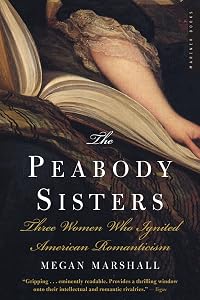
The Peabody Sisters: Three Women Who Ignited American Romanticism
by Megan Marshall
On This Page
Description
Elizabeth, Mary, and Sophia Peabody were in many ways our American Brontes. The story of these remarkable sisters-and their central role in shaping the thinking of their day-has never before been fully told. Twenty years in the making, Megan Marshall's monumental biography brings the era of creative ferment known as American Romanticism to new life. Elizabeth, the oldest sister, was a mind-on-fire thinker. A powerful influence on the great writers of the era-Emerson, Hawthorne, and Thoreau show more among them-she also published some of their earliest works. It was Elizabeth who prodded these newly minted Transcendentalists away from Emerson's individualism and toward a greater connection to others. Mary was a determined and passionate reformer who finally found her soul mate in the great educator Horace Mann. The frail Sophia was a painter who won the admiration of the preeminent society artists of the day. She married Nathaniel Hawthorne-but not before Hawthorne threw the delicate dynamics among the sisters into disarray. Marshall focuses on the moment when the Peabody sisters made their indelible mark on history. Her unprecedented research into these lives uncovered thousands of letters never read before as well as other previously unmined original sources. The Peabody Sisters casts new light on a legendary American era. Its publication is destined to become an event in American biography. This book is highly recommended for students and reading groups interested in American history, American literature, and women's studies. It is a wonderful look into 19th-century life. show lessTags
Recommendations



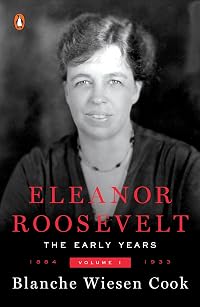

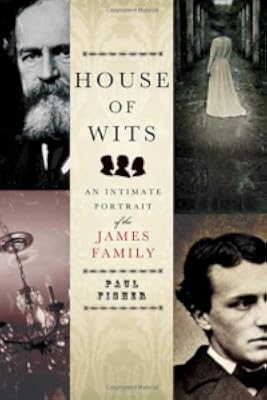
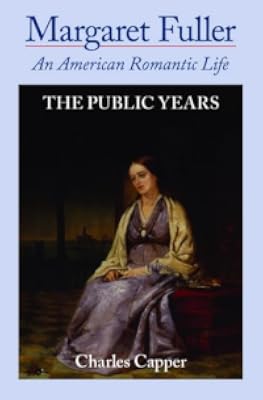
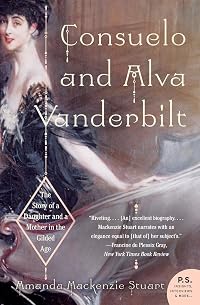



Member Recommendations
A Circle of Sisters: Alice Kipling, Georgiana Burne Jones, Agnes Poynter, and Louisa Baldwin by Judith Flanders
susanbooks 2 excellent biographers; 2 fascinating families

anonymous user An earlier book about these sisters.
Member Reviews
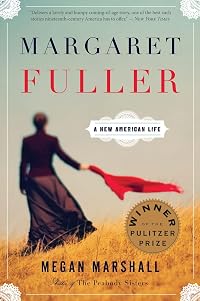
I can’t resist books about sisters, I've read more by and about the Mitford sisters than I’d care to admit, and this thoroughly researched book about the Peabody sisters has all the charms that the best of such books can offer--fascinating personalities, in-depth observations of their family dynamics, and an intimate window into the history of their time. It’s just as informative and moving as author Megan Marshall’s more recent book on Margaret Fuller. Those two books complement each other since they are both about women who were leading thinkers and influential players during the pre-Civil War era when American Romanticism and Transcendentalism were flowering, a time mainly dominated by men.
Money was always an issue for the show more Peabody family, but that seemed to push each of the sisters to excel. Elizabeth had a voracious intellect and her ideas helped inspire the likes of Emerson, Thoreau, and Bronson Alcott. She published their early works, urged them to curb their individualistic philosophies to connect more with others, and has had a lasting impact by promoting the benefits of kindergarten. Mary was a compassionate reformer who married statesman and educator Horace Mann. Sophia, though sickly, was recognized as a talented artist and she married novelist Nathaniel Hawthorne. The book’s tone is sympathetic, but honest, and the sisters come to life on the page to such an extent that it made me feel like I know them. show less
Money was always an issue for the show more Peabody family, but that seemed to push each of the sisters to excel. Elizabeth had a voracious intellect and her ideas helped inspire the likes of Emerson, Thoreau, and Bronson Alcott. She published their early works, urged them to curb their individualistic philosophies to connect more with others, and has had a lasting impact by promoting the benefits of kindergarten. Mary was a compassionate reformer who married statesman and educator Horace Mann. Sophia, though sickly, was recognized as a talented artist and she married novelist Nathaniel Hawthorne. The book’s tone is sympathetic, but honest, and the sisters come to life on the page to such an extent that it made me feel like I know them. show less
Megan Marshall basically lived with the Peabody sisters while writing this book (as much as someone can live with a trio of sisters who've been dead for more than 100 years), and it shows in her writing. She delved into their correspondence, their personal journals, their friends' letters to other friends about the sisters, news stories, census reports. And then she took all of this and turned it into the compelling story of three sisters at the center of a huge philosophical shift that took place in New England in the first half of the nineteenth century.
What's really interesting to me was how big an influence the Peabody women had on the men whose names are usually associated with the period: Ralph Waldo Emerson, Horace Mann, show more Nathaniel Hawthorne, Theodore Parker, William Ellery Channing. I wasn't exactly surprised by this---I'd already read Megan Marshall's biography of Margaret Fuller---but it's still jarring to see just how easily otherwise enlightened men could brush off the accomplishments and intellectual lives of the women around them, and how readily so many women accepted their limited role in society.
I heard on the news today about some story of poor judgment (at best) on the part of a public figure in Boston, and the commentator said, "Why are we not taking to the streets about this?" I have the same feeling when I read about the Peabody sisters. Why aren't the women studying with Elizabeth Peabody and meeting in her book shop rising up and throwing off the restrictive roles their society has handed them? I can speculate about the reasons---all very good ones, too---but it still doesn't quite make sense to me how the granddaughters of those who fought to make the United States into an independent country didn't fight more dramatically on behalf of their own independence.
The other thing that I found interesting was the negative impression I was left with of Emerson, Mann, and Hawthorne. They so obviously used the intelligent women around them, toyed with their affections, pitted sister against sister, and still the sisters defended these men and fought amongst themselves (in a very genteel, epistolary, nineteenth-century way, but it was fighting nonetheless). It's just another reminder, I guess, that although men are placed on pedestals by the writers of history, they are still human beings. Once again, not surprising, just disappointing.
In addition to being an intimate story of the sisters as individuals and of their sisterhood, this is also an excellent history of the Unitarian church. I've often wondered how we got from Calvinism to Unitarian Universalism in fewer than three centuries, and this book helped me make sense of it for the first time. It also sheds light on some of the ongoing friction points within the denomination. show less
What's really interesting to me was how big an influence the Peabody women had on the men whose names are usually associated with the period: Ralph Waldo Emerson, Horace Mann, show more Nathaniel Hawthorne, Theodore Parker, William Ellery Channing. I wasn't exactly surprised by this---I'd already read Megan Marshall's biography of Margaret Fuller---but it's still jarring to see just how easily otherwise enlightened men could brush off the accomplishments and intellectual lives of the women around them, and how readily so many women accepted their limited role in society.
I heard on the news today about some story of poor judgment (at best) on the part of a public figure in Boston, and the commentator said, "Why are we not taking to the streets about this?" I have the same feeling when I read about the Peabody sisters. Why aren't the women studying with Elizabeth Peabody and meeting in her book shop rising up and throwing off the restrictive roles their society has handed them? I can speculate about the reasons---all very good ones, too---but it still doesn't quite make sense to me how the granddaughters of those who fought to make the United States into an independent country didn't fight more dramatically on behalf of their own independence.
The other thing that I found interesting was the negative impression I was left with of Emerson, Mann, and Hawthorne. They so obviously used the intelligent women around them, toyed with their affections, pitted sister against sister, and still the sisters defended these men and fought amongst themselves (in a very genteel, epistolary, nineteenth-century way, but it was fighting nonetheless). It's just another reminder, I guess, that although men are placed on pedestals by the writers of history, they are still human beings. Once again, not surprising, just disappointing.
In addition to being an intimate story of the sisters as individuals and of their sisterhood, this is also an excellent history of the Unitarian church. I've often wondered how we got from Calvinism to Unitarian Universalism in fewer than three centuries, and this book helped me make sense of it for the first time. It also sheds light on some of the ongoing friction points within the denomination. show less
7.5/10
This is a creditable book by Megan Marshall on the lives of Elizabeth, Mary and Sophia Peabody, three very remarkable women in 19th Century America, who provided the tenor of that society as much, if not more than Emerson or Thoreau -- but who for the most part, as often happens in women's history, remained the unsung.
Much as I was looking forward to this, and much as I appreciate all the work done here, I need to be honest with myself: this never really "catches fire" in my imagination.
The undertaking might have worked better, in the end, if Marshall had dedicated one book to each of the sisters, for although this addresses the lives of all three, most of it is dedicated to exploring Elizabeth's, (the eldest) life. Arguably, she show more is the most talented, the most accomplished, the most intellectual of the three -- but the artistic sensibilities of the others are subsumed in her shadow and I feel we are left wanting.
Marshall's work is exhaustive and authoritative, and to prove it, she leaves us with 200 pages of notes; 200 pages which I think might have been better served had they been dedicated to filling out the sisters' histories, rather than providing proof of all her hard work. Not that references should be discounted, of course, but when the weight of a work rests on its end notes ...
I appreciated that she undertook the task at all, for it has the power of re-introducing us to three amazing women who "ignited American Romanticism". I do feel that the title is exact, and deserved.
Despite all the good parts, I was sorely tempted at one point to put it aside, for I found it too frustrating not being able to get more meat from the bones.
But I did read to the last word, and ironically was rewarded most delightfully by the last paragraph.
When Elizabeth died in 1894, at almost ninety, she was widely celebrated as the founder of kindergartens in America. A settlement house was established in her memory -- the Elizabeth Peabody House -- which still operates in Somerville, Massachusetts. The honors more than counterbalanced the gently satirical portrait painted of her as Miss Birdseye by Henry James in his novel The Bostonians. Elizabeth had outlived her fellow Transcendentalists; her "practical" Transcendentalism would survive them all.
Having just read all of Elizabeth's accomplishments, it was with a little stab of the heart that I remembered Miss Birdseye in James's novel:
She stopped on the sidewalk, and looked vaguely about her, in the manner of a person waiting for an omnibus or a street-car; she had a dingy, loosely-habited air, as if she had worn her clothes for many years and yet was even now imperfectly acquainted with them; a large, benignant face, caged in by the glass of her spectacles, which seemed to cover it almost equally everywhere, and a fat, rusty satchel, which hung low at her side, as if it wearied her.
Everything about this portrait stings of dinginess -- mind and spirit -- and yet to read about Elizabeth Peabody, the accomplished woman, nothing could have been farther from the truth. It makes me wonder why such coals were heaped on her head, by James.
I never did like The Bostonians. I'll have to re-read it, to remember it more justly, so I can now further downgrade it. : | show less
This is a creditable book by Megan Marshall on the lives of Elizabeth, Mary and Sophia Peabody, three very remarkable women in 19th Century America, who provided the tenor of that society as much, if not more than Emerson or Thoreau -- but who for the most part, as often happens in women's history, remained the unsung.
Much as I was looking forward to this, and much as I appreciate all the work done here, I need to be honest with myself: this never really "catches fire" in my imagination.
The undertaking might have worked better, in the end, if Marshall had dedicated one book to each of the sisters, for although this addresses the lives of all three, most of it is dedicated to exploring Elizabeth's, (the eldest) life. Arguably, she show more is the most talented, the most accomplished, the most intellectual of the three -- but the artistic sensibilities of the others are subsumed in her shadow and I feel we are left wanting.
Marshall's work is exhaustive and authoritative, and to prove it, she leaves us with 200 pages of notes; 200 pages which I think might have been better served had they been dedicated to filling out the sisters' histories, rather than providing proof of all her hard work. Not that references should be discounted, of course, but when the weight of a work rests on its end notes ...
I appreciated that she undertook the task at all, for it has the power of re-introducing us to three amazing women who "ignited American Romanticism". I do feel that the title is exact, and deserved.
Despite all the good parts, I was sorely tempted at one point to put it aside, for I found it too frustrating not being able to get more meat from the bones.
But I did read to the last word, and ironically was rewarded most delightfully by the last paragraph.
When Elizabeth died in 1894, at almost ninety, she was widely celebrated as the founder of kindergartens in America. A settlement house was established in her memory -- the Elizabeth Peabody House -- which still operates in Somerville, Massachusetts. The honors more than counterbalanced the gently satirical portrait painted of her as Miss Birdseye by Henry James in his novel The Bostonians. Elizabeth had outlived her fellow Transcendentalists; her "practical" Transcendentalism would survive them all.
Having just read all of Elizabeth's accomplishments, it was with a little stab of the heart that I remembered Miss Birdseye in James's novel:
She stopped on the sidewalk, and looked vaguely about her, in the manner of a person waiting for an omnibus or a street-car; she had a dingy, loosely-habited air, as if she had worn her clothes for many years and yet was even now imperfectly acquainted with them; a large, benignant face, caged in by the glass of her spectacles, which seemed to cover it almost equally everywhere, and a fat, rusty satchel, which hung low at her side, as if it wearied her.
Everything about this portrait stings of dinginess -- mind and spirit -- and yet to read about Elizabeth Peabody, the accomplished woman, nothing could have been farther from the truth. It makes me wonder why such coals were heaped on her head, by James.
I never did like The Bostonians. I'll have to re-read it, to remember it more justly, so I can now further downgrade it. : | show less
Megan Marshall created a page-turner about the lives of three 19th century sisters, and also filled this biography with so much fascinating information about life in the 19th century, Boston, Salem, and Concord, Emerson, Alcott, Hawthorne, Transcendentalism, and all the Unitarian ministers, especially Channing and Parker, I'd give it more than 5 stars if I could. This is the way I enjoy learning about history. Bravo--wow, and thanks to the English teacher at my high school who recommended it for our library collection.
An excellent, intelligent rendering of life in the Northeastern U.S., post-Revolutionary War/pre-Civil War. Although the book focuses on the lives of the talented Peabody Sisters (middle sister Mary was a teacher and essayist who married and influenced education innovator Horace Mann, youngest sister Sophia was an artist who married and served as muse to Nathaniel Hawthorne) it's through oldest sister Elizabeth--the glue, fulcrum and primary breadwinner of the Peabody family--that we come to understand the societal limits placed on women of that era. Elizabeth was a brilliant, disciplined thinker who taught and founded groundbreaking schools, wrote essays and books, and established and ran a Boston-based bookstore and small publishing show more house. Yet her primary purpose was in prodding, nurturing and supporting men who saw the world as she did: men such as Mann, Hawthorne (she was one of his earliest publishers, and found for him the infamous Customs House job, which is described in the beginning of The Scarlett Letter), Emerson, the Reverend Ellery Channing and Louisa May Alcott's father, Bronson.
I have some minor quibbles. Margaret Fuller (editor and cofounder, with Emerson, of the transcendental journal "The Dial") appears a couple of times in the book before we are told who she is and her relationship with Elizabeth Peabody is never really explored. Also, the book ends prematurely with Mary and Sophia's marriages to their more-famous husbands (Elizabeth never married), which leads me to hope that a part II is in the works. show less
I have some minor quibbles. Margaret Fuller (editor and cofounder, with Emerson, of the transcendental journal "The Dial") appears a couple of times in the book before we are told who she is and her relationship with Elizabeth Peabody is never really explored. Also, the book ends prematurely with Mary and Sophia's marriages to their more-famous husbands (Elizabeth never married), which leads me to hope that a part II is in the works. show less
A somewhat complicated but revelatory story of 3 sisters whose lives spanned the 19th century, and who became associated with the new Transcendentalist movement. They were lucky in that their mother was a teacher who believed that women needed to be well educated, and so each received an unusually strong education for the time. In addition, because Elizabeth didn't marry and Mary and Sophia married later in life, they had quite a bit of time to pursue career interests in their lives. Elizabeth is a strong, likable central character, who becomes a central figure in the lives of many famous people in the Transcendentalist movement, including Channing, Emerson and Alcott. Perhaps because she is a woman, she embraces many roles: governess, show more teacher, publisher, bookstore owner, hostess for 'conversations', supporter of her family. It is interesting that just like Louisa May Alcott, whose father was also a founding member of the Transcendentalists, she understood that her father was not going to adequately support his family, and had to contribute earnings to keep the family afloat. I was struck by how many times each of the sisters (and their family) moved. It seems like their lives were quite transient, moving often to find opportunities for employment. It's also interesting to see a movement grow and develop, not in a straight line, but in fits and starts. These people seem like modern-day hippies, with the Fruitlands and Brook Farm communes as experimental living situations, each of which ultimately failed. The book also deals with the relatively complex relationships between the women and the men in their lives. Before mary marries Horace Mann and Sophia marries Nathaniel Hawthorne, each man has a close relationship with Elizabeth, the most dominant of the sisters. This book leaves me feeling grateful for the women who preceded me, and the work they did to make their lives meaningful.
And by the way, it's very well written. This is a very complicated story of 3 individuals and is somewhat a page-turner. I liked it very much. show less
And by the way, it's very well written. This is a very complicated story of 3 individuals and is somewhat a page-turner. I liked it very much. show less
This was just awesome. The Peabody sisters were in the thick of intellectual life in New England (specifically the Boston area) in the first half of the 19th century. They knew all kinds of people who were famous or went on to be famous - one of them married Nathaniel Hawthorne and another married Horace Mann. One of them foreshadowed a lot of what Emerson made famous in his essays. And yet no one has ever heard of them.
The best parts of this book for me were about the sisters themselves and their interactions with each other. If you have siblings, you know that the connections and inner workings of that relationship are incredibly fraught and complex and difficult - sometimes all at once. This book really brought that to life for show more me.
Also, I felt a real kinship with these women - they were all way way ahead of their time. It's just incredible what they were able to accomplish when you consider the limitations put on women in those days.
It's a long book, but a fairly quick read anyway show less
The best parts of this book for me were about the sisters themselves and their interactions with each other. If you have siblings, you know that the connections and inner workings of that relationship are incredibly fraught and complex and difficult - sometimes all at once. This book really brought that to life for show more me.
Also, I felt a real kinship with these women - they were all way way ahead of their time. It's just incredible what they were able to accomplish when you consider the limitations put on women in those days.
It's a long book, but a fairly quick read anyway show less
Members
- Recently Added By
Lists

Best Biographies of Notable Women
424 works; 102 members

Books We Resisted Reading
178 works; 113 members
Author Information

6 Works 1,150 Members
Awards and Honors
Common Knowledge
- Original title
- The Peabody Sisters: Three Women Who Ignited American Romanticism
- Original publication date
- 2005
- People/Characters
- Elizabeth Palmer Peabody; Mary Tyler Peabody Mann; Sophia Peabody Hawthorne; Ralph Waldo Emerson; Nathaniel Hawthorne; Horace Mann (show all 7); Bronson Alcott
- Important places
- Salem, Massachusetts, USA
- Dedication
- For the Sedgwick sisters,
Josie and Sara,
and my own sister, Amy - Canonical DDC/MDS
- 974.4030922
- Canonical LCC
- F74.S1
- Disambiguation notice
- Full title (2005): The Peabody sisters : three women who ignited American romanticism / Megan Marshall
Classifications
- Genres
- Nonfiction, Biography & Memoir, History, General Nonfiction, Literature Studies and Criticism
- DDC/MDS
- 974.4030922 — History & geography History of North America Northeastern United States (New England and Middle Atlantic states) Massachusetts 1776-1865
- LCC
- F74 .S1 — Local History of the United States, Canada and Latin America United States local history Massachusetts
- BISAC
Statistics
- Members
- 577
- Popularity
- 51,294
- Reviews
- 13
- Rating
- (4.27)
- Languages
- English, French
- Media
- Paper, Ebook
- ISBNs
- 5
- UPCs
- 2
- ASINs
- 4