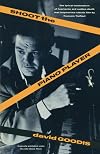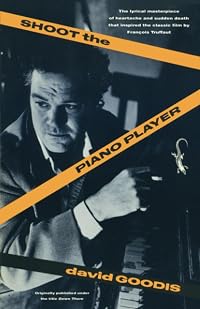
Shoot the Piano Player
by David Goodis
On This Page
Description
Once upon a time Eddie played concert piano to reverent audiences at Carnegie Hall. Now he bangs out honky-tonk for drunks in a dive in Philadelphia. But then two people walk into Eddie's life--the first promising Eddie a future, the other dragging him back into a treacherous past. Shoot the Piano Player is a bittersweet and nerve-racking exploration of different kinds of loyalty: the kind a man owes his family, no matter how bad that family is; the kind a man owes a woman; and, ultimately, show more the loyalty he owes himself. The result is a moody thriller that, like the best hard-boiled fiction, carries a moral depth charge. show lessTags
Recommendations





















Member Reviews
Originally Published in 1956 as Down There,/i>
File this classic noir tale, made all the more famous by François Truffaut’s retitled 1960 film adaptation Shoot the Piano Player, under “Let Sleeping Dogs Lie.” As Goodis’ very dark novel illustrates, they might yawn and lick you, or, more likely in noir land, they might be wounded by the past and explode to engulf you in violence that tears your world apart.
Eddie Lynn earns his meager keep by scratching out tunes on a beat up upright in Harriet’s Hut, a dive bar in the seedy part of Philadelphia. He a quiet man in worn clothes who comes across as milquetoast. He’s tightly scribed his existence in a tiny circle of playing, lying in his room, and occasionally paying Clarice for show more a bit of sex. So divorced from the world is he, he’s not aware that a young, attractive waitress, Lena, has her eye on his.
Then Turley shows up battered and a little disoriented and urges Eddie to help him. Eddie hasn’t laid eyes on Turley, or his other older brother Clifton, nor his parents, or their modest homestead in the dark woods of south Jersey in nearly a decade. Turley and Clifton have been involved in a caper that has gone seriously wrong. Two gunsels, described as real professionals, are after him and he needs to get away fast. Eddie doesn’t want any part of the action but fate dictates otherwise. The pros turn up at the bar and in the first of many violent outbursts in the book, Eddie enables Turley’s escape. Now, however, Eddie is a marked man who himself must avoid and eventually flee the gunmen.
Unfortunately for Eddie, the affair awakens his senses, especially to Lena, who helps him, and to whom he begins to become attached. He sufferers internal conflict, in fact the core of the book is about his constant internal struggle to not love again, to hide his true identity, to keep clear of his notorious brothers, all of which bubble to the surface and help readers understand the real Eddie.
Debate himself as much as he will, he can’t suppress his growing feelings for Lena, and can’t keep his previous life, love, and agony over causing his young wife’s death bottled up. It sort of replays itself when the bouncer, who is also Harriet’s husband and an ex-wrestler known as the Harleyville Hugger (specialty: bear hugging an opponent into submission) tries to take liberties with Lena. A brutal and exhausting fight ensues between him and Eddie, when Eddie defends her. It results in the stabbing death of Hugger.
Now Eddie with the aid of Lena, for whom he finally concedes his growing affection, has to lam out of Philly to the one place he’s certain nobody will find him, the family house in Jersey. Naturally, this being noir and ultimately nihilistic at heart, complete disaster engulfs every character in the novel, until Eddie reins in his emotional monster, and the novel ends on these notes: “He opened his eyes. He saw his fingers caressing the keyboard.”
Modern readers will probably find the dialogue somewhat stilted and anachronistic and Eddie’s motivations a bit overwrought, but Goodis more than makes up for these with his word pictures of a dark, brutal world, and the idea of a guy who just wants to be left alone to stew in his misfortune and, most important, not to care and love again to only enviably hurt the one loved and himself again. show less
File this classic noir tale, made all the more famous by François Truffaut’s retitled 1960 film adaptation Shoot the Piano Player, under “Let Sleeping Dogs Lie.” As Goodis’ very dark novel illustrates, they might yawn and lick you, or, more likely in noir land, they might be wounded by the past and explode to engulf you in violence that tears your world apart.
Eddie Lynn earns his meager keep by scratching out tunes on a beat up upright in Harriet’s Hut, a dive bar in the seedy part of Philadelphia. He a quiet man in worn clothes who comes across as milquetoast. He’s tightly scribed his existence in a tiny circle of playing, lying in his room, and occasionally paying Clarice for show more a bit of sex. So divorced from the world is he, he’s not aware that a young, attractive waitress, Lena, has her eye on his.
Then Turley shows up battered and a little disoriented and urges Eddie to help him. Eddie hasn’t laid eyes on Turley, or his other older brother Clifton, nor his parents, or their modest homestead in the dark woods of south Jersey in nearly a decade. Turley and Clifton have been involved in a caper that has gone seriously wrong. Two gunsels, described as real professionals, are after him and he needs to get away fast. Eddie doesn’t want any part of the action but fate dictates otherwise. The pros turn up at the bar and in the first of many violent outbursts in the book, Eddie enables Turley’s escape. Now, however, Eddie is a marked man who himself must avoid and eventually flee the gunmen.
Unfortunately for Eddie, the affair awakens his senses, especially to Lena, who helps him, and to whom he begins to become attached. He sufferers internal conflict, in fact the core of the book is about his constant internal struggle to not love again, to hide his true identity, to keep clear of his notorious brothers, all of which bubble to the surface and help readers understand the real Eddie.
Debate himself as much as he will, he can’t suppress his growing feelings for Lena, and can’t keep his previous life, love, and agony over causing his young wife’s death bottled up. It sort of replays itself when the bouncer, who is also Harriet’s husband and an ex-wrestler known as the Harleyville Hugger (specialty: bear hugging an opponent into submission) tries to take liberties with Lena. A brutal and exhausting fight ensues between him and Eddie, when Eddie defends her. It results in the stabbing death of Hugger.
Now Eddie with the aid of Lena, for whom he finally concedes his growing affection, has to lam out of Philly to the one place he’s certain nobody will find him, the family house in Jersey. Naturally, this being noir and ultimately nihilistic at heart, complete disaster engulfs every character in the novel, until Eddie reins in his emotional monster, and the novel ends on these notes: “He opened his eyes. He saw his fingers caressing the keyboard.”
Modern readers will probably find the dialogue somewhat stilted and anachronistic and Eddie’s motivations a bit overwrought, but Goodis more than makes up for these with his word pictures of a dark, brutal world, and the idea of a guy who just wants to be left alone to stew in his misfortune and, most important, not to care and love again to only enviably hurt the one loved and himself again. show less
Originally Published in 1956 as Down There,/i>
File this classic noir tale, made all the more famous by François Truffaut’s retitled 1960 film adaptation Shoot the Piano Player, under “Let Sleeping Dogs Lie.” As Goodis’ very dark novel illustrates, they might yawn and lick you, or, more likely in noir land, they might be wounded by the past and explode to engulf you in violence that tears your world apart.
Eddie Lynn earns his meager keep by scratching out tunes on a beat up upright in Harriet’s Hut, a dive bar in the seedy part of Philadelphia. He a quiet man in worn clothes who comes across as milquetoast. He’s tightly scribed his existence in a tiny circle of playing, lying in his room, and occasionally paying Clarice for show more a bit of sex. So divorced from the world is he, he’s not aware that a young, attractive waitress, Lena, has her eye on his.
Then Turley shows up battered and a little disoriented and urges Eddie to help him. Eddie hasn’t laid eyes on Turley, or his other older brother Clifton, nor his parents, or their modest homestead in the dark woods of south Jersey in nearly a decade. Turley and Clifton have been involved in a caper that has gone seriously wrong. Two gunsels, described as real professionals, are after him and he needs to get away fast. Eddie doesn’t want any part of the action but fate dictates otherwise. The pros turn up at the bar and in the first of many violent outbursts in the book, Eddie enables Turley’s escape. Now, however, Eddie is a marked man who himself must avoid and eventually flee the gunmen.
Unfortunately for Eddie, the affair awakens his senses, especially to Lena, who helps him, and to whom he begins to become attached. He sufferers internal conflict, in fact the core of the book is about his constant internal struggle to not love again, to hide his true identity, to keep clear of his notorious brothers, all of which bubble to the surface and help readers understand the real Eddie.
Debate himself as much as he will, he can’t suppress his growing feelings for Lena, and can’t keep his previous life, love, and agony over causing his young wife’s death bottled up. It sort of replays itself when the bouncer, who is also Harriet’s husband and an ex-wrestler known as the Harleyville Hugger (specialty: bear hugging an opponent into submission) tries to take liberties with Lena. A brutal and exhausting fight ensues between him and Eddie, when Eddie defends her. It results in the stabbing death of Hugger.
Now Eddie with the aid of Lena, for whom he finally concedes his growing affection, has to lam out of Philly to the one place he’s certain nobody will find him, the family house in Jersey. Naturally, this being noir and ultimately nihilistic at heart, complete disaster engulfs every character in the novel, until Eddie reins in his emotional monster, and the novel ends on these notes: “He opened his eyes. He saw his fingers caressing the keyboard.”
Modern readers will probably find the dialogue somewhat stilted and anachronistic and Eddie’s motivations a bit overwrought, but Goodis more than makes up for these with his word pictures of a dark, brutal world, and the idea of a guy who just wants to be left alone to stew in his misfortune and, most important, not to care and love again to only enviably hurt the one loved and himself again. show less
File this classic noir tale, made all the more famous by François Truffaut’s retitled 1960 film adaptation Shoot the Piano Player, under “Let Sleeping Dogs Lie.” As Goodis’ very dark novel illustrates, they might yawn and lick you, or, more likely in noir land, they might be wounded by the past and explode to engulf you in violence that tears your world apart.
Eddie Lynn earns his meager keep by scratching out tunes on a beat up upright in Harriet’s Hut, a dive bar in the seedy part of Philadelphia. He a quiet man in worn clothes who comes across as milquetoast. He’s tightly scribed his existence in a tiny circle of playing, lying in his room, and occasionally paying Clarice for show more a bit of sex. So divorced from the world is he, he’s not aware that a young, attractive waitress, Lena, has her eye on his.
Then Turley shows up battered and a little disoriented and urges Eddie to help him. Eddie hasn’t laid eyes on Turley, or his other older brother Clifton, nor his parents, or their modest homestead in the dark woods of south Jersey in nearly a decade. Turley and Clifton have been involved in a caper that has gone seriously wrong. Two gunsels, described as real professionals, are after him and he needs to get away fast. Eddie doesn’t want any part of the action but fate dictates otherwise. The pros turn up at the bar and in the first of many violent outbursts in the book, Eddie enables Turley’s escape. Now, however, Eddie is a marked man who himself must avoid and eventually flee the gunmen.
Unfortunately for Eddie, the affair awakens his senses, especially to Lena, who helps him, and to whom he begins to become attached. He sufferers internal conflict, in fact the core of the book is about his constant internal struggle to not love again, to hide his true identity, to keep clear of his notorious brothers, all of which bubble to the surface and help readers understand the real Eddie.
Debate himself as much as he will, he can’t suppress his growing feelings for Lena, and can’t keep his previous life, love, and agony over causing his young wife’s death bottled up. It sort of replays itself when the bouncer, who is also Harriet’s husband and an ex-wrestler known as the Harleyville Hugger (specialty: bear hugging an opponent into submission) tries to take liberties with Lena. A brutal and exhausting fight ensues between him and Eddie, when Eddie defends her. It results in the stabbing death of Hugger.
Now Eddie with the aid of Lena, for whom he finally concedes his growing affection, has to lam out of Philly to the one place he’s certain nobody will find him, the family house in Jersey. Naturally, this being noir and ultimately nihilistic at heart, complete disaster engulfs every character in the novel, until Eddie reins in his emotional monster, and the novel ends on these notes: “He opened his eyes. He saw his fingers caressing the keyboard.”
Modern readers will probably find the dialogue somewhat stilted and anachronistic and Eddie’s motivations a bit overwrought, but Goodis more than makes up for these with his word pictures of a dark, brutal world, and the idea of a guy who just wants to be left alone to stew in his misfortune and, most important, not to care and love again to only enviably hurt the one loved and himself again. show less
There are no joyrides when reading Goodis. But there are a lot of pleasures to be had in the little parts of his writing. Everything is intensely dark and intensely real even if you don't fully understand the characters' motivation or how they act, and even if you have never walked alone on the dark streets of Philadelphia. The story concerns a pianist, formerly a sensation on the classical stage (as befits a graduate of the Curtis Institute, America's premier music school), who has now retreated to playing jazz in an out-of-the-way bar for $30 a week. As the story unfolds, we are shown both the personal tragedy and the family he has run away from. But there is no escaping either as Goodis draws us into this bleak tale. The pianist's show more brother is on the run from the mob and comes to the bar looking for help. Suddenly the passive pianist is now engaged in something he never wanted--and his animal side is coming back info focus, as it did after his personal tragedy.
I've written around things here to avoid providing any spoilers. This is not a happy book. It is filled with scenes of pain and brutality, but throughout, there are rays of light as human beings act human and in the midst of this dark world, they reach out to help the pianist in small ways. This is too dark to be escapist fiction, but I suspect you won't be able to put it down until the end, or to soon forget it. show less
I've written around things here to avoid providing any spoilers. This is not a happy book. It is filled with scenes of pain and brutality, but throughout, there are rays of light as human beings act human and in the midst of this dark world, they reach out to help the pianist in small ways. This is too dark to be escapist fiction, but I suspect you won't be able to put it down until the end, or to soon forget it. show less
I thought I knew what I was getting into with this story. A man on the run, bleeding, stumbles into some dive and has a quick word with the piano man before the thugs come in after him... if you've read one noir, you've read them all, right? Wrong. This one is different. You see, Eddie is not just some piano player, he has a past. Well, everyone in a noir story has a past, don't they? But Eddie has an illustrious past. Eddie played Carnegie Hall. Eddie cut albums and went on tour. So why is he playing an upright in a gin joint?
The telling of Eddie's story ripped my gut out. Seriously, I was in awe. But it's not all doom and gloom. The scene in the Buick with Feather and Morris (the aforementioned thugs) had me laughing so hard I had show more tears running down my face. Goodis definitely knew how to craft a tale. All of his characters were well-formed in my mind. Most of the women were able to stand on their own, and gave as good as they got. And one more thing I like about it - Goodis told a gritty tale without resorting to foul language. I love Charlie Huston's stories but the sheer quantity of profanity in his stuff wears on me sometimes. Yes, I will definitely be reading more of Goodis. show less
The telling of Eddie's story ripped my gut out. Seriously, I was in awe. But it's not all doom and gloom. The scene in the Buick with Feather and Morris (the aforementioned thugs) had me laughing so hard I had show more tears running down my face. Goodis definitely knew how to craft a tale. All of his characters were well-formed in my mind. Most of the women were able to stand on their own, and gave as good as they got. And one more thing I like about it - Goodis told a gritty tale without resorting to foul language. I love Charlie Huston's stories but the sheer quantity of profanity in his stuff wears on me sometimes. Yes, I will definitely be reading more of Goodis. show less
This gritty, hard-boiled novel by David Goodis opens with an action scene where a bloody-faced Turley Linn is running for his life through the alleys of a Philadelphia slum, fleeing from two professional hit-men. Turley ducks into a run-down neighborhood bar called Harriet's Hut and finds his brother Eddie (the novel's main character) who he hasn't seen in over six years. Eddie acknowledges his brother but remains cool and doesn't stop playing his sweet honky-tonk music on the joint's piano. Remaining cool, detached and emotionally uninvolved is the key note (no pun intended) of Eddie's threadbare, solitary life.
In the first few pages we also come to know there is another side to cool Eddie, that is, some years ago Edward Webster Lynn, show more a concert pianist trained at the Curtis Institute, toured Europe and performed at Carnegie Hall, captivating and mesmerizing audiences with musical talent bordering on genius.
Then why, we may ask, is one of the world's greatest pianists tickling the eighty-eight at a rundown bar? It isn't until midway through the novel that we are given Eddie's backstory. Turns out, Edward was once deeply in love and married to a beautiful Puerto Rican woman named Teresa. One evening at a midtown Manhattan party, Teresa confesses to Edward that she had an affair with his high-class concert manager. Completely unhinged, Edward stomps out of the room. Seeing herself as unclean trash, Teresa jumps out a window.
Thus, we are given yet again another side of Eddie the piano player, the cool guy with his soft-easy smile, when, after the funeral, Edward goes ballistic. Late at night in Hell's Kitchen NYC, he gets himself mugged, robbed and beaten up, enjoying every minute of the violence. He then seeks out more violence again and again and gives as good as he gets, including mauling two policemen.
So violent is Eddie that a strong-arm specialist in the Bowery tells his buddies the next time he fights with the guy he'll need an automatic rifle. The author conveys Eddie's reflections on this period in his life, "Now, looking back on it, he saw the wild man of seven years ago, and thought, What it amounted to, you were crazy, I mean really crazy. Call it horror-crazy."
With this background and insight into Eddie's character, we have a more complete overview of the violence taking place one afternoon at Harriet's Hut. The bar's bouncer, Wally Plyne aka the Harleyville Hugger, admits to taking money for giving Eddie's address to the two hit-men. This causes Lena, the young, attractive waitress and friend of Eddie, to erupt with a torrent of verbal barbs and insults aimed at Plyne. Plyne tells her to shut her mouth but Lena keeps it up.
Plyne explodes, smacking Lena in the face. Lena keeps up the insults. Plyne smacks her again. Lena spits out more insults. More slaps and punches from Plyne. At this point Eddie steps in. Eddie and Plyne exchange punches. Plyne picks up a chair leg to use as a club and then, in response, Eddie grabbing a long, sharp bread knife. Fearing for his life, Plyne races out the back door. Eddie follows, knife in hand. Several minutes later, squeezed in one of the Harleyville Hugger's lethal bear-hugs, Eddie goes for Plyne's arm with the knife but Plyne suddenly shifts position and the knife sinks into Plyne's chest. Plyne slumps over, dead.
I focus on this scene because, to my mind, what happens underscores the author's view of human nature: people are capable of extreme violence; it is only a matter of the flash point. Doesn't matter if a person is an accomplished classical musician or an attractive twenty-seven year old waitress, push the buttons in a certain way and a man or woman will erupt like a volcano. Ah, the horror-crazy buried deep within us all.
David Goodis made it a practice to routinely visit the bars and hangouts and hot spots in Philadelphia's rat-infested, poverty-stricken slums. As a writer and artist, he opened himself to life as it was lived in the urban underbelly of the 1940s and 1950s - desperate, dark and dangerous - and sat at his typewriter and wrote all about it. show less
David Goodis is a great storyteller. The story opens with a man, bloodied, dazed and running from two unknown men. Throughout most of the plot you don't know who is who. Is the running man a good guy or is he bad? Why do the men chasing him want him so badly? They are relentless in their pursuit. You don't know who to root for. But, the story isn't really about the man being pursued. When he escapes into a seedy bar where his brother is playing piano, the attention shifts. Now, caught in the middle is younger brother, Eddie. Growing up, Eddie had very little to do with his rough and violent brothers. While they followed a life of crime, Eddie became a Carnegie Hall pianist. Now, he is just a simple piano player in Harriet's Hut. Out of show more family loyalty, Eddie helps his brother and plunges headlong into the trouble is he has been trying to avoid for years. There is a reason he no longer plays Carnegie and that past comes back to haunt him. Throughout the story there isn't enough character development to care about Eddie or his family. You don't know if they are the good guys or not. Enough bad things have happened to Eddie to make the reader sympathetic to his plight, but not enough to sit on the edge of your seat, hoping and praying for his survival. I rooted for the plucky waitress, Lena, who attaches herself to Eddie and refuses to take no for an answer. She was gutsy and valiant and never wavered from her character. show less
This gritty, hard-boiled novel by David Goodis opens with an action scene where a bloody-faced Turley Linn is running for his life through the alleys of a Philadelphia slum, fleeing from two professional hit-men. Turley ducks into a run-down neighborhood bar called Harriet's Hut and finds his brother Eddie (the novel's main character) who he hasn't seen in over six years. Eddie acknowledges his brother but remains cool and doesn't stop playing his sweet honky-tonk music on the joint's piano. Indeed, remaining cool, detached and emotionally uninvolved is the key note (no pun intended) of Eddie's thread-bare, solitary life.
In the first few pages we also come to know there is another side to cool Eddie, that is, some years ago Edward show more Webster Lynn, a concert pianist trained at the Curtis Institute, toured Europe and performed at Carnegie Hall, captivating and mesmerizing audiences with musical talent bordering on genius. Then why, we may ask, is one of the world's greatest pianists tickling the eighty-eight at a rundown bar? It isn't until midway through the novel that we are given Eddie's backstory. Turns out, Edward was once deeply in love and married to a beautiful Puerto Rican woman named Teresa. One evening at a mid-town Manhattan party, Teresa confesses to Edward she had an affair with his high-class concert manager. Then, as soon as Edward stomps out of the room, completely unhinged, seeing herself as unclean trash, Teresa jumps out a window.
Thus, we are given yet again another side of Eddie the piano player, the cool guy with his soft-easy smile, when, after the funeral, Edward goes ballistic. Late at night in Hell's Kitchen NYC, he gets himself mugged, robbed and beaten up, enjoying every minute of the violence. He then seeks out more violence again and again and gives as good as he gets, including mauling two policemen. So violent is Eddie that a strong-arm specialist in the Bowery tells his buddies the next time he fights with the guy he'll need an automatic rifle. The author conveys Eddie's reflections on this period in his life, "Now, looking back on it, he saw the wild man of seven years ago, and thought, What it amounted to, you were crazy, I mean really crazy. Call it horror-crazy."
With this background and insight into Eddie's character, we have a more complete overview of the violence taking place one afternoon at Harriet's Hut. The bar's bouncer, Wally Plyne aka the Harleyville Hugger, admits to taking money for giving Eddie's address to the two hit-men. This causes Lena, the young, attractive waitress and friend of Eddie, to erupt with a torrent of verbal barbs and insults aimed at Plyne. Plyne tells her to shut her mouth but Lena keeps it up. Plyne explodes, smacking Lena in the face. Lena keeps up the insults. Plyne smacks her again. Lena spits out more insults. More slaps and punches from Plyne. At this point Eddie steps in. Eddie and Plyne exchange punches. Plyne picks up a chair leg to use as a club and then, in response, Eddie grabbing a long, sharp bread knife. Fearing for his life, Plyne races out the back door. Eddie follows, knife in hand. Several minutes later, squeezed in one of the Harleyville Hugger's lethal bear-hugs, Eddie goes for Plyne's arm with the knife but Plyne suddenly shifts position and the knife sinks into Plyne's chest. Plyne slumps over, dead.
I focus on this scene because, to my mind, what happens underscores the author's view of human nature: people are capable of extreme violence; it is only a matter of the flash point. Doesn't matter if a person is an accomplished classical musician or an attractive 27 year old waitress, push the buttons in a certain way and people will erupt like volcanos. Ah, the horror-crazy buried deep within us all.
David Goodis made it a practice to routinely visit the bars and hangouts and hotspots in Philadelphia's rat-infested, poverty-stricken slums. As a writer and artist, he opened himself to life as it was lived in the urban underbelly of the 1940s and 1950s -- desperate, dark and dangerous - and sat at his typewriter and wrote all about it. show less
Members
- Recently Added By
Lists

Best Noir Fiction
160 works; 14 members

Noirvember: The Best Noir
113 works; 56 members

1950s
340 works; 22 members

Noirvember: Potential Reads
23 works; 1 member
Author Information

65+ Works 3,366 Members
Some Editions
Series
Belongs to Publisher Series
Work Relationships
Common Knowledge
- Canonical title*
- Dispareu contra el pianista
- Original title
- Down There
- Alternate titles
- Shoot The Piano Player
- Original publication date
- 1956
- Important places
- Philadelphia, Pennsylvania, USA
- Related movies
- Tirez sur le pianiste (1960 | IMDb)
- First words
- There were no street lamps, no lights at all.
- Quotations
- You want it all for free, don't you? But the thing is, you can't get it for free. You wanna learn about a person, it costs you. And the more you learn, the more it costs. Like digging a well, the deeper you go, the more expen... (show all)ses you got. And sometimes it's a helluva lot more than you can afford.
Like proving he still had it, the power, the importance the stuff and the drive, and whatever it takes to make a woman say yes. What he got from the waitress was a cold, silent no. - Last words
- (Click to show. Warning: May contain spoilers.)He saw his fingers caressing the keyboard.
- Original language*
- Inglés
- Disambiguation notice
- Shoot the Piano Player originally published as Down There
*Some information comes from Common Knowledge in other languages. Click "Edit" for more information.
Classifications
Statistics
- Members
- 596
- Popularity
- 49,346
- Reviews
- 14
- Rating
- (3.92)
- Languages
- 7 — Catalan, English, French, German, Italian, Portuguese, Spanish
- Media
- Paper, Ebook
- ISBNs
- 16
- ASINs
- 6