On This Page
Description
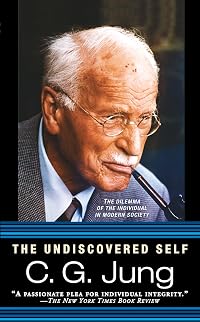
Sonu Shamdasani is editor of The Red Book and Philemon Professor of Jung History at University College London. These two essays, written late in Jung's life, reflect his responses to the shattering experience of World War II and the dawn of mass society. Among his most influential works, "The Undiscovered Self" is a plea for his generation--and those to come--to continue the individual work of self-discovery and not abandon needed psychological reflection for the easy ephemera of mass show more culture. Only individual awareness of both the conscious and unconscious aspects of the human psyche, Jung tells us, will allow the great work of human culture to continue and thrive. Jung's reflections on self-knowledge and the exploration of the unconscious carry over into the second essay, "Symbols and the Interpretation of Dreams," completed shortly before his death in 1961. Describing dreams as communications from the unconscious, Jung explains how the symbols that occur in dreams compensate for repressed emotions and intuitions. This essay brings together Jung's fully evolved thoughts on the analysis of dreams and the healing of the rift between consciousness and the unconscious, ideas that are central to his system of psychology. This paperback edition of Jung's classic work includes a new foreword by Sonu Shamdasani, Philemon Professor of Jung History at University College London. show lessTags
Recommendations











Member Reviews
While reading him, I swing wildly between thinking that Jung is very sensible and good and right, and thinking that he's a dick. The trouble, I think, is that after you've been reading Freud, coming to Jung is at first refreshing. He seems to apply Freud's ideas in a way that is more relevant to everyday life, that relates more to the experience of existence that we actually have, rather than just using them to build a system. Freud tends to grab hold of a theory and run with it to its ridiculous conclusion. He gets on his little horse and rides it blinkered to the finish line. And you wonder, well, shouldn't you try using the height advantage of being on a horse to just look around for any new possibilities you can see? Jung does this show more - he sits on his horse and has a good look around. This is very refreshing. But after a while, you begin to miss the big ideas, you miss Freud's crazy ambition, the striving for a system that explains everything, you want to scream at Jung: you're on a horse. Are you just going to sit there on it? You might as well have brought a fucking stepladder. Then he says something about parapsychology and you throw the book at the wall. show less
Is Jung one of the most interesting and insightful people ever, or is he someone who lept off into the mystical and archetypal to avoid addressing real repressed emotional pain of both his own and of the patients who he worked with?
Tough call. At this moment in time, I am going with the latter.
In either case, this book is pretty incredible. His bemoaning the lack of 'individuals' in our society, and his warnings on the evils of 'group think', and of a society composed of people who are not in touch with themselves internally, is prescient, true, and fucking scary.
Dreams deserve to be taken seriously, and on that front, he is equally compelling and inspiring.
As someone who is a little suspicious of the merits of his other work, I do show more believe this book is important, and well worth reading. show less
Tough call. At this moment in time, I am going with the latter.
In either case, this book is pretty incredible. His bemoaning the lack of 'individuals' in our society, and his warnings on the evils of 'group think', and of a society composed of people who are not in touch with themselves internally, is prescient, true, and fucking scary.
Dreams deserve to be taken seriously, and on that front, he is equally compelling and inspiring.
As someone who is a little suspicious of the merits of his other work, I do show more believe this book is important, and well worth reading. show less
Read this! I've read it multiple times in my life. I think it is insightful and enlightening. Also, at this time in history, I feel it has renewed relevance. Indeed, every time I read this slim volume I find it insightful and enlightening. The opening pages, from the early Cold War era, seem all too relevant today:
Jung seems dialed in on the dangerous demagogue phenomenon that affected so much mid-Twentieth Century Europe and seems on the rebound nearly a century later:
Jung's approach to unconsciousness, particularly in the collective sense, always seemed the most mystical, hard to grasp and potentially incredible part of his thought. Here is a more reasonable handle to begin picking it up:
While reading this book, I also read the article "PUTIN ON TRACK TO DISAPPOINT MULTIPLE COMPETING FACTIONS IN RUSSIA" By ISW Russia Fellow Nataliya Bugayova. As Putin seems to be going 'full Stalin' including dismantling the Monument to Victims of Holodomor, Jung's thoughts on that Soviet dictator resonates:
I hope for that "breakdown of power from within".
Here Jung seems geographic in a dated way while I find his alarm over fanaticism applicable to such phenomena as QAnon and the fascistic nationalism Putin actualizes.
[Review continued from me on another paperback edition] show less
...we are again living in an age filled with apocalyptic images of universal destruction. What is the significance of that split, symbolized by the “Iron Curtain,” which divides humanity into two halves? What will become of our civilization, and of man himself, if the hydrogen bombs begin to go off, or if the spiritual and moral darkness of State absolutism should spread over Europe?show more
We have no reason to take this threat
lightly. Everywhere in the West there are subversive minorities who, sheltered by our humanitarianism and our sense of justice, hold the incendiary torches ready, with nothing to stop the spread of their ideas except the critical reason of a single, fairly intelligent, mentally stable stratum of the population. One should not, however, overestimate the thickness of this stratum. It varies from country to country in accordance with national temperament. Also, it is regionally dependent on public education and is subject to the influence of acutely disturbing factors of a political and economic nature. ...
Rational argument can be conducted with some prospect of success only so long as the emotionality of a given situation does not exceed a certain critical degree. If the affective temperature rises above this level, the possibility of reason’s having any effect ceases and its place is taken by slogans and chimerical wish-fantasies. That is to say, a sort of collective possession results which rapidly develops into a psychic epidemic. In this state all those elements whose existence is merely tolerated as asocial under the rule of reason come to the top.
Jung seems dialed in on the dangerous demagogue phenomenon that affected so much mid-Twentieth Century Europe and seems on the rebound nearly a century later:
...personages who strut about on the world stage and whose voices are heard far and wide seem, to the uncritical public, to be borne along on some mass movement or on the tide of public opinion and for this reason are either applauded or execrated. Since mass suggestion plays the predominant role here, it remains a moot point whether their message is their own, for which they are personally responsible, or whether they merely function as a megaphone for collective opinion.
Jung's approach to unconsciousness, particularly in the collective sense, always seemed the most mystical, hard to grasp and potentially incredible part of his thought. Here is a more reasonable handle to begin picking it up:
Most people confuse “self-knowledge” with knowledge of their conscious ego personalities. Anyone who has any ego-consciousness at all takes it for granted that he knows himself. But the ego knows only its own contents, not the unconscious and its contents. People measure their self-knowledge by what the average person in their social environment knows of himself, but not by the real psychic facts which are for the most part hidden from them. In this respect the psyche behaves like the body with its physiological and anatomical structure, of which the average person knows very little too.
While reading this book, I also read the article "PUTIN ON TRACK TO DISAPPOINT MULTIPLE COMPETING FACTIONS IN RUSSIA" By ISW Russia Fellow Nataliya Bugayova. As Putin seems to be going 'full Stalin' including dismantling the Monument to Victims of Holodomor, Jung's thoughts on that Soviet dictator resonates:
It is useless to pillory the socialist dictatorship as utopian and to condemn its economic principles as unreasonable, because, in the first place, the criticizing West has only itself to talk to, its arguments being heard only on this side of the Iron Curtain, and, in the second place, any economic principles you like can be put into practice so long as you are prepared to accept the sacrifices they entail. You can carry through any social and economic reforms you please if, like Stalin, you let three million peasants starve to death and have a few million unpaid laborers at your disposal. A State of this kind has no social or economic crises to fear. So long as its power is intact – that is to say, so long as there is a well-disciplined and well-fed police army in the offing – it can maintain its existence for an indefinitely long period and can go on increasing its power to an indefinite extent. In accordance with its excess birth rate, it can raise the number of its unpaid workers almost at will in order to compete with its rivals, regardless of the world market, which is to a large measure dependent on wages. A real danger can come to it only from outside, through the threat of military attack. But this risk grows less every year, firstly because the war potential of the dictator States is steadily increasing, and secondly because the West cannot afford to arouse latent Russian or Chinese nationalism and chauvinism by an attack which would divert their well-meant undertakings into a hopelessly wrong channel. So far as one can see, only one possibility remains, and that is a breakdown of power from within...
I hope for that "breakdown of power from within".
Here Jung seems geographic in a dated way while I find his alarm over fanaticism applicable to such phenomena as QAnon and the fascistic nationalism Putin actualizes.
What can we do to counter this threat from the East? Even though the West has considerable industrial power and a sizable defense potential at its command, we cannot rest content with this, for we know that even the biggest guns and the heaviest industry with its relatively high living standard are not enough to check the psychic infection spread by religious fanaticism.
The West has unfortunately not yet awakened to the fact that our appeal to idealism and reason and other desirable virtues, delivered with so much enthusiasm, is mere sound and fury. It is a puff of wind swept away in the storm of religious faith, however twisted this faith may appear to us. We are faced, not with a situation that can be overcome by rational or moral arguments, but with an unleashing of emotional forces and ideas engendered by the spirit of the times, and these, as we know from experience, are not much influenced by rational reflection and still less by moral exhortation.
[Review continued from me on another paperback edition] show less
Writing in 1957, Jung is very concerned with the Cold War, Communism and the threat of nuclear disaster. However, his points seem very salient in 2008 as well.
He is alarmed about ‘mass-mindedness’ — the reduction of individuals to anonymous, like-thinking units of humanity, to be manipulated by propaganda and advertising into fulfilling whatever function is required of them by those in power. In his time this was mainly evident in the USSR, but he sees it in Western societies too, and I certainly see strong elements of it today.
He shows that although science tries to impose order on the world, ‘the distinctive thing about real facts, however, is their individuality.’ He gives the example that you could say that each stone in a show more bed of pebbles weighs an average of 145 grams, but you could go through the whole lot and not find a single one that weighs exactly 145 grams. ‘Not to put too fine a point on it, one could say that the real picture consists of nothing but exceptions to the rule, and that, in consequence, absolute reality has predominantly the character of irregularity.’
So large theories and schemes are not the right way to make people happy. They devalue and minimise the individual, making him feel worthless even as ‘humanity’ as a whole makes progress: ‘…man is the slave and victim of the machines that have conquered space and time for him; he is intimidated and endangered by the might of the war technique which is supposed to safeguard his physical existence …. All his achievements and possessions do not make him bigger; on the contrary, they diminish him….’
The key, then, is to understand not humanity as a whole but the individual self. And yet our psyche ‘remains an insoluble puzzle.’ In fact, Jung’s experience as a psychiatrist was that the biggest obstacle to knowledge of the undiscovered self was ‘fear of the discoveries that might be made in the realm of the unconscious.’ He claims that even Freud himself told him that ‘it was necessary to make a dogma of his sexual theory because this was the sole bulwark of reason against a possible “outburst of the black flood of occultism.”‘
Easier, then, is to subordinate the self and go along with everyone else. ‘Where the many are, there is security; what the many believe must of course be true …. sweetest of all, however, is that gentle and painless slipping back into the kingdom of childhood, into the paradise of parental care, into happy-go-luckiness and irresponsibility. All the thinking and looking after are done from the top; to all questions there is an answer; and for all needs the necessary provision is made. The infantile dream state of the mass man is so unrealistic that he never thinks to ask who is paying for this paradise. The balancing of accounts is left to a higher political or social authority, which welcomes the task, for its power is thereby increased; and the more power it has, the weaker and more helpless the individual becomes.’
Again, very familiar!! Jung says that resisting this mass mentality can only be done effectively by the person who understands his own individuality. He advocates a return to the ‘helpful medieval view that man is a microcosm, a reflection of the great cosmos in miniature.’ We have to get ourselves in order before we can get the rest of the world in order. Modern man is estranged from his instincts and taught to distrust them, imposing an alien reason on them and creating a split consciousness. Yet instincts cannot be suppressed — an example is the continued appeal of religion even in the face of knowledge that conflicts with it. Even where we have no religion, we create alternative gods out of money, work, the state, etc.
And by refusing to recognise the evil that is part of every human, we point to others instead as evil. He invokes the example of the atrocities committed by Europeans against their colonial subjects, which ‘quickly and conveniently sink into a sea of forgetfulness, and that state of chronic woolly-mindedness returns which we describe as “normality.” In shocking contrast to this is the fact that nothing has finally disappeared and nothing has been made good. The evil, the guilt, the profound unease of conscience, the obscure misgiving are there before our eyes, if only we would see. Man has done these things; I am a man, who has his share of human nature; therefore I am guilty with the rest and bear unaltered and indelibly within me the capacity and the inclination to do them again at any time …. None of us stands outside humanity’s black collective shadow. Whether the crime lies many generations back or happens today, it remains the symptom of a disposition that is always and everywhere present — and one would therefore do well to possess some “imagination in evil,” for only the fool can permanently neglect the conditions of his own nature. In fact, this negligence is the best means of making him an instrument of evil. Harmlessness and naivete are as little helpful as it would be for a cholera patient and those in his vicinity to remain unconscious of the contagiousness of the disease. On the contrary, they lead to projection of the unrecognised evil into the “other.” This strengthens the opponent’s position in the most effective way, because the projection carries the fear which we involuntarily and secretly feel for our own evil over to the other side and considerably increases the formidableness of his threat.’
A very long quote, I know, but I just loved this whole passage. I think it has very obvious parallels today with, for example, the ‘war on terror’ and its unequivocal dualism. They are evil and we are absolutely innocent, and so we can do anything, including torture and killing civilians, to make sure that our good prevails over their evil. The ‘harmlessness and naivete’ reminded me a lot of white British people, who like to believe that they are as pure as the driven snow because they have never personally oppressed anyone. They don’t accept any responsibility for what they are part of, and are happy for anything to be done to the evil “other” as long as there is no blood on their own hands.
Of course there are no easy answers in the book about how to discover the undiscovered self: Jung’s whole point is that we should get away from great generalisations and theories, and view the individual as, well, an individual. But there are some wonderful lessons, and the book is well written. show less
He is alarmed about ‘mass-mindedness’ — the reduction of individuals to anonymous, like-thinking units of humanity, to be manipulated by propaganda and advertising into fulfilling whatever function is required of them by those in power. In his time this was mainly evident in the USSR, but he sees it in Western societies too, and I certainly see strong elements of it today.
He shows that although science tries to impose order on the world, ‘the distinctive thing about real facts, however, is their individuality.’ He gives the example that you could say that each stone in a show more bed of pebbles weighs an average of 145 grams, but you could go through the whole lot and not find a single one that weighs exactly 145 grams. ‘Not to put too fine a point on it, one could say that the real picture consists of nothing but exceptions to the rule, and that, in consequence, absolute reality has predominantly the character of irregularity.’
So large theories and schemes are not the right way to make people happy. They devalue and minimise the individual, making him feel worthless even as ‘humanity’ as a whole makes progress: ‘…man is the slave and victim of the machines that have conquered space and time for him; he is intimidated and endangered by the might of the war technique which is supposed to safeguard his physical existence …. All his achievements and possessions do not make him bigger; on the contrary, they diminish him….’
The key, then, is to understand not humanity as a whole but the individual self. And yet our psyche ‘remains an insoluble puzzle.’ In fact, Jung’s experience as a psychiatrist was that the biggest obstacle to knowledge of the undiscovered self was ‘fear of the discoveries that might be made in the realm of the unconscious.’ He claims that even Freud himself told him that ‘it was necessary to make a dogma of his sexual theory because this was the sole bulwark of reason against a possible “outburst of the black flood of occultism.”‘
Easier, then, is to subordinate the self and go along with everyone else. ‘Where the many are, there is security; what the many believe must of course be true …. sweetest of all, however, is that gentle and painless slipping back into the kingdom of childhood, into the paradise of parental care, into happy-go-luckiness and irresponsibility. All the thinking and looking after are done from the top; to all questions there is an answer; and for all needs the necessary provision is made. The infantile dream state of the mass man is so unrealistic that he never thinks to ask who is paying for this paradise. The balancing of accounts is left to a higher political or social authority, which welcomes the task, for its power is thereby increased; and the more power it has, the weaker and more helpless the individual becomes.’
Again, very familiar!! Jung says that resisting this mass mentality can only be done effectively by the person who understands his own individuality. He advocates a return to the ‘helpful medieval view that man is a microcosm, a reflection of the great cosmos in miniature.’ We have to get ourselves in order before we can get the rest of the world in order. Modern man is estranged from his instincts and taught to distrust them, imposing an alien reason on them and creating a split consciousness. Yet instincts cannot be suppressed — an example is the continued appeal of religion even in the face of knowledge that conflicts with it. Even where we have no religion, we create alternative gods out of money, work, the state, etc.
And by refusing to recognise the evil that is part of every human, we point to others instead as evil. He invokes the example of the atrocities committed by Europeans against their colonial subjects, which ‘quickly and conveniently sink into a sea of forgetfulness, and that state of chronic woolly-mindedness returns which we describe as “normality.” In shocking contrast to this is the fact that nothing has finally disappeared and nothing has been made good. The evil, the guilt, the profound unease of conscience, the obscure misgiving are there before our eyes, if only we would see. Man has done these things; I am a man, who has his share of human nature; therefore I am guilty with the rest and bear unaltered and indelibly within me the capacity and the inclination to do them again at any time …. None of us stands outside humanity’s black collective shadow. Whether the crime lies many generations back or happens today, it remains the symptom of a disposition that is always and everywhere present — and one would therefore do well to possess some “imagination in evil,” for only the fool can permanently neglect the conditions of his own nature. In fact, this negligence is the best means of making him an instrument of evil. Harmlessness and naivete are as little helpful as it would be for a cholera patient and those in his vicinity to remain unconscious of the contagiousness of the disease. On the contrary, they lead to projection of the unrecognised evil into the “other.” This strengthens the opponent’s position in the most effective way, because the projection carries the fear which we involuntarily and secretly feel for our own evil over to the other side and considerably increases the formidableness of his threat.’
A very long quote, I know, but I just loved this whole passage. I think it has very obvious parallels today with, for example, the ‘war on terror’ and its unequivocal dualism. They are evil and we are absolutely innocent, and so we can do anything, including torture and killing civilians, to make sure that our good prevails over their evil. The ‘harmlessness and naivete’ reminded me a lot of white British people, who like to believe that they are as pure as the driven snow because they have never personally oppressed anyone. They don’t accept any responsibility for what they are part of, and are happy for anything to be done to the evil “other” as long as there is no blood on their own hands.
Of course there are no easy answers in the book about how to discover the undiscovered self: Jung’s whole point is that we should get away from great generalisations and theories, and view the individual as, well, an individual. But there are some wonderful lessons, and the book is well written. show less
These two essays, written late in Jung's life, reflect his responses to the shattering experience of World War II and the dawn of mass society. Among his most influential works, "The Undiscovered Self" is a plea for his generation--and those to come--to continue the individual work of self-discovery and not abandon needed psychological reflection for the easy ephemera of mass culture. Only individual awareness of both the conscious and unconscious aspects of the human psyche, Jung tells us, will allow the great work of human culture to continue and thrive.
Jung's reflections on self-knowledge and the exploration of the unconscious carry over into the second essay, "Symbols and the Interpretation of Dreams," completed shortly before his show more death in 1961. Describing dreams as communications from the unconscious, Jung explains how the symbols that occur in dreams compensate for repressed emotions and intuitions. This essay brings together Jung's fully evolved thoughts on the analysis of dreams and the healing of the rift between consciousness and the unconscious, ideas that are central to his system of psychology.
This paperback edition of Jung's classic work includes a new foreword by Sonu Shamdasani, Philemon Professor of Jung History at University College London. Source: Publisher show less
Jung's reflections on self-knowledge and the exploration of the unconscious carry over into the second essay, "Symbols and the Interpretation of Dreams," completed shortly before his show more death in 1961. Describing dreams as communications from the unconscious, Jung explains how the symbols that occur in dreams compensate for repressed emotions and intuitions. This essay brings together Jung's fully evolved thoughts on the analysis of dreams and the healing of the rift between consciousness and the unconscious, ideas that are central to his system of psychology.
This paperback edition of Jung's classic work includes a new foreword by Sonu Shamdasani, Philemon Professor of Jung History at University College London. Source: Publisher show less
Quick review: I didn't realize how spectacular both sections of this book would be when I bought it. I've heard Jung was difficult to read but found it engaging. The Undiscovered Self seems like it should be required reading for all civilized human beings. And Symbols and The Interpretation of Dreams led me down paths I hadn't even known were there.
Wow this was not at all what I expected. I thought it would be about breaking down the individual mind into ego, id ect. Instead for the most part it's about groups of people and what drives their actions. Written during the height of the cold war much of the text deals with the west and communism but in truth is just as relevant in the USA today with the deep divides of the alt right and the far left.
Members
- Recently Added By
Lists

Seeking the Soul
46 works; 1 member

My List
302 works; 1 member

Books Read in 2016
4,666 works; 199 members

Books in the Bibliography of The Dawn of Everything by Graeber & Wengrow
478 works; 2 members
Author Information

901+ Works 42,824 Members
Carl Gustav Jung was born in Switzerland on July 26, 1875. He originally set out to study archaeology, but switched to medicine and began practicing psychiatry in Basel after receiving his degree from the University of Basel in 1902. He became one of the most famous of modern psychologists and psychiatrists. Jung first met Sigmund Freud in 1907 show more when he became his foremost associate and disciple. The break came with the publication of Jung's Psychology of the Unconscious (1912), which did not follow Freud's theories of the libido and the unconscious. Jung eventually rejected Freud's system of psychoanalysis for his own "analytic psychology." This emphasizes present conflicts rather than those from childhood; it also takes into account the conflict arising from what Jung called the "collective unconscious"---evolutionary and cultural factors determining individual development. Jung invented the association word test and contributed the word complex to psychology, and first described the "introvert" and "extrovert" types. His interest in the human psyche, past and present, led him to study mythology, alchemy, oriental religions and philosophies, and traditional peoples. Later he became interested in parapsychology and the occult. He thought that unidentified flying objects (UFOs) might be a psychological projection of modern people's anxieties. He wrote several books including Studies in Word Association, Flying Saucers: A Modern Myth of Things Seen in the Skies, and Psychology and Alchemy. He died on June 6, 1961 after a short illness. (Bowker Author Biography) show less
Some Editions
Awards and Honors
Distinctions
Series

Belongs to Publisher Series
Work Relationships
Is contained in
Common Knowledge
- Original publication date
- 1957
- Dedication
- To my friend Fowler McCormick
- First words
- What will the future bring?
- Last words
- (Click to show. Warning: May contain spoilers.)I am neither spurred on by excessive optimism nor in love with high ideals, but am merely concerned with the fate of the individual human being-that infinitesimal unit on whom a world depends, and in whom, if we read the meaning of the Christian message aright, even God seeks his goal.
- Original language
- German
Classifications
- Genres
- Nonfiction, General Nonfiction, Philosophy, Religion & Spirituality
- DDC/MDS
- 150.1954 — Philosophy & psychology Psychology Emotions, Relationships, & Family Theory And Instruction Systems, schools, viewpoints Psychoanalytic systems Jungian system
- LCC
- BF173 .J7253 — Philosophy, Psychology and Religion Psychology Psychology Psychoanalysis
- BISAC
Statistics
- Members
- 2,129
- Popularity
- 9,653
- Reviews
- 26
- Rating
- (3.98)
- Languages
- English, German, Greek
- Media
- Paper, Ebook
- ISBNs
- 32
- ASINs
- 28