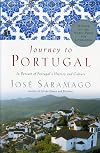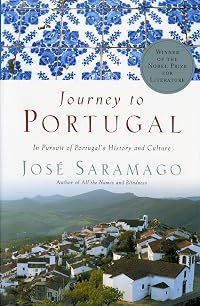
Journey to Portugal: In Pursuit of Portugal's History and Culture
by José Saramago
On This Page
Description
The Nobel Prize-winning author explores his homeland in "this monumental work, a literary hybrid" of cultural history, literary nonfiction, and travelogue (Publishers Weekly). In 1979, José Saramago decided to write a book called Journey to Portugal-and dedicated himself to obtaining the fullest meaning of his title. More than merely journeying in or through his native country, he wanted to achieve a deep encounter with it, foregoing the conventional assumptions and the routines of tourist show more guides. Instead, he scoured the country with the eyes and ears of an observer fascinated by the ancient myths and history of his people. Recording his experiences and observations across the length and breadth of Portugal, Saramago brings the country to life as only a writer of his brilliance can. Whether an inaccessible medieval fortress set on a cliff, a wayside chapel thick with cobwebs, or a grand mansion in the city, the extraordinary places of this land come alive with kings, warriors, painters, explorers, writers, saints, and sinners. Infused with the tenderness and intelligence that have become familiar to his readers, Saramago's Journey to Portugal is an ode of love for a country and its rich traditions. show lessTags
Recommendations


















Member Reviews
Nezaboravno putovanje kroz predele, istoriju i kulturu Portugalije.
Putovanje nikada nema kraj. Samo putnici imaju kraj. A čak i oni mogu produžiti putovanje u sećanju, u pamćenju, u pripovedanju. Kada je putnik seo na pesak plaže i rekao: „Nema više šta da se vidi“, znao je da nije tako. Kraj jednog putovanja tek je početak drugog. Treba videti ono što niste prvi put videli, videti ponovo ono što ste već videli, videti u proleće ono što ste videli leti, videti noću ono što ste videli danju, biti na suncu onde gde je ranije pala kiša, videti useve kako bujaju, zreo plod, pomeren kamen, senku koja ne beše tamo prethodni put. Potrebno je vratiti se starim stopama da bismo ih ponovili, i da bismo ucrtali nove puteve show more pored njih. Potrebno je ponovo započeti putovanje. Uvek.
Ova knjiga nije običan turistički vodič ili bedeker koji se nosi pod rukom, nego mnogo više od toga. Na svom putovanju kroz Portugaliju, njene skrivene kutke i viševekovnu kulturu, Žoze Saramago je išao tamo gde se uvek ide, ali i tamo kuda se ne ide gotovo nikada. Putnik ističe da nije tu kako bi davao savete, premda svojih opservacija ima napretek. Istina je, istovremeno, da će čitalac ovde naći mnogo odabranih i istančanih opisa portugalskih krajolika, ljudi, umetničke baštine i istorije ove zemlje, što je istovremeno unutrašnje putovanje ovog velikog pisca kroz sopstveni doživljaj domovine svojih predaka i savremenika.
Jedinstveno izdanje u svetu koje, umesto predgovorom, započinje putopisnim zapisom iz Portugalije našeg nobelovca Ive Andrića.
„Putovanje kroz Portugaliju je oda zemlji i njenoj bogatoj tradiciji. Samo Portugalac može da napiše ovakvu knjigu, samo Saramago može da iznedri ovakav stil. Ova knjiga je odavanje počasti zadivljujućem predelu gde se završava more a počinje zemlja.“ Henri Šin, New Statesman show less
Putovanje nikada nema kraj. Samo putnici imaju kraj. A čak i oni mogu produžiti putovanje u sećanju, u pamćenju, u pripovedanju. Kada je putnik seo na pesak plaže i rekao: „Nema više šta da se vidi“, znao je da nije tako. Kraj jednog putovanja tek je početak drugog. Treba videti ono što niste prvi put videli, videti ponovo ono što ste već videli, videti u proleće ono što ste videli leti, videti noću ono što ste videli danju, biti na suncu onde gde je ranije pala kiša, videti useve kako bujaju, zreo plod, pomeren kamen, senku koja ne beše tamo prethodni put. Potrebno je vratiti se starim stopama da bismo ih ponovili, i da bismo ucrtali nove puteve show more pored njih. Potrebno je ponovo započeti putovanje. Uvek.
Ova knjiga nije običan turistički vodič ili bedeker koji se nosi pod rukom, nego mnogo više od toga. Na svom putovanju kroz Portugaliju, njene skrivene kutke i viševekovnu kulturu, Žoze Saramago je išao tamo gde se uvek ide, ali i tamo kuda se ne ide gotovo nikada. Putnik ističe da nije tu kako bi davao savete, premda svojih opservacija ima napretek. Istina je, istovremeno, da će čitalac ovde naći mnogo odabranih i istančanih opisa portugalskih krajolika, ljudi, umetničke baštine i istorije ove zemlje, što je istovremeno unutrašnje putovanje ovog velikog pisca kroz sopstveni doživljaj domovine svojih predaka i savremenika.
Jedinstveno izdanje u svetu koje, umesto predgovorom, započinje putopisnim zapisom iz Portugalije našeg nobelovca Ive Andrića.
„Putovanje kroz Portugaliju je oda zemlji i njenoj bogatoj tradiciji. Samo Portugalac može da napiše ovakvu knjigu, samo Saramago može da iznedri ovakav stil. Ova knjiga je odavanje počasti zadivljujućem predelu gde se završava more a počinje zemlja.“ Henri Šin, New Statesman show less
“The journey is never over. Only travellers come to an end.”
Saramago ends this wonderful book on a note which is most most appropriate in the hands of a master storyteller. One really ‘feels priviledged’ in the company of a sensitive writer; sensitive to the place he belongs to, a place which is effortlessly shown to us to be more than just a place.
I had started Journey to Portugal a few months ago and I knew right away that it is just the way with this book. I literally savoured the descriptions of the country in the words of an author whose novels, almost consciously, avoid being set within definitive spaces of geography. The Journey however, is about Portugal from the eyes of the ‘traveller’.
I must start by saying that show more the experience had been unlike all others; I’d never read a travelogue from the point of view of a traveller with keen sense of imagination and appreciation of things witnessed by him.
The journey is beautifully given a start by the element of an unconditional prayer, as the traveller sets off to embark his homeland’s untouched, unventured corners.
The second part of the book (two of three) is narrated in a slightly different complexion. The ‘traveller’ is beautifully shown to have associated with the places he visits people he meets. There’s more of human emotion involved in the narration as he moves deep into the Portuguese landscape, especially going through the lowlands and reaching the soft-stone mountains of the Guarda... a thoroughly considerate traveler who is sensitive to the crumbling artifacts and cultural symbols of Portugal. … almost every page of the book captures your imagination by catching you unawares and introduces words of imagination, witness and feeling…
And it takes much longer to read this book for me than any other.. a ten-page session cannot take less than an hour; normally more.
I am wondering why the traveller’s much anticipated visit to Lisbon starts on a somewhat dejected and somber note. Here he is, ready to witness the marvel of this port city, the museums and the monasteries whose architecture takes you on a journey through various ages. But all he could muster is the bitter memories evoked by objects revealing horrendous crimes committed in the past. He is thankful to the museums for preserving some of the objects in order to testify what, according to him, is “necessary” for us to remember.
The traveller is clearly occupied with these thoughts as his indecision gives way to questioning:
“The traveler regains the street and feels lost. Where should he go now? What is he to visit? What shall he leave aside, either on purpose or because of the impossibility of seeing and commenting on everything? And anyway, what does it mean to see everything?”
~ Journey to Portugal
Undauntedly however, the traveller reaches the end of an exhilarating journey. But stops he does not. Ceaseless passion to discover once again, provides impetus to the traveller to begin again what would be nothing short of an experience. And we are all invited. show less
Saramago ends this wonderful book on a note which is most most appropriate in the hands of a master storyteller. One really ‘feels priviledged’ in the company of a sensitive writer; sensitive to the place he belongs to, a place which is effortlessly shown to us to be more than just a place.
I had started Journey to Portugal a few months ago and I knew right away that it is just the way with this book. I literally savoured the descriptions of the country in the words of an author whose novels, almost consciously, avoid being set within definitive spaces of geography. The Journey however, is about Portugal from the eyes of the ‘traveller’.
I must start by saying that show more the experience had been unlike all others; I’d never read a travelogue from the point of view of a traveller with keen sense of imagination and appreciation of things witnessed by him.
The journey is beautifully given a start by the element of an unconditional prayer, as the traveller sets off to embark his homeland’s untouched, unventured corners.
The second part of the book (two of three) is narrated in a slightly different complexion. The ‘traveller’ is beautifully shown to have associated with the places he visits people he meets. There’s more of human emotion involved in the narration as he moves deep into the Portuguese landscape, especially going through the lowlands and reaching the soft-stone mountains of the Guarda... a thoroughly considerate traveler who is sensitive to the crumbling artifacts and cultural symbols of Portugal. … almost every page of the book captures your imagination by catching you unawares and introduces words of imagination, witness and feeling…
And it takes much longer to read this book for me than any other.. a ten-page session cannot take less than an hour; normally more.
I am wondering why the traveller’s much anticipated visit to Lisbon starts on a somewhat dejected and somber note. Here he is, ready to witness the marvel of this port city, the museums and the monasteries whose architecture takes you on a journey through various ages. But all he could muster is the bitter memories evoked by objects revealing horrendous crimes committed in the past. He is thankful to the museums for preserving some of the objects in order to testify what, according to him, is “necessary” for us to remember.
The traveller is clearly occupied with these thoughts as his indecision gives way to questioning:
“The traveler regains the street and feels lost. Where should he go now? What is he to visit? What shall he leave aside, either on purpose or because of the impossibility of seeing and commenting on everything? And anyway, what does it mean to see everything?”
~ Journey to Portugal
Undauntedly however, the traveller reaches the end of an exhilarating journey. But stops he does not. Ceaseless passion to discover once again, provides impetus to the traveller to begin again what would be nothing short of an experience. And we are all invited. show less
I read this in preparation for a trip to Portugal, anticipating insight into the history and notable places scattered about the country, and it was there but most of it was a bit too detailed to be useful to me. Meaning that there was a lot of references to Portuguese history and historical figures I was not familiar with, and the author rarely offered more context, so I spent a good deal of time looking things up to learn more. Written more for someone Portuguese, and born and raised in Portugal, and familiar with that unique history. But what kept me going was the way he used language to describe his inner thoughts and impressions - it's written from the point of view of "the traveler" rather than first person. I found the use of show more language and description extraordinary, and took more notes (as quotes) than I ever have before from the thousands of books that I have read. Not sure if I am explaining this right - if this is intriguing, I would suggest reading a chapter, or a few pages, to see for yourself if it suits you. There were a few hiccups in the translations to English (for example, p 166, a salmon's "flippers"? Not fins?) but these were minor quibbles. Recommended for those that like language and unique turn of phrase. And Portugal, of course. show less
In 1979, Jose Saramago crossed the border from Spain into Northern Portugal and spent the next six months traveling in his native country, visiting churches and cathedrals and meeting people and rivers and mountains. This is the record of that journey. As an established fan of Saramago, history, geography, and travelogues, everything in this book appealed immediately. In fact, it was a dream of mine to recreate Saramago's journey to Portugal, even though I'm sure that other, much more qualified people, have already done so - and kudos to them!
This is not, in fact, a travelogue, any more than it is a personal narrative or a discussion about history or geology or making travel plans and decisions. No true journey is made up of one thing show more only, and in the sum of the parts it finds something entirely new altogether. It is that something altogether other that reached me when I read this over the span of two years. It is about interaction and observation, people and places and the distances between them, but not in any specifically cliched way. There is little sentimentality in this work, and little adventure of body unless you are someone to whom a late dinner or dark night still on the road seems filled with danger. I am such a soul and found myself nervous for the traveler's dining and sleeping arrangements as I also found myself rejoicing with him in the angels of a choir loft.
Saramago uses very specific language to describe what he sees and how he interprets it. It is not so specific as to be technical, nor is it so vague as to be merely 'beautiful' or 'rounded' or 'made of stone.' He knows what he sees and thinks about and he expects his readers to do the same. The difference between Gothic architecture and Manueline decoration do not exist merely to confound students. They exist because they describe the movement of art and culture through time, the changing desires and ethics and beliefs and influences, these all come together in one design and another and so one. It can be a barrier, if you are not familiar with the terms, as I was not (and, really, I cannot tell you the difference between the two periods I've named above, but that I know they exist and I know that they are different and I can tell you that they have different progenitors), but that barrier is easily overcome with patience and the recognition of the poetry in his descriptions.
It is not a fast read. I have tried to follow his route on a map and find that I will have to find a 1979 version in order to feel remotely successful. Although, to be honest, the most accurate map of a place is the place itself, and the only journey that I will ever take is the one that I set out on myself. It is not a chipper, uplifting feeling that lingers when the last page is turned. It is something more lasting and deeply felt: a sort of melancholy and joyfulness at the knowledge that the past exists, if you look for it, you will find something, even though it will likely not be what you thought you were looking for. show less
This is not, in fact, a travelogue, any more than it is a personal narrative or a discussion about history or geology or making travel plans and decisions. No true journey is made up of one thing show more only, and in the sum of the parts it finds something entirely new altogether. It is that something altogether other that reached me when I read this over the span of two years. It is about interaction and observation, people and places and the distances between them, but not in any specifically cliched way. There is little sentimentality in this work, and little adventure of body unless you are someone to whom a late dinner or dark night still on the road seems filled with danger. I am such a soul and found myself nervous for the traveler's dining and sleeping arrangements as I also found myself rejoicing with him in the angels of a choir loft.
Saramago uses very specific language to describe what he sees and how he interprets it. It is not so specific as to be technical, nor is it so vague as to be merely 'beautiful' or 'rounded' or 'made of stone.' He knows what he sees and thinks about and he expects his readers to do the same. The difference between Gothic architecture and Manueline decoration do not exist merely to confound students. They exist because they describe the movement of art and culture through time, the changing desires and ethics and beliefs and influences, these all come together in one design and another and so one. It can be a barrier, if you are not familiar with the terms, as I was not (and, really, I cannot tell you the difference between the two periods I've named above, but that I know they exist and I know that they are different and I can tell you that they have different progenitors), but that barrier is easily overcome with patience and the recognition of the poetry in his descriptions.
It is not a fast read. I have tried to follow his route on a map and find that I will have to find a 1979 version in order to feel remotely successful. Although, to be honest, the most accurate map of a place is the place itself, and the only journey that I will ever take is the one that I set out on myself. It is not a chipper, uplifting feeling that lingers when the last page is turned. It is something more lasting and deeply felt: a sort of melancholy and joyfulness at the knowledge that the past exists, if you look for it, you will find something, even though it will likely not be what you thought you were looking for. show less
Jose Saramago traveled throughout his native Portugal to give others a glimpse through language of what they might see. It is not easy to read because he calls himself the "traveler" throughout the narrative, making for a rather awkward third-person account. He spends a lot of time at churches, chapels, monasteries, convents, and cathedrals along the way. Another problem that I had with the book is that he began to describe things of interest and then would cut the description short while things that were less interesting were covered in more detail. I would certainly not recommend that this be anyone's primary book for a trip to Portugal, but it's okay for an armchair traveler who is more interesting in quality writing than detailed show more accounts of sights. There are a few black and white photos and section maps to help guide the armchair traveler. show less
Sort of interesting.
ed. companhia das letras, 1990, 271p., cada dura com sobrecapa, livro intacto, exceto um pequeno pntinlhamento de pó nocorte superior. ricamente ilustrado com centenas de fotografias.
Members
- Recently Added By
Lists

Books translated from Romance Languages into English
102 works; 7 members
EU Fiction: 1950-2022
223 works; 70 members
Author Information

241+ Works 53,224 Members
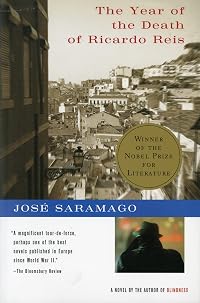
José Saramago was born on November 16, 1922. He spent most of his childhood on his parent's farm, except while attending school in Lisbon. Before devoting himself exclusively to writing novels in 1976, he worked as a draftsman, a publisher's reader, an editor, translator, and political commentator for Diario de Lisboa. He is indisputably show more Portugal's best-known literary figure and his books have been translated into more than 25 languages. Although he wrote his first novel in 1947, he waited some 35 years before winning critical acclaim for work such as the Memorial do Convento. His works include The Year of the Death of Ricardo Reis, The Stone Raft, Baltasar and Blimunda, The History of the Siege of Lisbon, The Gospel According to Jesus Christ, and Blindness. At age 75, he was awarded the Nobel Prize for Literature in 1998 for his work in which "parables sustained by imagination, compassion and irony, continually enables us to apprehend an elusory reality." He died from a prolonged illness that caused multiple organ failure on June 18, 2010 at the age of 87. (Bowker Author Biography) show less
Awards and Honors
Notable Lists
Series
Belongs to Publisher Series
Common Knowledge
- Canonical title
- Journey to Portugal: In Pursuit of Portugal's History and Culture
- Original title
- Viagem a Portugal
- Original publication date
- 1981
- Important places*
- Portugal
- Dedication
- A quem me abriu portas e mostrou caminhos
- e também em lembrança de Almeida Garrett,
mestre de viajantes.
To the one who opened doors for me and showed me the way
- and also in memory of Almeida Gerrett, master-traveller. - First words
- Nothing of the kind had occurred within the living memory of any border guard.
*Some information comes from Common Knowledge in other languages. Click "Edit" for more information.
Classifications
Statistics
- Members
- 928
- Popularity
- 28,792
- Reviews
- 13
- Rating
- (3.26)
- Languages
- 12 — Catalan, English, French, German, Italian, Norwegian (Bokmål), Norwegian, Portuguese (Portugal), Russian, Croatian, Spanish, Turkish
- Media
- Paper, Ebook
- ISBNs
- 55
- ASINs
- 10