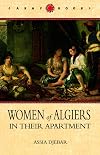
Women of Algiers in Their Apartment
by Assia Djebar
On This Page
Description
The cloth edition of Assia Djebar's Women of Algiers in Their Apartment, her first work to be published in English, was named by the American Literary Translators Association as an ALTA Outstanding Translation of the Year. Now available in paperback, this collection of three long stories, three short ones, and a theoretical postface by one of North Africa's leading writers depicts the plight of urban Algerian women who have thrown off the shackles of colonialism only to face a postcolonial show more regime that denies and subjugates them even as it celebrates the liberation of men. Denounced in Algeria for its political criticism, Djebar's book quickly sold out its first printing of 15,000 copies in France and was hugely popular in Italy. Her stylistically innovative, lyrical stories address the cloistering of women, the implications of reticence, the connection of language to oppression, and the impact of war on both women and men. The Afterword by Clarisse Zimra includes an illuminating interview with Djebar. show lessTags
Recommendations











Member Recommendations

Member Reviews
Assia Djebar's book is a set of short stories and an essay about the women of Algeria and their existence in a society that wants to keep them apart from the world, subservient to the male. It isn't the romantic formula of Western literature about the harem; these are stories of oppression, both at the hands of individual men and from two paternalistic societies: French colonial and fundamentalist Islam. More precisely, they are stories about the loss of voice and public identity, about disappearing into a private enclave whose keys are held by men. I've re-read her Overture to the book several times, an introduction in which she discusses her choice to write in French, rather than the Arabic imposed upon her country and her sex. After show more each story, going back and reading it, the words become more clear:
Arabic sounds...but always in feminine tones, uttered from lips beneath a mask...An excoriated language, from never having appeared in the sunlight, from having sometimes been intoned, declaimed, howled, dramatized, but always mouth and eyes in the dark...Words of the veiled body, language that in turn has taken the veil for so long a time.
I found the chronology of the stories interesting; they move backward. They start with the 1970s in the days of post-colonial Algeria as the country moves toward an Islamic society. They pass through the arc at whose zenith women stood relatively equal with men as guerilla fighters, able to pass the French soldiers with a flirt while carrying their bombs and guns. They end with the stories of the colonial days. In comparing the last, with their seraglios, to the first, where the female freedom fighters are deliberately forgotten, their selves dumped into insane asylums under the care of male doctors, you get a real sense that nothing really changed—only the outward form is different.
Perhaps the most surprising aspect of this book for me, given the feminist core, is the situation of men. Of course, many are simply the oppressors in these stories; she makes clear her position that the world would be a better place without them. Yet, the few men who are not the victimizers come across, themselves, as victims...and victims that are, in some ways, even more desperate: lost, alone and isolated. For, despite the subjugation of the women, both past and present, Djebar shows them bound together in a society of their own. When they are hurt or in need, it is always another woman who reaches out to ease their pain or help them understand. Shared suffering, forced seclusion and exclusion have crafted a hidden society, the world of the "apartment" or harem, which has bonds that aren't seen in the outside world.
There's a whole second level to this book, an allegory of Algeria as a woman, her true and diverse voice suppressed, first under the paternalism of a colonial power, later under the paternalism of Islam and Arabic. The language of this book is so dense and opaque that I need several readings. I've read the first story three times and have come away with something new each time.
Highly recommended. show less
Arabic sounds...but always in feminine tones, uttered from lips beneath a mask...An excoriated language, from never having appeared in the sunlight, from having sometimes been intoned, declaimed, howled, dramatized, but always mouth and eyes in the dark...Words of the veiled body, language that in turn has taken the veil for so long a time.
I found the chronology of the stories interesting; they move backward. They start with the 1970s in the days of post-colonial Algeria as the country moves toward an Islamic society. They pass through the arc at whose zenith women stood relatively equal with men as guerilla fighters, able to pass the French soldiers with a flirt while carrying their bombs and guns. They end with the stories of the colonial days. In comparing the last, with their seraglios, to the first, where the female freedom fighters are deliberately forgotten, their selves dumped into insane asylums under the care of male doctors, you get a real sense that nothing really changed—only the outward form is different.
Perhaps the most surprising aspect of this book for me, given the feminist core, is the situation of men. Of course, many are simply the oppressors in these stories; she makes clear her position that the world would be a better place without them. Yet, the few men who are not the victimizers come across, themselves, as victims...and victims that are, in some ways, even more desperate: lost, alone and isolated. For, despite the subjugation of the women, both past and present, Djebar shows them bound together in a society of their own. When they are hurt or in need, it is always another woman who reaches out to ease their pain or help them understand. Shared suffering, forced seclusion and exclusion have crafted a hidden society, the world of the "apartment" or harem, which has bonds that aren't seen in the outside world.
There's a whole second level to this book, an allegory of Algeria as a woman, her true and diverse voice suppressed, first under the paternalism of a colonial power, later under the paternalism of Islam and Arabic. The language of this book is so dense and opaque that I need several readings. I've read the first story three times and have come away with something new each time.
Highly recommended. show less
This is a collections of novellas and shorter stories that works almost as a sociological document. Oh, it's beautiful ("artistic"), but very much exploratory in an almost scientific way.
Djebar is after the memory, history, the words and very voices of women. Algerian women (and, specifically, Muslim), silenced for centuries. There is a trace of Berber otherness, matrilinearity (interesting that Djebar, like Mernissi, has Berber heritage). But, overall, women are suffocated. They communicate quietly, in whispers and murmurs (woman talking is most frequently expressed as "she murmurs"), in fragments and wisps of speech.
Compare to ancient Greek shutting up of women--this is the patriarchal Mediterranean symbolically killing the woman, show more choking the feminine, over and over again.
This fragmented speech can be hard to take and follow. Between themselves, these women are invariably a small group of relatives, sentenced to a cloistered life in a house doing housework and raising children. So communication is rooted in a common experience and shared context. Their muted words overlap and continue each other.
There's a movie of Djebar's called The Nouba of the Women of Mount Chenoua I'd seen before reading anything of hers, that seems deeply connected to this book. It too has a folkloric-cum-historical aim, and the "nouba", a symphonic musical form, is explicitly used to describe the speech of the female characters.
(You can watch the movie, something of a rarity, on Dailymotion. I had borrowed the DVD from the library but the video quality is the same, not great. Presumably it hasn't been re-released in a better copy. Only in French, sorry, with French subtitles for Arabic. La nouba des femmes du mont Chenoua de Assia Djebbar 1/2.)
There are women who rebel. The French colonisation is almost convenient as a moment where the fight for national liberation can coincide with women's emancipation, surge into the street, grasping of political power. At least this is the hope--running out the French will result in a new society with new rules and new people behaving differently. Algerian women played an important role in the anti-colonial fight. And they suffered horribly, imprisoned, tortured, raped.
Did the new country turn out to be what they hoped or were these sacrifices taken as all female sacrifices, for granted?
In the very important Afterword Djebar ends with the caution that the "harem" may be gone but the structure of the harem still imposes its laws on women: the laws of invisibility and silence. show less
Djebar is after the memory, history, the words and very voices of women. Algerian women (and, specifically, Muslim), silenced for centuries. There is a trace of Berber otherness, matrilinearity (interesting that Djebar, like Mernissi, has Berber heritage). But, overall, women are suffocated. They communicate quietly, in whispers and murmurs (woman talking is most frequently expressed as "she murmurs"), in fragments and wisps of speech.
Compare to ancient Greek shutting up of women--this is the patriarchal Mediterranean symbolically killing the woman, show more choking the feminine, over and over again.
This fragmented speech can be hard to take and follow. Between themselves, these women are invariably a small group of relatives, sentenced to a cloistered life in a house doing housework and raising children. So communication is rooted in a common experience and shared context. Their muted words overlap and continue each other.
There's a movie of Djebar's called The Nouba of the Women of Mount Chenoua I'd seen before reading anything of hers, that seems deeply connected to this book. It too has a folkloric-cum-historical aim, and the "nouba", a symphonic musical form, is explicitly used to describe the speech of the female characters.
(You can watch the movie, something of a rarity, on Dailymotion. I had borrowed the DVD from the library but the video quality is the same, not great. Presumably it hasn't been re-released in a better copy. Only in French, sorry, with French subtitles for Arabic. La nouba des femmes du mont Chenoua de Assia Djebbar 1/2.)
There are women who rebel. The French colonisation is almost convenient as a moment where the fight for national liberation can coincide with women's emancipation, surge into the street, grasping of political power. At least this is the hope--running out the French will result in a new society with new rules and new people behaving differently. Algerian women played an important role in the anti-colonial fight. And they suffered horribly, imprisoned, tortured, raped.
Did the new country turn out to be what they hoped or were these sacrifices taken as all female sacrifices, for granted?
In the very important Afterword Djebar ends with the caution that the "harem" may be gone but the structure of the harem still imposes its laws on women: the laws of invisibility and silence. show less
Djebar's short story collection is a subversive response to Eugène Delacroix's orientalist painting of the same name and to the patriarchical silencing of women after the Algerian war. Each story stands on their own, though the overarching theme is about the sacrifice women have made to gain independence from France's oppression, and how the very nation they helped free repaid them by hiding and silencing them. The whole collection is absolutely devastating.
I enjoyed some stories more than others and there was one that I still haven't fully wrapped my head around. But if you're able to find this book, i urge you to get it. The two longest stories are outstanding works of art and Djebar's postface is an excellent, post-colonial show more analysis of the painting by Delacroix.
The eponymous story is my favorite for its well-edited, cinematic images and surrealism. I went back to re-read it after finishing the book and noticed things I hadn't picked up on the first time (e.g., it seems like four characters are re-imagined versions of the four women in Delacroix's painting). I don't usually get attached to short stories because I feel that length is needed to really expand character, but this was one that I felt deep in my soul. show less
I enjoyed some stories more than others and there was one that I still haven't fully wrapped my head around. But if you're able to find this book, i urge you to get it. The two longest stories are outstanding works of art and Djebar's postface is an excellent, post-colonial show more analysis of the painting by Delacroix.
The eponymous story is my favorite for its well-edited, cinematic images and surrealism. I went back to re-read it after finishing the book and noticed things I hadn't picked up on the first time (e.g., it seems like four characters are re-imagined versions of the four women in Delacroix's painting). I don't usually get attached to short stories because I feel that length is needed to really expand character, but this was one that I felt deep in my soul. show less
"For Arabic women I see only one single way to unblock everything: talk, talk without stopping, about yesterday and today, talk among ourselves, in all the women's quarters, the traditional ones as well as those in the housing projects. Talk among ourselves and look. Look outside, look outside the walls and the prisons! ... The Woman as look and the Woman as voice" (p. 50)
Assia Djebar wrote this collection of feminist short fiction to bring forth the voice of Algerian women, repressed by colonialism and partriarchal culture. The stories and one essay were written separately over a period of many years, and published in 1980. The book's title comes from a Delacroix painting depicting a harem, and symbolizing the violation of Algerian show more women.
I enjoyed a couple of these stories, especially the title work and "The Dead Speak," about the death of an old woman. However, for the most part I had difficulty understanding the deeper meaning and symbolism. An afterword offered some explanation but on the whole this seems to be a book that would best be explored with the help of an expert in the field. show less
Assia Djebar wrote this collection of feminist short fiction to bring forth the voice of Algerian women, repressed by colonialism and partriarchal culture. The stories and one essay were written separately over a period of many years, and published in 1980. The book's title comes from a Delacroix painting depicting a harem, and symbolizing the violation of Algerian show more women.
I enjoyed a couple of these stories, especially the title work and "The Dead Speak," about the death of an old woman. However, for the most part I had difficulty understanding the deeper meaning and symbolism. An afterword offered some explanation but on the whole this seems to be a book that would best be explored with the help of an expert in the field. show less
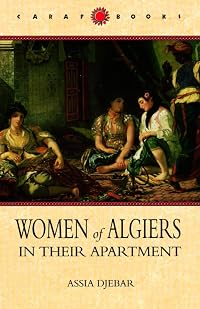
The title of this collection refers to a painting by Eugene Delacroix, which was allegedly inspired by a brief visit inside the harem of a home in Morocco. The painting and the stories in this collection depict the emotional and intellectual state of women hidden within walls and the veil. It is also a collection comprised of haunting, evocative prose which stirs the deepest aspect of the reader's self. The yearnings, fears, coping mechanisms, faith, belief, and suffering of the women in these stories will forever be imprinted in my heart. I have rarely read such a marvelous collection
Assia Djebar has written an exquisite collage of women’s stories from the Algerian civil war and its aftermath.
In “Overture”, Djebar describes her book’s goal and the hidden voices of women she is trying to capture.
These stories, a few frames of reference on a journey of listening, from 1958 to 1978.
Fragmented, remembered, reconstituted conversations…Fictious accounts, faces and murmurings of a nearby imaginary, a past-present that rebels against the intrusion of a new abstraction.
I could say: ”stories translated from…,” but from which language? From the Arabic? From colloquial Arabic or from feminine; one might just as well call it underground Arabic…
Arabic sounds—Italian, Afghan, Berber, or Bengali—and why show more not, but always in feminine tones, uttered from lips beneath a mask…
Words of the veiled body, language that in turn has taken the veil for so long a time.
Here, then, is a listening in…
The first and title story is about Algerian women of various backgrounds who still bear physical and psychological scars of the brutal Algerian war against French colonialization. There is the educated surgeon’s wife seeking to help her French childhood friend back from a suicide attempt while still dealing with her own adolescent years spent in prison and the silence she always carries. And the old, wrinkled woman who carries water at the public bath recalling what she has suffered and lost in the course of her life. The second section portrays the war years themselves with women exiled, imprisoned or left behind when the men went to fight. Both sections convey how war affects women in particular ways, often differently than it affects men.
Read more on my blog: me, you and books
http://mdbrady.wordpress.com/2012/02/17/women-of-algiers-in-their-apartment-by-a... show less
In “Overture”, Djebar describes her book’s goal and the hidden voices of women she is trying to capture.
These stories, a few frames of reference on a journey of listening, from 1958 to 1978.
Fragmented, remembered, reconstituted conversations…Fictious accounts, faces and murmurings of a nearby imaginary, a past-present that rebels against the intrusion of a new abstraction.
I could say: ”stories translated from…,” but from which language? From the Arabic? From colloquial Arabic or from feminine; one might just as well call it underground Arabic…
Arabic sounds—Italian, Afghan, Berber, or Bengali—and why show more not, but always in feminine tones, uttered from lips beneath a mask…
Words of the veiled body, language that in turn has taken the veil for so long a time.
Here, then, is a listening in…
The first and title story is about Algerian women of various backgrounds who still bear physical and psychological scars of the brutal Algerian war against French colonialization. There is the educated surgeon’s wife seeking to help her French childhood friend back from a suicide attempt while still dealing with her own adolescent years spent in prison and the silence she always carries. And the old, wrinkled woman who carries water at the public bath recalling what she has suffered and lost in the course of her life. The second section portrays the war years themselves with women exiled, imprisoned or left behind when the men went to fight. Both sections convey how war affects women in particular ways, often differently than it affects men.
Read more on my blog: me, you and books
http://mdbrady.wordpress.com/2012/02/17/women-of-algiers-in-their-apartment-by-a... show less
12/21/07 not finished yet but here are some of my thoughts posted elsewhere on LT: I'm well into [Women of Algiers in their Apartment] despite the amazing amount of distractions the season brings (and the usual distractions), but the women's voices in this book are rich and come from that same deep place in all of us. More than a single narrative, the book jumps back and forth in time illuminating the lives of Algerian women during and after colonial rule, those who were dissidents and prostitutes...various ideas of freedom and the veil come through the voices. There are included divans which seem to be prose poems - although it seems 'divan' can mean a 'book of poems' or a 'public audience room' in Arabic/Persian - either seems show more appropriate. It feels a bit fragmented - perhaps it is supposed to - but I already feel I should go back and read what I have already read again - which is NOT a bad thing. show less
Members
- Recently Added By
Lists

Women in Islam
120 works; 8 members
Author Information

Assia Djebar was born Fatima-Zohra Imalayan in Cherchell, Algeria on June 30, 1936. She read history at the Sorbonne in Paris, and, after teaching at Tunis and Rabat universities, emigrated to France with her husband and children. Her first novel, La Soif (The Mischief), was published in 1957. She wrote more than 15 novels during her lifetime show more including Algerian White, So Vast the Prison, The Tongue's Blood Does Not Run Dry, and The Children of the New World. She was also a playwright and filmmaker. In 2005, she became the fifth woman to be elected to the Académie Française. She received numerous awards for her work including the International Prize of Palmi, the Peace Prize of the Frankfurt Book Fair, the International Critics' Prize at the Venice Biennale for the film La Nouba des Femmes du Mont Chenoua, and the International Literary Neustadt Prize. She died on February 7, 2015 at the age of 78. (Bowker Author Biography) show less
Some Editions
Series
Belongs to Publisher Series
Common Knowledge
- Canonical title
- Women of Algiers in Their Apartment
- Original title
- Femmes d'Alger dans leur appartement
- Original publication date
- 1980
- Important places*
- Algerije
- Original language
- French
*Some information comes from Common Knowledge in other languages. Click "Edit" for more information.
Classifications
Statistics
- Members
- 252
- Popularity
- 129,071
- Reviews
- 11
- Rating
- (3.76)
- Languages
- English, French, German, Italian
- Media
- Paper
- ISBNs
- 14
- ASINs
- 2