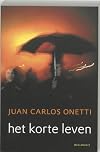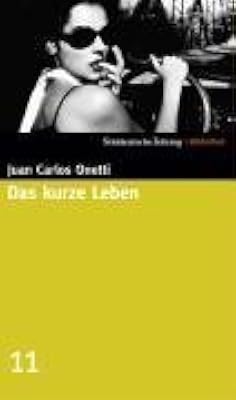
A Brief Life
by Juan Carlos Onetti
On This Page
Description
Written in 1950, A Brief Life is the first novel to feature Onetti's mythical town of Santa Mar'a. His protagonist Brausen eavesdrops on the conversation of his neighbours, a husband and wife, imagining their gestures, their expressions. Brausen lives with his wife, who has undergone major surgery after being diagnosed with breast cancer. To compensate for this physical void which stalls their caresses, Brausen imagines stories: of Santa Mar'a, and of a doctor named D'az Grey. But he not show more only wishes to imagine himself as someone else, he also seeks release from himself and from the world he knows. He leads many lives, some real and some fantastic, in order to experience a moment of psychic weightlessness - a ?brief life'. show lessTags
Recommendations























Member Reviews
I had been trying to obtain a copy of this book for a long time, and was thrilled when I found it online for less than two bucks, with free shipping to boot (even if I had to re-glue the spine and tape it together in order to get it into readable condition). I have worked my way backward with Onetti, beginning with his last book, Cuando ya no importe (Past Caring) and continuing on to books like El Astillero (The Shipyard), Dejemos hablar al viento (Let the Wind Speak) and Juntacadáveres (Bodysnatchers). This has, admittedly, been a very strange way to proceed. These books have all taken place in and around the fictitious town of Santa María, situated on the banks of a river and with a nearby settlement known as la colonia Suiza (The show more Swiss colony). Santa María is invented in La vida breve by the protagonist, Juan María Brausen, who dreams it up as a way to make some money off of a movie script and maneuvers the characters in his preliminary sketches of Santa María in ways that parallel his own life. The chapters in La vida breve alternate between three worlds: Brausen´s life and his interactions with his wife, Gertrudis (who is in the process of leaving him) and his friend Stein; the world of Santa María where the doctor Díaz Gray meets Elena Sala, who comes to him for prescriptions for morphine and ends up taking him along with her in a search for a missing Englishman; and the apartment next door, where Brausen has introduced himself under a pseudonym, Arce, to his new neighbor la Queca, a prostitute with whom he enters into a strange and abusive relationship. There are similarities between Brausen and his fictional and half-fictional selves, and as the book continues, the lines blur even more as he exerts his will over Díaz Gray in Santa María, while completing a journey as Arce that is similar Díaz Gray´s trip with Elena Sala.
La vida breve is fascinating because it shifts the responsibility for the creation of Santa María from Onetti to one of his own fictional creations, and documents the way that this world came to be. I wonder how much Brausen is a reflection of Onetti´s own self, making this book a documentation of his own motivations in writing and his desires to liberate himself from everyday life through the creation of characters and situations that reflect his own world and the things that he both wants to do and has done. It´s interesting because Brausen creates alter egos that do and want to do things that he himself is not necessarily capable of doing (he fantasizes about murdering la Queca, for example), and his life as Arce as well as his writing about Díaz Gray allow him to explore his dark fantasies. I wonder how much Onetti, in the characters he creates, is doing the same thing, examining his fears and the dark corners of his world and creating portraits of men that are like him in many ways. While reading a book where three different stories are connected and interwoven, I also enjoyed thinking about how all three were in turn connected with the author himself. It is an interesting web, with Onetti sitting in Montevideo imagining Brausen sitting in Buenos Aires, who in turn is imagining Santa María into being.
The world of Santa María is blurry, the characters are hardly ever sober, and they are somewhere between depression, despair, and the point where life doesn´t matter to them any more as they look back on what they have and haven´t accomplished. His books present a sufficiently pessimistic and somber view of individual achievement and motivation for my tastes. They are also detailed in a way that makes it tantalizingly possible to locate Santa María geographically (somewhere along the Río de la Plata, somewhere in central to northern Uruguay, somewhere not too far from Buenos Aires but close to a day´s trip) and imagine it in relation to places that I have been, even though it´s not a real place and its streets and plazas can´t be defined by looking at a map. Finally, I like that the stories of Díaz Gray, Larsen, Brausen, and the other characters that make up (and in the case of Brausen, create) Santa María, are interesting and compelling portraits of individuals and paint a specific and difficult reality, without aspirations to make overarching statements about Uruguay or Latin America, or propel greater thematic designs. I found an interesting article about Onetti, and it contained a quote by a critic in a review of the English translation of El Astillero (The Shipyard), calling it “a graphic, ominous symbol of Uruguayan decay.” Onetti´s reaction was that he had not written a novel of airy symbolism but instead about the failures of one particular man. I enjoy stories about the failures of particular men and women, and have enjoyed reading a few of Onetti´s books side by side with books by Camus and Sartre this year, because of the similarities in their examinations of individuals and existence. It makes sense that Onetti would be considered a Latin American existentialist, and that his work would be as relatable to the existentialists as to his Latin American peers.
Oh, and here´s the article about Juan Carlos Onetti:
http://blogs.monografias.com/sistema-limbico-neurociencias/2010/04/18/meet-juan-... show less
La vida breve is fascinating because it shifts the responsibility for the creation of Santa María from Onetti to one of his own fictional creations, and documents the way that this world came to be. I wonder how much Brausen is a reflection of Onetti´s own self, making this book a documentation of his own motivations in writing and his desires to liberate himself from everyday life through the creation of characters and situations that reflect his own world and the things that he both wants to do and has done. It´s interesting because Brausen creates alter egos that do and want to do things that he himself is not necessarily capable of doing (he fantasizes about murdering la Queca, for example), and his life as Arce as well as his writing about Díaz Gray allow him to explore his dark fantasies. I wonder how much Onetti, in the characters he creates, is doing the same thing, examining his fears and the dark corners of his world and creating portraits of men that are like him in many ways. While reading a book where three different stories are connected and interwoven, I also enjoyed thinking about how all three were in turn connected with the author himself. It is an interesting web, with Onetti sitting in Montevideo imagining Brausen sitting in Buenos Aires, who in turn is imagining Santa María into being.
The world of Santa María is blurry, the characters are hardly ever sober, and they are somewhere between depression, despair, and the point where life doesn´t matter to them any more as they look back on what they have and haven´t accomplished. His books present a sufficiently pessimistic and somber view of individual achievement and motivation for my tastes. They are also detailed in a way that makes it tantalizingly possible to locate Santa María geographically (somewhere along the Río de la Plata, somewhere in central to northern Uruguay, somewhere not too far from Buenos Aires but close to a day´s trip) and imagine it in relation to places that I have been, even though it´s not a real place and its streets and plazas can´t be defined by looking at a map. Finally, I like that the stories of Díaz Gray, Larsen, Brausen, and the other characters that make up (and in the case of Brausen, create) Santa María, are interesting and compelling portraits of individuals and paint a specific and difficult reality, without aspirations to make overarching statements about Uruguay or Latin America, or propel greater thematic designs. I found an interesting article about Onetti, and it contained a quote by a critic in a review of the English translation of El Astillero (The Shipyard), calling it “a graphic, ominous symbol of Uruguayan decay.” Onetti´s reaction was that he had not written a novel of airy symbolism but instead about the failures of one particular man. I enjoy stories about the failures of particular men and women, and have enjoyed reading a few of Onetti´s books side by side with books by Camus and Sartre this year, because of the similarities in their examinations of individuals and existence. It makes sense that Onetti would be considered a Latin American existentialist, and that his work would be as relatable to the existentialists as to his Latin American peers.
Oh, and here´s the article about Juan Carlos Onetti:
http://blogs.monografias.com/sistema-limbico-neurociencias/2010/04/18/meet-juan-... show less
So, here in Canada a few weeks ago we had this guy called Jian Ghomeshi who was a public radio host and pillar of the liberal Canadian establishment that has been largely gutted over the last decade by the Harper government. He was popular and helping prop up our CBC and for that reason a lot of people had a lot invested in him emotionally. And then the CBC let him go and he put out this weird statement that it was because of his consensual sex practices and that a lot of people might find them disturbing but this is Canada and "the state has no place in the bedrooms of the nation" (-Pierre Trudeau). And a lot of people swallowed Jian's "sexual preference is a human right" schtick hook line and sinker, only there was this weird thing show more where he said he was being persecuted by a "jilted ex" and that seemed a bit defensive for our brave boy but before we could figure out what was up it all came out anyway--he was beating up women and sexually assaulting them, like, a lot of women, like, for years. And two of the many ageless lessons we learned again out of that were:
1) never trust the guy who jumps out in front of allegations to try to gain control of the narrative; and
2) even though we know that rape isn't something that only happens in back alleys, and that misogyny and power and lust for skin colonize our minds in awful ways and none of us ("us" meaning men. I speak here of my poor old reactionary gender with its vicious sense of entitlement and overdetermined sense of self and desperate need to be a hero and be strong and desired) none of us is blameless at least in the sense of skirting lines we didn't mean to skirt or being tempted to skirt lines we thankfully didn't end up skirting, even though all that, guys who get called out on this shit never ever own up that what they did was wrong. Jian--and this detail has sat with me queasily so skip to the next paragraph if you wanna--before he beat up the women would turn his teddy bear to face the wall and say "Big Ears Teddy shouldn't see this." How sick and sad? Their minds are riddled with walls for hiding and mirrors for fracturing and they have exactly as many selves as they need to.
And I mean, fuck Jian, but not to pick on Jian. This week it's Bill Cosby. The other day it was Jimmy Savile, Woody Allen, whoever man. And the thing of it is is that it's always the male abuser's voice that gets heard first and loudest and longest in these things. Cosby's voice drowned out his victims' for 45 years.
So let us move on to consider Juan Carlos Onetti's A Brief Life. This is an extraordinary book, written with passing craft (especially craft for crafting epigrammatic sentences), that interweaves and smear-blends and shell-games the real and unreal on you in that way that real childhood-streetlight-type readers-for-love I think with few exceptions crave. Onetti was not only brilliant but also a principled intellectual of that mid-twentieth-century Latin American imprisoned-under-the-dictatorship mould. He was our kinda guy. This book is about Brausen, a middle-aged, advertising copywriter who is cracking up in his bad romance and writing a psychosexual film script and pretending he's someone he's not when he visits the prostitute next door. Brausen is a twitchy, loss-of-vigour-fearing, afraid-of-the-body kind of guy. He has a bro who takes him to party with women he finds repugnant and then he goes home to other women he finds repugnant. He reminds me a bit of Alexander Theroux's Eugene Eyestones written by someone with an iota of insight who recognizes that Braustones is a budding psychotic.
I'm sorry, I am, to raise the spectre of magic realism in a review of a South American writer, but this book often has a grimy noirish irrealis thing that is intoxicating and draws you in; as my friend Rick Harsch said in our discussion thread, "sentences sinuous with despair." Like being kind of drunk at night in a place where you don't speak the language and someone you're not sure if you trust is leading you on from bodega to street corner and you don't know why. It opens up into a few glorious set pieces, like when a Dostoevskian bishop appears to give us a spirited sermon on "the weak desperate man," whose desperation is "pure," and the strong, impure desperate man. Basically, the one who gives in and lives in despair versus the one who suffers infinitely more because he cradles a flicker of hope, but there's more to it than that. The weak desperate man reaches out to friends, to Lethery of whatever easeful kind; "the strong one can laugh, can walk in the world without involving others in his desperation, because he knows he must not expect help from men or from his everyday life. He, without knowing it, is separated from his desperation; without realizing it, he awaits the moment when he will be able to look it in the eye and kill it or die." And again: "I applaud the courage of he who accepts each and every one of the laws of a game he did not invent and was not asked if he wants to play." This is the sort of existentialism that we need splashed in our face now and then.
Brausen needs it too, although because he loves and depends on women so abjectly he ill-uses it, mistakes for freedom the freedom to beat a woman to death. And this is the indigestible lump: the whole narrative is controlled by him and he gets extraordinary pseudo-authorial powers to do it and escape not only from punishment (that's just verisimilitude) but even from reality at the end, dancing off into a surreal adventure story in a Madame Pompadour mask with his bros. He speaks with multiple masterful male voices, strong enough even to knit together his obviously troubled psyche for most of the book, and the woman he kills as "Arce," and the woman whose breast is filleted to power the narrative by kicking off his madness as "Brausen," and the woman whose role is masturbatory fantasy for his creepy doctor persona "Díaz Grey" don't get a single real word in edgewise. They are plot points, their suffering is that of the comic-book "girlfriend in the freezer." And I salute Onetti's talent and acknowledge his right to write the book that is within him and not some other book, but that's why I don't love A Brief Life. I think if you're one of those people who has a deep love for Ghomeshi's music (I wouldn't subscribe to "deep love" myself, but I did have a soft spot for Moxy Früvous, his early nineties a capella group) or Manhattan or The Cosby Show, it might be time to let it go too, because, like, those guys kind of lost the right to tell stories. Onetti is writing from a different era and I will not go that far, but I don't think my discomfort with this book is the kind that really needs overcoming. show less
1) never trust the guy who jumps out in front of allegations to try to gain control of the narrative; and
2) even though we know that rape isn't something that only happens in back alleys, and that misogyny and power and lust for skin colonize our minds in awful ways and none of us ("us" meaning men. I speak here of my poor old reactionary gender with its vicious sense of entitlement and overdetermined sense of self and desperate need to be a hero and be strong and desired) none of us is blameless at least in the sense of skirting lines we didn't mean to skirt or being tempted to skirt lines we thankfully didn't end up skirting, even though all that, guys who get called out on this shit never ever own up that what they did was wrong. Jian--and this detail has sat with me queasily so skip to the next paragraph if you wanna--before he beat up the women would turn his teddy bear to face the wall and say "Big Ears Teddy shouldn't see this." How sick and sad? Their minds are riddled with walls for hiding and mirrors for fracturing and they have exactly as many selves as they need to.
And I mean, fuck Jian, but not to pick on Jian. This week it's Bill Cosby. The other day it was Jimmy Savile, Woody Allen, whoever man. And the thing of it is is that it's always the male abuser's voice that gets heard first and loudest and longest in these things. Cosby's voice drowned out his victims' for 45 years.
So let us move on to consider Juan Carlos Onetti's A Brief Life. This is an extraordinary book, written with passing craft (especially craft for crafting epigrammatic sentences), that interweaves and smear-blends and shell-games the real and unreal on you in that way that real childhood-streetlight-type readers-for-love I think with few exceptions crave. Onetti was not only brilliant but also a principled intellectual of that mid-twentieth-century Latin American imprisoned-under-the-dictatorship mould. He was our kinda guy. This book is about Brausen, a middle-aged, advertising copywriter who is cracking up in his bad romance and writing a psychosexual film script and pretending he's someone he's not when he visits the prostitute next door. Brausen is a twitchy, loss-of-vigour-fearing, afraid-of-the-body kind of guy. He has a bro who takes him to party with women he finds repugnant and then he goes home to other women he finds repugnant. He reminds me a bit of Alexander Theroux's Eugene Eyestones written by someone with an iota of insight who recognizes that Braustones is a budding psychotic.
I'm sorry, I am, to raise the spectre of magic realism in a review of a South American writer, but this book often has a grimy noirish irrealis thing that is intoxicating and draws you in; as my friend Rick Harsch said in our discussion thread, "sentences sinuous with despair." Like being kind of drunk at night in a place where you don't speak the language and someone you're not sure if you trust is leading you on from bodega to street corner and you don't know why. It opens up into a few glorious set pieces, like when a Dostoevskian bishop appears to give us a spirited sermon on "the weak desperate man," whose desperation is "pure," and the strong, impure desperate man. Basically, the one who gives in and lives in despair versus the one who suffers infinitely more because he cradles a flicker of hope, but there's more to it than that. The weak desperate man reaches out to friends, to Lethery of whatever easeful kind; "the strong one can laugh, can walk in the world without involving others in his desperation, because he knows he must not expect help from men or from his everyday life. He, without knowing it, is separated from his desperation; without realizing it, he awaits the moment when he will be able to look it in the eye and kill it or die." And again: "I applaud the courage of he who accepts each and every one of the laws of a game he did not invent and was not asked if he wants to play." This is the sort of existentialism that we need splashed in our face now and then.
Brausen needs it too, although because he loves and depends on women so abjectly he ill-uses it, mistakes for freedom the freedom to beat a woman to death. And this is the indigestible lump: the whole narrative is controlled by him and he gets extraordinary pseudo-authorial powers to do it and escape not only from punishment (that's just verisimilitude) but even from reality at the end, dancing off into a surreal adventure story in a Madame Pompadour mask with his bros. He speaks with multiple masterful male voices, strong enough even to knit together his obviously troubled psyche for most of the book, and the woman he kills as "Arce," and the woman whose breast is filleted to power the narrative by kicking off his madness as "Brausen," and the woman whose role is masturbatory fantasy for his creepy doctor persona "Díaz Grey" don't get a single real word in edgewise. They are plot points, their suffering is that of the comic-book "girlfriend in the freezer." And I salute Onetti's talent and acknowledge his right to write the book that is within him and not some other book, but that's why I don't love A Brief Life. I think if you're one of those people who has a deep love for Ghomeshi's music (I wouldn't subscribe to "deep love" myself, but I did have a soft spot for Moxy Früvous, his early nineties a capella group) or Manhattan or The Cosby Show, it might be time to let it go too, because, like, those guys kind of lost the right to tell stories. Onetti is writing from a different era and I will not go that far, but I don't think my discomfort with this book is the kind that really needs overcoming. show less
I think it would be suitable to add a subtitle A Brief Life; and not a Happy One, as Onetti takes his readers deep into existential despair. I came away with the impression that I had read a book that reached deep into the mind of it's author. All the characters of the novel are projections, we know that some of them don't exist because Brausen (the main character in part one of the novel) tells us that he is writing a film script in which Dr Diaz Grey and Elena Sala are the principle characters, however in part two of the book Brausen appears to get subsumed into the story of Diaz Grey and Elena and the reader never gets to find out conclusively the identity of the first person narrator. I came to the conclusion that there are two show more major themes to this novel; one is the act of writing novels and authorial intentions and the other is the disintegration or descent into madness experienced by the protaganist (whoever he is): the only thing I am certain about is that it is a He. If all this sounds confusing then yes it is, but the confusion is expressed in such fine prose that I could live with the uncertainty. It is the sort of book you carry on reading in the hope that all will be revealed in the final pages, but you know deep down that this will not be the case.
The novel starts with the narrator alone in his apartment reflecting on his relationship with his partner Gertrudis, while listening to the sounds coming from the apartment next door. He is Brausen in the first part of the novel and is writing the film script about Dr Diaz Grey and his adventures with the mysterious Elena Sala in the imaginary town of Santa Maria. The narrator is soon projecting himself into the story of the events in his adjoining apartment and invents a character Arce who will form an abusive relationship with La Queca the prostitute living next door. There are therefore three major strands of the story; Brausens relationship with Gertrudis and his difficulties at work which he knows will lead to him being fired, the drama of Arce and La Queca that plays itself through the walls and then in the head of the narrator, and then the story of Diaz Grey, Elena Sala and their search for the English man. Parallels appear in the three story strands, time shifts come and go and the point of view slips from first person to third person and even into second person.
Great novels can start with a great first sentence that resounds throughout the reading of the book and Onetti's first sentence is a corker:
"Crazy World," the woman said once again, as if quoting, as if she were translating.
The idea of a crazy world is central to the story about La Queca, she imagines that she hears voices in her apartment, voices that drive her crazy, those voices are heard by Brausen next door, they are acknowledged by Arce and of course the reader is pretty certain that they are in the head of the narrator.
I, the bridge between Brausen and Arce, needed to be alone, understanding that isolation was essential in order to be born again, that simply being alone, without will or impatience, I would come to exist and recognise myself. Thrown across my bed and hearing La Queca's life with a wall between us, or next to her, horizontal and impassive under the monologues she unleashed and paraded through the room, I kept on waiting - indeed, I thought I had waited all my life without knowing it, and that if I had been conscious of this wait I would have shortened it, perhaps by years - and I preserved also the abandonment, the slightly feminine and shameful sensation that someone was providing for me. I ignored the objects and began to suspect that "they" were the ones mutilating the air of the apartment so as to harm me.
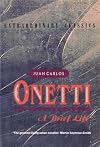
Onetti's characters certainly live in a world that is crazy and real at the same time. Much of the prose is weighed down by the reality of life in a 1950's Latin American country, that is not to say that it is the prose itself that is weighed down, because Onetti continually delights, surprises and entrances us with purple patches that make the reader reflect on thoughts that are original and pertinent. It is a book where the reader could pick any of the short chapters at random, read them in isolation and be bowled over by the excellence of the writing. Juan Carlos Onetti was born in Uruguay in 1909 and [A brief Life] was published in 1950 and translated into English in 1976. My version was translated by Hortense Carpentier in the "Extraordinary Classics" edition and I think the term extraordinary classic is most apt to describe this novel. It perhaps needs more than one reading and I may well come back to it. A strong 4 star read. show less
The novel starts with the narrator alone in his apartment reflecting on his relationship with his partner Gertrudis, while listening to the sounds coming from the apartment next door. He is Brausen in the first part of the novel and is writing the film script about Dr Diaz Grey and his adventures with the mysterious Elena Sala in the imaginary town of Santa Maria. The narrator is soon projecting himself into the story of the events in his adjoining apartment and invents a character Arce who will form an abusive relationship with La Queca the prostitute living next door. There are therefore three major strands of the story; Brausens relationship with Gertrudis and his difficulties at work which he knows will lead to him being fired, the drama of Arce and La Queca that plays itself through the walls and then in the head of the narrator, and then the story of Diaz Grey, Elena Sala and their search for the English man. Parallels appear in the three story strands, time shifts come and go and the point of view slips from first person to third person and even into second person.
Great novels can start with a great first sentence that resounds throughout the reading of the book and Onetti's first sentence is a corker:
"Crazy World," the woman said once again, as if quoting, as if she were translating.
The idea of a crazy world is central to the story about La Queca, she imagines that she hears voices in her apartment, voices that drive her crazy, those voices are heard by Brausen next door, they are acknowledged by Arce and of course the reader is pretty certain that they are in the head of the narrator.
I, the bridge between Brausen and Arce, needed to be alone, understanding that isolation was essential in order to be born again, that simply being alone, without will or impatience, I would come to exist and recognise myself. Thrown across my bed and hearing La Queca's life with a wall between us, or next to her, horizontal and impassive under the monologues she unleashed and paraded through the room, I kept on waiting - indeed, I thought I had waited all my life without knowing it, and that if I had been conscious of this wait I would have shortened it, perhaps by years - and I preserved also the abandonment, the slightly feminine and shameful sensation that someone was providing for me. I ignored the objects and began to suspect that "they" were the ones mutilating the air of the apartment so as to harm me.
Onetti's characters certainly live in a world that is crazy and real at the same time. Much of the prose is weighed down by the reality of life in a 1950's Latin American country, that is not to say that it is the prose itself that is weighed down, because Onetti continually delights, surprises and entrances us with purple patches that make the reader reflect on thoughts that are original and pertinent. It is a book where the reader could pick any of the short chapters at random, read them in isolation and be bowled over by the excellence of the writing. Juan Carlos Onetti was born in Uruguay in 1909 and [A brief Life] was published in 1950 and translated into English in 1976. My version was translated by Hortense Carpentier in the "Extraordinary Classics" edition and I think the term extraordinary classic is most apt to describe this novel. It perhaps needs more than one reading and I may well come back to it. A strong 4 star read. show less
Unconscious Sexism, Unnoticed Cruelty
This is a tone poem, a mood piece, which is what excuses the otherwise irresponsible quotation from the Sunday Telegraph on the back cover: “The Graham Greene of Uruguay.”
(This formula, “The X of Y,” needs to be banished from criticism and history, both because it means the country Y is ranked behind the country of author X, and because it drains the interest from the new author by explaining her work in terms of someone else. I could say that the Uruguayan painter Juan Manuel Blanes (1830-1901) is “the Ingres of Uruguay,” but that would only make his Retrato de Doña Carlota Ferreira—a canonical starting point of Uruguayan modernism—into a comic object.)
A Brief Life is about a man show more whose companion is dying, and his attempts to escape that tragedy by creating and imagining different lives for himself. The parallel between the main character’s attempts and Onetti’s own is very close, and so the novel is modernist in the sense that it is clear Onetti himself doesn’t like to think much about real tragedy, unless it is delivered as a question of imagination. There are issues in Onetti, to do with the narrator's and author's sexism and limited empathy. Normally they would not be an issue for me: I don't avoid authors like Celine, De Sade, or even Schreber (authors who are immoral, amoral, or monstrous in different ways). But I won't be reading more Onetti, and I wrote this to puzzle out the reasons.
Onetti’s women are unpleasantly imagined. He pictures them coming and going, perfuming, dressing, undressing, smoking, tapping their varnished nails, and dreaming of seducing men. Even though there are passages of some psychological insight and others with some introspective force, mainly women just recline, sit, pace, pose, and smoke (and so do men, although they aren’t observed, and they aren’t imagined thinking of themselves being observed), and I found that way of thinking repulsive. I understand Onetti wants us to see it as poetic, melancholic, resigned, wise, and adult.
The book has one or two pages in which Onetti suddenly dives into a deeper stoicism, and those are interesting passages because they are not integrated into the book’s perfumy pallor. This happens first on p. 44:
“Bills to be paid and the unforgettable certainty that nowhere in this world is there a woman, a friend, a house, a book, not even a vice, that can make me happy.… I never did anything and presumably I will die. I have, naturally, a certain impersonal remorse; but it hasn’t kept me from being content.”
An so forth: these passages are like unmelted glaciers in the narrative. It would have been a more interesting book—more dangerous—if there had been more of them.
Another thing: there are moments of tremendous cruelty in this book, which are, I think, partly unnoticed by Onetti. On pp. 56-7 he has his principal character dream of murdering his dying wife. He seems not to notice how quickly he allows himself to observe, and dismiss, the wife’s attempts to repress awareness of her illness. He doesn't see how cruelty and self-absorption limit his empathy.
What is wrong with unnoticed sexism or cruelty? In fiction nothing's wrong, but some things are unpersuasive. I don't stop reading authors because they are products of their generation or their culture, or because their narrators are sadistic, sexist, or otherwise objectionable. Fiction isn't history or sociology, so it doesn't matter if the book is an accurate record of its milieu, and fiction, for me, isn't self-help or inspiration or education, so it doesn't matter if the narrator is amoral, unedifying, or otherwise awful. What matters in fiction is persuasiveness: what is compelling, what makes sense in the logic and language of the book itself. And that is my problem with Onetti. He proposes his narrator as a reflective, thoughtful person, but there is an uncontrolled contrast between psychological insights that are part of the novel's structure, and those that are not noticed by the author or narrator. It's the lack of control of that contrast that matters, because it undermines my confidence that the book is under the author's control, that his imagination is his own possession, that he represents a perspective and an experience that is as reflective as he implies. Those issues are intrinsic to the form of the novel, and they're enough to prevent me from wanting to read more of his work. show less
This is a tone poem, a mood piece, which is what excuses the otherwise irresponsible quotation from the Sunday Telegraph on the back cover: “The Graham Greene of Uruguay.”
(This formula, “The X of Y,” needs to be banished from criticism and history, both because it means the country Y is ranked behind the country of author X, and because it drains the interest from the new author by explaining her work in terms of someone else. I could say that the Uruguayan painter Juan Manuel Blanes (1830-1901) is “the Ingres of Uruguay,” but that would only make his Retrato de Doña Carlota Ferreira—a canonical starting point of Uruguayan modernism—into a comic object.)
A Brief Life is about a man show more whose companion is dying, and his attempts to escape that tragedy by creating and imagining different lives for himself. The parallel between the main character’s attempts and Onetti’s own is very close, and so the novel is modernist in the sense that it is clear Onetti himself doesn’t like to think much about real tragedy, unless it is delivered as a question of imagination. There are issues in Onetti, to do with the narrator's and author's sexism and limited empathy. Normally they would not be an issue for me: I don't avoid authors like Celine, De Sade, or even Schreber (authors who are immoral, amoral, or monstrous in different ways). But I won't be reading more Onetti, and I wrote this to puzzle out the reasons.
Onetti’s women are unpleasantly imagined. He pictures them coming and going, perfuming, dressing, undressing, smoking, tapping their varnished nails, and dreaming of seducing men. Even though there are passages of some psychological insight and others with some introspective force, mainly women just recline, sit, pace, pose, and smoke (and so do men, although they aren’t observed, and they aren’t imagined thinking of themselves being observed), and I found that way of thinking repulsive. I understand Onetti wants us to see it as poetic, melancholic, resigned, wise, and adult.
The book has one or two pages in which Onetti suddenly dives into a deeper stoicism, and those are interesting passages because they are not integrated into the book’s perfumy pallor. This happens first on p. 44:
“Bills to be paid and the unforgettable certainty that nowhere in this world is there a woman, a friend, a house, a book, not even a vice, that can make me happy.… I never did anything and presumably I will die. I have, naturally, a certain impersonal remorse; but it hasn’t kept me from being content.”
An so forth: these passages are like unmelted glaciers in the narrative. It would have been a more interesting book—more dangerous—if there had been more of them.
Another thing: there are moments of tremendous cruelty in this book, which are, I think, partly unnoticed by Onetti. On pp. 56-7 he has his principal character dream of murdering his dying wife. He seems not to notice how quickly he allows himself to observe, and dismiss, the wife’s attempts to repress awareness of her illness. He doesn't see how cruelty and self-absorption limit his empathy.
What is wrong with unnoticed sexism or cruelty? In fiction nothing's wrong, but some things are unpersuasive. I don't stop reading authors because they are products of their generation or their culture, or because their narrators are sadistic, sexist, or otherwise objectionable. Fiction isn't history or sociology, so it doesn't matter if the book is an accurate record of its milieu, and fiction, for me, isn't self-help or inspiration or education, so it doesn't matter if the narrator is amoral, unedifying, or otherwise awful. What matters in fiction is persuasiveness: what is compelling, what makes sense in the logic and language of the book itself. And that is my problem with Onetti. He proposes his narrator as a reflective, thoughtful person, but there is an uncontrolled contrast between psychological insights that are part of the novel's structure, and those that are not noticed by the author or narrator. It's the lack of control of that contrast that matters, because it undermines my confidence that the book is under the author's control, that his imagination is his own possession, that he represents a perspective and an experience that is as reflective as he implies. Those issues are intrinsic to the form of the novel, and they're enough to prevent me from wanting to read more of his work. show less
Onetti es verdaderamente bueno. Hasta creo que podría decir que es de los mejores prosistas latinoamericanos que he tenido la fortuna de leer. Desgraciadamente tuve que hacer esta lectura muy apresurada, me hubiera gustado más detenerme a saborear los tremendos párrafos del uruguayo. La forma que entreteje los diferentes planos de la narración y luego los mete unos dentro de otros es increíble, resolver los juegos de espejos con sus protagonistas resulta un rompecabezas delicioso.
Qué más decir. Mundo loco.
Qué más decir. Mundo loco.
L'atalante, di Jean Vigo. Brividi analoghi.
Frasi da visualizzare per essere pienamente consci dell'incredibile Arte che Onetti regala al mondo, cosi' come in Vigo c'erano immagini da 'emotivizzare' per lo stesso motivo.
E' vero che Cortazar è più ampio, piu' 'artista' nei canoni consueti; tuttavia Onetti.
La densità delle frasi, a volte, è cosi' solida che il sentimento descritto, gli odori, gli scorci intravisti non sono descrizioni, ma diventano esperienza. E nonostante questà profondità 'materiale' nel testo sono frequentissimi i richiami all'aria, alla memoria di questa sugli oggetti, ad una atmosfera che riunisce i due mondi della trama in una unica, indistinta realta'.
Testo che è permeato da un profondo senso di show more religiosita', a mio avviso, pur essendo fortunatamente assenti accenni religiosi - anzi, ci sono come negazione. Anche le visioni, che si potrebbero scambiare quasi per 'deliranti', trovano invece spazio in un superamento dei confini della razionalità, che diventa Poesia dell'Apertura degli Occhi, ben oltre la semplice immaginazione. show less
Frasi da visualizzare per essere pienamente consci dell'incredibile Arte che Onetti regala al mondo, cosi' come in Vigo c'erano immagini da 'emotivizzare' per lo stesso motivo.
E' vero che Cortazar è più ampio, piu' 'artista' nei canoni consueti; tuttavia Onetti.
La densità delle frasi, a volte, è cosi' solida che il sentimento descritto, gli odori, gli scorci intravisti non sono descrizioni, ma diventano esperienza. E nonostante questà profondità 'materiale' nel testo sono frequentissimi i richiami all'aria, alla memoria di questa sugli oggetti, ad una atmosfera che riunisce i due mondi della trama in una unica, indistinta realta'.
Testo che è permeato da un profondo senso di show more religiosita', a mio avviso, pur essendo fortunatamente assenti accenni religiosi - anzi, ci sono come negazione. Anche le visioni, che si potrebbero scambiare quasi per 'deliranti', trovano invece spazio in un superamento dei confini della razionalità, che diventa Poesia dell'Apertura degli Occhi, ben oltre la semplice immaginazione. show less
La vida breve es la novela inaugural de Santa María, el territorio mítico de la narrativa onettiana. El protagonista de La vida breve, Brausen, escucha a través de una pared una conversación entre un hombre y una mujer. Imagina sus gestos, sus sentimientos. Brausen vive con su mujer, mutilada tras una complicada operación, y para compensar ese vacío físico que detendrá sus caricias, él imagina historias: la de Santa María, y la de un médico llamado Díaz Grey. Pero no solo desea imaginar que es otro, también quiere serlo.Carlos Fuentes dijo… «Las novelas y cuentos de Onetti son las piedras de fundación de nuestra modernidad.»
Aug 19, 2020Spanish
Members
- Recently Added By
Lists

1001 Books You Must Read Before You Die
1,448 works; 1,132 members

Latin American Literature
50 works; 11 members

Las 100 mejores novelas de la literatura hispanoamericana
96 works; 1 member
Canon de la narrativa universal del s. XX (cicutadry)
499 works; 3 members
Las 100 mejores novelas de la literatura hispanoamericana (cicutadry)
100 works; 1 member
Author Information

98+ Works 2,973 Members
Onetti's subject is the decay and materialism of the modern world, but he presents it in a dense, indirect prose style that creates a world often bordering on nightmare. The narrator of A Brief Life (1950) creates a number of other existences for himself to escape the boredom and limits, symbolized by his wife's mastectomy, of his own. Ultimately, show more the created worlds take over supposed reality. The Shipyard (1961), generally considered his best novel, demonstrates the central character's inability to control his life in an absurd existence. Onetti's characters never cease trying to create meaning, but they flounder helplessly in a world that is beyond their efforts at control. (Bowker Author Biography) show less
Some Editions
Awards and Honors
Series
Belongs to Publisher Series
Common Knowledge
- Canonical title
- A Brief Life
- Original title
- La vida breve
- Original publication date
- 1950
- Important places
- Uruguay
- Dedication*
- Für Norah Lange und Olivero Girondo
- First words*
- "Verrückte Welt", sagte noch einmal die Frau, als zitiere, als übersetze sie.
- Last words*
- (Click to show. Warning: May contain spoilers.)Ich kann mich still entfernen; ich überquere den kleinen Platz, und Sie schreiten neben mir, wir erreichen die Ecke, gehen die verlassene, baumbestandene Strasse hinauf, ohne vor jemandem zu fliehen, ohne eine Begegnung zu suchen, und ziehen dabei leicht die Füsse nach, eher aus Glücksgefühl als aus Müdigkeit.
- Original language*
- Spanisch
*Some information comes from Common Knowledge in other languages. Click "Edit" for more information.
Classifications
Statistics
- Members
- 450
- Popularity
- 67,898
- Reviews
- 10
- Rating
- (3.86)
- Languages
- 10 — Dutch, English, French, German, Italian, Japanese, Polish, Portuguese (Portugal), Russian, Spanish
- Media
- Paper, Ebook
- ISBNs
- 35
- ASINs
- 5