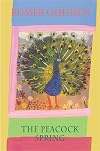
The Peacock Spring
by Rumer Godden
On This Page
Description
From the New York Times–bestselling author of The Greengage Summer: Two English sisters' lives are transformed when their father brings them to India. At fifteen and twelve, the daughters of Sir Edward Gwithiam of the diplomatic service have already seen more of the world than most children their age. But when Una and her younger sister, Halcyon, are summoned from their English boarding school to join their father in New Delhi, they encounter a reality unlike anything they have ever show more experienced. For Hal, India is a glorious adventure, filled with exotic sights and sounds, and a host of interesting new people. But Una feels like an outsider in this world of ingrained racial prejudice and cultural elitism left over from the days of the British Raj. Though no longer a child, she is expected to submit to the will of a Eurasian governess, the calculating and beautiful Alix Lamont, whose relationship with the girls' father appears more intimate and troubling than merely employee–employer. Then Ravi, a young Indian gardener, brings a welcome light into Una's life, relieving her sadness and loneliness with poetry and compassion. But what begins as a simple friendship soon blossoms into a love forbidden by society, threatening to end in scandal and disaster. Based in part on Rumer Godden's personal experiences and informed by her love of the Indian continent, where she spent the better part of her early life, The Peacock Spring is a beautiful and heartbreaking novel of loss of innocence and coming-of-age from the acclaimed author of Black Narcissus and The River. This ebook features an illustrated biography of the author including rare images from the Rumer Godden Literary Estate. Literature. Fiction. show lessTags
Recommendations


















Member Reviews
The Peacock Spring by Rumer Godden is a beautifully written, fully characterized coming-of-age story that brought tears to my eyes. As Una and her younger sister Hal are abruptly summoned from their British boarding school to their father’s side in India, they fear that his loneliness has overwhelmed him. When they arrive however, they soon realize that something else, or rather, someone else, is behind this summons. Waiting to be their governess/companion is Alix, a beautiful Eurasian woman, who Una soon realizes is not qualified to teach or really has much interest in the girls.
Seeking to avoid confrontations Una takes to spending time in the gardens and before too long her attention is taken by a young, handsome gardener, Ravi. As show more these two grow closer, so too, does her father’s relationship with Alix. Alix is a woman of many secrets and as Una slowly uncovers some, she uses them to force Alix into giving Una free control over her time, which she uses to grow ever closer to Ravi.
This story of a family coming apart, being too wrapped up in their own concerns to fully grasp what is happening with each other, spoke volumes to me. Eventually Alix’s secrets come home to roost, and Una finds out that flaunting the rules brings heartbreak and everlasting changes in her relationship with her father. Along with a wonderful story, this book gives a capsule picture of India and the state of race relations during post-colonial times. I highly recommend The Peacock Spring. show less
Seeking to avoid confrontations Una takes to spending time in the gardens and before too long her attention is taken by a young, handsome gardener, Ravi. As show more these two grow closer, so too, does her father’s relationship with Alix. Alix is a woman of many secrets and as Una slowly uncovers some, she uses them to force Alix into giving Una free control over her time, which she uses to grow ever closer to Ravi.
This story of a family coming apart, being too wrapped up in their own concerns to fully grasp what is happening with each other, spoke volumes to me. Eventually Alix’s secrets come home to roost, and Una finds out that flaunting the rules brings heartbreak and everlasting changes in her relationship with her father. Along with a wonderful story, this book gives a capsule picture of India and the state of race relations during post-colonial times. I highly recommend The Peacock Spring. show less
In her preface to this novel, Rumer Godden wrote:
I suppose, in a way, I am a divided person, having two roots: Sussex, England where I was born and India where I first went when I was six months old. For most of my life I have gone back and forth between them in one I am homesick for the other.
Sometimes this homesickness becomes acute …. I seemed to feel the warm Indian dust under my sandalled feet, smell flowers in sun, and other smells pungent and acrid …. I had no reason to go back to India, but the longing persisted; then, as if in answer, came a story linked to a memory of something strange and sad that happened many years before ….
This story draws on that particular memory; and it was so fortunate that it belonged to an show more author who knew India as a child, who saw that country more clear-sightedly as an adult, and who loved both England and India, and could see the strengths and weaknesses of both countries and what each one brought to the complex relationship between them.
Fifteen-year-old Una and her half-sister Halcyon (Hal) were happily settled in an English boarding school, after spending most of their childhood in different homes in different countries as their father’s diplomatic career, when a most unexpected letter arrived. It brought word that Sir Edward Gwithiam wished his daughters to join him in New Delhi, where he had recently been posted by the United Nations.
Hal was delighted with the prospect of a new adventure in India, but Una was desperately unhappy. She was clever, her teachers were encouraging her to set her sights on a good university, and she knew that even the best of governesses in India could not give her the education that she wanted and needed. The prospect of spending time with her adored father was little consolation.
Peacock SpringWhen she reached her father’s new home in Delhi, Una quickly realised that the reasons that her father had quoted in his letter were mere pretexts. Miss Lamont, who was to be her governess, was a beautiful woman, she held a privileged position in the household, and she was clearly unqualified to teach a well-educated fifteen year-old.
Of course Una understood what the real situation was, and why it was that she and Hal had been summoned.
Hal had never been much interested in lessons, she accepted Miss Lamont’s presence without question and happily accepted all of the lovely things that her new life had to offer.
Una resisted all of Miss Lamont’s attempts to win her over and a fierce battle of wills would develop between them. It was a battle that she could not win, because her adversary was cold and calculating, and determined that noting should prevent her from achieving her ambition, and because Una’s father shared that ambition and treated his daughter’s opposition as the behaviour of a spoilt child.
Hurt, troubled, and lonely, Una retired to the abandoned summer-house at the bottom of the garden, with her beloved books.
It was there that she met Ravi, the under-gardener. He was a handsome young man, he was an aspiring poet, and the gift of a blue peacock feather would lead to a clandestine romance.
Una was smitten with the young man and the very different side of life in India that he showed her; and of course it don’t occur to ask why someone with his education was working in a garden. Ravi’s friend Hem, a more worldly-wise medical student, knew why; and he warned him that the relationship could only lead him into more trouble, but Ravi took no notice at all.
When Una made a discovery that she knew would appall her father, she and Ravi made a desperate plan, that they hoped would allow them to escape from the worst of the fallout. It didn’t occur to either of them that while Sir Edward might be happy to allow his daughter to ‘sulk’ for a while he still considered her a child and would act as soon as he realised that anything might be amiss.
The events that played out would be a painful coming of age for Una.
I was caught up with her from the very first, I understood her feelings and her actions, and my concern grew as the story progressed. That story had a wonderful understanding of the complications of family life, the awkwardness of the stage of life between childhood and adulthood, the intensity of first love, and the pain that learning more about how people are and how the world works. I couldn’t doubt for a moment that Rumer Godden understood and that she care; and she made me understand and care very deeply.
Her characterisations were deep and complex, and this was a story of real fallible people. Even Miss Lamont, who could be considered the villain of the piece, was a woman who could make me feel care and concern. She was mixed race, she didn’t fit into English or Indian society, and so her life had been a struggle and she had to hold on to the wonderful and unexpected chance that she had been offered. In contrast, Hem was lovely. He was a little older and wider than his friend, his advice was almost invariably ignored, but he would remain the truest and most thoughtful of friends to both Ravi and Una.
The prose is rich and evocative; the attention to detail is exactly right; but above all this is a human drama, and that drama felt so real that I might have been looking into the lives of people who really lived and breathed for a short but significant spell in their lives. show less
I suppose, in a way, I am a divided person, having two roots: Sussex, England where I was born and India where I first went when I was six months old. For most of my life I have gone back and forth between them in one I am homesick for the other.
Sometimes this homesickness becomes acute …. I seemed to feel the warm Indian dust under my sandalled feet, smell flowers in sun, and other smells pungent and acrid …. I had no reason to go back to India, but the longing persisted; then, as if in answer, came a story linked to a memory of something strange and sad that happened many years before ….
This story draws on that particular memory; and it was so fortunate that it belonged to an show more author who knew India as a child, who saw that country more clear-sightedly as an adult, and who loved both England and India, and could see the strengths and weaknesses of both countries and what each one brought to the complex relationship between them.
Fifteen-year-old Una and her half-sister Halcyon (Hal) were happily settled in an English boarding school, after spending most of their childhood in different homes in different countries as their father’s diplomatic career, when a most unexpected letter arrived. It brought word that Sir Edward Gwithiam wished his daughters to join him in New Delhi, where he had recently been posted by the United Nations.
Hal was delighted with the prospect of a new adventure in India, but Una was desperately unhappy. She was clever, her teachers were encouraging her to set her sights on a good university, and she knew that even the best of governesses in India could not give her the education that she wanted and needed. The prospect of spending time with her adored father was little consolation.
Peacock SpringWhen she reached her father’s new home in Delhi, Una quickly realised that the reasons that her father had quoted in his letter were mere pretexts. Miss Lamont, who was to be her governess, was a beautiful woman, she held a privileged position in the household, and she was clearly unqualified to teach a well-educated fifteen year-old.
Of course Una understood what the real situation was, and why it was that she and Hal had been summoned.
Hal had never been much interested in lessons, she accepted Miss Lamont’s presence without question and happily accepted all of the lovely things that her new life had to offer.
Una resisted all of Miss Lamont’s attempts to win her over and a fierce battle of wills would develop between them. It was a battle that she could not win, because her adversary was cold and calculating, and determined that noting should prevent her from achieving her ambition, and because Una’s father shared that ambition and treated his daughter’s opposition as the behaviour of a spoilt child.
Hurt, troubled, and lonely, Una retired to the abandoned summer-house at the bottom of the garden, with her beloved books.
It was there that she met Ravi, the under-gardener. He was a handsome young man, he was an aspiring poet, and the gift of a blue peacock feather would lead to a clandestine romance.
Una was smitten with the young man and the very different side of life in India that he showed her; and of course it don’t occur to ask why someone with his education was working in a garden. Ravi’s friend Hem, a more worldly-wise medical student, knew why; and he warned him that the relationship could only lead him into more trouble, but Ravi took no notice at all.
When Una made a discovery that she knew would appall her father, she and Ravi made a desperate plan, that they hoped would allow them to escape from the worst of the fallout. It didn’t occur to either of them that while Sir Edward might be happy to allow his daughter to ‘sulk’ for a while he still considered her a child and would act as soon as he realised that anything might be amiss.
The events that played out would be a painful coming of age for Una.
I was caught up with her from the very first, I understood her feelings and her actions, and my concern grew as the story progressed. That story had a wonderful understanding of the complications of family life, the awkwardness of the stage of life between childhood and adulthood, the intensity of first love, and the pain that learning more about how people are and how the world works. I couldn’t doubt for a moment that Rumer Godden understood and that she care; and she made me understand and care very deeply.
Her characterisations were deep and complex, and this was a story of real fallible people. Even Miss Lamont, who could be considered the villain of the piece, was a woman who could make me feel care and concern. She was mixed race, she didn’t fit into English or Indian society, and so her life had been a struggle and she had to hold on to the wonderful and unexpected chance that she had been offered. In contrast, Hem was lovely. He was a little older and wider than his friend, his advice was almost invariably ignored, but he would remain the truest and most thoughtful of friends to both Ravi and Una.
The prose is rich and evocative; the attention to detail is exactly right; but above all this is a human drama, and that drama felt so real that I might have been looking into the lives of people who really lived and breathed for a short but significant spell in their lives. show less
This was the 2nd second-hand book I bought at Cooma, planning for some light holiday reading at Merimbula. I most certainly misjudged this novel when I thought it might be a good source of light entertainment.
At first I found it extremely frustrating. The "present" of the narrative never remains in place for very long. Every situation encountered engenders either a return to the past, to explain how the present is approached, a future-sweep to examine the knowledge that Una will, later, have, that might inform the present, if she knew about it now, or even a presentation of facts that another, more knowledgeable character, might tell Una, if she were to ask. Every encounter is a melding of past experience and the experience that is yet show more lacking to make a full picture of the "now". Because the narrative jumps without any visual indication that it has done so, it can at times take a little while to realise that the jump has indeed taken place. Also, for a thin book, it seems to be densely packed and takes quite a lot of reading. I actually found it quite a challenging read and wonder if I would have persevered when I was younger, "Puffin Plus" or no.
At first I was inclined to give up but decided to give it just a little longer. Then I became obstinately determined to find out "what happens" and then, little by little, I became increasingly fascinated by both characters and atmosphere. Before long I was riding the rhythm of changing timelines and bound up in a curiously rich and circular reality. I was completely intrigued by the complex nature of the characters, for whom no apologies, excuses or moral judgements are made. As the narrative progresses, I was privileged to see them both unalterably changed by experience and at the same time relentlessly unchanging and clinging ever more rigidly to familiar coping patterns. There is no great epiphany or personal growth, and no particularly happy ending brought about through enhanced relationships. The present is both the known and the unknown, the characters the changing and the unchanging, and there is a curious inevitability to the fascinating whole.
It seems to me to be a very "real" adventure - a dramatic life experience that causes a ripple and changes the water, without being able to change the flow of the river. This book has certainly earned a place on my bookshelf and will continue to move through my mind, becoming part of the me that encounters each new "now". show less
At first I found it extremely frustrating. The "present" of the narrative never remains in place for very long. Every situation encountered engenders either a return to the past, to explain how the present is approached, a future-sweep to examine the knowledge that Una will, later, have, that might inform the present, if she knew about it now, or even a presentation of facts that another, more knowledgeable character, might tell Una, if she were to ask. Every encounter is a melding of past experience and the experience that is yet show more lacking to make a full picture of the "now". Because the narrative jumps without any visual indication that it has done so, it can at times take a little while to realise that the jump has indeed taken place. Also, for a thin book, it seems to be densely packed and takes quite a lot of reading. I actually found it quite a challenging read and wonder if I would have persevered when I was younger, "Puffin Plus" or no.
At first I was inclined to give up but decided to give it just a little longer. Then I became obstinately determined to find out "what happens" and then, little by little, I became increasingly fascinated by both characters and atmosphere. Before long I was riding the rhythm of changing timelines and bound up in a curiously rich and circular reality. I was completely intrigued by the complex nature of the characters, for whom no apologies, excuses or moral judgements are made. As the narrative progresses, I was privileged to see them both unalterably changed by experience and at the same time relentlessly unchanging and clinging ever more rigidly to familiar coping patterns. There is no great epiphany or personal growth, and no particularly happy ending brought about through enhanced relationships. The present is both the known and the unknown, the characters the changing and the unchanging, and there is a curious inevitability to the fascinating whole.
It seems to me to be a very "real" adventure - a dramatic life experience that causes a ripple and changes the water, without being able to change the flow of the river. This book has certainly earned a place on my bookshelf and will continue to move through my mind, becoming part of the me that encounters each new "now". show less
This book was a surprise to me, starting out feeling like a safe and standard book about schoolgirls and then quickly taking a leap into something much more adult. This has made it stick with me much more than if it had stayed a book about schoolgirls and family dynamics. The complexity with which Godden treats the girls' (and adult women's) feelings and thoughts is admirable.
A coming-of-age story about two sisters, removed from boarding school in England and sent to be with their father in India. Not all is as it seems for these two impressionable girls. Few of the characters were particularly likeable, and although true to life and credible, the story hinged on family squabbles. The images of India were particularly vivid as the cultures of East and West met head-on. Beautifully written, but not my favourite Godden story.
The story is of two girls in their early teens who get abruptly pulled out of boarding school to go live with their diplomat father in India. It soon becomes clear to them that their governess is incompetent at teaching, and is in fact their father's mistress. The older girl, Una, is indignant at the sham, while the younger one, Hal, couldn't care less. Hal is thrilled with the sightseeing and parties the governess is trying to distract them with; Una is frustrated at being denied her studies. The better part of the first half of the book is about this subtle battle going on between the girls and the governess, made more interesting by the fact that all the servants resent the woman too, and the girls' father is pretty much oblivious to show more it all. But then Una meets a gardener who also happens to be a poet, and whose friend is an accomplished mathematician. Suddenly she finds a way to circumvent her governess and continue her studies. What she doesn't really expect is to fall in love...
While this story is not exactly tender, nor are most of the characters extremely likable, there was something about it that kept me intrigued. The further I got the more tangled it all became, until in the end Una was in quite a sticky situation. The ending was quite sad. I found myself feeling sympathy for characters I really didn't like in the beginning, and getting furious at others that I had previously admired. They're all quite deep characters, with layers and ulterior motives and secret thoughts and dumb moments, just like real people... This is not one of my favorite Rumer Godden books, but one I'm certainly hanging onto regardless.
from the Dogear Diary show less
While this story is not exactly tender, nor are most of the characters extremely likable, there was something about it that kept me intrigued. The further I got the more tangled it all became, until in the end Una was in quite a sticky situation. The ending was quite sad. I found myself feeling sympathy for characters I really didn't like in the beginning, and getting furious at others that I had previously admired. They're all quite deep characters, with layers and ulterior motives and secret thoughts and dumb moments, just like real people... This is not one of my favorite Rumer Godden books, but one I'm certainly hanging onto regardless.
from the Dogear Diary show less
Read during Winter 2004/2005
I pulled the video out of the pile to test my DVD to video transfer and forgot how much I enjoyed it so went for a reread of this book. The dramatization followed the book fairly well but there is much more richness of detail in the book. The casting choices don't match very well what Godden wanted, esp. poor Una who is thin and willowly in the book and rather lumplike (but an excellent portrayal) on TV. The book was definetely worth a reread. The story is compelling and the character studies are interesting. Ravi and Una's love story is very believable, as well as Una's blind trust and Ravi's ultimate shallowness and immaturity. The TV adaption adds the twist of Hem's implied homosexuality; there is no hint show more of it in the book and it doesn't seem to add much except give Hem a motive to do as Ravi wishes. show less
I pulled the video out of the pile to test my DVD to video transfer and forgot how much I enjoyed it so went for a reread of this book. The dramatization followed the book fairly well but there is much more richness of detail in the book. The casting choices don't match very well what Godden wanted, esp. poor Una who is thin and willowly in the book and rather lumplike (but an excellent portrayal) on TV. The book was definetely worth a reread. The story is compelling and the character studies are interesting. Ravi and Una's love story is very believable, as well as Una's blind trust and Ravi's ultimate shallowness and immaturity. The TV adaption adds the twist of Hem's implied homosexuality; there is no hint show more of it in the book and it doesn't seem to add much except give Hem a motive to do as Ravi wishes. show less
Members
- Recently Added By
Lists

Favorite Childhood Books
1,646 works; 517 members

Comfort Reads
221 works; 41 members

Books Read in 2022
5,166 works; 112 members
Author Information

89+ Works 15,251 Members
Margaret Rumer Godden was born Dec. 10, 1907, in Sussex, England. She was nine months old when her family moved to India, where her father ran a shipping line. She returned to London at age 20 to learn how to teach dance to children, and opened a school back in India. Returning to England while she was pregnant, she wrote her first book, "Chinese show more Puzzle," published in 1936. Her marriage to a stockbroker, Laurence Sinclair Foster, ended in 1941, leaving her penniless. In an effort to pay off her former husband's debts, Godden moved her family into a mountain cottage where she ran a school, made herbal teas for sale, and wrote books. Another novel of India, "The River," published in 1949, was one of her most acclaimed books and was made into a film by Jean Renoir in 1951. She returned to England to stay in 1945. Rumer Godden was the author of more than 60 books, including novels, short story collections, poetry, plays and non-fiction. She published her 21st novel, "Cromartie vs. the God Shiva," in 1997. Rumer Godden died a year later on November 8, 1998, in Thornhill, Scotland, at the age of 90. (Bowker Author Biography) show less
Series
Belongs to Publisher Series
Peacock Books (99)
Work Relationships
Common Knowledge
- Original publication date
- 1975
- Related movies
- The Peacock Spring (1996 | IMDb)
Classifications
- Genres
- Fiction and Literature, General Fiction, Children's Books, Teen, Young Adult
- DDC/MDS
- 823.9 — Literature & rhetoric English & Old English literatures English fiction 1900-
- LCC
- PZ3 .G5422 — Language and Literature Fiction and juvenile belles lettres Fiction and juvenile belles lettres Fiction in English
- BISAC
Statistics
- Members
- 354
- Popularity
- 88,860
- Reviews
- 8
- Rating
- (3.76)
- Languages
- English, Spanish
- Media
- Paper, Audiobook, Ebook
- ISBNs
- 17
- ASINs
- 8