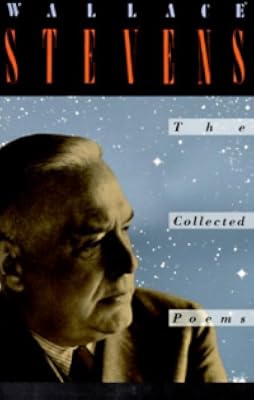
The Collected Poems of Wallace Stevens
by Wallace Stevens
On This Page
Description
This definitive poetry collection, originally published in 1954 to honor Stevens on his 75th birthday, contains: - "Harmonium" - "Ideas of Order" - "The Man With the Blue Guitar" - "Parts of the World" - "Transport Summer" - "The Auroras of Autumn" - "The Rock"Tags
Recommendations






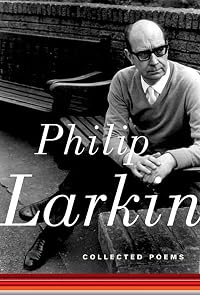
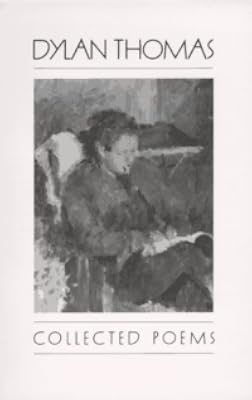

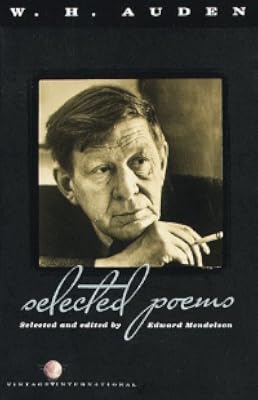
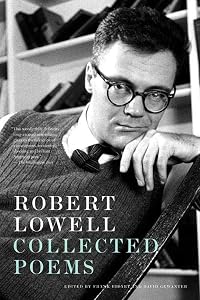










Member Recommendations
Bookwomble Thomas Jerome Newton reads this collection of Wallace's poems in Tevis's novel.
Member Reviews
Tomorrow I turn twenty-six, and I've been trying to come up with a suitable memorization poem to mark the occasion. After the daunting-but-satisfying April assignment of committing H.D.'s "Other Sea Cities" to memory, I wanted something slightly less ambitious, but nonetheless appropriately beautiful and reflective, for May. And Wallace Stevens, as he so often does, came through for me:
Thirteen Ways of Looking at a Blackbird
I
Among twenty snowy mountains,
The only moving thing
Was the eye of the blackbird.
II
I was of three minds,
Like a tree
In which there are three blackbirds.
III
The blackbird whirled in the autumn winds.
It was a small part of the pantomime.
IV
A man and a woman
Are one.
A man and a woman and a blackbird
Are one.
V
I do not know show more which to prefer,
The beauty of inflections
Or the beauty of innuendoes,
The blackbird whistling
Or just after.
VI
Icicles filled the long window
With barbaric glass.
The shadow of the blackbird
Crossed it, to and fro.
The mood
Traced in the shadow
An indecipherable cause.
VII
O thin men of Haddam,
Why do you imagine golden birds?
Do you not see how the blackbird
Walks around the feet
Of the women about you?
VIII
I know noble accents
And lucid, inescapable rhythms;
But I know, too,
That the blackbird is involved
In what I know.
IX
When the blackbird flew out of sight,
It marked the edge
Of one of many circles.
X
At the sight of blackbirds
Flying in a green light,
Even the bawds of euphony
Would cry out sharply.
XI
He rode over Connecticut
In a glass coach.
Once, a fear pierced him,
In that he mistook
The shadow of his equipage
For blackbirds.
XII
The river is moving.
The blackbird must be flying.
XIII
It was evening all afternoon.
It was snowing
And it was going to snow.
The blackbird sat
In the cedar limbs.
On a personal level, I like this poem for the contrast it provides with the verses to which I'm normally drawn. There are no metrical pyrotechnics; one couldn't sing the poem to any traditionally-phrased music. The line breaks function, to me at least, more as tools to slow the reader down and cause the experience of the poem to approximate quiet breathing. Within that space of breath, the poem works almost entirely in the realm of single evocative images - although sometimes, as with my favorite stanza, it veers into narrative enigmas of beautiful economy:
"He rode over Connecticut
In a glass coach.
Once, a fear pierced him,
In that he mistook
The shadow of his equipage
For blackbirds."
There are so many gorgeous details just in these six short lines: the juxtaposition of riding over such a prosaic place as Connecticut in something as mythic and opulent as a glass coach; the mingled hubris and vulnerability of the glass coach itself; the commuting of fairy-tale elements to the United States of the twentieth century; the weak and weighty perfection of the word "equipage"; and, of course, the absent blackbirds, harbingers of doom or mortality, who can "pierce" the carriaged rider with a shard-like terror by their very suggestion. I love the elegant way in which the lines suggest the coach's motion so indirectly - because to be mistaken for blackbirds moving as one, the shadow of the coach must be moving, perhaps circularly, in relation to a light source. And suddenly the reader can see how a complex glass structure, moving fast below a lamp so that the shadow swells and shrinks in a circle, or even progressing through a dappled grove of trees, might cast a shadow resembling those flocking, spiraling birds. Somehow the mysterious fear they incite in the rider adds to my sense of their stately motion. Quite a feat of suggestion in such a short space, and a gorgeous image besides.
I love the way in which the poem insists on the finely-drawn beauty of the small details of everyday life. In the seventh stanza, Stevens not only entreats his fellow-men to recognize the poetry inherent in the common blackbird, but he imparts a quasi-Biblical feel to a small town in Connecticut:
O thin men of Haddam,
Why do you imagine golden birds?
Do you not see how the blackbird
Walks around the feet
Of the women about you?
Upon first reading this stanza, I envisioned an Eliot-like desert progression, the "feet of the women" clad in sinewy sandals, the men possibly leading camels. But I like the true location of Haddam and its "thin men" even better: I think we modern people could stand to stop a moment and think about the soulfulness and poetry of our daily lives, really looking at the complexity and mystery of what's there, rather than hankering after "golden birds" (or camels) of fancy.
This poem is numerically appropriate for the turning of my 26th year (that's exactly one way of looking at a blackbird for every two years of my life, after all), but I think it's fitting in other ways as well. I like that its motion is quiet and contemplative, as I would like mine to be. I think the multiple perspectives it offers are a salient reminder to such as me, sometimes over-eager to explain things and put them to rest. If there are thirteen (or more) ways of looking at something as unassuming as a blackbird (is it unassuming?), then I could stand to jettison a good deal of impatience and the expectation of "mastering" any poem, skill or situation, and just absorb all of its myriad angles into myself. Whatever I think I know, I should learn that "the blackbird" - of uncertainty, mortality, dirtiness, striking beauty, discomfort, motion in stillness, stillness in motion, the world's quotidian representative - "is involved in what I know."
So. That's the goal. Hopefully I have a slew of long years ahead of me, 'cause it's a big one. Luckily, I have the last two beautiful stanzas of this poem to help me - in crude shorthand, blackbird-as-eternal-motion, and blackbird-as-eternal-inbetween-stillness-continuing-on. Even on its own, the line "It was evening all afternoon" would be enough to buoy me up significantly.
XII
The river is moving.
The blackbird must be flying.
XIII
It was evening all afternoon.
It was snowing
And it was going to snow.
The blackbird sat
In the cedar limbs. show less
Thirteen Ways of Looking at a Blackbird
I
Among twenty snowy mountains,
The only moving thing
Was the eye of the blackbird.
II
I was of three minds,
Like a tree
In which there are three blackbirds.
III
The blackbird whirled in the autumn winds.
It was a small part of the pantomime.
IV
A man and a woman
Are one.
A man and a woman and a blackbird
Are one.
V
I do not know show more which to prefer,
The beauty of inflections
Or the beauty of innuendoes,
The blackbird whistling
Or just after.
VI
Icicles filled the long window
With barbaric glass.
The shadow of the blackbird
Crossed it, to and fro.
The mood
Traced in the shadow
An indecipherable cause.
VII
O thin men of Haddam,
Why do you imagine golden birds?
Do you not see how the blackbird
Walks around the feet
Of the women about you?
VIII
I know noble accents
And lucid, inescapable rhythms;
But I know, too,
That the blackbird is involved
In what I know.
IX
When the blackbird flew out of sight,
It marked the edge
Of one of many circles.
X
At the sight of blackbirds
Flying in a green light,
Even the bawds of euphony
Would cry out sharply.
XI
He rode over Connecticut
In a glass coach.
Once, a fear pierced him,
In that he mistook
The shadow of his equipage
For blackbirds.
XII
The river is moving.
The blackbird must be flying.
XIII
It was evening all afternoon.
It was snowing
And it was going to snow.
The blackbird sat
In the cedar limbs.
On a personal level, I like this poem for the contrast it provides with the verses to which I'm normally drawn. There are no metrical pyrotechnics; one couldn't sing the poem to any traditionally-phrased music. The line breaks function, to me at least, more as tools to slow the reader down and cause the experience of the poem to approximate quiet breathing. Within that space of breath, the poem works almost entirely in the realm of single evocative images - although sometimes, as with my favorite stanza, it veers into narrative enigmas of beautiful economy:
"He rode over Connecticut
In a glass coach.
Once, a fear pierced him,
In that he mistook
The shadow of his equipage
For blackbirds."
There are so many gorgeous details just in these six short lines: the juxtaposition of riding over such a prosaic place as Connecticut in something as mythic and opulent as a glass coach; the mingled hubris and vulnerability of the glass coach itself; the commuting of fairy-tale elements to the United States of the twentieth century; the weak and weighty perfection of the word "equipage"; and, of course, the absent blackbirds, harbingers of doom or mortality, who can "pierce" the carriaged rider with a shard-like terror by their very suggestion. I love the elegant way in which the lines suggest the coach's motion so indirectly - because to be mistaken for blackbirds moving as one, the shadow of the coach must be moving, perhaps circularly, in relation to a light source. And suddenly the reader can see how a complex glass structure, moving fast below a lamp so that the shadow swells and shrinks in a circle, or even progressing through a dappled grove of trees, might cast a shadow resembling those flocking, spiraling birds. Somehow the mysterious fear they incite in the rider adds to my sense of their stately motion. Quite a feat of suggestion in such a short space, and a gorgeous image besides.
I love the way in which the poem insists on the finely-drawn beauty of the small details of everyday life. In the seventh stanza, Stevens not only entreats his fellow-men to recognize the poetry inherent in the common blackbird, but he imparts a quasi-Biblical feel to a small town in Connecticut:
O thin men of Haddam,
Why do you imagine golden birds?
Do you not see how the blackbird
Walks around the feet
Of the women about you?
Upon first reading this stanza, I envisioned an Eliot-like desert progression, the "feet of the women" clad in sinewy sandals, the men possibly leading camels. But I like the true location of Haddam and its "thin men" even better: I think we modern people could stand to stop a moment and think about the soulfulness and poetry of our daily lives, really looking at the complexity and mystery of what's there, rather than hankering after "golden birds" (or camels) of fancy.
This poem is numerically appropriate for the turning of my 26th year (that's exactly one way of looking at a blackbird for every two years of my life, after all), but I think it's fitting in other ways as well. I like that its motion is quiet and contemplative, as I would like mine to be. I think the multiple perspectives it offers are a salient reminder to such as me, sometimes over-eager to explain things and put them to rest. If there are thirteen (or more) ways of looking at something as unassuming as a blackbird (is it unassuming?), then I could stand to jettison a good deal of impatience and the expectation of "mastering" any poem, skill or situation, and just absorb all of its myriad angles into myself. Whatever I think I know, I should learn that "the blackbird" - of uncertainty, mortality, dirtiness, striking beauty, discomfort, motion in stillness, stillness in motion, the world's quotidian representative - "is involved in what I know."
So. That's the goal. Hopefully I have a slew of long years ahead of me, 'cause it's a big one. Luckily, I have the last two beautiful stanzas of this poem to help me - in crude shorthand, blackbird-as-eternal-motion, and blackbird-as-eternal-inbetween-stillness-continuing-on. Even on its own, the line "It was evening all afternoon" would be enough to buoy me up significantly.
XII
The river is moving.
The blackbird must be flying.
XIII
It was evening all afternoon.
It was snowing
And it was going to snow.
The blackbird sat
In the cedar limbs. show less
I must confess I rarely know what Stevens is talking about. Thus I was heartened by reading an article in Slate on interpretation of Stevens ("The Emperor of Ice-Cream: The Prankster Poetry of Wallace Stevens" By Alex Ross, 1/8/1998). Ross asserts that Stevens offers a "liberation ... from meaning" and charges that "academic interpreters have failed to meet the challenge posed by Helen Vendler in her landmark study 'On Extended Wings'--to give up the search for intellectual subject matter and to treat Stevens as 'pure sound.'" He adds, "any question about meaning in Stevens, whether well or badly formed, ruins the trance. His words are a dream melody of language, bells from nowhere." Cool. I feel better now. I bought the book because I show more loved the music of "The Emperor of Ice Cream":
Call the roller of big cigars,
The muscular one, and bid him whip
In kitchen cups concupiscent curds.
Let the wenches dawdle in such dress
As they are used to wear, and let the boys
Bring flowers in last month's newspapers.
Let be be finale of seem.
The only emperor is the emperor of ice cream.
(JAF) show less
Call the roller of big cigars,
The muscular one, and bid him whip
In kitchen cups concupiscent curds.
Let the wenches dawdle in such dress
As they are used to wear, and let the boys
Bring flowers in last month's newspapers.
Let be be finale of seem.
The only emperor is the emperor of ice cream.
(JAF) show less
Who can resist the splashes of color? The floral decorations for bananas? The dish of peaches in Russia? The man with the green guitar? The loneliness of Jersey City? Kiss, Cats! Death is the mother of beauty, indeed.
Vivid, witty, intelligent romanticism at its best.
As Delmore Schwartz said Stevens is the ""Prince of the realm and of English." Or as Henry of the "Dream Songs" says: "he mutter spiffy."
It troubles me when people dismiss Stevens perfunctorily.
Vivid, witty, intelligent romanticism at its best.
As Delmore Schwartz said Stevens is the ""Prince of the realm and of English." Or as Henry of the "Dream Songs" says: "he mutter spiffy."
It troubles me when people dismiss Stevens perfunctorily.
Not all of the poems are 5 star worthy. But you can see his writing evolve. And when he does it, he hits it so far out of the park you have to catch your breath. His poems can be so deep I uncover parts of existence I didn't know were there.
I didn't know I loved Wallace Stevens until I rediscovered him as a grownup. Alice says he's hard to understand. I like his thoughtful male voice, his ancient referential tone, contrasted with his simple language that reaches so deep into complexity. Very thoughtful work.
First read his poems in a grad course when this very book was our textbook; the images invoke many thoughts and feelings which I cannot articulate; and isn't that what the best poetry does for a reader? Check out "A Fading of the Sun."
I think if I devoted more time to Wallace Stevens I'd appreciate him more. "Emperor of Ice Cream" was one of the first poems I really liked when I was younger, for its absurdity. Same with "Disillusionment of Ten O'Clock." One of these days I'll buckle down and put more effort into reading poems like "Idea of Order at Key West."
Members
- Recently Added By
Lists

American Lit for Eng 11 Research Project
368 works; 6 members

Modernism
140 works; 9 members
Harold Bloom - The Western Canon: D. The Chaotic Age
833 works; 24 members

Philip Ward's Lifetime Reading Plan
592 works; 22 members

Tom's Bookstore
346 works; 2 members

Writers In Public Domain 2026
90 works; 1 member

Take Four Books
130 works; 1 member
Author Information

109+ Works 6,440 Members
Awards and Honors
Awards
Notable Lists
Series
Belongs to Publisher Series
Work Relationships
Has as a student's study guide
Common Knowledge
- Original publication date
- 1954 (USA/Canada edition) (USA/Canada edition); 1955 (UK edition) (UK edition)
- Important places
- USA; New England, USA; Florida, USA; Key West, Florida, USA
- Blurbers
- Gunn, Thom
Classifications
Statistics
- Members
- 2,082
- Popularity
- 9,986
- Reviews
- 9
- Rating
- (4.40)
- Languages
- English
- Media
- Paper, Ebook
- ISBNs
- 8
- ASINs
- 23