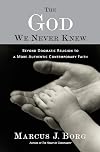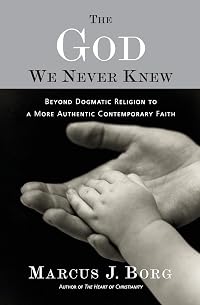
The God We Never Knew: Beyond Dogmatic Religion to a More Authentic Contemporary Faith
by Marcus J. Borg
On This Page
Description
How to have faith--or even think about God--without having to stifle modern rational thought is one of the most vital challenges facing many of us today. Marcus J. Borg, author of the bestselling Meeting Jesus Again for the First Time, traces his personal spiritual journey to the discovery of an authentic yet fully contemporary understanding of God. In a compelling, readable way, he leads us from the distant, authoritarian God of our childhood to an equally powerful, dynamic adult image of show more God--"the beyond in our midst," the life spirit that is within us and all around us--that reconciles faith with science, history, critical thinking, and religious pluralism. show lessTags
Recommendations











Member Reviews
Borg presents a God all would hope for (which is why we never knew him), but his vision simply wishes the terrible, vindictive, jealous, genocidal, and even infantile God portrayed in many books of the Old Testament away. Like all apologists, his vision of Jehovah does not include the blood thirsty tribal deity of the 1st 5 books of the Bible. There is much to wish for in Borg's portrayal, but one cannot take all of the good and positive traits of something and say the other traits are simply the wishes of a small tribe for a warrior God who destroys all of its enemies. If you do this, you are not following an existing religion created by an individual (Jesus) who believed that God actually acted as described in the Old Testament. You show more are creating a new religion and a new God. I have no problem with this, my only stand is that, if one does this, one must admit that their religion is a new one built on pieces of the old religion. show less
I used this book as part of my morning quiet time and there were times I would get so excited about the theology or one of his concepts that I had to write. At other times, he wrote about concepts that caused me to read one sentence and then ponder it for a few days. I love this type of writing about God.
How to have faith without having to stifle modern rational thought is one of the most vital challenges facing many of us today. The author traces his personal spiritual journey to the discovery of an authentic yet fully contemporary understanding of God. He leads us from the distant, authoritarian God of our childhood to an equally powerful, dynamic adult image of God that reconciles faith with science, history, critical thinking, and religious pluralism.
This book is hard to describe. The man who wrote it was a religious scholar, so he knows of which he speaks. For people who have no questions about their faith or religion in general, then I'd say give this book a pass because it WILL upset you. But if you're like me and have a LOT of questions, then this book is well worth a read. I found the subject truly fascinating. It explained some of my many questions and gave me a lot to think about. It's not a fast read nor should it be. You have to think about it and sometimes go back and re-read sections to make sure you understand. Even with having to do that, I'd highly recommend this book for anyone who possesses a quest for knowledge.
The author leads us from the distant, authoritative God of our childhood to an equally powerful, dynamic adult understanding of God. Tracing his own spiritual journey, he reveals how to embrace a fresh, authentic view of God that is fully compatible with good science, critical thinking, and religious pluralism -- a view that promotes a much healthier and more vital life of faith today. This book will appeal to unbelieving seekers and faint hearted believers, but it also has riches for those who think their faith is secure.
I read this book twenty plus years after its first publication, but it seems to me many of the ideas Borg discusses were being discussed, at least in Roman Catholic circles, in the 1970s. His book certainly has value but was not the revelation some people have found it to be. He outlines the common image of God as a white male monarch and briefly considers what's wrong with such an image in modern societies as opposed to the agrarian, monarchic and patriarchal societies of the time that concept of God as a king was first written down. He then offers alternative images of God as loving, compassionate, etc. All good as far as it goes but it doesn't go far enough anymore.
Almost Spongian in his idea of God and Christ, but then they're both working with some of the same source material (Paul Tillich, for one).
Members
- Recently Added By
Lists

Books read 2017
29 works; 1 member
Author Information

65+ Works 14,219 Members
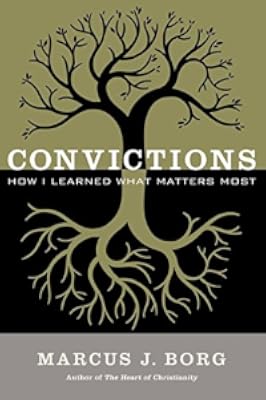
Marcus J. Borg was born on March 11, 1942 in Minnesota. He majored in philosophy and political science at Concordia College. He did graduate work at Union Theological Seminary in New York City and at Oxford University. He taught at various Midwest universities before joining the faculty at Oregon State University in 1979. He taught religion there show more until his retirement in 2007. During his lifetime, he wrote or co-wrote 21 books including Jesus: A New Vision, The Meaning of Jesus: Two Visions with N. T. Wright, and Convictions: How I Learned What Matters Most. He died after a prolonged illness on January 21, 2015 at the age of 72. (Bowker Author Biography) show less
Common Knowledge
- Canonical LCC
- BR124.B67 1997
Classifications
Statistics
- Members
- 923
- Popularity
- 29,113
- Reviews
- 7
- Rating
- (4.13)
- Languages
- Dutch, English
- Media
- Paper, Ebook
- ISBNs
- 5
- ASINs
- 11