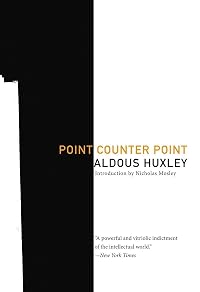
Point Counter Point
by Aldous Huxley 
On This Page
Description
Aldous Huxley's lifelong concern with the dichotomy between passion and reason finds its fullest expression both thematically and formally in his masterpiece Point Counter Point. By presenting a vision of life in which diverse aspects of experience are observed simultaneously, Huxley characterizes the symptoms of "the disease of modern man" in the manner of a composer - themes and characters are repeated, altered slightly, and played off one another in a tone that is at once critical and show more sympathetic. First published in 1928, Huxley's satiric view of intellectual life in the '20s is populated with characters based on such celebrities of the time as D.H. Lawrence, Katherine Mansfield, Sir Oswald Mosley, Nancy Cunard, and John Middleton Murray, as well as Huxley himself. A major work of the 20th century and a monument of literary modernism, this edition includes an introduction by acclaimed novelist Nicholas Mosley (author of Hopeful Monsters and the son of Sir Oswald Mosley). Along with Brave New World (written a few years later), Point Counter Point is Huxley's most concentrated attack on the scientific attitude and its effect on modern culture. show lessTags
Recommendations















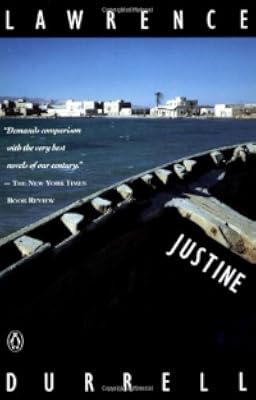
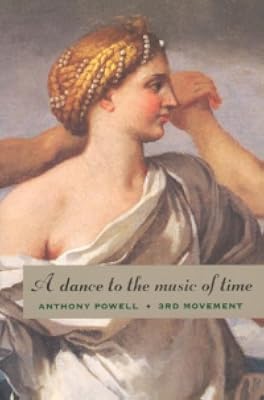
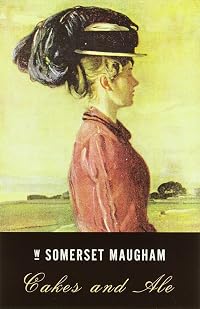
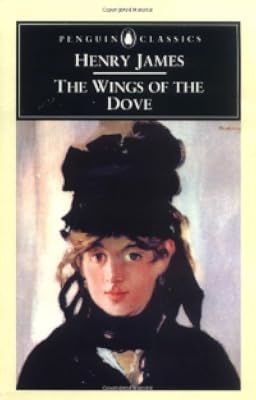
Member Recommendations

Member Reviews
I have always been an avid reader, but throughout my teens and early in college I read indiscriminately--Louisa May Alcott and Stephen King, Alex Haley and Piers Anthony, they were all gobbled down. And then, in college, I was assigned Aldous Huxley's Point Counter Point, and it changed the way I looked at books forever. For the first time in my life, I think, I really recognized that books could be about more than the plot, and that good writing could make you love a book even if you loathed all the characters.
I'm pretty sure I read Point Counter Point again soon after college, but at some point it disappeared from my library, and somewhere along the way every last bit of the book leaked out of my consciousness, because 25 years or so show more along, here I was reading the book again for the first time. Huxley uses the conversations and actions of a group of intellectuals, artists and writers, mostly, to explore passion and reason, the physical life vs. the intellectual life. Some of the characters are based on Huxley and his friends and acquaintances of the time, including D.H. Lawrence, Katherine Mansfield and John Middleton Murry. For me, the most brilliant part of the book is the opening quarter, which moves from person to person, primarily at a party, introducing the characters and themes. There is also an orchestra, playing Bach's Suite in B minor, for flute and strings.
"In the opening largo John Sebastian had, with the help of Pongileoni's snout and the air column, made a statement: There are grand things in the world, noble things; there are men born kingly; there are real conquerors, intrinsic lords of the earth. But of an earth that is, oh! complex and multitudinous, he had gone on to reflect in the fugal allegro. You seem to have found the truth; clear, definite, unmistakeable, it is announced by the violins; you have it, you triumphantly hold it. But it slips out of your grasp to present itself in a new aspect among the cellos and yet again in terms of Pongileoni's vibrating air column. The parts live their separate lives; they touch, their paths cross, they combine for a moment to create a seemingly final and perfected harmony, only to break apart again. Each is always alone and separate and individual. 'I am I,' asserts the violin; 'the world revolves round me.' 'Round me,' calls the cello. 'Round me,' the flute insists. And all are equally right and equally wrong; and none of them will listen to the others.
"In the human fugue there are eighteen hundred million parts. The resultant noise means something perhaps to the statistician, nothing to the artist. It is only by considering one or two parts at a time that the artist can understand anything. Here, for example, is one particular part; and John Sebastian puts the case. The Rondeau begins, exquisitely and simply melodious, almost a folk song. It is a young girl singing to herself of love, in solitude, tenderly mournful. A young girl singing among the hills, with the clouds drifting overhead. But solitary as one of the floating clouds, a poet had been listening to her song. The thoughts that it provoked in him are the Sarabande that follows the Rondeau. His is a slow and lovely meditation on the beauty (in spite of squalor and stupidity), the profound goodness (in spite of all the evil), the oneness (in spite of such bewildering diversity) of the world. It is a beauty, a goodness, a unity that no intellectual research can discover, that analysis dispels, but of whose reality the spirit is from time to time suddenly and overwhelmingly convinced. A girl singing to herself under the clouds suffices to create the certitude. Even a fine morning is enough. Is it illusion or the revelation of profoundest truth? Who knows?"
The structure and theme set with this passage, Huxley brings his characters forward, singly and in groups, combining and recombining to examine modern man, and the intellectual life vs. the instinctual life. The reader gets the occasional glimpse into the notebooks of Philip Quarles, an author and intellectual (whose natural tendency towards introversion was heightened by a childhood accident that lamed him), as he plans a novel constructed like a Beethoven composition: "The musicalization of fiction. Not in the symbolist way, by subordinating sense to sound. . . . But on a large scale, in the construction. Meditate on Beethoven. The changes of moods, the abrupt transitions. . . . More interesting still, the modulations, not merely from one key to another, but from mood to mood. A theme is stated, then developed, push out of shape, imperceptibly deformed, until, though still recognizably the same, it has become quite different. In sets of variations the process is carried a step further. . . . Put a novelist in the novel. He justifies aesthetic generalizations, which may be interesting--at least to me. He also justifies experiment. Specimens of his work may illustrate other possible or impossible ways of telling a story. And if you have him telling parts of the same story as you are, you can make a variation on the theme." He plans to use versions of his friends as characters. But, as he cautions, "The great defect of a novel of ideas is that it's a made-up affair. Necessarily; for people who can reel off neatly formulated notions aren't quite real; they're slightly monstrous. Living with monsters becomes rather tiresome in the long run."
While some of his characters are monstrous (particularly Maurice Spandrell, based on Baudelaire, who deliberately lives a life of debauchery and vice, and is consequently bored and unable to feel), and none are particularly likable, the book ends before they become tiresome. show less
I'm pretty sure I read Point Counter Point again soon after college, but at some point it disappeared from my library, and somewhere along the way every last bit of the book leaked out of my consciousness, because 25 years or so show more along, here I was reading the book again for the first time. Huxley uses the conversations and actions of a group of intellectuals, artists and writers, mostly, to explore passion and reason, the physical life vs. the intellectual life. Some of the characters are based on Huxley and his friends and acquaintances of the time, including D.H. Lawrence, Katherine Mansfield and John Middleton Murry. For me, the most brilliant part of the book is the opening quarter, which moves from person to person, primarily at a party, introducing the characters and themes. There is also an orchestra, playing Bach's Suite in B minor, for flute and strings.
"In the opening largo John Sebastian had, with the help of Pongileoni's snout and the air column, made a statement: There are grand things in the world, noble things; there are men born kingly; there are real conquerors, intrinsic lords of the earth. But of an earth that is, oh! complex and multitudinous, he had gone on to reflect in the fugal allegro. You seem to have found the truth; clear, definite, unmistakeable, it is announced by the violins; you have it, you triumphantly hold it. But it slips out of your grasp to present itself in a new aspect among the cellos and yet again in terms of Pongileoni's vibrating air column. The parts live their separate lives; they touch, their paths cross, they combine for a moment to create a seemingly final and perfected harmony, only to break apart again. Each is always alone and separate and individual. 'I am I,' asserts the violin; 'the world revolves round me.' 'Round me,' calls the cello. 'Round me,' the flute insists. And all are equally right and equally wrong; and none of them will listen to the others.
"In the human fugue there are eighteen hundred million parts. The resultant noise means something perhaps to the statistician, nothing to the artist. It is only by considering one or two parts at a time that the artist can understand anything. Here, for example, is one particular part; and John Sebastian puts the case. The Rondeau begins, exquisitely and simply melodious, almost a folk song. It is a young girl singing to herself of love, in solitude, tenderly mournful. A young girl singing among the hills, with the clouds drifting overhead. But solitary as one of the floating clouds, a poet had been listening to her song. The thoughts that it provoked in him are the Sarabande that follows the Rondeau. His is a slow and lovely meditation on the beauty (in spite of squalor and stupidity), the profound goodness (in spite of all the evil), the oneness (in spite of such bewildering diversity) of the world. It is a beauty, a goodness, a unity that no intellectual research can discover, that analysis dispels, but of whose reality the spirit is from time to time suddenly and overwhelmingly convinced. A girl singing to herself under the clouds suffices to create the certitude. Even a fine morning is enough. Is it illusion or the revelation of profoundest truth? Who knows?"
The structure and theme set with this passage, Huxley brings his characters forward, singly and in groups, combining and recombining to examine modern man, and the intellectual life vs. the instinctual life. The reader gets the occasional glimpse into the notebooks of Philip Quarles, an author and intellectual (whose natural tendency towards introversion was heightened by a childhood accident that lamed him), as he plans a novel constructed like a Beethoven composition: "The musicalization of fiction. Not in the symbolist way, by subordinating sense to sound. . . . But on a large scale, in the construction. Meditate on Beethoven. The changes of moods, the abrupt transitions. . . . More interesting still, the modulations, not merely from one key to another, but from mood to mood. A theme is stated, then developed, push out of shape, imperceptibly deformed, until, though still recognizably the same, it has become quite different. In sets of variations the process is carried a step further. . . . Put a novelist in the novel. He justifies aesthetic generalizations, which may be interesting--at least to me. He also justifies experiment. Specimens of his work may illustrate other possible or impossible ways of telling a story. And if you have him telling parts of the same story as you are, you can make a variation on the theme." He plans to use versions of his friends as characters. But, as he cautions, "The great defect of a novel of ideas is that it's a made-up affair. Necessarily; for people who can reel off neatly formulated notions aren't quite real; they're slightly monstrous. Living with monsters becomes rather tiresome in the long run."
While some of his characters are monstrous (particularly Maurice Spandrell, based on Baudelaire, who deliberately lives a life of debauchery and vice, and is consequently bored and unable to feel), and none are particularly likable, the book ends before they become tiresome. show less
Bad people doing bad things, but in a very witty way. That is a brief, if incomplete, summary of Aldous Huxley's novel, Point Counter Point.
It is more broadly a "novel of ideas" with a novelist of ideas, Philip Quarles, at its center. Quarles is a withdrawn, cerebral man, ill at ease with the everyday world and its emotions. He is surrounded by friends and family whose lives are like those of the monsters that Philip writes about in his journal. Just as Philip decides to structure his novel on the contrapuntal techniques of music (think Bach and Beethoven) the novel Huxley has written is structured in the same way. We are presented with an opening overture of more than one-hundred-fifty pages at a dinner party that serves as an show more introduction to most of the characters. The remainder of the novel intersperses scenes from their lives, letters from lovers and most interesting, the writings of Philip Quarles, who with his wife spends most of the first half of the novel returning from India and who is the closest to a protagonist that we get. While there is a bit of a literary explosion near the end, this is more a novel of the daily lives of London sophisticates in the 1920s. It catalogues their alternately sordid and ludicrous (sometimes both) erotic adventures, which generally end unhappily.
I particularly enjoyed the wealth of references to literature and philosophy, Huxley's polymathic mind shows through on every page. Among the literary references was the use of Dickens in a way that captures one of his essential character traits, "the appearance of Dickensian young-girlishness" (p. 19). Overall, I found the play of wit and ideas compelling, enough to bear with the bad people and their antics. show less
It is more broadly a "novel of ideas" with a novelist of ideas, Philip Quarles, at its center. Quarles is a withdrawn, cerebral man, ill at ease with the everyday world and its emotions. He is surrounded by friends and family whose lives are like those of the monsters that Philip writes about in his journal. Just as Philip decides to structure his novel on the contrapuntal techniques of music (think Bach and Beethoven) the novel Huxley has written is structured in the same way. We are presented with an opening overture of more than one-hundred-fifty pages at a dinner party that serves as an show more introduction to most of the characters. The remainder of the novel intersperses scenes from their lives, letters from lovers and most interesting, the writings of Philip Quarles, who with his wife spends most of the first half of the novel returning from India and who is the closest to a protagonist that we get. While there is a bit of a literary explosion near the end, this is more a novel of the daily lives of London sophisticates in the 1920s. It catalogues their alternately sordid and ludicrous (sometimes both) erotic adventures, which generally end unhappily.
I particularly enjoyed the wealth of references to literature and philosophy, Huxley's polymathic mind shows through on every page. Among the literary references was the use of Dickens in a way that captures one of his essential character traits, "the appearance of Dickensian young-girlishness" (p. 19). Overall, I found the play of wit and ideas compelling, enough to bear with the bad people and their antics. show less
This is Aldous Huxley's greatest novel. Oh, yes, "Brave New World" is also a classic, and indispensible. But, qua novel, this is Huxley's best. It is occasionally very funny, intellectually challenging, and a tad depressing. Huxley's cynical wit is conjoined with his love of dialogue and repartee and philosophic banter, and then placed in an overarching story that satisfyingly reveals the lives of a handful of fasccinating characters, one of them based on Huxley's friend D.H. Lawrence. Very, very good; and highly under-rated.
Set mainly in 1920s London and peripheral environs, Point Counter Point is a literary tragi-comedy detailing the goings-on within a circle of intellectuals, artists, and hapless socialites and political figures.
Much of the plot revolves around the discussions they have, and the implications of their contrasting philosophical and moral systems. The story is largely based on conflict and friendships between the characters, either as a result of their various infidelities, the disagreements between the scientific, artistic, and ordinary mind, differing political viewpoints, and the simple fact that some people are introverts and others extroverts.
The characters themselves are well developed, and supposedly inspired by actual people, one show more of whom being Huxley himself.
In places this story is as comic as Huxley's “Antic Hay”, though the characters here are more convincing and have greater depth as individuals, as opposed to the tendency Huxley had to caricature in some of his other works. The emphasis on philosophical discussion, as found in other works of his, such as “Those Barren Leaves”, is also present here, though his philosophical message seems to differ somewhat between books.
This is one of Huxley's finest novels, and despite the fact that most of the characters here are actually not very nice, a very enjoyable read. show less
Much of the plot revolves around the discussions they have, and the implications of their contrasting philosophical and moral systems. The story is largely based on conflict and friendships between the characters, either as a result of their various infidelities, the disagreements between the scientific, artistic, and ordinary mind, differing political viewpoints, and the simple fact that some people are introverts and others extroverts.
The characters themselves are well developed, and supposedly inspired by actual people, one show more of whom being Huxley himself.
In places this story is as comic as Huxley's “Antic Hay”, though the characters here are more convincing and have greater depth as individuals, as opposed to the tendency Huxley had to caricature in some of his other works. The emphasis on philosophical discussion, as found in other works of his, such as “Those Barren Leaves”, is also present here, though his philosophical message seems to differ somewhat between books.
This is one of Huxley's finest novels, and despite the fact that most of the characters here are actually not very nice, a very enjoyable read. show less
"The stertorous borborygmus of the dyspeptic Carlyle!"
Having come across a reference to this novel in Bill Bryson's "History...", I was curious about the characters. Not my favourite Huxley novel, but it was an interesting portrait of life in the 1920s, amongst a circle of friends including artists and writers. One character was based on Huxley himself, and offered an incite to his own thoughts about his profession - a writer who talks about putting a writer in a story, who is writing a story about a writer...ad infinitum! Huxley also describes music, in a seemingly experimental way.
I enjoyed learning about the real life characters his fictional ones were based on, D. H. Lawrence, Augustus John, Charles Baudelaire, and John Murray. The show more later being the most humourous portrayal in the story - a publisher choosing submitted stories not by their merit, but instead on the chances of spending time with the female authors upon acceptance of their works. I enjoyed the letters he dictated to his secretary on acceptance or dismissal, I guess Huxley himself received both at some times in his literary pursuits.
Overall I was expecting more of the scientifically minded eccentric characters ( as suggested by Bill Bryson), but the tale transpired to be more about artists and writers, and not as funny as his other novels. show less
Having come across a reference to this novel in Bill Bryson's "History...", I was curious about the characters. Not my favourite Huxley novel, but it was an interesting portrait of life in the 1920s, amongst a circle of friends including artists and writers. One character was based on Huxley himself, and offered an incite to his own thoughts about his profession - a writer who talks about putting a writer in a story, who is writing a story about a writer...ad infinitum! Huxley also describes music, in a seemingly experimental way.
I enjoyed learning about the real life characters his fictional ones were based on, D. H. Lawrence, Augustus John, Charles Baudelaire, and John Murray. The show more later being the most humourous portrayal in the story - a publisher choosing submitted stories not by their merit, but instead on the chances of spending time with the female authors upon acceptance of their works. I enjoyed the letters he dictated to his secretary on acceptance or dismissal, I guess Huxley himself received both at some times in his literary pursuits.
Overall I was expecting more of the scientifically minded eccentric characters ( as suggested by Bill Bryson), but the tale transpired to be more about artists and writers, and not as funny as his other novels. show less
This is one of the most extraordinary books I've ever read. I found a copy of it and plunged in with absolutely no knowledge of what it was about or even who the author was. I was gripped from the very first page. The cynical humour and incredibly perceptive analysis of characters that represent almost every facet of the human race reminded me of War and Peace at first (one of my favorite books).
Point Counter Point is absurdly intellectual - almost TOO intellectual for me. It's so complex that I can't even describe the things about it that made me love it. However, as someone who 'thinks too much' and has a naturally analytic mind, there were many places where I felt like I was reading something I could have written myself. It's a very show more exciting experience when you're reading a book and suddenly discover something like that. As a musician, I particularly appreciated the musical references. But perhaps my favorite moment was where Lord Edward's brother rings him up in great excitement to explain that he's just found mathematical proof of the existence of God.... show less
Point Counter Point is absurdly intellectual - almost TOO intellectual for me. It's so complex that I can't even describe the things about it that made me love it. However, as someone who 'thinks too much' and has a naturally analytic mind, there were many places where I felt like I was reading something I could have written myself. It's a very show more exciting experience when you're reading a book and suddenly discover something like that. As a musician, I particularly appreciated the musical references. But perhaps my favorite moment was where Lord Edward's brother rings him up in great excitement to explain that he's just found mathematical proof of the existence of God.... show less
Huxley brings together a dozen characters, only two of whom he doesn't seem to detest or belittle. The language and characterizations are stellar, arch, original and real, the intermingling of relationships complex, fascinating and both lurid and vivid. Discusisons of sensuality and humanity reflect the forwardness of D.H. Lawrence, but more heady.
Members
- Recently Added By
Published Reviews
ThingScore 75
Aldous Huxley's "Point Counter Point," published in 1928, is a highly intellectual novel that delves into the complexities of human relationships and societal norms through a rich tapestry of characters and ideas. Unlike traditional narratives, the novel employs a musical counterpoint as a structural device, interweaving multiple plot lines and perspectives to explore the contradictions and show more conflicts inherent in human nature and society.
Set in the post-World War I era, the novel presents a cross-section of British society, featuring a diverse cast of characters including intellectuals, scientists, artists, and aristocrats. Each character embodies different philosophical and moral viewpoints, allowing Huxley to examine a wide range of themes such as the search for meaning in a post-war world, the conflict between intellect and emotion, the nature of relationships, and the pursuit of happiness.
Through the interactions and contrasts between these characters, Huxley critiques the social and cultural mores of his time, particularly the superficiality and moral vacuity of the upper classes. The novel is known for its satirical tone and its intellectual debates on science, religion, politics, and art. "Point Counter Point" is considered one of Huxley's major works, showcasing his ability to blend social commentary with a deep exploration of philosophical and existential questions. It reflects Huxley's preoccupation with the human condition and his skepticism about the capacity of society to foster genuine human fulfillment and ethical development. show less
Set in the post-World War I era, the novel presents a cross-section of British society, featuring a diverse cast of characters including intellectuals, scientists, artists, and aristocrats. Each character embodies different philosophical and moral viewpoints, allowing Huxley to examine a wide range of themes such as the search for meaning in a post-war world, the conflict between intellect and emotion, the nature of relationships, and the pursuit of happiness.
Through the interactions and contrasts between these characters, Huxley critiques the social and cultural mores of his time, particularly the superficiality and moral vacuity of the upper classes. The novel is known for its satirical tone and its intellectual debates on science, religion, politics, and art. "Point Counter Point" is considered one of Huxley's major works, showcasing his ability to blend social commentary with a deep exploration of philosophical and existential questions. It reflects Huxley's preoccupation with the human condition and his skepticism about the capacity of society to foster genuine human fulfillment and ethical development. show less
added by Michael_Vannin
Lists

20th Century Literature
1,161 works; 55 members

Harold Bloom - The Western Canon: D. The Chaotic Age
833 works; 24 members

Jordan B. Peterson's Recommended Books
104 works; 5 members
The Modern Library's 100 Best Novels: The Board's List
85 works; 6 members

Blue Pyramid 1,276 Best Books of All Time
1,248 works; 32 members

Trinity College Booklist (1951): Class Ten, English Literature
358 works; 5 members

The Works of Aldous Huxley
49 works; 1 member

For Further Reading: A List of 160 Novels from 15 Literatures
160 works; 4 members

Best Books of 1926-1935
403 works; 10 members

1964 College Preparatory Reading List
202 works; 8 members

My Favourite Books
86 works; 5 members
Canon de la narrativa universal del s. XX (cicutadry)
499 works; 3 members
Modern Library's 100 Best Novels
100 works; 2 members

Canon de la narrativa universal del siglo XX
254 works; 6 members
Author Information

287+ Works 104,973 Members
Aldous Huxley was born on July 26, 1894, in Surrey, England, into a distinguished scientific and literary family; his grandfather was the noted scientist and writer, T.H. Huxley. Following an eye illness at age 16 that resulted in near-blindness, Huxley abandoned hope of a career in medicine and turned instead to literature, attending Oxford show more University and graduating with honors. While at Oxford, he published two volumes of poetry. Crome Yellow, his first novel, was published in 1927 followed by Antic Hay, Those Barren Leaves, and Point Counter Point. His most famous novel, Brave New World, published in 1932, is a science fiction classic about a futuristic society controlled by technology. In all, Huxley produced 47 works during his long career, In 1947, Huxley moved with his family to southern California. During the 1950s, he experimented with mescaline and LSD. Doors of Perception and Heaven and Hell, both works of nonfiction, were based on his experiences while taking mescaline under supervision. In 1959, Aldous Huxley received the Award of Merit for the Novel from the American Academy of Arts and Letters. He died on November 22, 1963. (Bowker Author Biography) show less
Aldous Huxley has a Legacy Library. Legacy libraries are the personal libraries of famous readers, entered by LibraryThing members from the Legacy Libraries group.
Some Editions
Awards and Honors
Series
Belongs to Publisher Series
Work Relationships
Is contained in
Common Knowledge
- Canonical title*
- Kontrapunkt des Lebens
- Original title
- Point Counter Point
- Alternate titles*
- Point Counterpoint
- Original publication date
- 1928
- People/Characters
- Walter Bidlake; Lucy Tantamount; Mark Rampion; Maurice Spandrell; Denis Burlap; Everard Webley (show all 9); Philip Quarles; Elinor Quarles; John Middleton Murry
- Important places
- London, England, UK
- Related movies
- Point Counterpoint (1968 | IMDb)
- Epigraph
- Oh, wearisome condition of humanity,
Born under one law, to another bound,
Vainly begot and yet forbidden vanity,
Created sick, commanded to be sound.
What meaneth nature by these diverse laws,
Passion and ... (show all)reason, self-division's cause?
Fulke Greville - First words
- 'You won't be late?'
- Last words
- (Click to show. Warning: May contain spoilers.)Of such is the Kingdom of Heaven.
- Original language
- English
*Some information comes from Common Knowledge in other languages. Click "Edit" for more information.
Classifications
Statistics
- Members
- 2,881
- Popularity
- 6,267
- Reviews
- 30
- Rating
- (3.75)
- Languages
- 17 — Catalan, Danish, Dutch, English, Finnish, French, German, Hungarian, Italian, Lithuanian, Polish, Portuguese, Romanian, Russian, Spanish, Swedish, Turkish
- Media
- Paper, Audiobook, Ebook
- ISBNs
- 63
- ASINs
- 92