On This Page
Description
The reader enters a mysterious cave and by following the instructions on each page can have several different adventures backward and forward in time.Tags
Recommendations


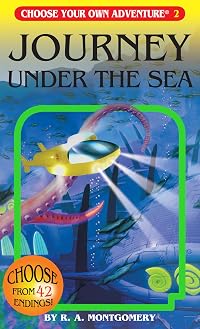
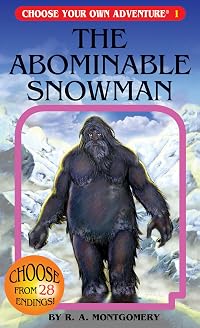


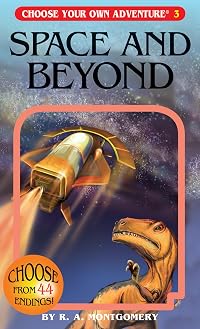
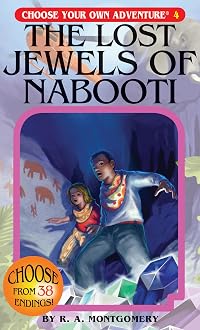


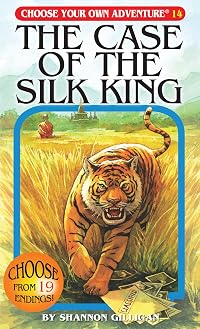


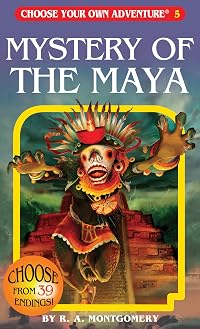
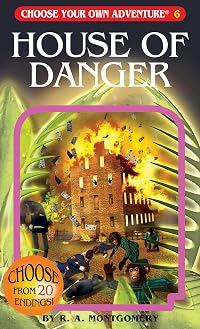
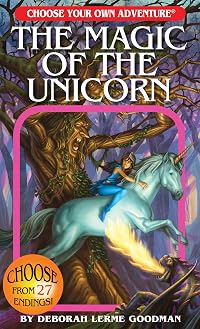







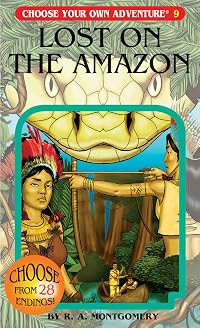
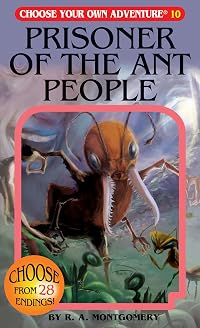


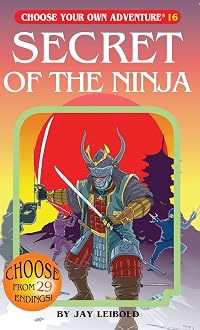


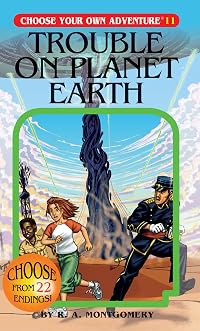
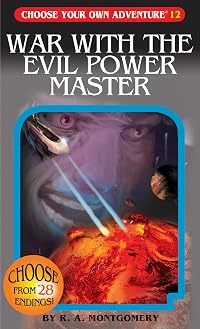


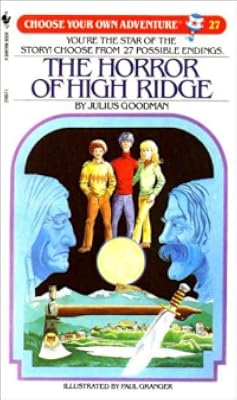


Member Recommendations

guildlingsfan Both in the same genre, fabled lands has character sheet, though
Member Reviews
You'll find that most of the reviews for Cave of Time and other entries in the Choose Your Own Adventure series are written by adults. This is because Cave of Time was the beginning of a genre that had a deep and lasting impact on an entire generation of childhood readers. Before video games and computer text adventure games became commonplace, the Choose Your Own Adventure series introduced children to interactive fiction that converted them from passive viewer to active participant. Rereading Cave of Time, I found myself doing the same thing I used to do as a child when reading these books, using my fingers as temporary placeholders at each crossroad so when on branch of the story ended - sometimes to horrific consequences - I could show more skip back and find out where the other narrative path would lead.
Cave of Time is the perfect introduction to the format. Wandering through the twisting tunnels of a mysterious cave and popping out at random points in time is an ideal narrative to expose the reader to the unpredictable nature of cause and effect, and how decisions don't always lead where you expect them to. From prehistoric Earth to a futuristic Utopia, Cave of Time explores the realms of time travel for its intended age group with - as countless middle-age reviewers can attest - lasting results. show less
Cave of Time is the perfect introduction to the format. Wandering through the twisting tunnels of a mysterious cave and popping out at random points in time is an ideal narrative to expose the reader to the unpredictable nature of cause and effect, and how decisions don't always lead where you expect them to. From prehistoric Earth to a futuristic Utopia, Cave of Time explores the realms of time travel for its intended age group with - as countless middle-age reviewers can attest - lasting results. show less
The Choose Your Own Adventure series offered an option every few pages to choose how the story would continue. According to your preference, you would follow its instructions by turning to the appropriate page of the book as indicated by your choice. This was a popular and revolutionary idea when the series was first launched in the early 1980s, driving it to incredible sales levels for many years until it was overshadowed by variants on the idea that took the concept to more elaborate lengths (e.g. Fighting Fantasy) and especially by other interactive media.
The plot: you explore a cave that turns out to be a time machine. The story's choices lead you on a large range of adventures into the past or future. Most books in this series were show more particularly themed but this one is wide-ranging and unpredictable.
Observations: a sequel to this was written for the series' 50th entry (and it gets a brief mention at the start of #14). While this was the first published book in the series, it was not the first of its style that Edward Packard wrote; that was Sugarcane Island, which he later revised and published as volume 62.
Personal memories: I was late in coming to this volume. I appreciated the rest of the series for having a theme to suit every mood, so this one's lack of focus makes it feel ... lacking. Given the book's premise that it could potentially take you to anywhere/anytime, it ultimately feels limited given all of the many, many places and times it does NOT take you. The complete lack of boundaries probably made it more fun to write than to read. show less
The plot: you explore a cave that turns out to be a time machine. The story's choices lead you on a large range of adventures into the past or future. Most books in this series were show more particularly themed but this one is wide-ranging and unpredictable.
Observations: a sequel to this was written for the series' 50th entry (and it gets a brief mention at the start of #14). While this was the first published book in the series, it was not the first of its style that Edward Packard wrote; that was Sugarcane Island, which he later revised and published as volume 62.
Personal memories: I was late in coming to this volume. I appreciated the rest of the series for having a theme to suit every mood, so this one's lack of focus makes it feel ... lacking. Given the book's premise that it could potentially take you to anywhere/anytime, it ultimately feels limited given all of the many, many places and times it does NOT take you. The complete lack of boundaries probably made it more fun to write than to read. show less
There were a lot of disappointing endings in this story. It's not that the endings were bad, but they left too much hanging and didn't feel as decisive as most CYOA books do. Of course, this was the first, so it gets extra points for starting the awesomeness.
This was the first of a new genre of book, the game book, though it came out under the title 'Choose Your Own Adventure'. I remember getting this book and the next book in the series for Christmas one year and I was pretty much all over them, especially since I loved the adventure games that I had on my Dad's computer (this was back in the early 80s). The period in which it was released saw a change in the way that games were being played in that there was a gradual movement away from board games to computer consoles and roleplaying games. However not many people had computers in those days, but craved a form of adventure that roleplaying games could only give for a limited period, so thus appeared the game book.
I note that Edward show more Packard came up with the idea while reading to his children. I suspect what happened was that his children, while enjoying the stories, wanted more involvement in the story itself, and as such I suspect he began to develop a way to allow them to chose their path through the story.
This is a very primitive version of the genre in that the description generally takes up the page and when you are given choices you turn to the relevant pages. Later we were to see the Fighting Fantasy gamebooks which used paragraphs instead of pages, and were generally a lot thicker with combat, dice rolling, and a character sheet. These books would begin to change the way stories were constructed, that is until computers became ubiquitous and people could now play adventure games in their own home.
The Cave of Time has you, the hero, and you are a very generic hero so that you could imagine yourself in his place, who while out on a hike discovers a cave, so you enter it and begin to explore it and discover that it will take you back and forward in time. There were numerous endings, and there was no actual correct ending, unlike Fighting Fantasy where the correct ending is the last paragraph in the book. However the endings that you arrive at are all dependant on the choices that you make during the story. One particular ending that I remember was the one where a UFO lands on a prairie and leaves behind a couple of humans, suggesting that this was how humanity first arrived on Earth. Personally if I was going down that route I would be a lot more sophisticated than that namely because I would have humanity as being the remnants of a colony established on Earth and then cut off from the rest of their society.
Later the first book in the series would be replaced by another book called the Abominable Snowman, and I am not really sure if I ever read that one. In fact I am very vague about which ones I actually read, though I did really enjoy this one and went out of my way to try and get as many of the others that were available. However there are over 120 of these books and I think I tapered off at around 20. show less
I note that Edward show more Packard came up with the idea while reading to his children. I suspect what happened was that his children, while enjoying the stories, wanted more involvement in the story itself, and as such I suspect he began to develop a way to allow them to chose their path through the story.
This is a very primitive version of the genre in that the description generally takes up the page and when you are given choices you turn to the relevant pages. Later we were to see the Fighting Fantasy gamebooks which used paragraphs instead of pages, and were generally a lot thicker with combat, dice rolling, and a character sheet. These books would begin to change the way stories were constructed, that is until computers became ubiquitous and people could now play adventure games in their own home.
The Cave of Time has you, the hero, and you are a very generic hero so that you could imagine yourself in his place, who while out on a hike discovers a cave, so you enter it and begin to explore it and discover that it will take you back and forward in time. There were numerous endings, and there was no actual correct ending, unlike Fighting Fantasy where the correct ending is the last paragraph in the book. However the endings that you arrive at are all dependant on the choices that you make during the story. One particular ending that I remember was the one where a UFO lands on a prairie and leaves behind a couple of humans, suggesting that this was how humanity first arrived on Earth. Personally if I was going down that route I would be a lot more sophisticated than that namely because I would have humanity as being the remnants of a colony established on Earth and then cut off from the rest of their society.
Later the first book in the series would be replaced by another book called the Abominable Snowman, and I am not really sure if I ever read that one. In fact I am very vague about which ones I actually read, though I did really enjoy this one and went out of my way to try and get as many of the others that were available. However there are over 120 of these books and I think I tapered off at around 20. show less
My memory of where and when I read these books has completely faded, but not the content. The books left such a huge impression on me that I can still remember many of the endings from this particular book. For those who aren’t familiar with the series, the story is not linear. The format is second-person; the protagonist is the reader, who makes the choices as to what actions to take. After a page (or sometimes two) of prose, the reader is presented with a few choices and the page numbers which continue the story based on each choice.
(Full review at my blog)
(Full review at my blog)
Something about a series... I simply had to read them all. Dad used to pick them up at rummage sales, and I'd get a dozen used copies (individually wrapped) at christmas. I still remember packing up my childhood belongings and convincing myself to donate these old books. But somewhere in a box in his basement, I kept this, #1, for the memories.
When you find these books in your mom's attic, do not reread them. They're not as good as you remember.
Members
- Recently Added By
Lists

Favorite Childhood Books
1,651 works; 515 members

Elevenses
316 works; 87 members

Survival, caves -- children's/young adult fiction
25 works; 5 members
Author Information

Some Editions
Awards and Honors
Awards
Series

Belongs to Publisher Series
Work Relationships
Common Knowledge
- Canonical title
- The Cave of Time (Choose Your Own Adventure, #1) (Choose Your Own Adventure, #1)
- Original publication date
- 1979-07
- First words
- You've hiked through Snake Canyon once before while visiting your Uncle Howard at Red Creek Ranch, but you never noticed any cave entrance.
- Last words
- (Click to show. Warning: May contain spoilers.)When you do, you find the opening to the Cave of Time has been covered over by a massive rock slide, and, you think to yourself that may be just as well.
Classifications
Statistics
- Members
- 682
- Popularity
- 42,167
- Reviews
- 13
- Rating
- (3.72)
- Languages
- 6 — Catalan, English, Finnish, Italian, Spanish, Thai
- Media
- Paper, Ebook
- ISBNs
- 19
- ASINs
- 5