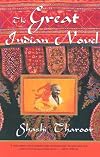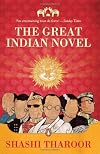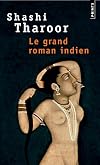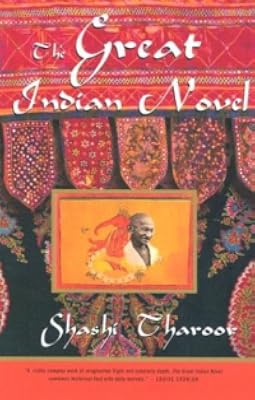
The Great Indian Novel
by Shashi Tharoor
On This Page
Description
In this award-winning novel, Tharoor has masterfully recast the two-thousand-year-old epic, The Mahabharata, with fictional but highly recognizable events and characters from twentieth-century Indian politics. Nothing is sacred in this deliciously irreverent, witty, and deeply intelligent retelling of modern Indian history and the ancient Indian epic The Mahabharata. Alternately outrageous and instructive, hilarious and moving, it is a dazzling tapestry of prose and verse that satirically, show more but also poignantly, chronicles the struggle for Indian freedom and independence. show lessTags
Recommendations



Member Reviews
Part two of my recently read trilogy of alt-mythologies is Shashi Tharoor's The Great Indian Novel. This is actually something of a mashup, the characters and happenings of the Sanskrit epic The Mahabharata neatly meshed with Indian politics leading up to independence and onwards to the 1970s.
The story is told as if narrated by one of the central-but-never-too-involved characters late in his life to a gruff younger man. This conceit works in the novel's favour, as the narrator is happy to digress, apologise, digress again, and then, when the story's perspective seems to lift to an omniscient third person view beyond any mortal sights, he'll respond to his typist's incredulous eyebrows with a pithy explanation of how he knows what he's show more narrating.
The Mahabharata was written around two thousand years ago, and the story it tells probably pre-dates that by another millennium. So it's not surprising that the characters and occurrences in the poem don't match up perfectly with the key figures and goings-on of twentieth century Indian politics. And yet, fittingly given the book's cyclic themes, these temporally disparate stories do match up just enough that a skilled weaver of tales could create something magnificent from their blend. And Shashi Tharoor has some mad weaving skills.
There's a catch, of course. Isn't there always when you're faced with a brilliant story, brilliantly told? I know just enough about Indian politics around the independence-era to avoid looking like a dolt when talking to my Indian friends, but I'd never even heard of The Mahabharata until I picked up this novel. The story itself is probably worth reading without knowing any of these things. But I found it ever more fascinating, and was better able to appreciate Shashi Tharoor's accomplishment, when I badgered my Indian chums (and Wikipedia) for the details of The Mahabharata and the intricacies of the Indian independence movement. If you know the poem, the history, and the country, then read this book. If you don't then kidnap an Indian who knows all these things, and then read this book. show less
The story is told as if narrated by one of the central-but-never-too-involved characters late in his life to a gruff younger man. This conceit works in the novel's favour, as the narrator is happy to digress, apologise, digress again, and then, when the story's perspective seems to lift to an omniscient third person view beyond any mortal sights, he'll respond to his typist's incredulous eyebrows with a pithy explanation of how he knows what he's show more narrating.
The Mahabharata was written around two thousand years ago, and the story it tells probably pre-dates that by another millennium. So it's not surprising that the characters and occurrences in the poem don't match up perfectly with the key figures and goings-on of twentieth century Indian politics. And yet, fittingly given the book's cyclic themes, these temporally disparate stories do match up just enough that a skilled weaver of tales could create something magnificent from their blend. And Shashi Tharoor has some mad weaving skills.
There's a catch, of course. Isn't there always when you're faced with a brilliant story, brilliantly told? I know just enough about Indian politics around the independence-era to avoid looking like a dolt when talking to my Indian friends, but I'd never even heard of The Mahabharata until I picked up this novel. The story itself is probably worth reading without knowing any of these things. But I found it ever more fascinating, and was better able to appreciate Shashi Tharoor's accomplishment, when I badgered my Indian chums (and Wikipedia) for the details of The Mahabharata and the intricacies of the Indian independence movement. If you know the poem, the history, and the country, then read this book. If you don't then kidnap an Indian who knows all these things, and then read this book. show less
Part two of my recently read trilogy of alt-mythologies is Shashi Tharoor's The Great Indian Novel. This is actually something of a mashup, the characters and happenings of the Sanskrit epic The Mahabharata neatly meshed with Indian politics leading up to independence and onwards to the 1970s.
The story is told as if narrated by one of the central-but-never-too-involved characters late in his life to a gruff younger man. This conceit works in the novel's favour, as the narrator is happy to digress, apologise, digress again, and then, when the story's perspective seems to lift to an omniscient third person view beyond any mortal sights, he'll respond to his typist's incredulous eyebrows with a pithy explanation of how he knows what he's show more narrating.
The Mahabharata was written around two thousand years ago, and the story it tells probably pre-dates that by another millennium. So it's not surprising that the characters and occurrences in the poem don't match up perfectly with the key figures and goings-on of twentieth century Indian politics. And yet, fittingly given the book's cyclic themes, these temporally disparate stories do match up just enough that a skilled weaver of tales could create something magnificent from their blend. And Shashi Tharoor has some mad weaving skills.
There's a catch, of course. Isn't there always when you're faced with a brilliant story, brilliantly told? I know just enough about Indian politics around the independence-era to avoid looking like a dolt when talking to my Indian friends, but I'd never even heard of The Mahabharata until I picked up this novel. The story itself is probably worth reading without knowing any of these things. But I found it ever more fascinating, and was better able to appreciate Shashi Tharoor's accomplishment, when I badgered my Indian chums (and Wikipedia) for the details of The Mahabharata and the intricacies of the Indian independence movement. If you know the poem, the history, and the country, then read this book. If you don't then kidnap an Indian who knows all these things, and then read this book. show less
The story is told as if narrated by one of the central-but-never-too-involved characters late in his life to a gruff younger man. This conceit works in the novel's favour, as the narrator is happy to digress, apologise, digress again, and then, when the story's perspective seems to lift to an omniscient third person view beyond any mortal sights, he'll respond to his typist's incredulous eyebrows with a pithy explanation of how he knows what he's show more narrating.
The Mahabharata was written around two thousand years ago, and the story it tells probably pre-dates that by another millennium. So it's not surprising that the characters and occurrences in the poem don't match up perfectly with the key figures and goings-on of twentieth century Indian politics. And yet, fittingly given the book's cyclic themes, these temporally disparate stories do match up just enough that a skilled weaver of tales could create something magnificent from their blend. And Shashi Tharoor has some mad weaving skills.
There's a catch, of course. Isn't there always when you're faced with a brilliant story, brilliantly told? I know just enough about Indian politics around the independence-era to avoid looking like a dolt when talking to my Indian friends, but I'd never even heard of The Mahabharata until I picked up this novel. The story itself is probably worth reading without knowing any of these things. But I found it ever more fascinating, and was better able to appreciate Shashi Tharoor's accomplishment, when I badgered my Indian chums (and Wikipedia) for the details of The Mahabharata and the intricacies of the Indian independence movement. If you know the poem, the history, and the country, then read this book. If you don't then kidnap an Indian who knows all these things, and then read this book. show less
This satirical history of pre and post independence India, narrated with characters and events of the ageless epic, Mahabharata, is a great attempt by Shashi Tharoor. The writing, both the prose and the verse, is so fluid the pages turn quite fast. Barring certain parallels that feel forced, and some tedious philosophical discourse, this book is an enjoyable read, especially for those who have read their Mahabharata and know the modern political history of India.
This is a retelling of the Mahabharatha as a story of the modern history of India. It's an amazing book - combining wit, broad humour (including a collection of really horrendous puns), passion and polemic.
It's densely allusive: as my knowledge of both the Mahabharata and modern Indian history is little more than outline, I couldn't tell you how much twisting of each is necessary to make them fit together. But even from my position of ignorance, I picked up all sorts of little references - for example, every Westerner who's produced a famous portrayal of India lends his name to a bit-part player, from EM Forster to Richard Attenborough (director of the film "Gandhi"), and I also spotted throwaway references to both Rushdie and Vikram show more Seth. Even the title has two or three meanings packed into it: maha=great, bharata=India.
This should not, however, make the book seem like a chore to read. It was a delight - a fast-moving, epic tale, which is funny as well as moving. show less
It's densely allusive: as my knowledge of both the Mahabharata and modern Indian history is little more than outline, I couldn't tell you how much twisting of each is necessary to make them fit together. But even from my position of ignorance, I picked up all sorts of little references - for example, every Westerner who's produced a famous portrayal of India lends his name to a bit-part player, from EM Forster to Richard Attenborough (director of the film "Gandhi"), and I also spotted throwaway references to both Rushdie and Vikram show more Seth. Even the title has two or three meanings packed into it: maha=great, bharata=India.
This should not, however, make the book seem like a chore to read. It was a delight - a fast-moving, epic tale, which is funny as well as moving. show less
Like no other book I've read. It's a clever, sarcastic, hopeful, cutting/biting, clever, poetic, and lyrical retelling of Mahabharata, an Indian epic, but reformulated to tell of India's past, from the end of the British Raj era till 1970/80's.
It's philosophical but accessible. And Tharoor maintains a wit and forgiving (or perhaps, accepting) tone.
The book is dense with material and reflection or commentary. I enjoyed the satirical element. So many of India's figures are presented, in light disguise, but very bare and under a critical eye. No one is spared... except the people of India
I do think knowing a good amount about India helps. I certainly chuckled knowingly at who, what and where Tharoor referred to.
It's philosophical but accessible. And Tharoor maintains a wit and forgiving (or perhaps, accepting) tone.
The book is dense with material and reflection or commentary. I enjoyed the satirical element. So many of India's figures are presented, in light disguise, but very bare and under a critical eye. No one is spared... except the people of India
I do think knowing a good amount about India helps. I certainly chuckled knowingly at who, what and where Tharoor referred to.
A good friend recommended this and I said, "Sure, Sure," and forgot about it for six months. When I finally felt sufficiently obligated to read it I sped through this alternate history of India; intoxicating is too small a word.
Although I'm not religious, I love books that draw on religious symbolism and allusion. (For example, Philip Pullman's His Dark Materials is rooted in Paradise Lost... love it to death).
So, I really enjoyed the fact that The Great Indian Novel is based on the Mahabharata. Since I know hardly anything ABOUT the Mahabharata, I'm sure a lot of the allegory was lost on me. But it was still a really interesting mish mash of religious stories and 20th century history. Funny, too.
And Tharoor pulls off something I imagine is pretty difficult...he presents Gandhi as a human being with flaws, even pokes light fun at him, but all in the spirit of admiration and love.
If you like to get your history in fiction form, this is also a great intro to show more the Indian independence movement. show less
So, I really enjoyed the fact that The Great Indian Novel is based on the Mahabharata. Since I know hardly anything ABOUT the Mahabharata, I'm sure a lot of the allegory was lost on me. But it was still a really interesting mish mash of religious stories and 20th century history. Funny, too.
And Tharoor pulls off something I imagine is pretty difficult...he presents Gandhi as a human being with flaws, even pokes light fun at him, but all in the spirit of admiration and love.
If you like to get your history in fiction form, this is also a great intro to show more the Indian independence movement. show less
Members
- Recently Added By
Lists

16 Books About Gods and Mythology
16 works; 1 member
Author Information

42+ Works 3,421 Members
Awards and Honors
Notable Lists
Series
Belongs to Publisher Series
Akal literaria (20)
Common Knowledge
- Original publication date
- 1989
- Important places
- India
Classifications
Statistics
- Members
- 736
- Popularity
- 38,285
- Reviews
- 19
- Rating
- (3.75)
- Languages
- 5 — English, French, German, Italian, Spanish
- Media
- Paper, Ebook
- ISBNs
- 17
- ASINs
- 2