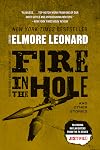
When the Women Come Out to Dance: Stories
by Elmore Leonard
Raylan Givens (Collections and Selections — 2.5)
On This Page
Description
In this superb short fiction collection, Elmore Leonard, "the greatest crime writer of our time, perhaps ever" (New York Times Book Review), once again illustrates how the line between the law and the lawbreakers is not as firm as we might think. In the title story, the basis for the hit FX series Justified, U.S. Marshal Raylan Givens meets up with an old friend, but they're now on different sides of the law. Federal marshal Karen Sisco, from Out of Sight, returns in "Karen Makes Out," once show more again inadvertently mixing pleasure with business. In "When the Women Come Out to Dance," Mrs. Mahmood gets more than she bargains for when she conspires with her maid to end her unhappy marriage. These nine stories are the great Elmore Leonard at his vivid, hilarious, and unfailingly human best. show lessTags
Recommendations







Member Reviews
The pleasures in this collection of short fiction, which are considerable, are rooted in familiarity rather than innovation. The stories cover Leonard’s trademark territory and they feature his highly polished, minimalist prose. Raylan Givens and Karen Sisco put in appearances, welcome as ever, and the characters who’re new to these stories are recognizable Leonard types. To read Fire in the Hole is to watch an old pro at work.
The “old pro” quality shows, too, in Leonard’s ability to find novelty in familiar situations that – in the hands of a lazier or less capable writer – would feel stale or clichéd. Karen Sisco’s outing, “Karen Makes Out, is a slightly surreal riff on a plot explored in scores of movies and show more hundreds of television episodes: “A cop’s personal and professional lives become entangled.” The title story, featuring Raylan Givens, takes a plot as old as Warner Brothers gangster pictures – old friends on opposite sides of the law – and makes it feel fresh by rooting the characters’ entangled backgrounds in the specifics of growing up poor in a small Kentucky town. Best of all are two one-off tales: “Hurrah for Capt. Early,” about the simmering tensions caused by the arrival of a stranger in a Western town, and “When the Women Come Out to Dance,” about a tough-minded woman who discovers that she isn’t quite as smart or as worldly as she thought she was. Familiar plots and archetypal characters, but Leonard makes them new again.
None of these stories will change your life, or cause you to rethink your view of the world. They will, however, give the pleasure that comes of watching Michael Jordan arc a perfect jump shot, or Yo-Yo Ma glide through a Bach sonata. Mastery, so polished that it looks effortless, is always beautiful. show less
The “old pro” quality shows, too, in Leonard’s ability to find novelty in familiar situations that – in the hands of a lazier or less capable writer – would feel stale or clichéd. Karen Sisco’s outing, “Karen Makes Out, is a slightly surreal riff on a plot explored in scores of movies and show more hundreds of television episodes: “A cop’s personal and professional lives become entangled.” The title story, featuring Raylan Givens, takes a plot as old as Warner Brothers gangster pictures – old friends on opposite sides of the law – and makes it feel fresh by rooting the characters’ entangled backgrounds in the specifics of growing up poor in a small Kentucky town. Best of all are two one-off tales: “Hurrah for Capt. Early,” about the simmering tensions caused by the arrival of a stranger in a Western town, and “When the Women Come Out to Dance,” about a tough-minded woman who discovers that she isn’t quite as smart or as worldly as she thought she was. Familiar plots and archetypal characters, but Leonard makes them new again.
None of these stories will change your life, or cause you to rethink your view of the world. They will, however, give the pleasure that comes of watching Michael Jordan arc a perfect jump shot, or Yo-Yo Ma glide through a Bach sonata. Mastery, so polished that it looks effortless, is always beautiful. show less
Boy! I do love me some Elmore Leonard. Spare writing, razor-sharp dialogue, brain-twisting plotting, wonderful characters. The last book of his that I read (in 2012) was [Road Dogs]. Thirty-one others I read before that, scattered throughout the 1980s, 1990s, and 2000s.
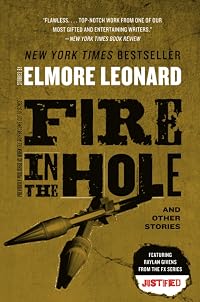
[When the Women Come Out to Dance] is a collection of nine stories, a couple of them set in the 19th century, the rest having contemporary settings. The centerpiece is "Fire in the Hole", which is the basis of the TV series "Justified". (In fact, the publisher renamed the book and republished it as [Fire in the Hole].)
In Sparks, an insurance adjuster meets with a recently widowed Californian whose house was consumed in one of those infamous wildfires. He knows the show more wildfire didn't consume the house. Will he persuade her to confess?
Terminally ill 80-somethings meet, chat a few minutes over drinks, and just-like-that agree to live together. It's Hanging Out at the Buena Vista. "Would we sleep together?" asks Vincent. To which Natalie, after a moment of thought, replies, "Well, not the first night."
Vernice has had it with Chickasaw Charlie Hoke, the older guy who's living with her. Get a job or get out, she tells him. His plan is to convince the general manager of a new casino to hire him as a celebrity host. Charlie has two qualifications: he had an 18-year career as a pitcher, even pitched in a World Series. In addition, he's a Chickasaw Indian from Tishomingo County and the new place's name is to be Tishomingo Hotel & Casino. Can he convince the GM?
In When the Women Come Out to Dance, a young Columbian widow is hired as a domestic by an ex-stripper who's married to a wealthy Pakistani plastic surgeon. (The widow's late husband died in an unfortunate accident, buried in a load of concrete from the cement truck he drove. The police found it suspicious that his hands were tied behind his back.) Not long thereafter, the surgeon, a notorious womanizer, dies in a one-car accident.
Boyd Crowder, a one-time coal miner, spent six years in prison for not paying income tax. Released, Boyd "formed the East Kentucky Militia with a cadre of neo-Nazi skinheads, a bunch of boys wearing Doc Martens and swastika tattoos." He adopts Fire in the Hole as his war cry. The government responds to the threat Boyd presents by reassigning U. S. Marshall Raylan Givens to Harlan County, Kentucky, his birthplace. Lethal shenanigans ensue.
Karen Makes Out has Deputy U. S. Marshal Karen Sisco approached by an F.B.I. agent, asking her about her new boyfriend, sharing his suspicions. She can't believe what he tells her; she won't believe it. While the bf is trying to guess what she does for a living—"Don't tell me, I want to guess, even if it takes a while"—what he does for a living is the story's mystery.
In the aftermath of the war in Cuba, a small Texas town prepares a celebration for a local war hero in Hurrah for Capt. Early. Arriving for the do is a well-dressed colored man toting a tidy bedroll. The hotel staff won't allow him to sit in the lobby, even though the man, Bo Catlett, says he's waiting for Bren Early ("Bren is it," says the hotel clerk), and that he and Early "go back a ways."
A Mexican bandito rides toward a prosperous Texas ranch, presuming to rustle some cattle. His attention is drawn to an attractive woman bathing herself at a hand pump outside a ramshackle cabin in a vast, barren desert. She's The Tonto Woman, wife of the rancher whose cattle the Mexican plans to rustle. She was kidnapped by Indians and her face tattooed; her husband got her back, then banished her from his sight. He reappraises the decision.
A long-time Hollywood stuntman, rocked by the accidental death of his girlfriend, opts to return home to Oklahoma, where he has a large farm. When the stuntman, who called himself Tenkiller in the credits, arrives home, he discovers his farm manager is sliding into dementia and has effectively signed away the farm to a low-life family that refuses to vacate. A real estate agent representing the grifters is a former schoolmate of the stuntman, and an old flame as well.
The collection is a mix, of course, but each story dazzles with Leonard magic. My thumb is up for it. show less
[When the Women Come Out to Dance] is a collection of nine stories, a couple of them set in the 19th century, the rest having contemporary settings. The centerpiece is "Fire in the Hole", which is the basis of the TV series "Justified". (In fact, the publisher renamed the book and republished it as [Fire in the Hole].)
In Sparks, an insurance adjuster meets with a recently widowed Californian whose house was consumed in one of those infamous wildfires. He knows the show more wildfire didn't consume the house. Will he persuade her to confess?
Terminally ill 80-somethings meet, chat a few minutes over drinks, and just-like-that agree to live together. It's Hanging Out at the Buena Vista. "Would we sleep together?" asks Vincent. To which Natalie, after a moment of thought, replies, "Well, not the first night."
Vernice has had it with Chickasaw Charlie Hoke, the older guy who's living with her. Get a job or get out, she tells him. His plan is to convince the general manager of a new casino to hire him as a celebrity host. Charlie has two qualifications: he had an 18-year career as a pitcher, even pitched in a World Series. In addition, he's a Chickasaw Indian from Tishomingo County and the new place's name is to be Tishomingo Hotel & Casino. Can he convince the GM?
In When the Women Come Out to Dance, a young Columbian widow is hired as a domestic by an ex-stripper who's married to a wealthy Pakistani plastic surgeon. (The widow's late husband died in an unfortunate accident, buried in a load of concrete from the cement truck he drove. The police found it suspicious that his hands were tied behind his back.) Not long thereafter, the surgeon, a notorious womanizer, dies in a one-car accident.
Boyd Crowder, a one-time coal miner, spent six years in prison for not paying income tax. Released, Boyd "formed the East Kentucky Militia with a cadre of neo-Nazi skinheads, a bunch of boys wearing Doc Martens and swastika tattoos." He adopts Fire in the Hole as his war cry. The government responds to the threat Boyd presents by reassigning U. S. Marshall Raylan Givens to Harlan County, Kentucky, his birthplace. Lethal shenanigans ensue.
Karen Makes Out has Deputy U. S. Marshal Karen Sisco approached by an F.B.I. agent, asking her about her new boyfriend, sharing his suspicions. She can't believe what he tells her; she won't believe it. While the bf is trying to guess what she does for a living—"Don't tell me, I want to guess, even if it takes a while"—what he does for a living is the story's mystery.
In the aftermath of the war in Cuba, a small Texas town prepares a celebration for a local war hero in Hurrah for Capt. Early. Arriving for the do is a well-dressed colored man toting a tidy bedroll. The hotel staff won't allow him to sit in the lobby, even though the man, Bo Catlett, says he's waiting for Bren Early ("Bren is it," says the hotel clerk), and that he and Early "go back a ways."
A Mexican bandito rides toward a prosperous Texas ranch, presuming to rustle some cattle. His attention is drawn to an attractive woman bathing herself at a hand pump outside a ramshackle cabin in a vast, barren desert. She's The Tonto Woman, wife of the rancher whose cattle the Mexican plans to rustle. She was kidnapped by Indians and her face tattooed; her husband got her back, then banished her from his sight. He reappraises the decision.
A long-time Hollywood stuntman, rocked by the accidental death of his girlfriend, opts to return home to Oklahoma, where he has a large farm. When the stuntman, who called himself Tenkiller in the credits, arrives home, he discovers his farm manager is sliding into dementia and has effectively signed away the farm to a low-life family that refuses to vacate. A real estate agent representing the grifters is a former schoolmate of the stuntman, and an old flame as well.
The collection is a mix, of course, but each story dazzles with Leonard magic. My thumb is up for it. show less
"And it seemed to move him. Hazen said, "Sometimes it works," shaking his head, "and sometimes it don't." He looked at Denise again to say, "This one wasn't my trip," and walked out with his big Colt .45." (pg. 227)
A strong collection of short stories from a writer whose style is ideally suited for the medium. Whereas a lot of short-story collections seem to be dumping grounds for ideas that writers couldn't expand or incorporate into novels, Elmore Leonard's sparse style (he famously advised that writers should "leave out the parts that readers tend to skip"), ear for dialogue and knack for creating memorable characters in just a few lines all conspire to make Fire in the Hole a good staging ground for his talent.
The book starts off show more quite average: 'Sparks' is well-written but largely aimless and 'Hanging Out at the Buena Vista' lives up to its title in that it is rather throwaway. 'Chickasaw Charlie Hoke' lays the baseball jargon on thick (why do American sports fans always assume others will know the lingo?) and consequently is a bit of a chore to get through. 'When the Women Come Out to Dance' adds a bit of flavour and signals an overall increase in quality in the book: 'Karen Makes Out' and 'Tenkiller' are above-average crime stories, whilst 'Hurrah for Capt. Early' and 'The Tonto Woman' have got me interested in looking into some of Leonard's Western stories.
However, it is the centrepiece, 'Fire in the Hole', coming slap bang in the middle of the book, which is worth the price of admission alone. This is the story that was the main inspiration for the exceptional TV series Justified, with US Deputy Marshal Raylan Givens returning to his hometown of Harlan in Eastern Kentucky. It is a gold mine of ideas and peppered with great dialogue, and the influence of the story can be seen from episode one of the TV show right the way to the final line of the last episode. The story's main quality is Leonard's knack of getting his characters to speak "hard words in a quiet tone of voice" (pg. 81), a love of spicy dialogue and good delivery which was the hallmark of Justified and of the stories making up this excellent collection. show less
A strong collection of short stories from a writer whose style is ideally suited for the medium. Whereas a lot of short-story collections seem to be dumping grounds for ideas that writers couldn't expand or incorporate into novels, Elmore Leonard's sparse style (he famously advised that writers should "leave out the parts that readers tend to skip"), ear for dialogue and knack for creating memorable characters in just a few lines all conspire to make Fire in the Hole a good staging ground for his talent.
The book starts off show more quite average: 'Sparks' is well-written but largely aimless and 'Hanging Out at the Buena Vista' lives up to its title in that it is rather throwaway. 'Chickasaw Charlie Hoke' lays the baseball jargon on thick (why do American sports fans always assume others will know the lingo?) and consequently is a bit of a chore to get through. 'When the Women Come Out to Dance' adds a bit of flavour and signals an overall increase in quality in the book: 'Karen Makes Out' and 'Tenkiller' are above-average crime stories, whilst 'Hurrah for Capt. Early' and 'The Tonto Woman' have got me interested in looking into some of Leonard's Western stories.
However, it is the centrepiece, 'Fire in the Hole', coming slap bang in the middle of the book, which is worth the price of admission alone. This is the story that was the main inspiration for the exceptional TV series Justified, with US Deputy Marshal Raylan Givens returning to his hometown of Harlan in Eastern Kentucky. It is a gold mine of ideas and peppered with great dialogue, and the influence of the story can be seen from episode one of the TV show right the way to the final line of the last episode. The story's main quality is Leonard's knack of getting his characters to speak "hard words in a quiet tone of voice" (pg. 81), a love of spicy dialogue and good delivery which was the hallmark of Justified and of the stories making up this excellent collection. show less
Initially I read this book for the title story, because I am mad for Boyd Crowder (Walton Goggins) in the Justified series; I skipped ahead to read Fire as soon as I got the book. I previously had read the Tonto Woman in a Western anthology, and I read it again. Then one thing led to another, and I finished the book in short time. Elmore Leonard is first a storyteller. His characters, always flawed, continue forward - sometimes fatalistically - to their understated and dark humored conclusions. Sometimes I find myself reading as fast as possible to keep up with the twists and turns of the story, held by the utter ambivalence of life's empathy toward the characters. This collection is spare in language and full in the telling. Well done.
A fantastic collection of short stories, it starts out with a couple of short sketches that are more interesting than they should be for what they are. Leonard's writing really shines as he manages to use a short scene to paint entire people & years of history.
Other stories include the one on which the TV series Justified is based & one with Karen Sisco, another interesting marshal. Plus plenty more, including 2 that I had previously read in his western stories. They were just as good the second time.
Other stories include the one on which the TV series Justified is based & one with Karen Sisco, another interesting marshal. Plus plenty more, including 2 that I had previously read in his western stories. They were just as good the second time.
I read this book for one story specifically, ‘Fire in the Hole’, which inspired the first series of Justified. I loved that show and still miss it. It also happens to be the longest and most memorable in the collection, which are otherwise neatly written and wryly amusing yet didn’t really grab me. Leonard’s narratives are character-driven but his characters aren’t generally very sympathetic. His most common theme is Disorganised Crime. Even Boyd Crowder, the most competent criminal in the book, is stymied by the gang of neo-nazi morons he runs with. ‘Fire in the Hole’ made me want to re-watch Justified, inevitably, and was also interesting for the ways in which it diverged from the TV version. While certain lines are show more identical, the ending was totally different. In the book Raylan kills Boyd; in the show Raylan’s shot misses his heart and they continue to be nemeses for five more seasons. Leonard brought Boyd back for [b:Raylan|12037108|Raylan|Elmore Leonard|https://images.gr-assets.com/books/1326486289s/12037108.jpg|17003686], though, after being inspired by the TV iteration!
Of the other stories, I liked the titular one for focusing on two female characters with an interesting dynamic. The two historical tales, ‘Hurrah for Captain Early’ and ‘The Tonto Woman’ were unexpected, as I hadn’t realised that Leonard wrote historical fiction. Even more so than the other stories, though, they were filled with racist, misogynist idiot American men. Which can be tiring and trying at the best of times. show less
Of the other stories, I liked the titular one for focusing on two female characters with an interesting dynamic. The two historical tales, ‘Hurrah for Captain Early’ and ‘The Tonto Woman’ were unexpected, as I hadn’t realised that Leonard wrote historical fiction. Even more so than the other stories, though, they were filled with racist, misogynist idiot American men. Which can be tiring and trying at the best of times. show less
THIS is how you write dialogue! My GOSH Leonard is a master without parallel! He needs to live forever, because once I'm done reading all his books, I just don't know what I'll do to satiate my craving for crime fiction. I haven't written much fiction, but if/when I do, undoubtably his method will seep in to my narrative. There simply isn't another writer worth being influenced by as far as human interaction goes. The fact that the characters in these short stories are familiar from previous books is even more delicious gravy. Masterful, just masterful.
Members
- Recently Added By
Author Information

Elmore John Leonard, Jr. 10/11/25 -- 8/20/13 Elmore John Leonard, Jr., popularly known as mystery and western writer Elmore Leonard, was born in New Orleans, Louisiana on October 11, 1925. He served in the United States Naval Reserve from 1943 to 1946. He received a Ph.D. in English from the University of Detroit in 1950. After graduating, he show more wrote short stories and western novels as well as advertising and education film scripts. In 1967, he began to write full-time and received several awards including the 1977 Western Writers of America award and the 1984 Writers of America Edgar Allan Poe award. His other works include Get Shorty, Out of Sight, Hombre, Mr. Majestyk, 3:10 to Yuma, and Rum Punch. Many of his works were adapted into movies. Library of America recently announced plans to publish the first of a three-volume collection of his books beginning in the Fall of 2014. Leonard died on August 20, 2013 from complications of a stroke he had earlier. He was 87 years old. (Bowker Author Biography) show less
Series

Common Knowledge
- Original title
- When the Women Come Out to Dance: Stories
- Alternate titles
- Fire in the Hole: Stories
- Original publication date
- 2003
- People/Characters
- Raylan Givens; Karen Sisco
- Related movies
- Justified (2010 | IMDb); Karen Sisco (2003 | IMDb)
- First words
- They sat close to each other on the sofa, Canavan aware of Mrs. Harris' scent and her dark hair, parted to one side, she would hold away from her face to look at the map spread open on the coffee table.
- Last words
- (Click to show. Warning: May contain spoilers.)"He could tell a story," Ben said.
- Disambiguation notice
- Both When the Women Come Out to Dance (2003) and Fire in the Hole: Stories (2012) include the stories:
-- "Sparks"
-- "Hanging Out at the Buena Vista"
-- "Chickasaw Charlie Hoke"
-- "When the Wom... (show all)en Come Out to Dance"
-- "Fire in the Hole"
-- "Karen Makes Out"
-- "Hurrah for Capt. Early"
-- "Tonto Woman"
-- "Tenkiller"
Classifications
Statistics
- Members
- 933
- Popularity
- 28,671
- Reviews
- 29
- Rating
- (3.75)
- Languages
- 5 — English, French, Italian, Portuguese, Russian
- Media
- Paper, Audiobook, Ebook
- ISBNs
- 33
- ASINs
- 9