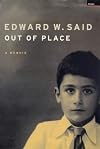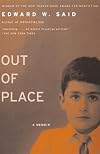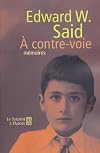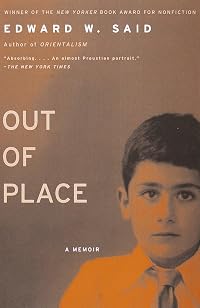
Out of Place: a memoir
by Edward W. Said
On This Page
Description
From one of the most important intellectuals of our time comes an extraordinary story of exile and a celebration of an irrecoverable past. A fatal medical diagnosis in 1991 convinced Edward Said that he should leave a record of where he was born and spent his childhood, and so with this memoir he rediscovers the lost Arab world of his early years in Palestine, Lebanon, and Egypt. Said writes with great passion and wit about his family and his friends from his birthplace in Jerusalem, schools show more in Cairo, and summers in the mountains above Beirut, to boarding school and college in the United States, revealing an unimaginable world of rich, colorful characters and exotic eastern landscapes. Underscoring all is the confusion of identity the young Said experienced as he came to terms with the dissonance of being an American citizen, a Christian and a Palestinian, and, ultimately, an outsider. Richly detailed, moving, often profound, Out of Place depicts a young man's coming of age and the genesis of a great modern thinker. show lessTags
Recommendations
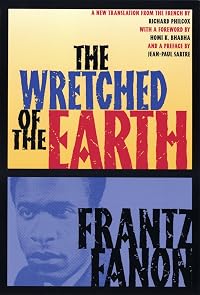
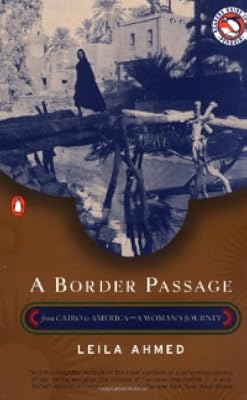
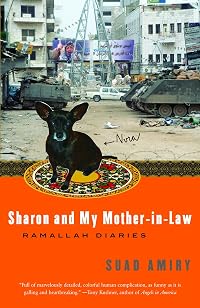
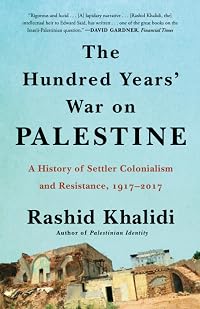

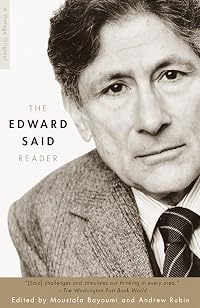
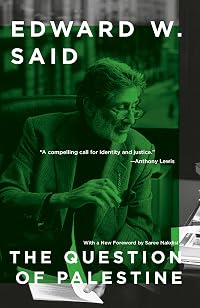



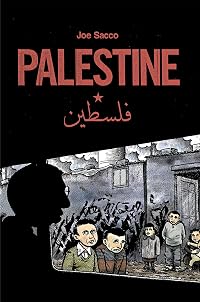
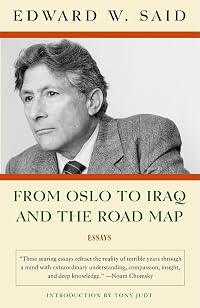
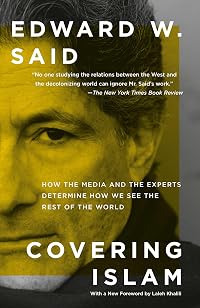


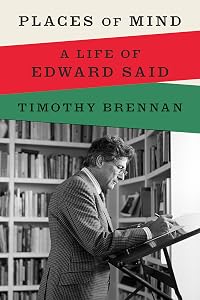
Member Recommendations
aamirq An emotional Palestinian memoir

by anonymous user
Member Reviews
All families invent their parents and children, give each of them a story, character, fate, and even a language. There was always something wrong with how I was invented and meant to fit in with the world of my parents and four sisters. Whether this was because I constantly misread my part or because of some deep flaw in my being I could not tell for most of my early life. Sometimes I was intransigent, and proud of it. At other times I seemed to myself to be nearly devoid of any character at all, timid, uncertain, without will. Yet the overriding sensation I had was of always being out of place.
Edward Said was an important academic, intellectual and writer, known for his literary criticism and writings on orientalism and the politics of show more a Palestinian state. Having been diagnosed with chronic lymphocytic leukemia, anticipated to be fatal, he set forth to provide a “subjective account” of his early years spent in the Middle East and later, in the United States. Edward Said passed away in 2003.
Said was born in 1935 in Jerusalem, in what was then Palestine, to Christian parents. Both of his parents were Palestinian by birth, although his father, Wadie, obtained American citizenship after fighting for the U.S. forces in World War I. His mother, Hilda, was mostly raised in Beirut, home to her maternal relatives, but returned as a teenager to Nazareth for an arranged marriage with the much older Wadie.
Said’s childhood was spent in Jerusalem, Cairo and Beirut, before moving to the United States, where he would complete high school at Mount Hermon School, secure degrees from Princeton and Harvard, and live out his adulthood. From an early age, he struggled with the ambiguities of speaking multiple languages and the national identity confusions of being a Christian Palestinian with American citizenship through his father, while residing in various Arab countries. His early education took place in schools for the children of American and British expatriates, where he was often treated as an outsider by his peers and as a disciplinary problem by his teachers.
Although recognizing that his childhood took place against a backdrop of major changes in the Middle East, the focus of Said’s memoir is personal, not political. His relationships with his parents are both a source of ambivalence and the most powerful force in shaping his development. Both parents were in their own ways loving but overly controlling. His father exercised a parental authority and discipline that was distant, critical, emotionally repressive, and focused on the requirements of his son achieving manhood. His mother vacillated between suffocating affection and harsh judgments, but remained Edward’s primary refuge and support throughout her lifetime. Raised in a culturally rich environment, he was introduced to great literature, theater and music at a young age. Yet despite his talents in these areas, the constant criticism he experienced, both at home and at school, left him with pervasive feelings of isolation, lack of belonging and self-doubt, and a poor body image. Separation from his family, and especially his mother, caused him great loneliness while in the U.S., although it was mainly during these years that he found the confidence and independence necessary to accept his own identity.
I cannot recall ever having read another memoir of childhood that was as painfully candid and amazingly detailed as this. The scope and depth of his memories are astonishing and their description is enriched by the insights of adulthood. Perhaps appropriately, Said ends his memoir with the death of his mother, providing only hints of his later life and its continued reflection of the confusions of his youth, even as he anticipated his own death.
I occasionally experience myself as a cluster of flowing currents. I prefer this to the idea of a solid self, the identity to which so many attach so much significance. These currents, like the themes of one's life, flow along during the waking hours, and at their best, they require no reconciling, no harmonizing. They are "off" and may be out of place, but at least they are always in motion, in time, in place, in the form of all kinds of strange combinations moving about, not necessarily forward, sometimes against each other, contrapuntally yet without one central theme. A form of freedom, I'd like to think, even if I am far from being totally convinced that it is. That skepticism too is one of the themes I particularly want to hold on to. With so many dissonances in my life I have learned actually to prefer being not quite right and out of place.
Highly recommended. show less
Polished prose from Said and he describes the various dislocations of his childhood adroitly, but to me it always felt like an old man looking back rather than the child or the young man in the moment. I mean the book is very consciously about something — the excavation of the “real Edward” from within the shell-Edwards constructed by each of his parents — and this is a narrative apparent to the author only in retrospect. That’s fine, it just rendered the book as a whole sort of distant to me. Also, Ed talks a lot about music and less about books, but we never taste or smell anything. So his memories are made of different stuff from mine.
خارج المكان وخارج الزمان هذا المفكر الفريد الذي لا تستطيع الا ان تحييه على شجاعته الفريدة من نوعها رحم الله ادوارد سعيد الذي امن بالانسان الانسان على حسب وصف الدكتور عبد الوهاب المسيري ولو ان هنالك اختلاف واضح بين قراءة سعيد والمسيري للتاريخ والانسان لكن جوهر همهما كان نصرة الحق ورفع الظلم عن المظلومين
قد نتحاشى بعض تفاصيل هذه السيرة الذاتية الممتعة التي تحمل معاني عميقة لكونها كتبت من مفكر عاش في الولايات show more المتحدة الامريكية منذ مراهقته تقريبا ,الا انها حتى في هذه التفاصيل تحمل هما واحدا هو القضية الفلسطينية ولن تكتمل لديك الصورة الا وفي مخيلتك هذا النموذج, قراءة التاريخ باعين اديب مثل ادوارد سعيد له ميرة. فانت ترى الاحداث من خلال ماكنه تحليليه للنفس وللمشهد السياسي لا توصف باقل من عبقرية, انوي ان اقرأ في القريب العاجل كتابه الاهم الاستشراق لما له من شهرة واسعة . show less
قد نتحاشى بعض تفاصيل هذه السيرة الذاتية الممتعة التي تحمل معاني عميقة لكونها كتبت من مفكر عاش في الولايات show more المتحدة الامريكية منذ مراهقته تقريبا ,الا انها حتى في هذه التفاصيل تحمل هما واحدا هو القضية الفلسطينية ولن تكتمل لديك الصورة الا وفي مخيلتك هذا النموذج, قراءة التاريخ باعين اديب مثل ادوارد سعيد له ميرة. فانت ترى الاحداث من خلال ماكنه تحليليه للنفس وللمشهد السياسي لا توصف باقل من عبقرية, انوي ان اقرأ في القريب العاجل كتابه الاهم الاستشراق لما له من شهرة واسعة . show less
Fantastic book. Whiel I read it two years ago, I remember that i felt it applied to me even as I was not one with so-called "identity issues", who has fairly clear roots, whose family has lived in the same place and are of very similar backgrounds, but it could be applied to various changes in identity or conflicting identities beyond ethnic, religious, race political or geographic.
I picked this up because I was curious but amazingly uninformed about the author and then it languishe for quite some time on my shelf. It's an unusual memoir, jumping around in time in a slightly confusing way, but it created a sense of time and place that I really enjoyed connecting with. The biggest impression was mainly that his parents were just horrible, though. Since I see it through the adult eyes of his childhood memories, maybe it is not as it seems but they seem just horrible. They assume the worst of him and constantly attack him.It is a strange upbringing and only his banishment to boarding school in the US seems to actually save him from it. I'm glad I read it but it took much longer than I expected because it was very show more difficult at times. show less
For some reason, I thought it was important to read Edward W. Said's memoir before any of his other influential and intellectual works. I thought it might help me better understand his point of view or something like that. Unfortunately, this memoir didn't really delve too much into Edward's adult life, and the events that shaped his intellectual thought were overshadowed by a ton of detail regarding his family life.
Content warnings:
- child abuse (mostly emotional)
- cancer
On one hand, I can't really hold either the subject/timeframe of this memoir or its contents against Edward Said, because it's his memoir to do with what he liked and he wrote it during the last months of his terminal illness. On the other, it's absolutely and show more incredibly tedious (I'm so sorry). It's clear that he wrote this more for himself than for an audience in mind. But while it paints a very interesting portrait of Cairo in the 40s and 50s, the rest had me struggling to get through. A lot of time is spent on details, sometimes very intimate details, that I'm not sure I need to know.
But even so, it doesn't put me off reading his other works. show less
Content warnings:
- child abuse (mostly emotional)
- cancer
On one hand, I can't really hold either the subject/timeframe of this memoir or its contents against Edward Said, because it's his memoir to do with what he liked and he wrote it during the last months of his terminal illness. On the other, it's absolutely and show more incredibly tedious (I'm so sorry). It's clear that he wrote this more for himself than for an audience in mind. But while it paints a very interesting portrait of Cairo in the 40s and 50s, the rest had me struggling to get through. A lot of time is spent on details, sometimes very intimate details, that I'm not sure I need to know.
But even so, it doesn't put me off reading his other works. show less
Edward Said experienced both British and American imperialism as the old Arab order crumbled in the late forties and early fifties. This account of his early life reveals the influences that have formed his books, "Orientalism" and "Culture and Imperialism". Edward Said was born in Jerusalem, and brought up in Cairo, spending every summer in the Lebanese mountain village of Dhour el Shweir, until he was "banished" to America in 1951. This work is a mixture of emotional archaeology and memory, exploring an essentially irrecoverable past. As ill health sets him thinking about endings, Edward Said returns to his beginnings in this personal memoir of his ferociously demanding "Victorian" father, and his adored, inspiring, yet ambivalent mother.
Members
- Recently Added By
Published Reviews
ThingScore 100
Und Said, der Literaturwissenschaftler, der scharfsinnige Analytiker, der Dekonstrukteur von Mythen und Stereotypen, erweist sich als ein grandioser Erzähler. Man muss nicht gleich, wie Salman Rushdie in einer enthusiastischen Rezension, Proust, Balzac oder Joseph Conrad zum Vergleich heranziehen, um zu erkennen, dass "Out of Place", auf deutsch "Am falschen Ort", zu den bemerkenswertesten show more Autobiographien gehört, die inden letzten Jahrzehnten erschienen sind. show less
added by Indy133
Lists

The Emergence of the Modern Middle East
289 works; 13 members

Universtiy of Toronto - NMC473/2173H - Intellectuals of the Arab World
91 works; 2 members

Decolonize Palestine's Reading List
126 works; 3 members
Author Information

105+ Works 16,734 Members
Born in Jerusalem and educated at Victoria College in Cairo and at Princeton and Harvard universities, Edward Said has taught at Columbia University since 1963 and has been a visiting professor at Harvard and Johns Hopkins University. He has had an unusual dual career as a professor of comparative literature, a recognized expert on the novelist show more and short story writer Joseph Conrad, (see Vol. 1) and as one of the most significant contemporary writers on the Middle East, especially the Palestinian question and the plight of Palestinians living in the occupied territories. Although he is not a trained historian, his Orientalism (1978) is one of the most stimulating critical evaluations of traditional Western writing on Middle Eastern history, societies, and literature. In the controversial Covering Islam (1981), he examined how the Western media have biased Western perspectives on the Middle East. A Palestinian by birth, Said has sought to show how Palestinian history differs from the rest of Arabic history because of the encounter with Jewish settlers and to present to Western readers a more broadly representative Palestinian position than they usually obtain from Western sources. Said is presently Old Dominion Foundation Professor in the Humanities at Columbia, editor of Arab Studies Quarterly, and chair of the board of trustees of the Institute of Arab Studies. He is a member of the Palestinian National Council as well as the Council on Foreign Relations in New York. (Bowker Author Biography) Edward W. Said is University Professor of English & Comparative Literature at Columbia University. He is the author of nineteen books, including "Orientalism" (which was nominated for a National Book Critics Circle Award), "Culture & Imperialism", "The End of the Peace Process", & "Out of Place", a memoir. He lives in New York City. (Bowker Author Biography) show less
Awards and Honors
Awards
Series
Belongs to Publisher Series
Common Knowledge
- Canonical title
- Out of Place: a memoir
- Original title
- Out of Place. A Memoir
- Original publication date
- 1999
- Important places
- Lebanon; Egypt; Palestine
- Dedication
- To Dr. Kanti Rai and Miriam C. Said
- First words
- All families invent their parents and children, give each of them a story, character, fate, and even a language.
- Last words
- (Click to show. Warning: May contain spoilers.)With so many dissonances in my life I have learned actually to prefer being not quite right and out of place.
- Blurbers
- Nadine Gordimer; Salman Rushdie; Kenzaburo Oe
- Original language*
- Amerikanisch
*Some information comes from Common Knowledge in other languages. Click "Edit" for more information.
Classifications
- Genres
- Biography & Memoir, Literature Studies and Criticism, Nonfiction
- DDC/MDS
- 809 — Literature & rhetoric Literature, rhetoric & criticism History, description, critical appraisal of more than two literatures
- LCC
- E184 .P33 .S25 — History of the United States United States Elements in the population Afro-Americans
- BISAC
Statistics
- Members
- 866
- Popularity
- 31,289
- Reviews
- 13
- Rating
- (3.80)
- Languages
- 15 — Arabic, Chinese, Dutch, English, French, German, Hebrew, Italian, Norwegian (Bokmål), Norwegian, Portuguese, Slovenian, Spanish, Swedish, Turkish
- Media
- Paper, Ebook
- ISBNs
- 25
- ASINs
- 4