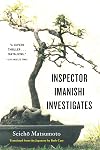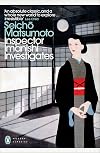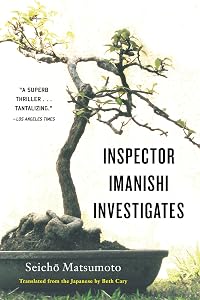
Inspector Imanishi Investigates
by Seichō Matsumoto
On This Page
Description
Tokyo, 1960. As the first rays of morning light hit the rails at Kamata Station, a man's body is found on the tracks. With only two leads - a distinctive accent and a single word, 'kameda' - senior inspector Imanishi Eitaro is called in to solve the puzzle.Tags
Recommendations






















Member Reviews
This is my idea of Japanese noir. Slow pace with lots of daily mundanities, lots of potential leads that don't pan out, lots of thinking and reading the newspapers or magazines. Time passes very suddenly in the space of a line. Sometimes the psychology of the crime can be very raw and extra messed up, but the dimly-lit homey public spaces (like Tanizaki's In Praise of Shadows) and countryside farmhouses (like in Old Enough!) ground me enough. I can read a few more books of Imanishi just reading magazines for clues and travelling on trains to explore wild leads.
A wonderful book, exquisitley translated. The year is 1960 and we are in both Tokyo and small town Japan. The war is over, but memories linger. Japan is improving economically but we are yet to see the transformations of the 1970s and 1980s. New cultural ideas are starting to replace old certainties
And into this steps Inspector Imanishi. Careful, methodical, good at his job, polite and keenly aware of his status, he is in many ways an ideal policeman - for that place and time. It is worth noting that in the 1960s and still today, the vast majority of criminal cases in Japan are solved via confession. Imanishi expects to get to the bottom of his case through identifying the right suspec
But to start with, he can't even identify the body. show more A man has been beaten beyond recognition and left underneath a train. He is not local - noone is missing. No one knows anything about him, other than that he was drinking in a bar with a younger man. All Imanishi has to go on his a scrap of overheard conversation; the name Kamada and a distinctive regional accent
From these fragments Imanishi has to build a case; and his methodical yet meandering progress, is contrasted with the modern, incomprehensible culture of the new generation Nouveau Group, and the old conservative culture of rural and regional Japan. Class and status mean everything. Women are treated with casual disrespect and have little agency; some appalling things happen to female characters in this novel, to noone's great surprise. All in all, it perfectly captures a moment in time.
Highly recommended. Minus half a star because I am not sure I quite believe in the murder method, ingenious as it is. show less
And into this steps Inspector Imanishi. Careful, methodical, good at his job, polite and keenly aware of his status, he is in many ways an ideal policeman - for that place and time. It is worth noting that in the 1960s and still today, the vast majority of criminal cases in Japan are solved via confession. Imanishi expects to get to the bottom of his case through identifying the right suspec
But to start with, he can't even identify the body. show more A man has been beaten beyond recognition and left underneath a train. He is not local - noone is missing. No one knows anything about him, other than that he was drinking in a bar with a younger man. All Imanishi has to go on his a scrap of overheard conversation; the name Kamada and a distinctive regional accent
From these fragments Imanishi has to build a case; and his methodical yet meandering progress, is contrasted with the modern, incomprehensible culture of the new generation Nouveau Group, and the old conservative culture of rural and regional Japan. Class and status mean everything. Women are treated with casual disrespect and have little agency; some appalling things happen to female characters in this novel, to noone's great surprise. All in all, it perfectly captures a moment in time.
Highly recommended. Minus half a star because I am not sure I quite believe in the murder method, ingenious as it is. show less
Cumulative effects work wonderfully in this novel. And not just the amassing of clues and facts you would expect for a crime thriller such as this. It also applies to the atmosphere, the period of Japan during the early 1960s, which is why I was interested in Inspector Imanishi Investigates in the first place.
I looked into this story because I wanted something out of time and place, whose environment would be nostalgic yet exotic. Tokyo and Japan in 1961 fit the bill perfectly. At first I was disappointed. There didn't seem to be much exotic about it at all. Just a drab, colorless train yard in a big city that, if anything, seemed reflective of American hard-boiled thrillers. Then, things began to change. Slightly. The environs of Tokyo show more gave way to more descriptive settings in the mountains and countryside. And the cityscape became more interesting. All of a sudden, the novel seemed to bring to life the transition Japan was undergoing at the time. Just a few years later, in 1964, the Tokyo Olympics would herald modern postwar Japan's re-emergence as a major economic and political power. That sense of unveiling is here, too, in Inspector Imanishi Investigates.
The bleak Tokyo landscape begins to acquire a unique character. Much like Imanishi himself, whose desperate crowded bonsai garden seeks to maintain a connection with the past, so does the new Tokyo, with its freshly sprouting apartment buildings barely coexist with the diminishing number of old prewar houses, literally casting them into shadows. Imanishi, his colleagues, and his family, nonetheless, have come to terms with the times. Amidst the gargantuan and at times inhospitable and inhuman nature of all the "Newness," the warrens of teahouses, noodle shops, and old stores provide a nest for tradition.
By chance, I happened to be reading The Pillow Book while also reading Inspector Imanishi Investigates. The courtly etiquette and mannerisms of that 1000 year-old book still linger in Inspector Imanishi, with the polished rituals of letter writing, the messaging through haiku, and even the symbols of old artisan craftsmanship as exemplified through the abacus maker and the handmade lacquered specialties. All the more poignant it is made to seem when Imanishi acknowledges towards the end that it is time to make way for a younger generation.
By the end, then, the novel has provided a unique and, for the Western reader, exotic look at a Japan quickly succumbing to the modern and the new, although Imanishi has put it off for just a while yet. That is what made it so enjoyable for me. Not to mention that the crime story itself is a puzzle piece masterfully brought together at book's end. I'll be reading more of Matsumoto's work soon. show less
I looked into this story because I wanted something out of time and place, whose environment would be nostalgic yet exotic. Tokyo and Japan in 1961 fit the bill perfectly. At first I was disappointed. There didn't seem to be much exotic about it at all. Just a drab, colorless train yard in a big city that, if anything, seemed reflective of American hard-boiled thrillers. Then, things began to change. Slightly. The environs of Tokyo show more gave way to more descriptive settings in the mountains and countryside. And the cityscape became more interesting. All of a sudden, the novel seemed to bring to life the transition Japan was undergoing at the time. Just a few years later, in 1964, the Tokyo Olympics would herald modern postwar Japan's re-emergence as a major economic and political power. That sense of unveiling is here, too, in Inspector Imanishi Investigates.
The bleak Tokyo landscape begins to acquire a unique character. Much like Imanishi himself, whose desperate crowded bonsai garden seeks to maintain a connection with the past, so does the new Tokyo, with its freshly sprouting apartment buildings barely coexist with the diminishing number of old prewar houses, literally casting them into shadows. Imanishi, his colleagues, and his family, nonetheless, have come to terms with the times. Amidst the gargantuan and at times inhospitable and inhuman nature of all the "Newness," the warrens of teahouses, noodle shops, and old stores provide a nest for tradition.
By chance, I happened to be reading The Pillow Book while also reading Inspector Imanishi Investigates. The courtly etiquette and mannerisms of that 1000 year-old book still linger in Inspector Imanishi, with the polished rituals of letter writing, the messaging through haiku, and even the symbols of old artisan craftsmanship as exemplified through the abacus maker and the handmade lacquered specialties. All the more poignant it is made to seem when Imanishi acknowledges towards the end that it is time to make way for a younger generation.
By the end, then, the novel has provided a unique and, for the Western reader, exotic look at a Japan quickly succumbing to the modern and the new, although Imanishi has put it off for just a while yet. That is what made it so enjoyable for me. Not to mention that the crime story itself is a puzzle piece masterfully brought together at book's end. I'll be reading more of Matsumoto's work soon. show less
Miso and Murder
"The murderer had viciously battered the victim's face after death, indicating that the criminal was someone who hated the victim a great deal, or that the murderer had intended to destroy the face totally in order to prevent identification of the body. The investigation team concluded the crime had not been motivated by robbery but was a murder committed by an acquaintance of the victim acting out of hatred, perhaps a crime of passion." (p. 5)
With little to go on, other than a faceless corpse, Inspector Imanishi sets out to find a murderer. The clues are scarce, dead ends abound, yet the inspector works on. In some ways he reminded me of the Japanese version of Columbo, all rumpled trench coat and dogged patience. Except show more Imanishi wears a kimono, at least at home. He also collects miniature bonsai trees, eats miso soup and rice for breakfast, writes haikus and spends a lot of time reclining on a tatami mat, smoking cigarettes and pondering the case.
Several times I almost gave up on this book - too many strange names: train stations, prefectures, and people. Too many quiet moments. Too little drama. But page by page, it began to grow on me. I liked the way Imanishi poured green tea over his rice before he ate it. I liked the way his wife, Yoshiko, fussed over him and how he followed hunch after hunch until he solved the case.
Imanishi isn't a man given to emotion. He is quiet, determined and thorough. His search for the killer is less a roller coaster ride, and more a game of soduku - of trying different things until something fits then moving to the next step.
Seicho Matsumoto didn't start writing until he was in his forties. He went on to write 450 novels before he died at age 83. On the back of the 1989 version of this book (originally published in 1961) is a photo of the author; gray hair scraped back and hanging below his ears, horn-rimmed glasses, white shirt, thin black tie and an unlit cigarette dangling from his lips. He has the stony expression and creased face of someone who's pulled a few too many all-nighters.
I love this guy.
I ended up loving this book.
I wish more of his books were in print. Amazon is releasing a title in May called Pro Bono. I will definitely be ordering a copy. show less
"The murderer had viciously battered the victim's face after death, indicating that the criminal was someone who hated the victim a great deal, or that the murderer had intended to destroy the face totally in order to prevent identification of the body. The investigation team concluded the crime had not been motivated by robbery but was a murder committed by an acquaintance of the victim acting out of hatred, perhaps a crime of passion." (p. 5)
With little to go on, other than a faceless corpse, Inspector Imanishi sets out to find a murderer. The clues are scarce, dead ends abound, yet the inspector works on. In some ways he reminded me of the Japanese version of Columbo, all rumpled trench coat and dogged patience. Except show more Imanishi wears a kimono, at least at home. He also collects miniature bonsai trees, eats miso soup and rice for breakfast, writes haikus and spends a lot of time reclining on a tatami mat, smoking cigarettes and pondering the case.
Several times I almost gave up on this book - too many strange names: train stations, prefectures, and people. Too many quiet moments. Too little drama. But page by page, it began to grow on me. I liked the way Imanishi poured green tea over his rice before he ate it. I liked the way his wife, Yoshiko, fussed over him and how he followed hunch after hunch until he solved the case.
Imanishi isn't a man given to emotion. He is quiet, determined and thorough. His search for the killer is less a roller coaster ride, and more a game of soduku - of trying different things until something fits then moving to the next step.
Seicho Matsumoto didn't start writing until he was in his forties. He went on to write 450 novels before he died at age 83. On the back of the 1989 version of this book (originally published in 1961) is a photo of the author; gray hair scraped back and hanging below his ears, horn-rimmed glasses, white shirt, thin black tie and an unlit cigarette dangling from his lips. He has the stony expression and creased face of someone who's pulled a few too many all-nighters.
I love this guy.
I ended up loving this book.
I wish more of his books were in print. Amazon is releasing a title in May called Pro Bono. I will definitely be ordering a copy. show less
Would I read another book by this author?
Yes
Would I recommend this book?
Yes.
To whom would I recommend it?
To anyone interested in murder mysteries, particularly police procedural stories.
Did this book inspire me to do anything?
Yes. I delved into more detail on Japanese geography and in particular the layout and areas of Tokyo city.
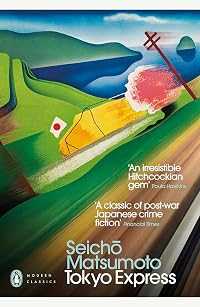
This is the second book I have read by Seicho Matsumoto, the first one being “Tokyo Express”. As with “Tokyo Express” this story involves a lot of travel by train. Unlike “Tokyo Express” the train travel is not central to the mystery, but it introduces the reader to far flung parts of Japan and helps enlighten them to the diversity of Japan in terms of its climate, landscape, dialects, local show more industries. Simply by reading the book one acquires knowledge about regions in northern and southern Japan, and gets to know the names of several localities in Tokyo.
I found the book compelling and was keen to pick it up and continue reading. This was despite the writing style being a bit formal. I do not know if this is a result of the translation process or of the way the story was originally written. Japanese is apparently quite a florid language so I cannot help but think the original must have been more stylised.
The story includes many aspects that indicate the treatment of women in Japanese culture was not very good at the time of the novel’s writing. It is demonstrated quite starkly and I can only assume the author did this deliberately to highlight this cultural issue.
Unlike “Tokyo Express”, “Inspector Imanishi Investigates” showed the mystery being solved rather than telling how everything was resolved. If anything it went to great length to show the tiring slog that a police investigation can involve. It showed the frustrations faced by the detectives involved and emphasised the need to support findings with proof that will support the case in court. show less
Yes
Would I recommend this book?
Yes.
To whom would I recommend it?
To anyone interested in murder mysteries, particularly police procedural stories.
Did this book inspire me to do anything?
Yes. I delved into more detail on Japanese geography and in particular the layout and areas of Tokyo city.
This is the second book I have read by Seicho Matsumoto, the first one being “Tokyo Express”. As with “Tokyo Express” this story involves a lot of travel by train. Unlike “Tokyo Express” the train travel is not central to the mystery, but it introduces the reader to far flung parts of Japan and helps enlighten them to the diversity of Japan in terms of its climate, landscape, dialects, local show more industries. Simply by reading the book one acquires knowledge about regions in northern and southern Japan, and gets to know the names of several localities in Tokyo.
I found the book compelling and was keen to pick it up and continue reading. This was despite the writing style being a bit formal. I do not know if this is a result of the translation process or of the way the story was originally written. Japanese is apparently quite a florid language so I cannot help but think the original must have been more stylised.
The story includes many aspects that indicate the treatment of women in Japanese culture was not very good at the time of the novel’s writing. It is demonstrated quite starkly and I can only assume the author did this deliberately to highlight this cultural issue.
Unlike “Tokyo Express”, “Inspector Imanishi Investigates” showed the mystery being solved rather than telling how everything was resolved. If anything it went to great length to show the tiring slog that a police investigation can involve. It showed the frustrations faced by the detectives involved and emphasised the need to support findings with proof that will support the case in court. show less
I don't know how to explain how much I loved this book. I picked it up on a whim (a Japanese actor I like is in the 2011 remake/2 ep special based on the novel) and ended up falling in love with the writing, the story and the characters. There's something about Seicho Matsumoto that I find absolutely endearing and his two main characters (Imanishi and Yoshimura) are utterly charming. I'm not sure why I feel this way, this is a murder mystery, after all. But it was one of the best I've ever read. It's not necessarily a moving/emotionally charged novel, but I was gripped from the moment I got it, until the extremely satisfying conclusion. I did hazard a few guesses as to the identity of the murderer and eventually figured it, but not too show more much before Imanishi put the pieces together). I really hope there are more English translations of Seicho Matsumoto's books to come, because I want to read them all. show less
La verdad es que no sé cómo empezar a hablar sobre este libro, porque tengo muchas cosas que decir. Me ha gustado mucho.
Voy a empezar con la única mala: muchos diálogos están mal puntuados.
Ya está.
La verdad es que no conocía a este autor. Vi el libro de casualidad, lo cogí de casualidad también y me lo he acabado leyendo en un pispás. Mi elección a ciegas es relevante porque:
La narración es tan amena que no me di cuenta de que NO era un libro actual hasta la página 114, que dijeron el año de nacimiento de un personaje y pensé que era un error. Me reí mucho cuando comprobé la fecha de publicación original y que efectivamente había pasado por alto un montón de detalles como la ausencia de teléfonos móviles, show more internet... Lo único que noté fueron tiempos de viajes en tren "un poco" raros. Irónico, teniendo en cuenta que el libro trata sobre una investigación policial. XD
El desarrollo me ha gustado mucho porque no se me ha hecho pesado, a pesar de que las cosas se van descubriendo bastante poco a poco. Te vas de aventura con el protagonista mientras busca pistas, te alegras si las encuentra y te entristeces si no. Muy real y humano en ese aspecto, parte de por qué me ha gustado tanto.
Lo mejor es que no hay momento "se ha resuelto todo pero dejamos al lector en vilo", porque te vas oliendo cositas aunque no se confirmen o desmientan hasta rato después. Ha habido un par de momentos que me dejaron con la boca abierta y eso me ha encantado.
Los personajes son muy humanos. Con esto quiero decir que son personas normales y no caricaturas, como suele pasar en los géneros procedurales. Todas las personas dan impresión de reales, alguien a quien te podrías encontrar en el bar de al lado o en la parada del autobús.
Recomiendo leerlo con un mapa y la wikipedia a mano, no porque sea un Señor de los Anillos, sino porque el protagonista viaja mucho en todas direcciones (cuánto dinero se habrá gastado el pobre señor) y pasa por sitios que --ya no existen--. Aquí entra en juego la wikipedia, que te dice a qué ciudad o distrito pertenecen actualmente xD. No te pierdes mucho si no sabes dónde está cada ciudad mencionada, pero creo que la trama gana bastante picturándote todo geográficamente (y, de paso, aprendes un poco sobre cada zona, lol). show less
Voy a empezar con la única mala: muchos diálogos están mal puntuados.
Ya está.
La verdad es que no conocía a este autor. Vi el libro de casualidad, lo cogí de casualidad también y me lo he acabado leyendo en un pispás. Mi elección a ciegas es relevante porque:
La narración es tan amena que no me di cuenta de que NO era un libro actual hasta la página 114, que dijeron el año de nacimiento de un personaje y pensé que era un error. Me reí mucho cuando comprobé la fecha de publicación original y que efectivamente había pasado por alto un montón de detalles como la ausencia de teléfonos móviles, show more internet... Lo único que noté fueron tiempos de viajes en tren "un poco" raros. Irónico, teniendo en cuenta que el libro trata sobre una investigación policial. XD
El desarrollo me ha gustado mucho porque no se me ha hecho pesado, a pesar de que las cosas se van descubriendo bastante poco a poco. Te vas de aventura con el protagonista mientras busca pistas, te alegras si las encuentra y te entristeces si no. Muy real y humano en ese aspecto, parte de por qué me ha gustado tanto.
Lo mejor es que no hay momento "se ha resuelto todo pero dejamos al lector en vilo", porque te vas oliendo cositas aunque no se confirmen o desmientan hasta rato después. Ha habido un par de momentos que me dejaron con la boca abierta y eso me ha encantado.
Los personajes son muy humanos. Con esto quiero decir que son personas normales y no caricaturas, como suele pasar en los géneros procedurales. Todas las personas dan impresión de reales, alguien a quien te podrías encontrar en el bar de al lado o en la parada del autobús.
Recomiendo leerlo con un mapa y la wikipedia a mano, no porque sea un Señor de los Anillos, sino porque el protagonista viaja mucho en todas direcciones (cuánto dinero se habrá gastado el pobre señor) y pasa por sitios que --ya no existen--. Aquí entra en juego la wikipedia, que te dice a qué ciudad o distrito pertenecen actualmente xD. No te pierdes mucho si no sabes dónde está cada ciudad mencionada, pero creo que la trama gana bastante picturándote todo geográficamente (y, de paso, aprendes un poco sobre cada zona, lol). show less
Members
- Recently Added By
Lists

Asian American Literature
46 works; 6 members

Unread books
1,063 works; 87 members

Books Read in 2026
1,913 works; 66 members
Author Information

163+ Works 2,588 Members
The creator of the social detective story, Seicho is credited with reviving the mystery genre after World War II. He began writing in his middle age and has produced over 450 fiction and nonfiction works. (Bowker Author Biography)
Some Editions
Awards and Honors
Series
Belongs to Publisher Series
Work Relationships
Common Knowledge
- Canonical title
- Inspector Imanishi Investigates
- Original title
- 砂の器 Suna no Utsuwa
- Original publication date
- 1961
- First words
- The first train on the Keihin-Tohoku line was scheduled to leave the Kamata Station at 4:08 A.M.
- Last words
- (Click to show. Warning: May contain spoilers.)La voce, calmissima, aveva un timbro musicale particolarmente gradevole.
- Original language
- Japanese
Classifications
- Genres
- Fiction and Literature, Mystery
- DDC/MDS
- 813 — Literature & rhetoric American literature in English American fiction in English
- LCC
- PL856 .A8 .S813 — Language and Literature Languages and literatures of Eastern Asia, Africa, Oceania Languages of Eastern Asia, Africa, Oceania Japanese language and literature Japanese literature Individual authors and works
- BISAC
Statistics
- Members
- 723
- Popularity
- 39,171
- Reviews
- 23
- Rating
- (3.83)
- Languages
- 5 — English, French, Italian, Japanese, Spanish
- Media
- Paper, Audiobook, Ebook
- ISBNs
- 15
- ASINs
- 12