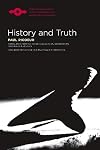
History and Truth
by Paul Ricœur
On This Page
Description
Incredible originality of thought in areas as vast as phenomenology, religion, hermeneutics, psychoanalysis, intersubjectivity, language, Marxism, and structuralism has made Paul Ricoeur one of the philosophical giants of the twentieth century. The way in which Ricoeur approaches these themes makes his works relevant to the reader today: he writes with honesty and depth of insight into the core of a problem, and his ability to mark for future thought the very path of philosophical inquiry is show more nearly unmatched. In History and Truth, Ricoeur investigates the antinomy between history and truth, or between historicity and meaning. He argues that history has meaning insofar as it approaches universality and system but no meaning insofar as this universality violates the singularity of individuals' lives. Imposing unity upon truth, or unifying the diversity of knowledge and opinion, creates a singular and universal history but destroys historicity and subjectivity. Allowing for singularities in history promotes a multiplicity of truths over a single, unique truth and thereby annihilates system. This volume and the other new editions of Ricoeur's texts published by Northwestern University Press have joined the canon of contemporary continental philosophy and continue to contribute to emergent discussions in the twenty-first century. Book jacket. show lessTags
Recommendations











Member Reviews
¿Es posible comprender la historia pasada y también vivir –y, por otra parte, hacer- la historia presente, sin ceder al espíritu de las "filosofías de la historia", ni entregarse a la irracionalidad de la violencia o del absurdo? ¿Cuál es, entonces, la verdad del oficio del historiador? ¿Y cómo participar de verdad en la tarea de nuestro tiempo?
Estas son las preguntas que atraviesan los ensayos reunidos por Paul Ricoeur en Historia y verdad. Los estudios se encuentran agrupados alrededor de dos polos: uno metodológico y otro ético. Los de la primera parte, más teóricos, están dedicados al significado de la actividad histórica e inspirados en el oficio el filósofo y de historiador de la filosofía, que practica el autor. show more Los de la segunda parte pertenecen a una crítica de la civilización y están orientados hacia una pedagogía política. A través de temas de civilización y de cultura –el trabajo, la violencia, la palabra, la angustia, la sexualidad-, Ricoeur se interroga acerca de la manera en que la verdad adviene en la actividad concreta de los hombres.
Los ensayos que componen este volumen están signados por un único ritmo que mantiene unidas las preocupaciones evocadas por el autor. "Esta pareja verbal –historia y verdad- acompaña todos estos estudios, desplazando lentamente su propio sentido y enriqueciéndolo de continuo con nuevos significados." show less
Estas son las preguntas que atraviesan los ensayos reunidos por Paul Ricoeur en Historia y verdad. Los estudios se encuentran agrupados alrededor de dos polos: uno metodológico y otro ético. Los de la primera parte, más teóricos, están dedicados al significado de la actividad histórica e inspirados en el oficio el filósofo y de historiador de la filosofía, que practica el autor. show more Los de la segunda parte pertenecen a una crítica de la civilización y están orientados hacia una pedagogía política. A través de temas de civilización y de cultura –el trabajo, la violencia, la palabra, la angustia, la sexualidad-, Ricoeur se interroga acerca de la manera en que la verdad adviene en la actividad concreta de los hombres.
Los ensayos que componen este volumen están signados por un único ritmo que mantiene unidas las preocupaciones evocadas por el autor. "Esta pareja verbal –historia y verdad- acompaña todos estos estudios, desplazando lentamente su propio sentido y enriqueciéndolo de continuo con nuevos significados." show less
Ratings
Members
- Recently Added By
Author Information

197+ Works 6,364 Members
Professor of philosophy at the University of Paris and the University of Chicago, Paul Ricoeur has been described as "possibly the only younger philosopher in Europe whose reputation is of the magnitude of that of the old men of Existentialism---Marcel, Jaspers, Heidegger and Sartre . . . ." His work has been characterized as "the most massive show more accomplishment of any philosopher of Christian faith since the appearance of Gabriel Marcel." A practitioner of the phenomenology of Edmund Husserl mediated by a return to Immanuel Kant---in that things in themselves, though unknowable, are not excluded by bracketing existence but are acknowledged as the necessary conditions for the possibility of human experience---Ricoeur has examined those parts of experience---faulty, fallible, and susceptible to error and evil---that other phenomenologists, interested primarily in the cognitional, have neglected. In this respect he follows in the footsteps of Heidegger and Sartre, but he goes beyond them in his discovery of principles transcending human subjectivity that are amenable to spiritual interpretation. Here Ricoeur steps within the contemporary hermeneutic circle of Heidegger and Hans-Georg Gadamer, on whom he has written. Ricoeur's hermeneutical method, however, has much in common with the methods of biblical exegesis, and in this respect his works should be especially appealing to seminarians and the clergy. (Bowker Author Biography) show less
Series
Belongs to Publisher Series
Classifications
Statistics
- Members
- 151
- Popularity
- 214,740
- Reviews
- 1
- Rating
- (3.33)
- Languages
- 5 — English, French, Portuguese, Romanian, Spanish
- Media
- Paper, Ebook
- ISBNs
- 9
- ASINs
- 4