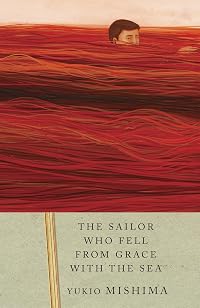
The Sailor Who Fell from Grace with the Sea
by Yukio Mishima
On This Page
Description
A band of savage thirteen-year-old boys reject the adult world as illusory, hypocritical, and sentimental, and train themselves in a brutal callousness they call 'objectivity'. When the mother of one of them begins an affair with a ship's officer, he and his friends idealise the man at first; but it is not long before they conclude that he is in fact soft and romantic. They regard this disillusionment as an act of betrayal on his part - and the retribution is deliberate and horrifying.Tags
Recommendations





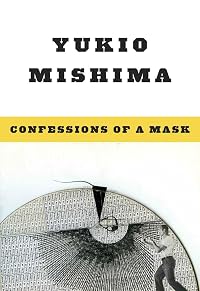

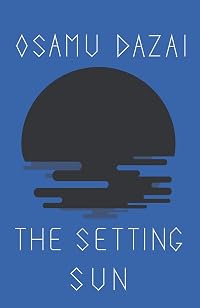




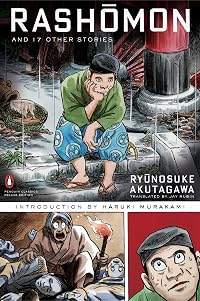
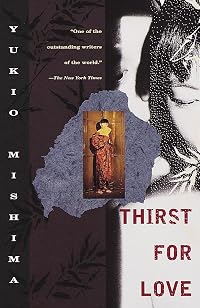

























Member Recommendations
Member Reviews
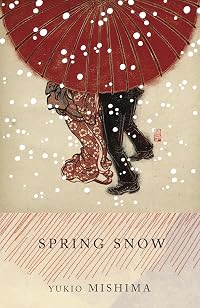
My first read for #januaryinjapan. I'd been meaning to read some more Mishima for a while now — ever since reading and loving [book:Spring Snow|62793] — and this challenge gave me the perfect reason to do so.
I so enjoy Mishima's style of writing — somehow spare and yet poetic all at once. That said, no one warned me that perhaps as the mother of a fourteen-year-old son, this book might be extra troubling. It really was. This is not a fun or light or easy book to read. There were two parts that were troubling enough that I almost stopped reading. By the way, if you are thinking of reading this book, content warnings for voyeurism, animal abuse, and violence.
BUT. Like I said, the atmosphere of Mishima's writing is so magnetic. As show more are his themes of masculinity, identity, and purpose. His books exist in that transitory space of Japan after WWII, as it was being opened to the West, and the tension between those two cultures. And specifically in this book, add a group of highly intelligent teenage boys under the sway of a budding psychopath.
This dark little book, while upsetting, is quite compelling. An enthralling read. show less
I so enjoy Mishima's style of writing — somehow spare and yet poetic all at once. That said, no one warned me that perhaps as the mother of a fourteen-year-old son, this book might be extra troubling. It really was. This is not a fun or light or easy book to read. There were two parts that were troubling enough that I almost stopped reading. By the way, if you are thinking of reading this book, content warnings for voyeurism, animal abuse, and violence.
BUT. Like I said, the atmosphere of Mishima's writing is so magnetic. As show more are his themes of masculinity, identity, and purpose. His books exist in that transitory space of Japan after WWII, as it was being opened to the West, and the tension between those two cultures. And specifically in this book, add a group of highly intelligent teenage boys under the sway of a budding psychopath.
This dark little book, while upsetting, is quite compelling. An enthralling read. show less
Disturbing and dreary, Yukio Mishima’s The Sailor Who Fell From Grace With The Sea throbs with anger. As turbulent as the waves that hit the rock by a cliff in a stormy night, every slap of seawater intensifies, the debris fall then drown, until it calms with a brief gentleness only to pick up again.
Thirteen-year old Noburo is a member of a teen gang driven by radical nihilistic convictions. Cold-blooded acts of violence, unending brain conditioning by peers in competitive and complicit huddles, and almost an irrationally intense hatred are intensified by an arrival of an intruder in his seemingly ordinary home life. This intruder is a sailor who ultimately falls in love with Noburo’s widowed mother. As the months come and go and show more the seasons change, what seems to be an Oedipal element that rusts Noburo’s relationship with both his mother and her lover, a deeper internal revolt against this relationship stems from the problematic structure and system of society; school as one of its smallest unit is an example of confining children, stifling their freedom, disciplining them akin to robots. When they turn into adults they lose the essence of innocence, imagination, and continue to let themselves be eaten by this system; blindly; willingly; and this, unfortunately emanates from his mother’s lover. The gang’s convictions then becomes more rigid and there may only be one solution.
I don’t really buy the almost excessive, subjectively unreasonable brutality of this novel most particularly with animals. The teenagers can be irritating and whiny which of course is how most of them are in real life but I at least expected a strong introspection to accompany their convictions. Beyond this flaw, there is an interesting bit about Japanese juvenile laws that turn some tables around. If not for a certain paragraph I would have rated this lower and it was, I think, the saving grace of Mishima’s too bitter and acidic The Sailor Who Fell From Grace With The Sea: “There is no such thing as a good father because the role itself is bad. Strict fathers, soft fathers, nice moderate fathers—one's as bad as another. They stand in the way of our progress while they try to burden us with their inferiority complexes, and their unrealized aspirations, and their resentments, and their ideals, and the weaknesses they've never told anyone about, and their sins, and their sweeter-than-honey dreams, and the maxims they've never had the courage to live by—they'd like to unload all that silly crap on us, all of it!“
I look forward to reading more of his works particularly Forbidden Colours. And after a lot of reading, he also had an intriguing life and controversial death that made this novel all the more horrifying. show less
Thirteen-year old Noburo is a member of a teen gang driven by radical nihilistic convictions. Cold-blooded acts of violence, unending brain conditioning by peers in competitive and complicit huddles, and almost an irrationally intense hatred are intensified by an arrival of an intruder in his seemingly ordinary home life. This intruder is a sailor who ultimately falls in love with Noburo’s widowed mother. As the months come and go and show more the seasons change, what seems to be an Oedipal element that rusts Noburo’s relationship with both his mother and her lover, a deeper internal revolt against this relationship stems from the problematic structure and system of society; school as one of its smallest unit is an example of confining children, stifling their freedom, disciplining them akin to robots. When they turn into adults they lose the essence of innocence, imagination, and continue to let themselves be eaten by this system; blindly; willingly; and this, unfortunately emanates from his mother’s lover. The gang’s convictions then becomes more rigid and there may only be one solution.
I don’t really buy the almost excessive, subjectively unreasonable brutality of this novel most particularly with animals. The teenagers can be irritating and whiny which of course is how most of them are in real life but I at least expected a strong introspection to accompany their convictions. Beyond this flaw, there is an interesting bit about Japanese juvenile laws that turn some tables around. If not for a certain paragraph I would have rated this lower and it was, I think, the saving grace of Mishima’s too bitter and acidic The Sailor Who Fell From Grace With The Sea: “There is no such thing as a good father because the role itself is bad. Strict fathers, soft fathers, nice moderate fathers—one's as bad as another. They stand in the way of our progress while they try to burden us with their inferiority complexes, and their unrealized aspirations, and their resentments, and their ideals, and the weaknesses they've never told anyone about, and their sins, and their sweeter-than-honey dreams, and the maxims they've never had the courage to live by—they'd like to unload all that silly crap on us, all of it!“
I look forward to reading more of his works particularly Forbidden Colours. And after a lot of reading, he also had an intriguing life and controversial death that made this novel all the more horrifying. show less
This novel has a deceptively simple storyline but is full of parallelisms, a chilling tale that invokes some disturbing themes. A 13-year old boy, his beautiful widowed mother, and a sailor. The boy is devoted to his loving mother and seems to have normal interests for a boy his age -- swimming, sailing, the sea. Unbeknownst to her, he belongs to a small group of highly intelligent students eager to live out the ideals of their so-called life philosophy, "objectivity", where they denounce emotions and sentimentality. It is no mere innocent childish rebellion against adults, they reject adulthood as illusory and hypocritical. They believe themselves to have the moral right to free the world of "romanticism" -- a kind of exaggerated show more nihilism, even fanaticism where violence and brutality are mere instruments to be wielded whenever necessary. A spy-hole where he peeps at his mother at night, and a savage dissection of a cat are merely two tests in emotion control.
The mother meets the sailor and they become lovers. The boy, from the beginning, looks up to him as the epitome of the hero their group aspired to -- strong, daring, valiant, glorious, terrifying, rough, in short, macho as macho can be. There is a gradual disillusionment when the sailor and his mother decides to marry and he stays ashore for good. This is the ultimate betrayal -- for once he ties himself to land and the institutions of adulthood, his weak, feminine side now dominates him. He is essentially condemned, his perfection soiled. This the group can never except, so they must do something about it.
There are strong symbolisms apparent between these main characters, the tension between imperial and modern Japan, and Mishima himself. The prose is stark compared to his other novels, yet Mishima effectively lets us explore the pathology of misplaced idealism. He is very good in doing that. show less
The mother meets the sailor and they become lovers. The boy, from the beginning, looks up to him as the epitome of the hero their group aspired to -- strong, daring, valiant, glorious, terrifying, rough, in short, macho as macho can be. There is a gradual disillusionment when the sailor and his mother decides to marry and he stays ashore for good. This is the ultimate betrayal -- for once he ties himself to land and the institutions of adulthood, his weak, feminine side now dominates him. He is essentially condemned, his perfection soiled. This the group can never except, so they must do something about it.
There are strong symbolisms apparent between these main characters, the tension between imperial and modern Japan, and Mishima himself. The prose is stark compared to his other novels, yet Mishima effectively lets us explore the pathology of misplaced idealism. He is very good in doing that. show less
Yukio Mishima occupies a strange place in the Western imagination and my imagination in particular. Ever since I saw the trailer for Paul Schrader's biopic about him, Mishima has held a mythic sway over me. He was transgressive and problematic and represented a certain kind of masculine ideal. At its best, this ideal led him to create works of beauty, and at worst turned him into a deranged fascist who committed public suicide. If he were a Westerner, I'm not sure if he would have the same cult following he does. Then again there are plenty of far-right literary figures in the West who remain canonical staples.
In undergrad, I read this novel and The Temple of the Golden Pavilion. I loved this one but was lukewarm on the latter. The best show more of the classic Japanese novelists write in what I call "hallucinatory realism". They don't just use the conventions of literary and psychological realism to explore abnormal personalities, they also have an electric undercurrent running through their work. Think about how Lynch made The Straight Story. It's not a surrealist film, but underneath it all, something isn't quite right. Among these authors, I would include Tanizaki, Rampo, and Akutagawa along with Mishima. This novel is almost like a fantasy without any supernatural elements. At its high points it echoes the best of Greek tragedy. It's not perfect, though. Mishima was at his best writing about men and masculinity. The main female character here isn't well drawn and the sections that focus on her drag. So it deserves 4.5 stars. My recommendation is to go into it and read it blind. The synopsis gives the whole thing away. And be warned that there is a gruesome five-page section that describes the killing and dissection of a kitten in graphic detail. show less
In undergrad, I read this novel and The Temple of the Golden Pavilion. I loved this one but was lukewarm on the latter. The best show more of the classic Japanese novelists write in what I call "hallucinatory realism". They don't just use the conventions of literary and psychological realism to explore abnormal personalities, they also have an electric undercurrent running through their work. Think about how Lynch made The Straight Story. It's not a surrealist film, but underneath it all, something isn't quite right. Among these authors, I would include Tanizaki, Rampo, and Akutagawa along with Mishima. This novel is almost like a fantasy without any supernatural elements. At its high points it echoes the best of Greek tragedy. It's not perfect, though. Mishima was at his best writing about men and masculinity. The main female character here isn't well drawn and the sections that focus on her drag. So it deserves 4.5 stars. My recommendation is to go into it and read it blind. The synopsis gives the whole thing away. And be warned that there is a gruesome five-page section that describes the killing and dissection of a kitten in graphic detail. show less
This author and novella came to my via the Bowie 100 Books List and was a definite hit for me.
A young Japanese boy is confused when his widowed mother takes up with a sailor on a couple of days leave in port, but enchanted with boats and the sea this confusion turns to wonderment and idealisation by the time the man returns to sea. When the sailor returns to the boy's mother after six months away at sea, circumstances change and he quickly falls from the pedestal the boy had precariously placed him on. With this fall from grace comes terrible consequences as the boy summons the savage group of boys he is part of for retribution.
As with many Japanese novels, there is a wonderful sense of dark foreboding and yet space and spareness in show more Mishima's writing. Time feels slowed down and the atmosphere is electric, with what is unsaid feeling almost more compelling than what is said, and the extremes of nature - especially the oppressive heat of the summer section - adding to the intoxicating atmosphere.
I would have loved for this short novella to have taken us a little further into the story, yet also respect the point at which Mishima leaves the tale with the reader.
Recommended if you enjoy Japanese literature, but warning - it contains vivid description of animal cruelty in one part, so this Lord of the Flies flavour of story may not be for everyone.
4 stars - a wonderfully dark and evocative tale show less
A young Japanese boy is confused when his widowed mother takes up with a sailor on a couple of days leave in port, but enchanted with boats and the sea this confusion turns to wonderment and idealisation by the time the man returns to sea. When the sailor returns to the boy's mother after six months away at sea, circumstances change and he quickly falls from the pedestal the boy had precariously placed him on. With this fall from grace comes terrible consequences as the boy summons the savage group of boys he is part of for retribution.
As with many Japanese novels, there is a wonderful sense of dark foreboding and yet space and spareness in show more Mishima's writing. Time feels slowed down and the atmosphere is electric, with what is unsaid feeling almost more compelling than what is said, and the extremes of nature - especially the oppressive heat of the summer section - adding to the intoxicating atmosphere.
I would have loved for this short novella to have taken us a little further into the story, yet also respect the point at which Mishima leaves the tale with the reader.
Recommended if you enjoy Japanese literature, but warning - it contains vivid description of animal cruelty in one part, so this Lord of the Flies flavour of story may not be for everyone.
4 stars - a wonderfully dark and evocative tale show less
Glory is bitter stuff... but then so are dreams. The Sailor Who Felll from Grace with the Sea offers an enlightening glimpse into Mishima's thought. A thundering greenish-blue wave rolling in from the West hit Japan's shores post-war. The way of the warrior losing ground, the katana and the tantō starting to show signs of rust where salty water brushed their blade.
Our sailor Ryuji wishes to attain the glory of his ancestors but can only conjure it in his dreams on ship and shore. Torn between the ocean and Fusako's bosom.
Fusako's son, Noboru, and his gang, however, see through the charade and have neatly reordered the world to their apathetic liking.
An interesting ensemble makes for an intense read. A novella that feels like a novel, show more characters that remain somewhat unknown, words and phrases that spring from the page and come alive in the mind. show less
Our sailor Ryuji wishes to attain the glory of his ancestors but can only conjure it in his dreams on ship and shore. Torn between the ocean and Fusako's bosom.
Fusako's son, Noboru, and his gang, however, see through the charade and have neatly reordered the world to their apathetic liking.
An interesting ensemble makes for an intense read. A novella that feels like a novel, show more characters that remain somewhat unknown, words and phrases that spring from the page and come alive in the mind. show less
The beauty of "The Sailor Who Fell from Grace with the Sea" is, to my mind, beyond dispute. While most of the Japanese literature I've read has struck me as somewhat spare, "The Sailor Who Fell from Grace with the Sea" is sensual, full of poetic, often counterintuitive descriptive phrases and startling, memorable imagery. In addition to the obvious political themes that I'll discuss below, I also sense that this novel is attempting to work through some of the psychological fallout from the atomic attacks that ended the Second World War. Mishima's description of his young characters playing in military graveyards an abandoned packing crates perfectly conveys the feelings of paental abandonment, deracination, and hopelessness that they show more express throughout the novel. "The Sailor Who Fell from Grace with the Sea" will probably find a receptive audience among those readers whose taste runs toward the gloomy and eschatological, and its precisely sketched characters and straight-line plot convey a full-bore intensity that few writers would even attempt. It's dark, bloody, sexual, merciless, and it makes it home in a particularly twisted corner of the human heart where few authors have dared venture before or since.
My problems with "Sailor" begin and end with its author and some of the political thinking that seems to have gone in to its writing. How, exactly, do we consider a beautiful work of art crafted by a draft-dodging, sexually repressed ultranationalist who committed ritual suicide after attempting to overthrow the Japanese government? There's a part of me that wants to claim that Mishima's political opinions and activities are irrelevant to our enjoyment of his work. After all, many readers have forgiven Pound, Yeats, and Lawrence their dalliances with fascism; their work seems to have survived their politics. However, it's difficult to deny that Mishima's opinions – his distrust of women, his dislike of foreign customs and bourgeois capitalism, his obsession with death and masculinity – permeate every sentence of "Sailor." His apparent sympathy with the aggressors who perpetrate the murder that closes the book is, in the context of his biography, particularly troubling. Seen in the best possible light, this book is an arresting portrait of a singular and brutal worldview and its characters' attitudes are necessary elements in a unified, and ultimately satisfying, whole. Understandably, some readers will find themselves unable to separate Mishima's aesthetics from his politics and will consider this novel the product of a troubled, and perhaps vicious, mind. Dear reader, the only way to find out which of these two camps you will fall into, or at least near, is to read this remarkable, if disturbing, little book for yourself. show less
My problems with "Sailor" begin and end with its author and some of the political thinking that seems to have gone in to its writing. How, exactly, do we consider a beautiful work of art crafted by a draft-dodging, sexually repressed ultranationalist who committed ritual suicide after attempting to overthrow the Japanese government? There's a part of me that wants to claim that Mishima's political opinions and activities are irrelevant to our enjoyment of his work. After all, many readers have forgiven Pound, Yeats, and Lawrence their dalliances with fascism; their work seems to have survived their politics. However, it's difficult to deny that Mishima's opinions – his distrust of women, his dislike of foreign customs and bourgeois capitalism, his obsession with death and masculinity – permeate every sentence of "Sailor." His apparent sympathy with the aggressors who perpetrate the murder that closes the book is, in the context of his biography, particularly troubling. Seen in the best possible light, this book is an arresting portrait of a singular and brutal worldview and its characters' attitudes are necessary elements in a unified, and ultimately satisfying, whole. Understandably, some readers will find themselves unable to separate Mishima's aesthetics from his politics and will consider this novel the product of a troubled, and perhaps vicious, mind. Dear reader, the only way to find out which of these two camps you will fall into, or at least near, is to read this remarkable, if disturbing, little book for yourself. show less
Members
- Recently Added By
Published Reviews
"Both novels have their brilliant moments, and both fall short of sustained brilliance."
added by GYKM
Lists

Japanese Literature
230 works; 40 members

David Bowie's Top 100
97 works; 23 members

Best of World Literature
435 works; 52 members

20th Century Literature
1,161 works; 55 members

1960s, Best books published therein
254 works; 22 members

Books Read in 2014
2,343 works; 89 members

David Bowie's List of Top 100 Books
94 works; 6 members

Books With the Most Memorable Titles
478 works; 158 members
Great Short Books: A Year of Reading-Briefly
59 works; 4 members

sotiris' favourites circa january 2023
43 works; 2 members

current
52 works; 1 member

philosophy
28 works; 2 members

Leituras Solitárias - 2024
4 works; 1 member
David Bowie’s Top 100 Favourite Reads
100 works; 3 members
Talk Discussions
Past Discussions
The Sailor Who Fell From Grace With The Sea (Bowie's Top 100) in 75 Books Challenge for 2016 (April 2016)
Mishima : The Sailor who Fell from Grace with the Sea in Author Theme Reads (October 2012)
Author Information

269+ Works 27,192 Members
Yukio Mishima, the pseudonym for Hiraoka Kimitake, was born in Tokyo in 1925. His work covers many styles: poetry, essays, modern Kabuki ja Noh drama, and novels. Among his masterpieces are The Temple of the Golden Pavilion, and the four-volume novel Sea of Fertility, which outlines the Japanese experience in the 20th century. Each of the four show more volumes in this series has a distinct title--Spring Snow, Runaway Horses, The Temple of Dawn, and Five Signs of a God's Decay--and they were published over a six-year period, from 1965-1970. Mishima's plays include Tenth Day Chrysanthemum, and the Kabuki piece The Moon Like a Drawn Bow. Although Mishima was been nominated three times for the Nobel Prize for Literature, he never received it. Nevertheless, he is considered by many critics as one of the most important Japanese novelists of the 20th century. Yukio Mishima died by his own hand in 1970, committing seppuku (ritual disembowelment). (Bowker Author Biography) show less
Some Editions
Awards and Honors
Distinctions
Notable Lists
Series
Belongs to Publisher Series
Mishima Yukio Zenshu (The Collected Works of Yukio Mishima, 41 volumes)
Work Relationships
Is contained in
Has the adaptation
Common Knowledge
- Canonical title
- The Sailor Who Fell from Grace with the Sea
- Original title
- 午後の曳航
- Alternate titles
- Gogo no Eiko
- Original publication date
- 1963 (original Japanese) (original Japanese); 1965 (English: Nathan) (English: Nathan)
- People/Characters
- Ryuji; Fusako; Noboru (Fusako's son)
- Important places
- Japan
- Related movies
- The Sailor Who Fell from Grace with the Sea (1976 | IMDb)
- First words
- "Sleep well, dear."
- Last words
- (Click to show. Warning: May contain spoilers.)Glory, as anyone knows, is bitter stuff.
- Original language
- Japanese
Classifications
- Genres
- Fiction and Literature, General Fiction
- DDC/MDS
- 895.635 — Literature & rhetoric Literatures of other languages Literatures of East and Southeast Asia Japanese Japanese fiction 1945–2000
- LCC
- PL833 .I7 .G613 — Language and Literature Languages and literatures of Eastern Asia, Africa, Oceania Languages of Eastern Asia, Africa, Oceania Japanese language and literature Japanese literature Individual authors and works
- BISAC
Statistics
- Members
- 3,696
- Popularity
- 4,366
- Reviews
- 68
- Rating
- (3.84)
- Languages
- 15 — Catalan, Danish, Dutch, English, Finnish, French, German, Greek, Italian, Japanese, Russian, Spanish, Swedish, Turkish, Portuguese (Portugal)
- Media
- Paper, Audiobook, Ebook
- ISBNs
- 61
- ASINs
- 22