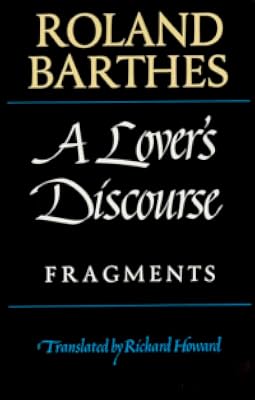
A Lover's Discourse: Fragments
by Roland Barthes
On This Page
Description
'May be the most detailed, painstaking anatomy of desire that we are ever likely to see or need again... An ecstatic celebration of love and language' Washington Post The language we use when we are in love is not a language we speak. It is a language addressed to ourselves and to our imaginary beloved. It is a language of solitude, of mythology, of what Barthes calls an 'image repertoire'. Reviving the notion of the amorous subject beyond psychological or clinical enterprises, Barthes' A show more Lover's Discourseis a book for everyone who has ever been in love, or indeed, thought themselves to be immune to its power. show lessTags
Recommendations





















Member Reviews
¿Me gustó? Por momentos. Y por momentos también es maravilloso. Y por momentos es incómodo porque habla de las concepciones más usuales del amor, que son dolorosas y neuróticas y que tal vez por eso son tan recordadas. Al fin y al cabo el fantasma explosivo de Werther es lo que conecta el libro de principio a fin, con alocuciones de Freud guiándolo con un cayado amable. Si no me dio lo que buscaba, tal vez, es porque concibo el amor más al estilo de Erich Fromm que el de los dramas europeos. Pero quién te dice, el equivocado no sea yo.
This extensive study of love has disemboweled me in every sense of the word. From Goethe's Werther, Freud's Interpretation of Dreams, Nietzsche's The Gay Science, Plato's Symposium, Proust's In Search of Lost Time to countless conversations with friends together with personal experiences Barthes painstakingly dissects love beyond the philosophical, psychological, and emotional. A Lover's Discourse bridges the resolute interstices between the head and the heart; bothering gestures and impressions precipitating contradictions ** "Perpetual monologues apropos of a loved being, which are neither corrected nor nourished by that being, lead to erroneous notions concerning mutual relations, and make us strangers to each other when we meet show more again, so that we find things different from what, without realizing it, we imagined." (p159); the inane and the insane; the overthinking and overwhelming; the Image-repertoire.
"Love is neither dialectical nor reformist."
For most of us skeptic and insecure of ourselves in love, Barthes offers a place of solace and reflection in A Lover's Discourse. A heavy book of undeniable intensity, its secret is not so much in completely understanding the text but associating it with your own feelings and experiences of love and almost love. Indeed, love, although unfathomable, is a universal feeling. For the heartbroken, the confused, the frustrated, the mad, ** "The lover's solitude is not a solitude of person (love confides, speaks, tells itself), it is a solitude of system: I am alone in making a system out of it (perhaps because I am ceaselessly flung back on the solipsism of my discourse). A difficult paradox: I can be understood by everyone (love comes from books, its dialect is a common one), but I can be heard (received "prophetically") only by subjects who have exactly and right now the same language I have." (p212). All the naïvety, immaturity, ambiguity, and yearning: acknowledged and, to an extent, assuringly ordinary. It's all here, makes you feel better, relieved. And the drama in love cannot be separated from itself — love kills, can kill. Further, there is absolutely so much to take in from this. I unexpectedly gone through this quickly there is a weight on my chest as I look back on past love affairs with a different set of eyes. How much we have talked and wrote and depicted love that at times it seemed already overused, overhyped, yet it still interests, possesses, and arouses. Barthes strikes and alters. Highsmith put it memorably so: "Love was supposed to be a kind of blissful insanity." show less
"Love is neither dialectical nor reformist."
For most of us skeptic and insecure of ourselves in love, Barthes offers a place of solace and reflection in A Lover's Discourse. A heavy book of undeniable intensity, its secret is not so much in completely understanding the text but associating it with your own feelings and experiences of love and almost love. Indeed, love, although unfathomable, is a universal feeling. For the heartbroken, the confused, the frustrated, the mad, ** "The lover's solitude is not a solitude of person (love confides, speaks, tells itself), it is a solitude of system: I am alone in making a system out of it (perhaps because I am ceaselessly flung back on the solipsism of my discourse). A difficult paradox: I can be understood by everyone (love comes from books, its dialect is a common one), but I can be heard (received "prophetically") only by subjects who have exactly and right now the same language I have." (p212). All the naïvety, immaturity, ambiguity, and yearning: acknowledged and, to an extent, assuringly ordinary. It's all here, makes you feel better, relieved. And the drama in love cannot be separated from itself — love kills, can kill. Further, there is absolutely so much to take in from this. I unexpectedly gone through this quickly there is a weight on my chest as I look back on past love affairs with a different set of eyes. How much we have talked and wrote and depicted love that at times it seemed already overused, overhyped, yet it still interests, possesses, and arouses. Barthes strikes and alters. Highsmith put it memorably so: "Love was supposed to be a kind of blissful insanity." show less
i have a confession, if you promise not to tell: i have a crush right now :( and here's the thing: barthes perfectly captures how it feels to have a crush. this was not really what i expected, because i kind of went in blind, but his lover is the unreciprocated lover. his lover really is the subject of the story, which withholds him from being the object. and jesus christ he understood EXACTLY how it feels. like, not all of this is relatable and a small portion of it is also not compelling (a little too much mother-child psychoanalysis talk for my liking), but the bits that hit hard really HIT. i took so many photos of pages and paragraphs that resonate, but the one thing that really has been bouncing around in my brain like a show more screensaver is the bit where he's like "anxiety conferred by the telephone: the true signature of love." AND IT STILL IS!!!!! damn it roland, how did you know i would one day spend hours waiting for a text back. insane show less
The rumours are true: it's all here, every ludicrous pattern of behaviour love has pushed you into, every thought you've had about it, then quickly pushed away for being a little too true. "X once told me that love had protected him against worldliness: coteries, ambitions, advancements, interferences, alliances, secessions, roles, powers: love had made him into a social catastrophe, to his delight."; "Someone tells me: this kind of love is not viable. But how can you evaluate viability? Why is the viable a Good Thing? Why is it better to last than to burn?"; "Even as he obsessively asks himself why he is not loved, the amorous subject lives in the belief that the loved object does love him but does not tell him so."; "...even an show more object, a book for instance, in which the other is absorbed (I am jealous of the book)." I soon stopped noting down passages or I would have copied out the entire book. And despite all those frightening LibraryThing tags (semiotics, poststrcuturalism, theory) it isn't difficult to read. Sure, the capitalised Other makes many appearances, but you don't have to trouble yourself with Lacan; you can just read it as the plain old "other". And there is a lot of Werther, but only because Barthes likes to summarise it (does anybody read Werther these days?).
So the only question I have is this: do I want the patterns of love's behaviour to be picked over and analysed at all? The question is irrelevant to me, perhaps: I have read the book, there's no going back; and my instinct, of course, is to answer loudly "no" to anything that suggests a little less knowledge might be a good thing. But I am a small man and wonder if there are some things it is better not to know (I am wary of Facebook because I do not want to know about your current boyfriend, and I do not even want the option of being able to sigh over hundreds of photos of ex- or never-were-lovers; isn't much of life about refusal, deliberately turning away from things, in short, choosing? How else do we account for so many people being out in the world working rather than lying all day between foetid sheets?). And with this comes the thought that I do not want my ridiculous madness reduced to a type; I would prefer to believe that it is unique, that I suffer as nobody else has (not just by quantity, but also quality). Yes, of course, it can be a comfort to know others have been pained by the same things as yourself; it is always welcome to be reminded that one is not alone. But to be told that one's mental torture is commonplace, ordinary: is this what I want to hear? I remmeber one of BS Johnson's stories: "I would not actually commit suicide, I had thought, but I would just see what the pain was like, of a razorblade cutting my flesh. Whether it was worse than the pain of not having Jo.... Perhaps the Head would remmeber me now.... But he might be used to schoolboys with self-inflicted injuries: the interview had not semed to disquieten him very much. The thought that I was not original even in this respect made me feel yet more depressed." But of course I know that "commonplace" does not equal "futile". Goethe surely knew that Werther's sorrows were commonplace (isn't that just another way of saying "True"?), but wrote the book anyway. Wasn't that because other didn't realise how commonplace it was, though? Perhaps the difference now is just that the secret is out: Goethe suggests how commonplace this is, Barthes proves it with the aid of illustrative examples, I sit and think how commonplace it seems to consider this as commonplace. Is that postmodernism? Is it time to find new commonplaces?
Well, this has become confused, and it's all madness either way, I suppose. Time to read another book. show less
So the only question I have is this: do I want the patterns of love's behaviour to be picked over and analysed at all? The question is irrelevant to me, perhaps: I have read the book, there's no going back; and my instinct, of course, is to answer loudly "no" to anything that suggests a little less knowledge might be a good thing. But I am a small man and wonder if there are some things it is better not to know (I am wary of Facebook because I do not want to know about your current boyfriend, and I do not even want the option of being able to sigh over hundreds of photos of ex- or never-were-lovers; isn't much of life about refusal, deliberately turning away from things, in short, choosing? How else do we account for so many people being out in the world working rather than lying all day between foetid sheets?). And with this comes the thought that I do not want my ridiculous madness reduced to a type; I would prefer to believe that it is unique, that I suffer as nobody else has (not just by quantity, but also quality). Yes, of course, it can be a comfort to know others have been pained by the same things as yourself; it is always welcome to be reminded that one is not alone. But to be told that one's mental torture is commonplace, ordinary: is this what I want to hear? I remmeber one of BS Johnson's stories: "I would not actually commit suicide, I had thought, but I would just see what the pain was like, of a razorblade cutting my flesh. Whether it was worse than the pain of not having Jo.... Perhaps the Head would remmeber me now.... But he might be used to schoolboys with self-inflicted injuries: the interview had not semed to disquieten him very much. The thought that I was not original even in this respect made me feel yet more depressed." But of course I know that "commonplace" does not equal "futile". Goethe surely knew that Werther's sorrows were commonplace (isn't that just another way of saying "True"?), but wrote the book anyway. Wasn't that because other didn't realise how commonplace it was, though? Perhaps the difference now is just that the secret is out: Goethe suggests how commonplace this is, Barthes proves it with the aid of illustrative examples, I sit and think how commonplace it seems to consider this as commonplace. Is that postmodernism? Is it time to find new commonplaces?
Well, this has become confused, and it's all madness either way, I suppose. Time to read another book. show less
I read this, as is only appropriate, in fragments, starting back in the summer. I might read two or three fragments with my morning coffee before I had to leave for class, or at the table in my family home between conversations with the people always coming and going from the main room here.
This is one of those rare books that lives up to my imagination of it, a perfect collision of high academic theory and the most mutable intangible realm of feeling. I took down passages all the time, such beautiful renderings of how desperately humans seek to connect to one another, to know one another, to know ourselves. How deeply we fail at it sometimes. How rich the something-like-it we achieve might be. This mix of head-and-heart, this show more sympathetic over-intellectualizing of emotions is as worthwhile as it is impractical and in vain. I sincerely love it. show less
This is one of those rare books that lives up to my imagination of it, a perfect collision of high academic theory and the most mutable intangible realm of feeling. I took down passages all the time, such beautiful renderings of how desperately humans seek to connect to one another, to know one another, to know ourselves. How deeply we fail at it sometimes. How rich the something-like-it we achieve might be. This mix of head-and-heart, this show more sympathetic over-intellectualizing of emotions is as worthwhile as it is impractical and in vain. I sincerely love it. show less
Se è vero che «il discorso amoroso è oggi di una estrema solitudine», forse questo oggi (a distanza di trent'anni dalla scrittura del testo) lo dimostra ancor di più. Il lettore non può che aderire a una topica necessariamente attuale, e anche se forse riesce a fare a meno del Werther (sostituito da mille altri riferimenti contemporanei), non può privarsi del piacere tutto intellettuale di riconoscere la propria adesione a costruzioni e figure linguistiche non destinate a essere "aggiornate".
ТЕКСТЪТ-УДОВОЛСТВИЕ Е ТЕКСТЪТ, КОЙТО НИ ИЗПЪЛВА БЕЗ ОСТАТЪК".
От 1977 г. Фрагментите на любовния дискурс продължава да бъде най-четената книга на известния френски семиолог, критик, философ РОЛАН БАРТ (1915-1980). Навярно защото в тази книга-портрет, чиито епизоди изпълват чистото Да! на най-неотменното жизнено чувство - любовта, читателят вижда и чува себе си, вижда и чува влюбения.
В днешно време необходимостта от show more тази книга се определя от едно съображение и то е изключителната самота на любовния дискурс. Този дискурс е може би говорен от хиляди субекти (кой знае?), но никой не го поддържа; той е напълно изоставен от заобикалящите ни езици, които или не го познават, или го подценяват, или го осмиват ‐ така той бива отрязан не само от властта си, но и от своите механизми (знания, умения, изкуства). Когато по такъв начин един дискурс бива увлечен от собствената си сила по течението на неактуалното, изнесен извън всякаква масовост, не му остава нищо друго освен да бъде място ‐ колкото и стеснено да е то ‐ на утвърждаване. В крайна сметка тъкмо това утвърждаване е субектът на книгата, която започва.
Как е създадена тази книга?
Всичко тръгна от следния принцип: не би трябвало влюбеният да се свежда до прост субект в дадено симптоматично състояние, а по-скоро трябва да се направи така, че да се чуе онова, което е неактуалното в гласа му, сиреч неподдаващото се на рационално обяснение... show less
От 1977 г. Фрагментите на любовния дискурс продължава да бъде най-четената книга на известния френски семиолог, критик, философ РОЛАН БАРТ (1915-1980). Навярно защото в тази книга-портрет, чиито епизоди изпълват чистото Да! на най-неотменното жизнено чувство - любовта, читателят вижда и чува себе си, вижда и чува влюбения.
В днешно време необходимостта от show more тази книга се определя от едно съображение и то е изключителната самота на любовния дискурс. Този дискурс е може би говорен от хиляди субекти (кой знае?), но никой не го поддържа; той е напълно изоставен от заобикалящите ни езици, които или не го познават, или го подценяват, или го осмиват ‐ така той бива отрязан не само от властта си, но и от своите механизми (знания, умения, изкуства). Когато по такъв начин един дискурс бива увлечен от собствената си сила по течението на неактуалното, изнесен извън всякаква масовост, не му остава нищо друго освен да бъде място ‐ колкото и стеснено да е то ‐ на утвърждаване. В крайна сметка тъкмо това утвърждаване е субектът на книгата, която започва.
Как е създадена тази книга?
Всичко тръгна от следния принцип: не би трябвало влюбеният да се свежда до прост субект в дадено симптоматично състояние, а по-скоро трябва да се направи така, че да се чуе онова, което е неактуалното в гласа му, сиреч неподдаващото се на рационално обяснение... show less
Members
- Recently Added By
Lists

Recommended Non-Fiction Books
26 works; 2 members

How to date men when you hate men
12 works; 1 member

Books Read in 2024
4,727 works; 128 members
Author Information

196+ Works 22,362 Members
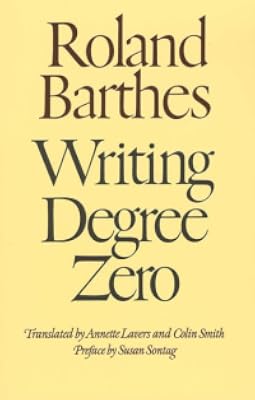
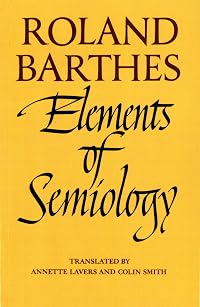
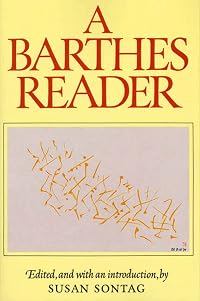
Roland Barthes (1915-1980), a French critic and intellectual, was a seminal figure in late twentieth-century literary criticism. Barthes's primary theory is that language is not simply words, but a series of indicators of a given society's assumptions. He derived his critical method from structuralism, which studies the rules behind language, and show more semiotics, which analyzes culture through signs and holds that meaning results from social conventions. Barthes believed that such techniques permit the reader to participate in the work of art under study, rather than merely react to it. Barthes's first books, Writing Degree Zero (1953), and Mythologies (1957), introduced his ideas to a European audience. During the 1960s his work began to appear in the United States in translation and became a strong influence on a generation of American literary critics and theorists. Other important works by Barthes are Elements of Semiology (1968), Critical Essays (1972), The Pleasure of the Text (1973), and The Empire of Signs (1982). The Barthes Reader (1983), edited by Susan Sontag, contains a wide selection of the critic's work in English translation. (Bowker Author Biography) show less
Some Editions
Series
Belongs to Publisher Series
Salamanderpockets (756)
Common Knowledge
- Canonical title*
- Фрагменты любовной речи
- Original title
- Fragments d'un discours amoureux
- Original publication date
- 1977; 2007
- Original language
- French
*Some information comes from Common Knowledge in other languages. Click "Edit" for more information.
Classifications
Statistics
- Members
- 2,382
- Popularity
- 8,248
- Reviews
- 18
- Rating
- (4.25)
- Languages
- 22 — Catalan, Chinese, Czech, Danish, Dutch, English, Finnish, French, German, Greek, Hungarian, Italian, Japanese, Lithuanian, Norwegian (Bokmål), Polish, Portuguese, Russian, Croatian, Spanish, Swedish, Turkish
- Media
- Paper, Audiobook, Ebook
- ISBNs
- 66
- ASINs
- 15