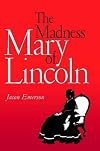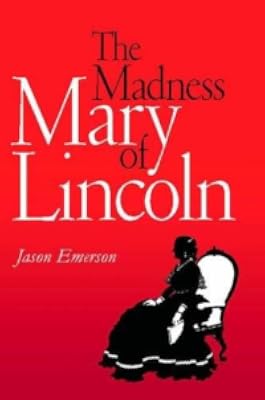
The Madness of Mary Lincoln
by Jason Emerson
On This Page
Description
In 2005, historian Jason Emerson discovered a steamer trunk formerly owned by Robert Todd Lincoln's lawyer and stowed in an attic for forty years. The trunk contained a rare find: twenty-five letters pertaining to Mary Todd Lincoln's life and insanity case, letters assumed long destroyed by the Lincoln family. Mary wrote twenty of the letters herself, more than half from the insane asylum to which her son Robert had her committed, and many in the months and years after. The show more Madness of Mary Lincoln is the first examination of Mary Lincoln's mental illness b show lessTags
Recommendations









Member Reviews
What a stirring and heart-wrenching book of a well-known woman's life. To think that she was holding her husband's hand and talking with him shortly before he was assassinated in the theater - how that must have stayed with her for all those years.
The tragedies and deaths in her life are certainly many and would drive anyone into madness, even if temporarily: Willie in the White House, Abraham, Tad when a young man. Emerson brings these details into light especially from a Victorian context. It's hard to remember sometimes that this was the era in which the Lincoln's lived. Much of his research comes from missing letters from a family trunk, heretofore guessed at but only recently found.
Granted, the reading can be a bit dry but this show more book is definitely worth going through till the end. It does bring up the quandry of the mentally ill and the quality that their lives should have. show less
The tragedies and deaths in her life are certainly many and would drive anyone into madness, even if temporarily: Willie in the White House, Abraham, Tad when a young man. Emerson brings these details into light especially from a Victorian context. It's hard to remember sometimes that this was the era in which the Lincoln's lived. Much of his research comes from missing letters from a family trunk, heretofore guessed at but only recently found.
Granted, the reading can be a bit dry but this show more book is definitely worth going through till the end. It does bring up the quandry of the mentally ill and the quality that their lives should have. show less
During her lifetime, Mary Todd Lincoln was often considered odd (and difficult!). Over the years of her marriage, she went through cycles of what appears now to be depression and mania. Until Abraham was assassinated, Mary's oddities were relatively well controlled. After his death, she became more manic about money and possessions, somewhat paranoid, and more obsessive about her youngest son Tad and the deaths of her husband and two other sons. On the 10th anniversary of the assassination, Mary suffered what appears to be a psychotic episode. Her remaining son, Robert, on the advice of the family doctors and after dealing with Mary for years, brought suit to have her declared insane and confined to a private sanitarium for treatment. show more With the help of a few friends in the Chicago and some newspaper coverage, Mary was able to make enough of a scene that she was sent to live with her sister and, after a year, was able to take over her own financial affairs. After spending some time in Europe, Mary grew sick and died back at her sister's house.
Of course, life is never simple. There was at the time, and still are, a number of people who thought that Mary was not insane, and even if she was an odd person, should never have been confined. Many of these people thought that Robert Lincoln was motivated by greed or the desire to put his mother away to avoid having to deal with her, or both. It's not even clear what Mary's actual condition was. Compounding the problem is Robert's intense desire for privacy, so many of the primary sources historians could use to understand events were destroyed. This has fueled much of the ongoing debate.
In The Madness of Mary Lincoln, Jason Emerson uses letters written by Mary Todd Lincoln mainly to the friends who led the effort to get her out of the sanitarium to sort out some of the doubt about what happened. It seems that Robert's lawyer made copies of a set of Mary's letters before turning them over to be burned. The Madness of Mary Lincoln is an excellent telling of Mary's story in light of these letters.
Recommended, especially for Civil War era history buffs. show less
Of course, life is never simple. There was at the time, and still are, a number of people who thought that Mary was not insane, and even if she was an odd person, should never have been confined. Many of these people thought that Robert Lincoln was motivated by greed or the desire to put his mother away to avoid having to deal with her, or both. It's not even clear what Mary's actual condition was. Compounding the problem is Robert's intense desire for privacy, so many of the primary sources historians could use to understand events were destroyed. This has fueled much of the ongoing debate.
In The Madness of Mary Lincoln, Jason Emerson uses letters written by Mary Todd Lincoln mainly to the friends who led the effort to get her out of the sanitarium to sort out some of the doubt about what happened. It seems that Robert's lawyer made copies of a set of Mary's letters before turning them over to be burned. The Madness of Mary Lincoln is an excellent telling of Mary's story in light of these letters.
Recommended, especially for Civil War era history buffs. show less
Mary, the wife/widow of Abraham Lincoln, is a fascinating figure in history. In 1875, she was found insane by a jury and sent to a mental hospital. The controversy over this forced institutionalization echoes through the years. Was Mary the vicitm of a money-hungry son who wanted to put her away for his own reasons? Or was Robert T. Lincoln a concerned son genuinely seeking the well-being of his mentally-ill mother? It's pretty clear where author Jason Emerson stands on the issue.
This book draws upon recently-discovered copies of some of Mary's long-lost correspondence, as well as other documentation regarding Mary's state of mind and the actions taken by her son to have her committed. The long-lost correspondence was actually tracked show more down by the author himself during the research of this book.
Emerson tells Mary's story, glossing briefly over her early years, with increasing focus during her time in the White House and the aftermath of her husband's assasination. The greatest depth is reserved for the time period leading up to and following her 1875 trial.
The appendices include the text of the newly-discovered letters and an analysis by a modern psychiatrist of Mary's symptoms as evidenced in the sources available. There are also extensive notes and a bibliography and an index.
The book is well-researched and adequately written. There were a few places where the notes seemed a little murky. For instance, in one place Mary was quoted as saying something with no footnote for a source given; then statements by others suggesting she did NOT say it were mentioned, with citations. Also, Emerson has a habit of dropping little bombshells at the ends of many chapters -- sort of like the "cliff hangers" in movie serials of old -- that do tend to make one want to keep reading. Example: ". . . they seemed relatively unconcerned by her behavior. That is, until they found her gun." (End of chapter 7.) A little tacky, but effective. show less
This book draws upon recently-discovered copies of some of Mary's long-lost correspondence, as well as other documentation regarding Mary's state of mind and the actions taken by her son to have her committed. The long-lost correspondence was actually tracked show more down by the author himself during the research of this book.
Emerson tells Mary's story, glossing briefly over her early years, with increasing focus during her time in the White House and the aftermath of her husband's assasination. The greatest depth is reserved for the time period leading up to and following her 1875 trial.
The appendices include the text of the newly-discovered letters and an analysis by a modern psychiatrist of Mary's symptoms as evidenced in the sources available. There are also extensive notes and a bibliography and an index.
The book is well-researched and adequately written. There were a few places where the notes seemed a little murky. For instance, in one place Mary was quoted as saying something with no footnote for a source given; then statements by others suggesting she did NOT say it were mentioned, with citations. Also, Emerson has a habit of dropping little bombshells at the ends of many chapters -- sort of like the "cliff hangers" in movie serials of old -- that do tend to make one want to keep reading. Example: ". . . they seemed relatively unconcerned by her behavior. That is, until they found her gun." (End of chapter 7.) A little tacky, but effective. show less
Jason Emerson's work uses recently discovered letters written by and to Mary Lincoln during her "insanity episode" in 1875 and the years afterword to provide new insight into her admission into an insane asylum and the reasons for it.
He describes the episodes that led Robert Todd Lincoln, upon the advice of multiple medical professionals, to place his mother in Bellevue Place, but also shows evidence that Mrs. Lincoln's son was not a cold calculating man intent on taking advantage of his mother and stealing her money, but that he truly agonized over the decision and did what he honestly believed was the best thing for her health and safety.
He also shows how Mary and her friends fought for her freedom and how Mary held a grudge against show more her son for most of the remaining years of her life, even while she traveled in Europe.
The book concludes with a psychiatrists' evaluation of the historical record in an attempt to diagnose Mary Lincoln as well as it is possible to do more than a century after her death.
Mr. Emerson's work provides valuable insight into the troubles Mary Lincoln suffered, how she and the people around her dealt with them and explains the actions her son took to care for her. It is a very insightful, readable look into the mental state of the former First Lady. show less
He describes the episodes that led Robert Todd Lincoln, upon the advice of multiple medical professionals, to place his mother in Bellevue Place, but also shows evidence that Mrs. Lincoln's son was not a cold calculating man intent on taking advantage of his mother and stealing her money, but that he truly agonized over the decision and did what he honestly believed was the best thing for her health and safety.
He also shows how Mary and her friends fought for her freedom and how Mary held a grudge against show more her son for most of the remaining years of her life, even while she traveled in Europe.
The book concludes with a psychiatrists' evaluation of the historical record in an attempt to diagnose Mary Lincoln as well as it is possible to do more than a century after her death.
Mr. Emerson's work provides valuable insight into the troubles Mary Lincoln suffered, how she and the people around her dealt with them and explains the actions her son took to care for her. It is a very insightful, readable look into the mental state of the former First Lady. show less
Ratings
Members
- Recently Added By
Lists

Books Read in 2012
59 works; 1 member
Author Information

10 Works 329 Members
Jason Emerson is a journalist and an independent historian who has been researching and writing about the Lincoln family for more than twenty-five years. His works include The Madness of Mary Lincoln; Giant in the Shadows: The Life of Robert T. Lincoln; Mary Lincoln's Insanity Case: A Documentary History; and Lincoln's Lover: Mary Lincoln in show more Poetry. show less
Common Knowledge
- People/Characters
- Abraham Lincoln; Mary Todd Lincoln
- Important places
- Washington, D.C., USA
- Important events
- Assassination of Abraham Lincoln
Classifications
- Genres
- Nonfiction, History, Biography & Memoir, General Nonfiction
- DDC/MDS
- 973.7092 — History & geography History of North America United States Civil War Era (1857-1865) Civil War
- LCC
- E457.25 .L55 .E46 — History of the United States United States Civil War period, 1861-1865 Lincoln's administrations, 1861-April 15, 1865
- BISAC
Statistics
- Members
- 167
- Popularity
- 192,873
- Reviews
- 4
- Rating
- (3.83)
- Languages
- English
- Media
- Paper, Ebook
- ISBNs
- 5
- ASINs
- 1