
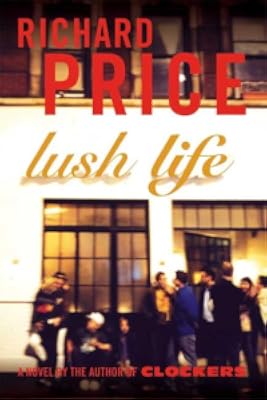
Lush Life
by Richard Price
On This Page
Description
So, what do you do? Whenever people asked him, Eric Cash used to have a dozen answers. Artist, actor, screenwriter. But now he's thirty-five years old and he's still living on the Lower East Side, still in the restaurant business, still serving the people he always wanted to be. What does Eric do? He manages. Not like Ike Marcus. Ike was young, good-looking, people liked him. Ask him what he did, he wouldn't say tending bar. He was going places--until two street kids stepped up to him and show more Eric on Eldridge Street one night and pulled a gun. At least, that's Eric's version. In Lush life, Richard Price tears the shiny veneer off the "new" New York to show us the hidden cracks, the underground networks of control and violence beneath the glamour. show lessTags
Recommendations




Member Reviews
A mugging on the perilous streets of New York City goes bad and the subsequent murder investigation goes even worse. This type of crime novel is usually pretty routine, but instead of the usual book-em-and-cook-em drill, I found myself reading about cops who care -- who even cry at funerals. The language of the streets was wonderfully crisp and blunt (I became immune to the F-bombs after awhile). I enjoyed the contradiction of the grittiness of the plot and characters being written about in Price's literary style. It kept me reading about the dogged determination of partners Matty and Yolanda who persist in solving this agonizing case despite getting sucked into a downward spiral of mistakes and bad luck.
I’ll live a lush life in some small dive…
And there I’ll be, while I rot
With the rest of those whose lives are lonely, too.. ~ Billy Strayhorn's Lush Life
Lush Life is one of the really beautiful standard jazz tunes written by Billy Strayhorn. And, of course, the title of the newest novel by Richard Price. This is not my usual reading genre, but being a huge fan of HBO’s The Wire, for whom Price did some writing, and with the closing up shop of this particular HBO franchise, I thought I’d give this one a …listen. I say listen, because when I went to put it on my hold list at the library, I was way, way down there. Oddly enough though, I logged in a #1 for the unabridged cd copy. The reader was Bobby Cannavale who did a great show more job.
Pegged as a police procedural, which always sounds like it could be an acquired taste, Price’s tale is riveting, Between some great characters and the detailed look at Manhattan’s Lower East Side, this is a novel that is one of those that’s hard to put down - or in this case, hard to stop feeding the cd’s into the player (just one more, just one more…)
Price gives us one of the great cop teams of Matty Clark and Yolando Bello, and throws the brass in their path in all their pathetic glory. Watching these two work is just a fascinating study. And to watch them work in the gentrified hodge-podge that is the Lower East Side is icing on the cake. You just will not find a better mix of character and place than Price gives the reader here. show less
And there I’ll be, while I rot
With the rest of those whose lives are lonely, too.. ~ Billy Strayhorn's Lush Life
Lush Life is one of the really beautiful standard jazz tunes written by Billy Strayhorn. And, of course, the title of the newest novel by Richard Price. This is not my usual reading genre, but being a huge fan of HBO’s The Wire, for whom Price did some writing, and with the closing up shop of this particular HBO franchise, I thought I’d give this one a …listen. I say listen, because when I went to put it on my hold list at the library, I was way, way down there. Oddly enough though, I logged in a #1 for the unabridged cd copy. The reader was Bobby Cannavale who did a great show more job.
Pegged as a police procedural, which always sounds like it could be an acquired taste, Price’s tale is riveting, Between some great characters and the detailed look at Manhattan’s Lower East Side, this is a novel that is one of those that’s hard to put down - or in this case, hard to stop feeding the cd’s into the player (just one more, just one more…)
Price gives us one of the great cop teams of Matty Clark and Yolando Bello, and throws the brass in their path in all their pathetic glory. Watching these two work is just a fascinating study. And to watch them work in the gentrified hodge-podge that is the Lower East Side is icing on the cake. You just will not find a better mix of character and place than Price gives the reader here. show less
4.5 stars. Character = plot = dialogue. Wounded people in a gritty, vibrant, urban world occasionally illuminated with bright flashes of sunlight. You put a Richard Price book down and the characters stay with you. If you want to know how to write dialogue, read this guy.
It took a while to figure out what I thought about this one. I love Richard Price's prose, his dialogue, and the way he depicts the city (especially in this one, which takes place in places I used to live). The first third of the book had me totally involved. Then it just kind of coasted, in a straight-line trajectory that was so unlike Price's usual piling on of complications that it felt like a deliberate exercise in how to frustrate everyone's ideas about crime novels. The police procedural part keeps moving along even though there's not much to resolve, and the people keep doing pretty much what they started out doing; it's clear that none of them are really going to learn anything from this, and solving the case is not going to show more help. The energy of the book is all in the inner floundering around of the main characters, and in the details of petty crime in different social classes, and the portrayal of a particular slice of lower Manhattan that's been conquered by gentrification without actually becoming a better place to live. It's well worth reading for those things, just don't go looking for a story. show less
In Lush Life, Richard Price creates a microcosm of New York City surrounding a murder and its investigation in the lower east side. The victim, unfortunately immortalized by his final ill-chosen words, "Not tonight, my man," is the linchpin of the novel. The actions and reactions of his family, friends and acquaintances, police, and the shooter, are the story. Price's realism and attention to detail, not to mention his command of the language of the street, the police, and the city itself bring the story to life. His ability to reveal his characters through both dialogue and exposition is unsurpassed.
Price reveals much with few words. In one exchange with a pot-smoking upstate policeman and the NYC cop that pulls him over, the smoker show more refers to it as
"A little somethin', somethin' for the drive."
"Somethin' somethin', huh?" Lugo hadn't heard that phrase in two years.
Moments like this are the gems spread throughout the story and are what make it sing. show less
Price reveals much with few words. In one exchange with a pot-smoking upstate policeman and the NYC cop that pulls him over, the smoker show more refers to it as
"A little somethin', somethin' for the drive."
"Somethin' somethin', huh?" Lugo hadn't heard that phrase in two years.
Moments like this are the gems spread throughout the story and are what make it sing. show less
Lush Life is not a crime novel. It is a novel about crime and the innumerable ways people can be criminals. It is, in particular, a story of fathers and sons. Every character … major, minor, and incidental … is fully and compassionately drawn, often through his or her own words. The dialog shines.
Here is the distraught father of a murdered son:
‘“You know,” Marcus said, addressing the middle distance, “when they’re little, you love them, take pride in them, and when they grow up, you still do, but it’s bizarre when other people, new people, see him and think, ‘Well, here’s this young man, here’s this young adult who does such and such very well,’ and you’re witnessing this acceptance from others, this respect show more and seriousness, and you, I can’t help laughing, thinking, that’s, WHAT young man, that’s Ikey, you wouldn’t believe the dopey shit he did as a kid, but there he is getting respect, and it’s not like I don’t have it for him, me of all people, but I always feel like laughing, not put-him-in-his-place laughing, just ‘Aw, c’mon, that’s Ike …”’’ pg. 137
Here is the intense Yemeni clerk of the Sana’a 24/7 mini-mart:
‘“Sometimes your father does things you don’t understand, but a father doesn’t need to explain all his actions to you,” Nazir said. “You need to have faith and trust that behind every act is love. Then later you look back or you sit quietly and it becomes clear that these things which seemed harsh at the time saved you. You were just too much a child to understand, but now you are a man with health and prosperity and all you can say is thank you.”’ pg. 186
And our homicide detective who, when first informed of the murder, is coming off a midnight to four a.m. free-lance security gig at a night-club:
‘He could let them handle the investigation until his tour began at eight or jump in now; Matty deciding to jump because the bar was so close to the crime scene he could see the fluttering yellow tape from where he stood. What would be the point of going home for only a few hours’ sleep?
‘Besides, his sons had come down for a few days to stay with him and he didn’t particularly like them.
‘There were two: the one he always thought of as the Big One, a jerk of a small-town cop in upstate Lake George, where his ex-wife had moved after the divorce, and the younger one, whom he naturally thought of as the Other One, a mute teen who had still been in diapers when they broke up.
‘He was at best an indifferent parent but didn’t know what to do about it; and the boys themselves were pretty conditioned to think of him as a distant relative down in New York City, some guy obliged by blood to let them crash now and then.’ pp 37-38 show less
Here is the distraught father of a murdered son:
‘“You know,” Marcus said, addressing the middle distance, “when they’re little, you love them, take pride in them, and when they grow up, you still do, but it’s bizarre when other people, new people, see him and think, ‘Well, here’s this young man, here’s this young adult who does such and such very well,’ and you’re witnessing this acceptance from others, this respect show more and seriousness, and you, I can’t help laughing, thinking, that’s, WHAT young man, that’s Ikey, you wouldn’t believe the dopey shit he did as a kid, but there he is getting respect, and it’s not like I don’t have it for him, me of all people, but I always feel like laughing, not put-him-in-his-place laughing, just ‘Aw, c’mon, that’s Ike …”’’ pg. 137
Here is the intense Yemeni clerk of the Sana’a 24/7 mini-mart:
‘“Sometimes your father does things you don’t understand, but a father doesn’t need to explain all his actions to you,” Nazir said. “You need to have faith and trust that behind every act is love. Then later you look back or you sit quietly and it becomes clear that these things which seemed harsh at the time saved you. You were just too much a child to understand, but now you are a man with health and prosperity and all you can say is thank you.”’ pg. 186
And our homicide detective who, when first informed of the murder, is coming off a midnight to four a.m. free-lance security gig at a night-club:
‘He could let them handle the investigation until his tour began at eight or jump in now; Matty deciding to jump because the bar was so close to the crime scene he could see the fluttering yellow tape from where he stood. What would be the point of going home for only a few hours’ sleep?
‘Besides, his sons had come down for a few days to stay with him and he didn’t particularly like them.
‘There were two: the one he always thought of as the Big One, a jerk of a small-town cop in upstate Lake George, where his ex-wife had moved after the divorce, and the younger one, whom he naturally thought of as the Other One, a mute teen who had still been in diapers when they broke up.
‘He was at best an indifferent parent but didn’t know what to do about it; and the boys themselves were pretty conditioned to think of him as a distant relative down in New York City, some guy obliged by blood to let them crash now and then.’ pp 37-38 show less
Richard Price’s novel Lush Life is a messy brawl of a crime story; diffuse, overlong, ambiguous and vexing, the book is, in short, a perfect fictional mirror for contemporary New York City. Price’s story deals with the fallout of a random murder on the Lower East Side: Two young black men from the nearby projects attempt a stickup of three barhopping hipsters, which goes awry when one of the victims resists in a burst of misplaced bravado. The ensuing investigation blows a huge hole in the lives of everyone involved, from cops to families to friends to assailants.
The first third of the book, dealing with the murder and its immediate aftermath, is a tight and exhilarating piece of writing. When the leads fizzle and the investigation show more stalls, however, the narrative loses some of its momentum as police, witnesses and suspects settle in for an enervating waiting game. Price is a canny and observant writer — his dialogue snaps and snarls with the profane rhythms of everyday speech — and he has a pitiless sense of social geography. One sequence in particular, a depiction of a vigil organized by the dead boy’s friend, is such a cruelly accurate portrayal of the fatuousness of the young bohemians invading the neighborhood that one doesn’t know whether to laugh or cringe. Price, whose most recent busman’s holiday was scriptwriting for The Wire, has a nose for the inner workings of urban life: fiction verité at its finest.
What makes Lush Life so potent a read, despite its flaws, is that it upends the tidy certainties of most crime fiction, substituting a more real and jaggedly uncertain narrative. The cops on the case are hamstrung by bureaucratic inertia; the murdered boy’s father is deranged with grief; the survivor is unhinged by guilt and resentment; and the man who pulled the trigger is not some evil psychopath but a numb, confused kid. The book’s ending implies a nearly classical fatalism about the relentless cycling of history, personal and urban. As in life, tragedies explode and fade, lives crumble and renew, and the city moves on. From The L Magazine, March 12, 2008 show less
The first third of the book, dealing with the murder and its immediate aftermath, is a tight and exhilarating piece of writing. When the leads fizzle and the investigation show more stalls, however, the narrative loses some of its momentum as police, witnesses and suspects settle in for an enervating waiting game. Price is a canny and observant writer — his dialogue snaps and snarls with the profane rhythms of everyday speech — and he has a pitiless sense of social geography. One sequence in particular, a depiction of a vigil organized by the dead boy’s friend, is such a cruelly accurate portrayal of the fatuousness of the young bohemians invading the neighborhood that one doesn’t know whether to laugh or cringe. Price, whose most recent busman’s holiday was scriptwriting for The Wire, has a nose for the inner workings of urban life: fiction verité at its finest.
What makes Lush Life so potent a read, despite its flaws, is that it upends the tidy certainties of most crime fiction, substituting a more real and jaggedly uncertain narrative. The cops on the case are hamstrung by bureaucratic inertia; the murdered boy’s father is deranged with grief; the survivor is unhinged by guilt and resentment; and the man who pulled the trigger is not some evil psychopath but a numb, confused kid. The book’s ending implies a nearly classical fatalism about the relentless cycling of history, personal and urban. As in life, tragedies explode and fade, lives crumble and renew, and the city moves on. From The L Magazine, March 12, 2008 show less
Members
- Recently Added By
Published Reviews
ThingScore 75
Price is a builder, a drafter of vast blueprints, and though the Masonic keystone of his novel is a box-shaped N.Y.P.D. office, he stacks whole slabs of city on top of it and excavates colossal spaces beneath it. He doesn’t just present a slice of life, he piles life high and deep.
added by timtom
Lists

The Guardian's 1000 Novels Everyone Must Read
1,005 works; 547 members

Pen/Faulkner Winners and Finalists
178 works; 9 members

Obama Reads
181 works; 3 members

Books recommended by Barack Obama
295 works; 28 members

to get
244 works; 2 members
Author Information

19+ Works 7,160 Members
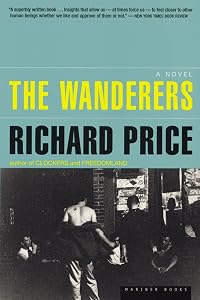
Author and screenwriter Richard Price was born in the Bronx, New York on October 12, 1949. He received a BS degree from Cornell University, an MFA from Columbia University, and a Mirillees Fellowship in fiction at Stanford University. His first novel, The Wanderers, was published in 1974 and was adapted into a film by director Philip Kaufman in show more 1979. His novel Clockers was nominated for the National Book Critics Circle Award and was made into a movie by Spike Lee in 1994. His screenwriting credits include The Color of Money (1986), Sea of Love (1989), Mad Dog and Glory (1992), and Ransom (1996). Price won several awards for his writing on the television series The Wire. He has written for numerous publications including The New York Times, Esquire Magazine, the Village Voice, and Rolling Stone. In 1999, he received the American Academy of Arts and Letters Award in Literature. In 2015, Price published his bestselling novel, The Whites, under the pseudonym Harry Brandt. (Bowker Author Biography) show less
Some Editions
Awards and Honors
Awards
Distinctions
Work Relationships
Is replied to in
Has as a student's study guide
Common Knowledge
- Canonical title
- Lush Life
- Original publication date
- 2008
- People/Characters
- Matty Clark; Yolanda Bello; Eric Cash; Billy Marcus; Little Dap; Tristan (show all 7); Isaac "Ike" Marcus
- Important places
- Lower East Side, Manhattan, New York, New York, USA
- Dedication
- As always, with love for
Judy, Annie, and Gen - First words
- The Quality of Life Task Force: four sweatshirts in a bogus taxi set up on the corner of Clinton Street alongside the Williamsburg Bridge off-ramp to profile the incoming salmon run; their mantra: Dope, guns, overtime; thei... (show all)r motto: Everyone's got something to lose.
- Last words
- (Click to show. Warning: May contain spoilers.)Seven-thirty: three hours from now. He decided to sit there and wait, do it face-to-face.
- Disambiguation notice*
- original title: Lush Life
*Some information comes from Common Knowledge in other languages. Click "Edit" for more information.
Classifications
Statistics
- Members
- 2,123
- Popularity
- 9,619
- Reviews
- 106
- Rating
- (3.76)
- Languages
- 7 — Dutch, English, French, German, Italian, Portuguese, Spanish
- Media
- Paper, Audiobook, Ebook
- ISBNs
- 36
- UPCs
- 1
- ASINs
- 8