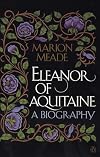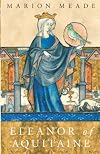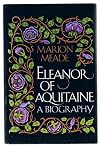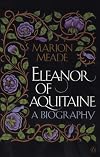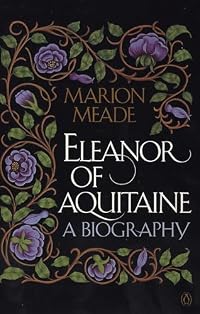
Eleanor of Aquitaine: A Biography
by Marion Meade
On This Page
Description
Biography of the wife of King Henry II of England and mother of Richard I, the Lionheart, and John.Tags
Recommendations

















Member Reviews
This was hands down one of the best biographies I have ever read. I have long admired Eleanor, the woman who was a queen twice, first in France, and the second being the queen to the formidable Henry II of England. Together they sired eight children, two of them becoming future kings of England in their own right. Boy, what she went through and achieved for her children is truly astounding. She was a formidable woman who knew to pick her battles. She most certainly made some mistakes along the way, but for the time period, when women were mostly kept in the background, Eleanor was always in the forefront. She lived to be 82 years old, quite a feat for the time as well. Before I read this book, my only reference for Eleanor was the show more famous film, "The Lion in Winter." Even then, I fell in love with the woman she was, and have always wanted to learn more about her. This book gave me that and much more. Not only a biography, but a detailed historical account of her life, and those of her husband, Henry II, and her sons. It definitely made me want to read more about the various figures during her lifetime. show less
One of the most famous women in history, Eleanor of Aquitaine would have been right at home in today's celebrity driven world. Married at an early age to Louis VII, she tired of him, got wicked (supposedly) with her uncle during the Second Crusade, then left the French King and married Henry II, King of England. Kinda like Princess Diana/Grace Kelly/Madonna all rolled into one.
By leaving one King and marrying another, Eleanor brought hundreds of years of warfare to Europe because her hereditary holdings caused an imbalance of power. The book does an excellent job of bringing out the way she affected history and her ability to manipulate a male dominated world. I was amazed to see how she battled her husbands and her sons, yet she show more outlived all except for son John (the bad King).
If you're like me, and you've seen The Lion In Winter and want to learn more about the Lioness, this is a very good book for that objective.
Book Season = Summer (just sit back and become absorbed) show less
By leaving one King and marrying another, Eleanor brought hundreds of years of warfare to Europe because her hereditary holdings caused an imbalance of power. The book does an excellent job of bringing out the way she affected history and her ability to manipulate a male dominated world. I was amazed to see how she battled her husbands and her sons, yet she show more outlived all except for son John (the bad King).
If you're like me, and you've seen The Lion In Winter and want to learn more about the Lioness, this is a very good book for that objective.
Book Season = Summer (just sit back and become absorbed) show less
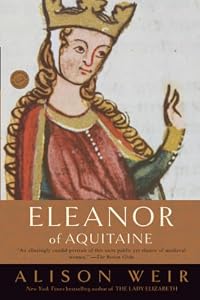
I thoroughly enjoyed reading this. Eleanor is one of the few medieval women about whom there is enough documentation to write a biography, and she comes across as feisty, determined and rather formidable. Educated at one of the most cultured courts in Europe, she married two of Europe's most powerful men, and was divorced by the first and imprisoned by the second. The mother of Richard the Lionheart and King John, she became a Crusader herself during her first marriage to Louis of France. She must have been a remarkable woman. I haven't read Alison Weir's biography of Eleanor, so I can't compare them, but I enjoyed Meade's very much.
Eleanor of Aquitaine didn't leave any diaries and none of her contemporaries even described her appearance except to say she was beautiful. The author took what information she did have and really made Eleanor come alive for the reader. Her writing isn't as "fun" as that of Alison Weir but it was still enjoyable.
Eleanor of Aquitaine remains one of history's most important female figures. As "popular" biographies go, this is a remarkably readable one and the subject matter is treated respectfully and carefully. Still, it is not at all academically rigorous. Meade habitually puts her own thoughts into Eleanor's mind, ascribes her own reasoning processes to Eleanor's decisions, assumes her own motives are Eleanor's. At such a great distance in time, it is impossible to know, or even to sensibly speculate, at what might have driven the course of action followed by a historical figure. It is, further, quite impossible for a citizen of the 21st Century to make accurate presumptions about the motivations of those who lived and died in the 12th show more Century. If you are interested in the era or the woman, by all means, read and enjoy this book but be very careful to supplement it with a more serious and measured work. show less
Eleanor grew up in the Dukedom of Aquitaine at a time when most of France was ruled by England. In northern Europe, and England, women had little social standing. Aquitaine, in the south, named "land of waters" by the Romans, was a rich land, filled with orchards and vineyards; life was good for those in power. Leisure was preeminent and women were more highly respected. They could inherit property and many became wealthy landowners. Such was Eleanor's case. She had inherited Aquitaine, which made her a rich prize for any king. She was only fifteen when her father, the Duke, died, and King Louis the Fat (he was so enormous he was virtually unable to sit up) arranged a marriage between his second son, Louis, and the attractive Eleanor, show more now heir to the most prized lands in Europe.
Louis was a retiring young man best suited, most thought, for the monastery. Eleanor wasted no time -- remember she was still an adolescent -- corrupting (in the mind of her mother-in-law) Louis to the more secular ways of the south. Their marriage was a catastrophe. He was ineffectual, indecisive, inadequate, generally most ofthe "in's" one can apply. Louis' Second Crusade was a disaster. The presence of Eleanor and her ladies with their enormous baggage train made travel difficult. The Pope's personal intervention, virtually dragging them to bed to force reconsumation of their marriage was the catalyst for the final dissolution, because the product of this pathetic reunion was a girl, and Louis' Capetians desperately needed a male to continue the line.
Then Henry and the Plantagenets entered on the scene. Interestingly, Plantagenet was not a family name. It came from a nickname of Henry's father, Geoffrey of Anjou, who used to wear the yellow blossom of the broom plant, the planta genesta, in his hair.
Eleanor was tired of Louis -- once she said it was like being married to a monk -- and when she met eighteen-year-old Henry, eleven years her junior and heir to Anjou and all of England, she fell head over heels in lust for him. Meade suspects that sexual attraction, richly spiced with political advantage, was a major justification for her divorce from Louis. Consanguinity was the publicly announced reason permitting annulment. She married Henry eight weeks later. It was a stinging slap at the Capetian, for he and Henry were bitter enemies.
Henry Plantagenet became the most radical monarch in English history. During the next thirty-five years he revolutionized government, streamlining it and making it so efficient the government could function king-less if necessary.
Eleanor played a major role in the reexamination of the role of women in the twelfth century. Even the Church abandoned its traditional view of women as an instrument of the devil, but women continued to oscillate between superiority and inferiority. Eleanor and her daughter by Louis, who lived with her as she approached her later forties and became estranged from Henry, made a conscious and deliberate effort to define the female role in a legal code of social conduct called Tractus de Amore et de Amoris & medies. It was loosely modeled after Ovid but is almost the opposite to his Art of Loving. Their tract proclaimed woman to be the" dominant figure, the man merely a pupil who must be carefully instructed until he becomes a fit partner for his lady. " Woman is supreme, a goddess to be approached by her man only with reverence.
When Eleanor died at age 82, she had been a queen for sixty-six years. She produced several sons, including Richard Coeur-de-Lion, famous for his third crusade but notorious for his flaunted homosexuality (a problem because it meant he would produce no heir), and King John, whose meanness, recklessness and appalling judgment resulted in the Magna Carta. Perhaps because of his evil personality, he was the only English king ever named John. Eleanor was the glue that held the Plantagenets together, and after her death, her first husband's descendants made considerable inroads into Henry's Normandy and her beloved Aquitaine. show less
Louis was a retiring young man best suited, most thought, for the monastery. Eleanor wasted no time -- remember she was still an adolescent -- corrupting (in the mind of her mother-in-law) Louis to the more secular ways of the south. Their marriage was a catastrophe. He was ineffectual, indecisive, inadequate, generally most ofthe "in's" one can apply. Louis' Second Crusade was a disaster. The presence of Eleanor and her ladies with their enormous baggage train made travel difficult. The Pope's personal intervention, virtually dragging them to bed to force reconsumation of their marriage was the catalyst for the final dissolution, because the product of this pathetic reunion was a girl, and Louis' Capetians desperately needed a male to continue the line.
Then Henry and the Plantagenets entered on the scene. Interestingly, Plantagenet was not a family name. It came from a nickname of Henry's father, Geoffrey of Anjou, who used to wear the yellow blossom of the broom plant, the planta genesta, in his hair.
Eleanor was tired of Louis -- once she said it was like being married to a monk -- and when she met eighteen-year-old Henry, eleven years her junior and heir to Anjou and all of England, she fell head over heels in lust for him. Meade suspects that sexual attraction, richly spiced with political advantage, was a major justification for her divorce from Louis. Consanguinity was the publicly announced reason permitting annulment. She married Henry eight weeks later. It was a stinging slap at the Capetian, for he and Henry were bitter enemies.
Henry Plantagenet became the most radical monarch in English history. During the next thirty-five years he revolutionized government, streamlining it and making it so efficient the government could function king-less if necessary.
Eleanor played a major role in the reexamination of the role of women in the twelfth century. Even the Church abandoned its traditional view of women as an instrument of the devil, but women continued to oscillate between superiority and inferiority. Eleanor and her daughter by Louis, who lived with her as she approached her later forties and became estranged from Henry, made a conscious and deliberate effort to define the female role in a legal code of social conduct called Tractus de Amore et de Amoris & medies. It was loosely modeled after Ovid but is almost the opposite to his Art of Loving. Their tract proclaimed woman to be the" dominant figure, the man merely a pupil who must be carefully instructed until he becomes a fit partner for his lady. " Woman is supreme, a goddess to be approached by her man only with reverence.
When Eleanor died at age 82, she had been a queen for sixty-six years. She produced several sons, including Richard Coeur-de-Lion, famous for his third crusade but notorious for his flaunted homosexuality (a problem because it meant he would produce no heir), and King John, whose meanness, recklessness and appalling judgment resulted in the Magna Carta. Perhaps because of his evil personality, he was the only English king ever named John. Eleanor was the glue that held the Plantagenets together, and after her death, her first husband's descendants made considerable inroads into Henry's Normandy and her beloved Aquitaine. show less
Eleanor of Aquitaine, by Marion Meade, is a well-written, highly informative and entertaining read about one of Europe’s most remarkable and influential women. Meade places Eleanor on the large as well as intimate and personal stages, allowing readers to understand what made Eleanor into the cultured, sometimes tempestuous, always intelligent woman who loved and lost two kings and empires. Highly recommended.
Members
- Recently Added By
Lists

Club Read's Recommended Nonfiction Written by Women
618 works; 30 members
Author Information

17+ Works 2,593 Members
Marion Meade is the author of Dorothy Parker: What Fresh Hell Is This? and Bobbed Hair and Bathtub Gin: Writers Running Wild in the Twenties. She has also written biographies of Woody Allen, Buster Keaton, Eleanor of Aquitaine, Madame Blavatsky, and Victoria Woodhull, as well as two novels about medieval France.
Common Knowledge
- Canonical title
- Eleanor of Aquitaine: A Biography
- Original publication date
- 1991
- People/Characters
- Eleanor of Aquitaine; Henry II, King of England; Louis VII, King of France
- Important events
- Second Crusade (1145 | 1149); Reign of Henry II (1154-12-19 | 1189-07-06)
- Quotations
- The proper study of mankind is woman and, by common agreement since the time of Adam, it is the most complex and arduous.
Henry Adams, Mont-Saint-Michel and Chartres
Classifications
- Genres
- History, Nonfiction, Biography & Memoir, General Nonfiction
- DDC/MDS
- 920 — History & geography Biographies, Genealogy, Healdry Biographies
- LCC
- DA209 .E6 .M4 — History of Europe, Asia, Africa and Oceania Great Britain History of Great Britain England History By period Early and medieval to 1485 1154-1485. Angevins. Plantagenets.
- BISAC
Statistics
- Members
- 624
- Popularity
- 46,397
- Reviews
- 14
- Rating
- (3.72)
- Languages
- English
- Media
- Paper, Ebook
- ISBNs
- 10
- ASINs
- 7