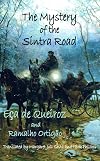
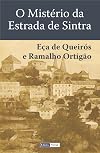
The Mystery of the Sintra Road
by Eça de Queirós
On This Page
Description
Two friends are kidnapped by several masked men, who, to judge by their manners and their accent are men of the best society. One of the friends is a doctor, and the masked men say that they need him to assist a noblewoman, who is about to give birth. When they reach the house, they find no such noblewoman, only a dead man. Another man, known only as A.M.C., bursts in at this point and declares that the man died of opium poisoning. The doctor writes a letter to a newspaper editor, setting show more out the facts as he knows them. These facts are rebutted first by a friend of A.M.C. and then by the first masked man, who explains the whole story...Eça de Queiroz wrote this spoof âe~mysteryâe(tm) with his friend Ramalho Ortigão, publishing it in the form of a series of anonymous letters in the Diário de NotÃcias between 24 July and 27 September 1870. Many readers believed the letters to be genuine. As the book progresses, one sees Eça gradually getting into his stride as a novelist, equally at home with humour and with human drama.Recently turned into a major Portuguese feature film it will delight avid Eça fans and lovers of mysteries. show lessTags
Recommendations














Member Reviews
"Dr ***" and his friend "F" are abducted from the Sintra Road by four masked men, brought to a mysterious house to ascertain that an opium overdose is actually dead. While at said house, another man - "A.M.C." - bursts in on the group, and as a result, the mystery of the dead body is slowly unraveled, revealing a tale of love, passion, deceit, and murder. This is considered the first detective story published in Portugal and was written in 1870 by friends José Maria Eça de Queiroz and Ramalho Ortigão to shake up Lisbon and show that literary styles were changing. Published in installments in a Lisbon newspaper as a series of letters to the editor, many Lisboetas thought the story of the murder was true and it caused some commotion in show more the capital city. The last installment, however, included a note announcing that the story was fiction, signed by its two authors, who both went on to become huge influences on Portuguese literature's progression from Romanticism to Realism. The remarkable thing is, though, that not only was this a progressive experiment, it is a genuinely exciting story that holds up surprisingly well, even by today's standards. It does include some passages of excessive Romanticism that sound bloated to contemporary ears, but that's easily made up by the authors' genuine talent for telling a captivating story with characters that are allowed to be flawed and pathetic without being pitiable. I'll gladly admit to being a huge fan of Eça de Queiroz's already and this, his first novel, only added to my admiration of his skill. show less
Tem lá os seus momentos (“Já não me escrevia como dantes em papel de acaso, em folhas de carteira, em pedaços de cartas velhas, que denotavam as inspirações do amor, os sobressaltos repentinos da paixão; escrevia-me em papel Marquet, perfumado!”). Mas é só um embrião mal-formado do que viria a ser a obra de Eça de Queirós na sua maturidade. Dispensável.
Free download at Gutenberg Project.
Free download at Gutenberg Project.
Free download at Gutenberg Project.
Free download at Gutenberg Project.
El día 23 de julio de 1870, el Diario de Noticias de Lisboa insertaba una nota de última hora que decía así: «A punto de cerrar nuestra edición, hemos recibido un escrito singular. Se trata de una carta sin firma enviada por correo a nuestra redacción. En ella se inicia una narración estupenda acerca de un horrible y misterioso suceso. El interés que despierta y su calidad literaria nos determinan a transcribir íntegro tan interesante documento, cosa que haremos mañana domingo». Y efectivamente, al día siguiente, 24 de julio, el pueblo de Lisboa, que se disponía alegremente a presenciar un desfile conmemorando la entrada del Ejército liberal, vio sobresaltada su habitual modorra con la lectura de aquella primera noticia show more aportada por un incógnito doctor X, al parecer testigo, y en parte protagonista, del sensacional misterio que ya desde aquel mismo día se empezó a conocer como El misterio de la carretera de Sintra. show less
Mar 27, 2023Spanish
Members
- Recently Added By
Author Information

323+ Works 6,888 Members
Series
Belongs to Publisher Series
Common Knowledge
- Canonical title
- The Mystery of the Sintra Road
- Original title
- O Mistério da Estrada de Sintra
- Original publication date
- 1870
- First words*
- Señor director del "Diario de Noticias".
- Original language*
- Português
- Disambiguation notice*
- A publicação dos textos originais ocorreu, pela primeira vez, entre 24 de julho e 27 de setembro de 1870, no jornal Diário de Notícias. A primeira publicação em livro, no entanto, ocorreu apenas em 1884.
*Some information comes from Common Knowledge in other languages. Click "Edit" for more information.
Classifications
- Genres
- Fiction and Literature, Romance
- DDC/MDS
- 869.33 — Literature & rhetoric Spanish Literature Literatures of Portuguese and Galician languages Portuguese fiction 19th Century
- LCC
- PQ9261 .E3 — Language and Literature French, Italian, Spanish and Portuguese literatures Portuguese literature Individual authors, 1701-1960
- BISAC
Statistics
- Members
- 175
- Popularity
- 187,543
- Reviews
- 12
- Rating
- (3.31)
- Languages
- 6 — English, French, Hungarian, Italian, Portuguese (Portugal), Spanish
- Media
- Paper, Audiobook, Ebook
- ISBNs
- 23
- ASINs
- 11