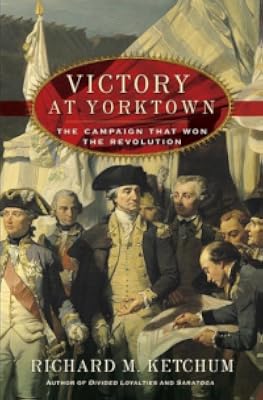
Victory at Yorktown: The Campaign That Won the Revolution
by Richard M. Ketchum
On This Page
Description
From "the finest historian of the American Revolution" comes the definitive account of the battle and unlikely triumph that led to American independence (Douglas Brinkley) In 1780, George Washington's army lay idle for want of supplies, food, and money. All hope seemed lost until a powerful French force landed at Newport in July. Then, under Washington's directives, Nathanael Greene began a series of hit-and-run operations against the British. The damage the guerrilla fighters inflicted show more would help drive the enemy to Yorktown, where Greene and Lafayette would trap them before Washington and Rochambeau, supported by the French fleet, arrived to deliver the coup de gracirc'ce. Richard M. Ketchum illuminates, for the first time, the strategies and heroic personalities-American and French-that led to the surprise victory, only the second major battle the Americans would win in almost seven horrific years. Relying on good fortune, daring, and sheer determination never to give up, American and French fighters-many of whom walked from Newport and New York to Virginia-brought about that rarest of military operations: a race against time and distance, on land and at sea. Ketchum brings to life the gripping and inspirational story of how the rebels defeated the world's finest army against all odds. The acclaimed author of "Saratoga" illuminates, for the first time, the strategies and heroic personalities--American and French--that led to the surprise victory, only the second major battle the Americans would win in almost seven horrific years. show lessTags
Recommendations







Member Reviews
Mr. Ketchum gives an excellent account of the campaigns in the southern states and then he carries through with the events leading to the Battle at Yorktown and the succeeding two years after Cornwallis’s surrender. Ketchum, also gives the reader an analysis of why events developed as they did. The author’s writing style is terrific. The battles and the events flow very well from one chapter to the next. I was able to follow the story, and it kept my interest throughout the book. The one fault I did find was that the book could have used a few more descriptive maps. I found myself doing numerous rereads just so I could figure out where I was located in any one particular state. Overall, the book gave me an excellent well-rounded show more education on the campaign to and including Yorktown. show less
In the late middle it gets, unavoidably, rather technical. This is where he has pulling together 5 campaigns at once so this can't really be avoided. Other then that the book is truly excellent. I want to give extra props for the integration of information from "Washington's Spys" and also the beautifully written ending that gives a real understanding of the social and political standing post war.
A REALLY good read. READ IT NAOW.
A REALLY good read. READ IT NAOW.
Ketcham delivers another fine study of an important campaign of the American Revolution. Ketchum's narratives seem to develop greater complexity with each succeeding book.
Ketcham begins with the mutinous American army of 1780 in the Morristown winter-starved, ragged, and on the verge of disintegration, as well as the inept and weak care of the Continental army by Congress. He also relates the arrival of the French Navy and Army at Newport, and how, in many ways, these forces, together with additional naval units under De Grasse make possible the Virginia campaign of 1781. The story takes us up to the Newburgh conspiracy in 1782, and Washington's farewell at Fraunces Tavern.
Other key elements in the story are, Lafayette's mission to show more secure money from a tottering French monarchy, Benedict Arnold's treason and subsequent campaign in Virginia as a British commander, Nathaniel Greene's campaign in the Carolina's and, of course, Washington's relationship with Rochambeau. show less
Ketcham begins with the mutinous American army of 1780 in the Morristown winter-starved, ragged, and on the verge of disintegration, as well as the inept and weak care of the Continental army by Congress. He also relates the arrival of the French Navy and Army at Newport, and how, in many ways, these forces, together with additional naval units under De Grasse make possible the Virginia campaign of 1781. The story takes us up to the Newburgh conspiracy in 1782, and Washington's farewell at Fraunces Tavern.
Other key elements in the story are, Lafayette's mission to show more secure money from a tottering French monarchy, Benedict Arnold's treason and subsequent campaign in Virginia as a British commander, Nathaniel Greene's campaign in the Carolina's and, of course, Washington's relationship with Rochambeau. show less
Despite the title, this book covers far more than just the Battle of Yorktown. Instead, the work addresses the entire Southern Campaign, a little known and rarely covered aspect of the war. I particularly appreciated the discussion of the British command failures, including the total breakdown between Clinton and Cornwallis, as well as the often confounding but ultimately significant participation of the British and French fleets.
No doubt the author knows his stuff, however in my opinion at times book drifted with unnecessary detail. More focus on the significant events, battles and political aspects and less on minutiae would have increased the book's effectiveness. In any case, an enjoyable and worthwhile read.
No doubt the author knows his stuff, however in my opinion at times book drifted with unnecessary detail. More focus on the significant events, battles and political aspects and less on minutiae would have increased the book's effectiveness. In any case, an enjoyable and worthwhile read.
Mr. Ketchum gives an excellent account of the campaigns in the southern states and then he carries through with the events leading to the Battle at Yorktown and the succeeding two years after Cornwallis’s surrender. Ketchum, also gives the reader an analysis of why events developed as they did. The author’s writing style is terrific. The battles and the events flow very well from one chapter to the next. I was able to follow the story, and it kept my interest throughout the book. The one fault I did find was that the book could have used a few more descriptive maps. I found myself doing numerous rereads just so I could figure out where I was located in any one particular state.
Overall, the book gave me an excellent well-rounded show more education on the campaign to and including Yorktown. show less
Overall, the book gave me an excellent well-rounded show more education on the campaign to and including Yorktown. show less
What many people find disturbing about the general populace today is its lack of knowledge of our country’s past. Certainly an understanding of how our country came to be is essential for us to be clear-sighted citizens.
The historical information that Victory at Yorktown provides is targeted for adult readers more than it is people of high school age. Reading the book and appreciating its content requires a discipline not found among a majority people of high school age, in my opinion. Accurate historical fiction would be much more appropriate for adolescent readers.
If the reader is patient, if he reads each chapter after a sufficient time has elapsed to allow him to return refreshed, he will be rewarded.
The book takes up the show more narrative of the military struggle between American and British forces in 1780, five years after redcoat soldiers and Massachusetts militiamen had fired at each other at Lexington and Concord. Ketchum must set the stage for what is to follow, a difficult task because he has much to cover. I found the first two chapters and chapter 4 rather dull, due mainly to the fact that Ketchum had to present diverse information, I wanting him to focus on two, three, or four aspects. Thereafter, the chapters became more concise with the last chapter being perhaps his best.
I took away from this book a better appreciation of the extreme hardships suffered by those who served their states and their united cause, the absolute necessity of France’s assistance, George Washington’s indefatigability, integrity, and willingness to take chances, and the Continental Congress’s utter incapacity to govern. My awareness of the amazing incompetency of the British military leaders and the extreme obduracy of George III was reinforced. I appreciated as well the role that chance played in the outcome of events, be it who individually lived or died or what broad opportunities were successfully or not successfully utilized. If no other conclusion stays with the reader, the one that should remain is that our forefathers were extremely fortunate to have won their independence. I wish most Americans today had that appreciation. show less
The historical information that Victory at Yorktown provides is targeted for adult readers more than it is people of high school age. Reading the book and appreciating its content requires a discipline not found among a majority people of high school age, in my opinion. Accurate historical fiction would be much more appropriate for adolescent readers.
If the reader is patient, if he reads each chapter after a sufficient time has elapsed to allow him to return refreshed, he will be rewarded.
The book takes up the show more narrative of the military struggle between American and British forces in 1780, five years after redcoat soldiers and Massachusetts militiamen had fired at each other at Lexington and Concord. Ketchum must set the stage for what is to follow, a difficult task because he has much to cover. I found the first two chapters and chapter 4 rather dull, due mainly to the fact that Ketchum had to present diverse information, I wanting him to focus on two, three, or four aspects. Thereafter, the chapters became more concise with the last chapter being perhaps his best.
I took away from this book a better appreciation of the extreme hardships suffered by those who served their states and their united cause, the absolute necessity of France’s assistance, George Washington’s indefatigability, integrity, and willingness to take chances, and the Continental Congress’s utter incapacity to govern. My awareness of the amazing incompetency of the British military leaders and the extreme obduracy of George III was reinforced. I appreciated as well the role that chance played in the outcome of events, be it who individually lived or died or what broad opportunities were successfully or not successfully utilized. If no other conclusion stays with the reader, the one that should remain is that our forefathers were extremely fortunate to have won their independence. I wish most Americans today had that appreciation. show less
Richard Ketchum's writing style makes it very easy to read. The book does not suffocate the reader with dates but instead tells a compelling narrative that concisely distills the key facts.
The book does not focus on the events of Yorktown as the title may suguest. Instead, it is a broad overview of the major events that ultimately led to the allied victory at Yorktown.
The book does not focus on the events of Yorktown as the title may suguest. Instead, it is a broad overview of the major events that ultimately led to the allied victory at Yorktown.
Members
- Recently Added By
Lists

Best U.S. History Books (1754-1828)
363 works; 18 members
Author Information

34+ Works 2,641 Members
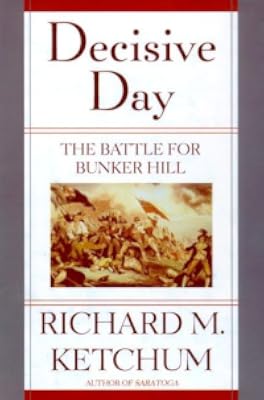
Richard M. Ketchum was born in Pittsburgh, Pennsylvania on March 15, 1922. He received a degree in American history from Yale University in 1943. After college, he served as commander of a Navy submarine chaser in the Atlantic. He owned an advertising agency until 1951, when he joined the United States Information Agency, eventually becoming show more director of overseas publications. He was hired by American Heritage in 1956 and co-founded Country Journal, where he also served as editor. He wrote several history books including Decisive Day: The Battle for Bunker Hill, Saratoga: Turning Point of America's Revolutionary War, and The Borrowed Years, 1938-1941. He died on January 12, 2012 at the age of 89. (Bowker Author Biography) show less
Common Knowledge
- People/Characters
- George Washington; Charles Cornwallis, 1st Marquess Cornwallis; Marquis de Lafayette
- Important places
- Yorktown, Virginia, USA
- Important events
- American Revolution (1775 | 1783)
Classifications
Statistics
- Members
- 213
- Popularity
- 152,563
- Reviews
- 7
- Rating
- (3.95)
- Languages
- English
- Media
- Paper, Ebook
- ISBNs
- 3
- ASINs
- 1