On This Page
Description
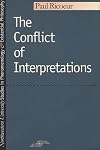
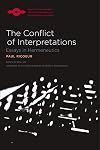
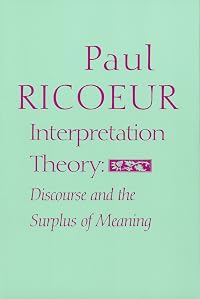
This collection brings together twenty-two essays by Paul Ricoeur under the topics of structuralism, psychoanalysis, hermeneutics, and religion. In dramatic conciseness, the essays illuminate the work of one of the leading philosophers of the day. Those interested in Ricoeur's development of the philosophy of language will find rich and suggestive reading. But the diversity of essays also speaks beyond the confines of philosophy to linguists, theologians, psychologists, and psychoanalysts.Tags
Recommendations














Member Reviews
Escritos a lo largo de una década, los ensayos de El conflicto de las interpretaciones recuperan con rigurosa consecuencia las reflexiones centrales de Paul Ricoeur -uno de los filósofos más influyentes de la contemporaneidad, autor entre otros libros de Del texto a la acción- acerca de la interpretación y la crítica del sentido.
Resuelto a legitimar la hermenéutica frente a otras disciplinas, Ricoeur explora inicialmente las sendas que se abren a la filosofía contemporánea por el "injerto del problema hermenéutico en el método fenomenológico", lo que conducirá luego a la indagación de las diferencias epistemológicas entre las distintas hermenéuticas. La cuestión del doble sentido postula una matriz interdisciplinaria show more -que le asigna a la filosofía una tarea de arbitraje-, traza los límites entre una ciencia estructural y una filosofía estructuralista, a la vez que busca en la semántica un eje de referencia para el conjunto del campo hermenéutico.
No menos importante es el encuentro con el psicoanálisis y sus derivaciones en torno al engaño de la conciencia y la arqueología del sujeto. Ciertos símbolos ponen a prueba este nuevo instrumento teórico: la paternidad, la culpabilidad, la ética, la religión, el ateísmo y la fe. Aunque centrados en la filosofía del lenguaje, los ensayos aquí reunidos trasponen en este punto los confines filosóficos y dialogan no solamente con Heidegger, Marx y Freud, sino también con la lingüística y la teología, iluminando la totalidad de la obra de Ricoeur. show less
Resuelto a legitimar la hermenéutica frente a otras disciplinas, Ricoeur explora inicialmente las sendas que se abren a la filosofía contemporánea por el "injerto del problema hermenéutico en el método fenomenológico", lo que conducirá luego a la indagación de las diferencias epistemológicas entre las distintas hermenéuticas. La cuestión del doble sentido postula una matriz interdisciplinaria show more -que le asigna a la filosofía una tarea de arbitraje-, traza los límites entre una ciencia estructural y una filosofía estructuralista, a la vez que busca en la semántica un eje de referencia para el conjunto del campo hermenéutico.
No menos importante es el encuentro con el psicoanálisis y sus derivaciones en torno al engaño de la conciencia y la arqueología del sujeto. Ciertos símbolos ponen a prueba este nuevo instrumento teórico: la paternidad, la culpabilidad, la ética, la religión, el ateísmo y la fe. Aunque centrados en la filosofía del lenguaje, los ensayos aquí reunidos trasponen en este punto los confines filosóficos y dialogan no solamente con Heidegger, Marx y Freud, sino también con la lingüística y la teología, iluminando la totalidad de la obra de Ricoeur. show less
100 RIC 4
Ricoeur explora inicialmente las sendas que se abren a la filosofía contemporánea por el "injerto del problema hermenéutico en el método fenomenológico".
Sep 6, 2020Spanish
Ratings
Members
- Recently Added By
Author Information

Professor of philosophy at the University of Paris and the University of Chicago, Paul Ricoeur has been described as "possibly the only younger philosopher in Europe whose reputation is of the magnitude of that of the old men of Existentialism---Marcel, Jaspers, Heidegger and Sartre . . . ." His work has been characterized as "the most massive show more accomplishment of any philosopher of Christian faith since the appearance of Gabriel Marcel." A practitioner of the phenomenology of Edmund Husserl mediated by a return to Immanuel Kant---in that things in themselves, though unknowable, are not excluded by bracketing existence but are acknowledged as the necessary conditions for the possibility of human experience---Ricoeur has examined those parts of experience---faulty, fallible, and susceptible to error and evil---that other phenomenologists, interested primarily in the cognitional, have neglected. In this respect he follows in the footsteps of Heidegger and Sartre, but he goes beyond them in his discovery of principles transcending human subjectivity that are amenable to spiritual interpretation. Here Ricoeur steps within the contemporary hermeneutic circle of Heidegger and Hans-Georg Gadamer, on whom he has written. Ricoeur's hermeneutical method, however, has much in common with the methods of biblical exegesis, and in this respect his works should be especially appealing to seminarians and the clergy. (Bowker Author Biography) show less
Some Editions
Series

Belongs to Publisher Series
Common Knowledge
- Canonical title
- The Conflict of Interpretations
- Original title
- Les conflits des interprétation
- Original publication date
- 1974
- Canonical LCC
- BD241.R54
Classifications
Statistics
- Members
- 281
- Popularity
- 115,029
- Reviews
- 3
- Rating
- (4.20)
- Languages
- 6 — English, French, German, Italian, Polish, Spanish
- Media
- Paper
- ISBNs
- 14
- UPCs
- 1
- ASINs
- 3