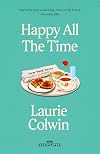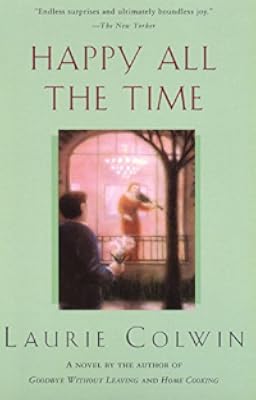
Happy All the Time
by Laurie Colwin
On This Page
Description
A witty modern-day classic about two unique couples discovering universal truths about love and marriage from "a wise, bighearted writer" (The Washington Post).Guido Morris and Vincent Cardworthy are third cousins and best friends. In college they dreamed of writing poetry (Guido) and winning the Nobel Prize in Physics (Vincent). Now in their late twenties, they are together again in Cambridge and on the verge of settling down to more prosaic pursuits. Vincent is headed to New York City to show more become the Board of City Planning's expert on garbage, while Guido is preparing to take over the management of his family's foundation.
What they really want to know, however, is who their wives will be. Guido gets the first inkling of his romantic future when he spies a girl with the blackest, sleekest hair he has ever seen sitting on a bench at the Fogg Museum. When he tries to flirt with her, Holly Sturgis makes a cutting remark and leaves. For Guido, it is love at first sight.
Vincent discovers Misty Berkowitz one morning at work. Stirring her coffee with a fountain pen, she tells him to get the hell away from her. Soon, cheerful, open-minded Vincent can't stop thinking about his bored, misanthropic, and very pretty colleague.
Guido, Holly, Vincent, and Misty are lucky enough to find love. The question is, are they smart enough to hold on to it? From the terrifying uncertainty of courtship to the dull contentment of marriage, Happy All the Time is a dazzling tribute to the hard work and real courage it takes to create a storybook romance.
This ebook features an illustrated biography of Laurie Colwin including rare photos and never-before-seen documents from the author's estate.
. show less
Tags
Recommendations






















Member Reviews
Laurie Colwin's Happy All the Time feels like a combination of P.G. Wodehouse (humor and low stakes plot), J.D. Salinger (tone and witty dialogue), and Sally Rooney (insightful observations about the inner lives of quirky, specific characters). The first 30 pages felt a little lackluster to me, so I struggled to get into it at first. But if you persevere past that point, it gets better and better until it becomes 100 percent brilliant. A favorite read of the year!
Segundo libro que leo de Laurie Colwin (le pondría 3.5 estrellas) y lamento mucho que la autora haya muerto tan joven porque tenía una narrativa impecable. Sus personajes están perfectamente bien construidos, los diálogos muy bien armados y hay lineas francamente buenas. Me habría gustado ver cómo se desarrollaban sus historias con más edad...
"Tantos días felices" es una historia absolutamente cotidiana, sin puntos de clímax. Una historia de amor plana, sin dramas ni sorpresas. Tal vez esa es la sorpresa en las novelas de Colwin. Estás esperando a que pase algo más, que dé un giro inesperado... pero no paras de leer, no te aburres, no te cansa.
Lo que tiene en común con Felicidad Familiar (además de lo bien escrita) es show more este retrato de la familia con la economía resuelta, que se dedica a vivir y uno puede observar cómo se conforman parejas y se entretejen amistades, como nos pasa a todos en la vida real.
Sin embargo, personalmente disfruté más de "Feliciad Familiar" tal vez porque el tema de la Infidelidad (y desde la voz de una mujer) implicaba un poco más de tensión y era menos esperanzadora y positiva que "Tantos Días Felices", que al final eso es lo que retrata: la pacífica felicidad de los días en los que pareciera que no pasa nada. Sí volvería a leer a Colwin en unos meses tal vez. show less
"Tantos días felices" es una historia absolutamente cotidiana, sin puntos de clímax. Una historia de amor plana, sin dramas ni sorpresas. Tal vez esa es la sorpresa en las novelas de Colwin. Estás esperando a que pase algo más, que dé un giro inesperado... pero no paras de leer, no te aburres, no te cansa.
Lo que tiene en común con Felicidad Familiar (además de lo bien escrita) es show more este retrato de la familia con la economía resuelta, que se dedica a vivir y uno puede observar cómo se conforman parejas y se entretejen amistades, como nos pasa a todos en la vida real.
Sin embargo, personalmente disfruté más de "Feliciad Familiar" tal vez porque el tema de la Infidelidad (y desde la voz de una mujer) implicaba un poco más de tensión y era menos esperanzadora y positiva que "Tantos Días Felices", que al final eso es lo que retrata: la pacífica felicidad de los días en los que pareciera que no pasa nada. Sí volvería a leer a Colwin en unos meses tal vez. show less
Our main characters are actually not. (Not happy all the time, that is.)
Nothing phases Holly. She’s imperturbable, un-ruffle-able. Nothing gets to her. Never sad, but never very happy either. That’s Holly.
And then there’s Misty. No one would call her happy.
“If you wanted some appealing girl, why didn’t you go down to the PR department? It’s loaded with appealing types.”
“I don’t want any of those appealing types,” he paused. “I wanted you.”
“Oh yeah?” said Misty. “What are you going to do when you get me?”
“Well, take you out for lunch,” said Vincent.
“Really? Well, I don’t permit myself to be taken out for lunch.”
“Is that some kind of militant stand?”
“No,” said Misty. “I’m just not show more that sort of girl. I don’t go in for all that adorable socializing. I think it’s stupid and disgusting.”
“I see,” said Vincent. “You’re not very nice, are you?”
“No,” said Misty.
It isn’t a happily-ever-after sort of book, but, nevertheless, it is both mood-boosting (it’s on the official Mood-Boosting Book list) and genuine. Colwin is a master. I will read more of her. show less
Nothing phases Holly. She’s imperturbable, un-ruffle-able. Nothing gets to her. Never sad, but never very happy either. That’s Holly.
And then there’s Misty. No one would call her happy.
“If you wanted some appealing girl, why didn’t you go down to the PR department? It’s loaded with appealing types.”
“I don’t want any of those appealing types,” he paused. “I wanted you.”
“Oh yeah?” said Misty. “What are you going to do when you get me?”
“Well, take you out for lunch,” said Vincent.
“Really? Well, I don’t permit myself to be taken out for lunch.”
“Is that some kind of militant stand?”
“No,” said Misty. “I’m just not show more that sort of girl. I don’t go in for all that adorable socializing. I think it’s stupid and disgusting.”
“I see,” said Vincent. “You’re not very nice, are you?”
“No,” said Misty.
It isn’t a happily-ever-after sort of book, but, nevertheless, it is both mood-boosting (it’s on the official Mood-Boosting Book list) and genuine. Colwin is a master. I will read more of her. show less
Spoilers could be. This was a sweet book. I like all the St. Teresa of Avila stuff. The characters were sort of real people, and likable, and you cared about them, mostly. It was all a little sweet & privileged but it was nice to read, and everybody was happy at the end.
Happy All by Time by Laurie Colwin was essentially a book about nothing and everything, and I really enjoyed the experience of reading about Guido, Holly, Vincent and Misty—how they met, how they married, and how they lived and loved.
This was also a book about interiors…like reading an issue of my all time favorite magazine Victoria (sadly, no longer published).
From the Publisher:
This delightful comedy of manners and morals is about romantic friendship, romantic marriage, and romantic love—about four people who are good hearted and sane, lucky and gifted, and who find one another. Knowing that happiness is an art form that requires energy, discipline, and talent, Guido, Holly, Vincent and Misty deal with jealousy, estrangement, show more and other perils involved in the search for love.
Regarding Guido’s first breakfast with Holly:
She liked to have tea on a tray and she was fond of unmatched china. The tray she brought to Guido held cups that bore forget-me-nots, a lily-of-the-valley sugar dish, a cream pitcher with red poppies, and a teapot covered with red roses and cornflowers. This tray, when set on the bed, contributed to Guido’s sensory overload. He was touched to think that this effort had been made on his behalf, but when he got to know Holly better he learned that she made up identical trays for herself when she studied.
Holly’s view of education:
When they first met, she [Holly] had been writing her master’s thesis on the subject of Chinese export porcelain. She had been encouraged to publish it. When the subject was brought up, she yawned and said she might some day. Education, she said, was something that enriched your life—not something you did things with.
Guido has to hire a secretary to replace the departed “porcelain-like beauty” who had been his uncle’s secretary. As a white-gloved Katharine Gibbs graduate, I had no trouble picturing Jane Motherwell’s replacement:
…Guido had hired a secretary. The two temporaries had made appointments and then failed to show up. Five candidates had called. One was an actress who said she would be frequently on the road; one was a young man who said he was writing a novel with the aid of a computer; one did not know how to type; another could type but would not answer telephones; and the last did not speak very much English. A person named Betty Helen Carnhoops won hands down. She was a square girl with piano legs, short efficient hair of no particular color, and green harlequin glasses that sprouted in each corner a gold rose with a rhinestone in the center. She typed ninety-five words a minute, took shorthand, and answered the phone in a brisk, businesslike manner. When Uncle Giancarlo eventually met her, he said, with a sigh: “How could you replace my beautiful tiger of wrath with such a horse of instruction? This is an office the gives money away for the purpose of making things beautiful and now it is made efficient by a cardboard box.”
Laurie Colwin died of a heart attack in 1992 at age 48. One tribute to her says:
None of us had ever met Colwin except through her writing. But we felt as if we knew her from those stories. We knew that she liked animals and small children, quilts and pretty plates, family and friends, men who were good dancers and good kissers. We knew that she loved music, from classical greats like Boccherini and Brahms, to rock 'n' roll legends like the Everly Brothers and Jerry Lee Lewis. She knew all the words to the Crystals' "He's a Rebel." She loved to read, and to cook.
I think I would have enjoyed sharing a tea tray with Laurie Colwin. show less
This was also a book about interiors…like reading an issue of my all time favorite magazine Victoria (sadly, no longer published).
From the Publisher:
This delightful comedy of manners and morals is about romantic friendship, romantic marriage, and romantic love—about four people who are good hearted and sane, lucky and gifted, and who find one another. Knowing that happiness is an art form that requires energy, discipline, and talent, Guido, Holly, Vincent and Misty deal with jealousy, estrangement, show more and other perils involved in the search for love.
Regarding Guido’s first breakfast with Holly:
She liked to have tea on a tray and she was fond of unmatched china. The tray she brought to Guido held cups that bore forget-me-nots, a lily-of-the-valley sugar dish, a cream pitcher with red poppies, and a teapot covered with red roses and cornflowers. This tray, when set on the bed, contributed to Guido’s sensory overload. He was touched to think that this effort had been made on his behalf, but when he got to know Holly better he learned that she made up identical trays for herself when she studied.
Holly’s view of education:
When they first met, she [Holly] had been writing her master’s thesis on the subject of Chinese export porcelain. She had been encouraged to publish it. When the subject was brought up, she yawned and said she might some day. Education, she said, was something that enriched your life—not something you did things with.
Guido has to hire a secretary to replace the departed “porcelain-like beauty” who had been his uncle’s secretary. As a white-gloved Katharine Gibbs graduate, I had no trouble picturing Jane Motherwell’s replacement:
…Guido had hired a secretary. The two temporaries had made appointments and then failed to show up. Five candidates had called. One was an actress who said she would be frequently on the road; one was a young man who said he was writing a novel with the aid of a computer; one did not know how to type; another could type but would not answer telephones; and the last did not speak very much English. A person named Betty Helen Carnhoops won hands down. She was a square girl with piano legs, short efficient hair of no particular color, and green harlequin glasses that sprouted in each corner a gold rose with a rhinestone in the center. She typed ninety-five words a minute, took shorthand, and answered the phone in a brisk, businesslike manner. When Uncle Giancarlo eventually met her, he said, with a sigh: “How could you replace my beautiful tiger of wrath with such a horse of instruction? This is an office the gives money away for the purpose of making things beautiful and now it is made efficient by a cardboard box.”
Laurie Colwin died of a heart attack in 1992 at age 48. One tribute to her says:
None of us had ever met Colwin except through her writing. But we felt as if we knew her from those stories. We knew that she liked animals and small children, quilts and pretty plates, family and friends, men who were good dancers and good kissers. We knew that she loved music, from classical greats like Boccherini and Brahms, to rock 'n' roll legends like the Everly Brothers and Jerry Lee Lewis. She knew all the words to the Crystals' "He's a Rebel." She loved to read, and to cook.
I think I would have enjoyed sharing a tea tray with Laurie Colwin. show less
Sweet story, absolutely fantastic characters and some of the wittiest lines in any book I've read in a while.
I loved and continue to love Laurie Colwin's two foodbooks -- Homecooking and More Homecooking—and recommend them wholeheartedly. I finally came across the opportunity to read one of her fiction books, specifically Happy All the Time. The reviews are largely raves, with many claiming the book changed their lives and/or they reread it every year. I'm afraid I can't agree and after spending some time thinking about it realized it may be a generational matter. The characters, who do little but talk and question their own good fortune, were just tiresome and annoying in the end. Maybe younger readers, with a touch less cynicism, miss that, but in the end, the book just wasn't entranching. Very well written, however.
Members
- Recently Added By
Lists

Recommend the 20 best books you've read in the last five years
2,168 works; 606 members

Favorite Literary Love Stories
182 works; 100 members
Books I've Read More Than Once
602 works; 49 members

1970s
657 works; 23 members

A Smorgasbord of Culinary Fiction
221 works; 94 members

Books We Love to Reread
688 works; 296 members
Our Favorite Comfort Reads
334 works; 200 members
Author Information

20+ Works 5,115 Members
Common Knowledge
- Original title
- Happy All the Time
- Original publication date
- 1978
- People/Characters
- Guido Morris; Vincent Cardworthy; Holly Sturgis; Misty Berkowitz
- Dedication
- For Ann Arensberg
- First words
- Guido Morris and Vincent Cardworthy were third cousins.
- Last words
- (Click to show. Warning: May contain spoilers.)They raised their glasses and, by the light of the candles, they drank to a truly wonderful life.
Classifications
Statistics
- Members
- 923
- Popularity
- 28,880
- Reviews
- 27
- Rating
- (3.82)
- Languages
- 6 — English-based Creoles and Pidgins, English, French, Galician, Italian, Spanish
- Media
- Paper, Audiobook, Ebook
- ISBNs
- 26
- ASINs
- 11