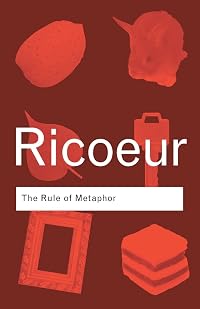
The Rule of Metaphor: The Creation of Meaning in Language (Routledge Classics)
by Paul Ricœur
On This Page
Description
Originally published in English in 1978, this full-scale examination of the philosophy of metaphor from Aristotle to the present, brings together and discusses significant viewpoints on metaphor held by writers in various disciplines. These include linguistics and semantics, the philosophy of language, literary criticism, and aesthetics.Tags
Recommendations












Member Reviews
Very didactic and insttructive if you are interested in philosophy of language, hermeneutics.
As a bonus, contains a reading of Aristotle's Poetics and of Derrida's La mythologie blanche.
As a bonus, contains a reading of Aristotle's Poetics and of Derrida's La mythologie blanche.
Metaphors speak volumes - see 'Images of Organisation' by Garth Morgan.
Metaphors speak volumes - see 'Images of Organisation' by Garth Morgan.
100 RIC 1
SUMÁRIO:
[009] - Prefácio.
(.)
[017] - ESTUDO I: ENTRE RETÓRICA E POÉTICA: ARISTÓTELES:
[017] - 01.01 O Desdobramento da retórica e da poética;
[024] - 01.02 O núcleo comum à poética e à retórica;
[042] - 01.03 Um enigma: metáfora e comparação (eikõn);
[050] - 01.04 O lugar "retórico" da léxis;
[062] - 01.05 O lugar "poético" da léxis.
(.)
[078] - ESTUDO II: O DECLÍNIO DA RETÓRICA: A TROPOLOGIA.:
[078] - 02.01 O "modelo" retórico da tropologia;
[083] - 02.02 Fontanier, o primado da idéia e da palavra;
[087] - 02.03 Tropo e figura;
[093] - 02.04 Metonímia, sinédoque, metáfora;
[099] - 02.05 A família da metáfora;
[102] - 02.06 Metáfora forçada e metáfora de invenção.
(.)
[109] - ESTUDO III: A METÁFORA E A SEMÂNTICA DO show more DISCURSO:
[109] - 03.01 O debate entre semântica e semiótica;
[123] - 03.02 Semântica e retórica da metáfora;
[134] - 03.03 Gramática lógica e semântica;
[142] - 03.04 Crítica literária e semântica.
(.)
[157] - ESTUDO IV: A METÁFORA E A SEMÂNTICA DA PALAVRA:
[157] - 04.01 Monismo do signo e primado da palavra;
[163] - 04.02 Lógica e linguística da denominação;
[172] - 04.03 A metáfora como "mudança de sentido";
[188] - 04.04 A metáfora e os postulados saussurianos;
[195] - 04.05 O jogo do sentido: entre a frase e a palavra.
(.)
[214] - ESTUDO V: A METÁFORA E A NOVA RETÓRICA:
[214] - 05.01 Desvio e grau retórico zero;
[222] - 05.02 O espaço da figura;
[231] - 05.03 Desvio e redução de desvio;
[143] - 05.04 O funcionamento das figuras: a análise "sêmica".
(.)
[267] - ESTUDO VI: O TRABALHO DA SEMELHANÇA:
[267] - 06.01 Substituição e semelhança;
[288] - 06.02 O momento "icônico" da metáfora;
[293] - 06.03 O processo feito à semelhança;
[296] - 06.04 Defesa da Semelhança;
[307] - 06.05 Psicolinguística da metáfora;
[317] - 06.06 Ícone e imagem.
(.)
[331] - ESTUDO VII: METÁFORA E REFERÊNCIA
[331] - 07.01 Os postulados da referencia;
[339] - 07.02 Argumentação contra a referencia;
[349] - 07.03 Uma teoria da denotação generalizada;
[366] - 07.04 Modelo e metátora;
[376] - 07.05 Por um conceito de "verdade metafórica".
(.)
[394] - ESTUDO VIII: METÁFORA E DISCURSO FILOSÓFICO:
[394] - 08.01 A metáfora e a equivocidade do ser: Aristóteles;
[416] - 08.02 A metáfora e a "analogia entis": a onto-teologia;
[432] - 08.03 Meta-fórica e meta-física;
[453] - 08.04 A intersecção das esferas de discurso;
[465] - 08.05 Explicitação ontológica do postulado da referência.
(.)
[483] - Autores Citados.
(.) show less
[009] - Prefácio.
(.)
[017] - ESTUDO I: ENTRE RETÓRICA E POÉTICA: ARISTÓTELES:
[017] - 01.01 O Desdobramento da retórica e da poética;
[024] - 01.02 O núcleo comum à poética e à retórica;
[042] - 01.03 Um enigma: metáfora e comparação (eikõn);
[050] - 01.04 O lugar "retórico" da léxis;
[062] - 01.05 O lugar "poético" da léxis.
(.)
[078] - ESTUDO II: O DECLÍNIO DA RETÓRICA: A TROPOLOGIA.:
[078] - 02.01 O "modelo" retórico da tropologia;
[083] - 02.02 Fontanier, o primado da idéia e da palavra;
[087] - 02.03 Tropo e figura;
[093] - 02.04 Metonímia, sinédoque, metáfora;
[099] - 02.05 A família da metáfora;
[102] - 02.06 Metáfora forçada e metáfora de invenção.
(.)
[109] - ESTUDO III: A METÁFORA E A SEMÂNTICA DO show more DISCURSO:
[109] - 03.01 O debate entre semântica e semiótica;
[123] - 03.02 Semântica e retórica da metáfora;
[134] - 03.03 Gramática lógica e semântica;
[142] - 03.04 Crítica literária e semântica.
(.)
[157] - ESTUDO IV: A METÁFORA E A SEMÂNTICA DA PALAVRA:
[157] - 04.01 Monismo do signo e primado da palavra;
[163] - 04.02 Lógica e linguística da denominação;
[172] - 04.03 A metáfora como "mudança de sentido";
[188] - 04.04 A metáfora e os postulados saussurianos;
[195] - 04.05 O jogo do sentido: entre a frase e a palavra.
(.)
[214] - ESTUDO V: A METÁFORA E A NOVA RETÓRICA:
[214] - 05.01 Desvio e grau retórico zero;
[222] - 05.02 O espaço da figura;
[231] - 05.03 Desvio e redução de desvio;
[143] - 05.04 O funcionamento das figuras: a análise "sêmica".
(.)
[267] - ESTUDO VI: O TRABALHO DA SEMELHANÇA:
[267] - 06.01 Substituição e semelhança;
[288] - 06.02 O momento "icônico" da metáfora;
[293] - 06.03 O processo feito à semelhança;
[296] - 06.04 Defesa da Semelhança;
[307] - 06.05 Psicolinguística da metáfora;
[317] - 06.06 Ícone e imagem.
(.)
[331] - ESTUDO VII: METÁFORA E REFERÊNCIA
[331] - 07.01 Os postulados da referencia;
[339] - 07.02 Argumentação contra a referencia;
[349] - 07.03 Uma teoria da denotação generalizada;
[366] - 07.04 Modelo e metátora;
[376] - 07.05 Por um conceito de "verdade metafórica".
(.)
[394] - ESTUDO VIII: METÁFORA E DISCURSO FILOSÓFICO:
[394] - 08.01 A metáfora e a equivocidade do ser: Aristóteles;
[416] - 08.02 A metáfora e a "analogia entis": a onto-teologia;
[432] - 08.03 Meta-fórica e meta-física;
[453] - 08.04 A intersecção das esferas de discurso;
[465] - 08.05 Explicitação ontológica do postulado da referência.
(.)
[483] - Autores Citados.
(.) show less
Apr 26, 2013Portuguese (Brazil)
Ratings
Members
- Recently Added By
Lists

Metaphors, etc.
16 works; 3 members
Author Information

198+ Works 6,414 Members
Professor of philosophy at the University of Paris and the University of Chicago, Paul Ricoeur has been described as "possibly the only younger philosopher in Europe whose reputation is of the magnitude of that of the old men of Existentialism---Marcel, Jaspers, Heidegger and Sartre . . . ." His work has been characterized as "the most massive show more accomplishment of any philosopher of Christian faith since the appearance of Gabriel Marcel." A practitioner of the phenomenology of Edmund Husserl mediated by a return to Immanuel Kant---in that things in themselves, though unknowable, are not excluded by bracketing existence but are acknowledged as the necessary conditions for the possibility of human experience---Ricoeur has examined those parts of experience---faulty, fallible, and susceptible to error and evil---that other phenomenologists, interested primarily in the cognitional, have neglected. In this respect he follows in the footsteps of Heidegger and Sartre, but he goes beyond them in his discovery of principles transcending human subjectivity that are amenable to spiritual interpretation. Here Ricoeur steps within the contemporary hermeneutic circle of Heidegger and Hans-Georg Gadamer, on whom he has written. Ricoeur's hermeneutical method, however, has much in common with the methods of biblical exegesis, and in this respect his works should be especially appealing to seminarians and the clergy. (Bowker Author Biography) show less
Series
Belongs to Publisher Series
Common Knowledge
- Original title
- La métaphore vive
Classifications
- Genres
- Philosophy, Nonfiction, Literature Studies and Criticism, Fiction and Literature, Religion & Spirituality
- DDC/MDS
- 808 — Literature & rhetoric Literature, rhetoric & criticism Rhetoric and collections of literary texts from more than two literatures
- LCC
- PN228 .M4 .R513 — Language and Literature Literature (General) Literature (General) Authorship Technique. Literary composition, etc.
- BISAC
Statistics
- Members
- 409
- Popularity
- 76,180
- Reviews
- 5
- Rating
- (4.08)
- Languages
- 9 — English, French, German, Greek, Hungarian, Italian, Portuguese, Slovenian, Spanish
- Media
- Paper, Ebook
- ISBNs
- 23
- ASINs
- 5