On This Page
Description
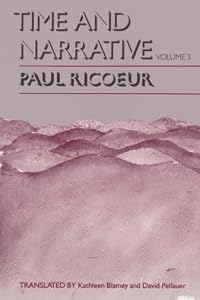
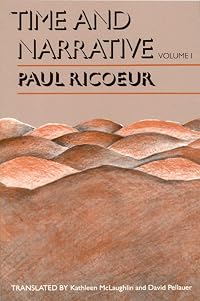
In the first two volumes of this work, Paul Ricoeur examined the relations between time and narrative in historical writing, fiction, and theories of literature. This final volume, a comprehensive reexamination and synthesis of the ideas developed in volumes 1 and 2, stands as Ricoeur's most complete and satisfying presentation of his own philosophy.Ricoeur's aim here is to explicate as fully as possible the hypothesis that has governed his inquiry, namely, that the effort of thinking at show more work in every narrative configuration is completed in a refiguration of temporal experience. To this end, he sets himself the central task of determing how far a poetics of narrative can be said to resolve the "aporias"-the doubtful or problematic elements-of time. Chief among these aporias are the conflicts between the phenomenological sense of time (that experienced or lived by the individual) and the cosmological sense (that described by history and physics) on the one hand and the oneness or unitary nature of time on the other. In conclusion, Ricoeur reflects upon the inscrutability of time itself and attempts to discern the limits of his own examination of narrative discourse."As in his previous works, Ricoeur labors as an imcomparable mediator of often estranged philosophical approaches, always in a manner that compromises neither rigor nor creativity."-Mark Kline Taylor, Christian Century "In the midst of two opposing contemporary options-either to flee into ever more precious readings... or to retreat into ever more safe readings... -Ricoeur's work offers an alternative option that is critical, wide-ranging, and conducive to new applications."-Mary Gerhart, Journal of Religion show lessTags
Recommendations










Member Reviews
La primera edición en francés de esta obra data de 1985. Sus fundamentos proceden del análisis del tiempo en las “Confesiones” de San Agustín y del concepto de mythos (que aquí se traduce por trama) de la “Poética” de Aristóteles. Sus tres volúmenes versan sobre el tiempo en el relato histórico, el tiempo en el relato de ficción y la experiencia del tiempo en la narración. La principal aportación de las ideas de Ricoeur es difícil de circunscribir. Se trata de una obra monumental que explora los horizontes de la vida humana en tanto narración y las implicaciones que ello tiene para la historia, la ficción narrativa y la experiencia del tiempo. Impresiona, por de pronto, la amplitud de las exploraciones, que van show more desde la obra de los historiadores franceses de la escuela de los Annales hasta las consideraciones nomológicas de raigambre hempeliana en lo histórico, y desde la narratología científica hasta la comprensión inteligible de los textos de ficción, con enjundiosos análisis de obras como “En busca del tiempo perdido”, “La señora Dalloway” y “La montaña mágica”. En estos análisis se logra, además de la densidad intelectual del filósofo, la intuición del esteta y la sensibilidad del crítico. En el quehacer bioético, el estudio de esta obra es importante por varios motivos, de los cuales solamente destacaremos dos. Primero, como toda narración histórica, la de la misma bioética como disciplina y como discurso oscila entre la coyuntura y la estructura. El tratamiento escolar del tema lo reduce a cuatro o cinco acontecimientos relevantes (Nuremberg, Tuskeege, Willowbrook y otros) y trata de formar una seriación del tipo causa-efecto entre esos sucesos y el desarrollo de la embrionaria teoría que abona el principialismo ingenuo. Poca atención se presta en esta reconstrucción a la estructura social en la cual se dan los fenómenos de la investigación científica y sus aplicaciones en los planos del conocimiento y del bienestar. Las reflexiones de Ricoeur merecerían ser tratadas en todo curso que confronte las raíces históricas del movimiento bioético. En el trabajo de deliberación comunitaria que los comités ilustran, es evidente que lo narrativo –y por extensión lo hermenéutico– tiene destacado papel, aunque ello no sea siempre reconocido en el trabajo cotidiano. Lamentablemente, comprender se transforma a menudo en asunto de sentimientos y psicología, lo cual enturbia el trabajo sistemático de la tradición filosófica en la epistemología de la vida cotidiana y el tratamiento del Lebenswelt, que esencialmente constituyen el trabajo dialógico.
Ricoeur, con su insistencia en la comprensión narrativa, explora más allá de la empatía o la simpatía y puede acercar el análisis del juicio moral al estudio de los equiliibrios lógicos y reflexivos que permiten tomar decisiones. Sin duda alguna, esta obra fundamental debiera tener un sitio en los estudios bioéticos, aunque su autor no necesariamente haya desarrollado sus implicaciones en este campo.
Fernando Lolas Stepke show less
Ricoeur, con su insistencia en la comprensión narrativa, explora más allá de la empatía o la simpatía y puede acercar el análisis del juicio moral al estudio de los equiliibrios lógicos y reflexivos que permiten tomar decisiones. Sin duda alguna, esta obra fundamental debiera tener un sitio en los estudios bioéticos, aunque su autor no necesariamente haya desarrollado sus implicaciones en este campo.
Fernando Lolas Stepke show less
Aporética del tiempo y la poética del relato, historia y ficción
Sep 6, 2020Spanish
Ratings
Members
- Recently Added By
Author Information

197+ Works 6,361 Members
Professor of philosophy at the University of Paris and the University of Chicago, Paul Ricoeur has been described as "possibly the only younger philosopher in Europe whose reputation is of the magnitude of that of the old men of Existentialism---Marcel, Jaspers, Heidegger and Sartre . . . ." His work has been characterized as "the most massive show more accomplishment of any philosopher of Christian faith since the appearance of Gabriel Marcel." A practitioner of the phenomenology of Edmund Husserl mediated by a return to Immanuel Kant---in that things in themselves, though unknowable, are not excluded by bracketing existence but are acknowledged as the necessary conditions for the possibility of human experience---Ricoeur has examined those parts of experience---faulty, fallible, and susceptible to error and evil---that other phenomenologists, interested primarily in the cognitional, have neglected. In this respect he follows in the footsteps of Heidegger and Sartre, but he goes beyond them in his discovery of principles transcending human subjectivity that are amenable to spiritual interpretation. Here Ricoeur steps within the contemporary hermeneutic circle of Heidegger and Hans-Georg Gadamer, on whom he has written. Ricoeur's hermeneutical method, however, has much in common with the methods of biblical exegesis, and in this respect his works should be especially appealing to seminarians and the clergy. (Bowker Author Biography) show less
Series

Work Relationships
Is contained in
Common Knowledge
- Canonical title
- Time and narrative, volume 3
- Original title
- Temps et récit, tome 3
Classifications
- Genres
- Philosophy, Nonfiction, Literature Studies and Criticism, Fiction and Literature, Religion & Spirituality
- DDC/MDS
- 809.923 — Literature & rhetoric Literature, rhetoric & criticism History, description, critical appraisal of more than two literatures Literature displaying specific features, miscellaneous writings Literature displaying specific elements Narration
- LCC
- PN212 .R5213 — Language and Literature Literature (General) Literature (General) Authorship Technique. Literary composition, etc.
- BISAC
Statistics
- Members
- 328
- Popularity
- 96,570
- Reviews
- 2
- Rating
- (4.15)
- Languages
- 8 — English, French, German, Italian, Polish, Portuguese, Slovenian, Spanish
- Media
- Paper, Ebook
- ISBNs
- 13
- UPCs
- 1
- ASINs
- 2