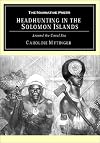
Headhunting in the Solomon Islands: Around the Coral Sea
by Caroline Mytinger, Caroline Mytinger (Author)
On This Page
Description
More than 80 years ago, Caroline Mytinger, a portrait artist, and her childhood friend Margaret Warner set out by freighter from San Francisco with little more than $400 in their pocket and a tin of paints to their name. Their objective was to paint portraits of the tribal people of Papua New Guinea and the Solomon Islands before the encroachment of modern, European-style culture changed their lives forever. This gripping book tells of the two women's experiences whilst travelling through show more Melanesia between 1926 and 1930. show lessTags
Recommendations
























Member Reviews
"Head-hunting in the Solomon Islands" by Caroline Mytinger is a captivating and eye-opening account of the author's journey and experiences in the remote Solomon Islands. Published in 1942, this book provides readers with a unique glimpse into the cultural practices and traditions of the indigenous people living in this region.
Mytinger, an American artist, embarks on a daring expedition to the Solomon Islands, where she immerses herself in the local communities and witnesses their way of life firsthand. Through her vivid descriptions and beautiful illustrations, she brings to life the landscapes, people, and customs of these islands.
One of the book's highlights is Mytinger's exploration of the practice of head-hunting, a ritualistic and show more complex cultural tradition that was prevalent among certain tribes in the Solomon Islands. She shares her encounters with the locals and provides valuable insights into the historical and cultural context surrounding this practice.
What sets "Head-hunting in the Solomon Islands" apart is Mytinger's ability to bridge the gap between observer and participant. She develops personal connections with the people she meets, allowing readers to gain a deeper understanding of their lives, beliefs, and struggles. Her artwork further enhances the narrative, capturing the essence and beauty of the people and landscapes she encounters.
While the book focuses on head-hunting, it also delves into other aspects of Solomon Island culture, such as tattooing, spirituality, and daily life. Mytinger's writing style is engaging and evocative, making the reader feel as though they are embarking on the journey alongside her.
However, it is important to note that the book was written in a different time, and some readers may find certain cultural perspectives outdated or insensitive by today's standards. It is crucial to approach the content with an understanding of the historical context and appreciate the book for its anthropological value rather than judging it by contemporary societal norms. show less
Mytinger, an American artist, embarks on a daring expedition to the Solomon Islands, where she immerses herself in the local communities and witnesses their way of life firsthand. Through her vivid descriptions and beautiful illustrations, she brings to life the landscapes, people, and customs of these islands.
One of the book's highlights is Mytinger's exploration of the practice of head-hunting, a ritualistic and show more complex cultural tradition that was prevalent among certain tribes in the Solomon Islands. She shares her encounters with the locals and provides valuable insights into the historical and cultural context surrounding this practice.
What sets "Head-hunting in the Solomon Islands" apart is Mytinger's ability to bridge the gap between observer and participant. She develops personal connections with the people she meets, allowing readers to gain a deeper understanding of their lives, beliefs, and struggles. Her artwork further enhances the narrative, capturing the essence and beauty of the people and landscapes she encounters.
While the book focuses on head-hunting, it also delves into other aspects of Solomon Island culture, such as tattooing, spirituality, and daily life. Mytinger's writing style is engaging and evocative, making the reader feel as though they are embarking on the journey alongside her.
However, it is important to note that the book was written in a different time, and some readers may find certain cultural perspectives outdated or insensitive by today's standards. It is crucial to approach the content with an understanding of the historical context and appreciate the book for its anthropological value rather than judging it by contemporary societal norms. show less
Ratings
Members
- Recently Added By
Author Information

3 Works 217 Members
Awards and Honors
Distinctions
Series
Belongs to Publisher Series
Maailm ja mõnda (29)
Work Relationships
Has the (non-series) sequel
Common Knowledge
- Original publication date
- 1942
- Important places
- Salomonseilanden; Solomon Islands
- Dedication
- To My Mother / Orles MacDowell
- First words
- One day the Expedition set out, quite simply, to paint the portrait of a race of primitive negroids living in the Southwest Pacific.
Classifications
- Genres
- Anthropology, Travel, Nonfiction, General Nonfiction, Biography & Memoir
- DDC/MDS
- 919.35 — History & geography Geography & travel Geography of and travel in Australasia, Pacific Ocean islands, Atlantic Ocean islands, Arctic islands, Antarctica and on extraterrestrial worlds New Zealand Manawatu-Wanganui Region
- LCC
- DU850 .M9 — History of Europe, Asia, Africa and Oceania Oceania (South Seas) History of Oceania (South Seas) Smaller island groups
- BISAC
Statistics
- Members
- 201
- Popularity
- 163,164
- Reviews
- 2
- Rating
- (3.75)
- Languages
- English, Estonian, Japanese, Russian
- Media
- Paper, Ebook
- ISBNs
- 7
- ASINs
- 21