
On This Page
Tags
Recommendations


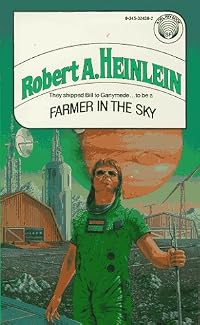


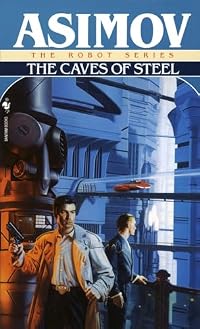
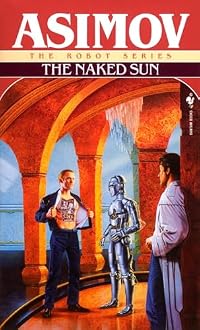


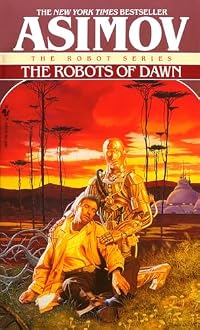







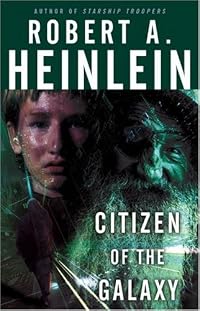


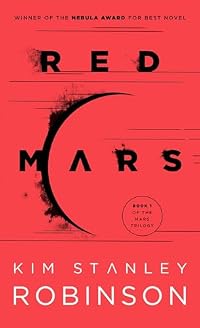


Member Recommendations


Member Reviews
Having not long since read Frank Herbert's high-concept sci-fi epic, Dune, I've just read Asimov's juvenile sci-fi adventure, Space Ranger, the first in his series about David Starr, a man so perfect he could be one of E.E. "Doc" Smith's Lensmen.
Asimov has done little that transcends his '50s USA-centric point of view, and with few changes, this could be a Western story about cattle barons and cowboys, trying to screw one another over, while having to adhere to a manly frontier code. And it is all men, apart from a vaugely female disembodied voice. How do they pass those long, cold Martian nights down on the farm?
The story reeks of imperialism, colonialism and capitalism, not my favourite flavours, but it is set on Mars, so that's a show more bonus.
I bought Space Ranger mainly for its Bruce Pennington cover, probably the only similarity between this book and my edition of Dune, and even the artwork is better on that (though I do still like Bruce's rendition of David Starr, which is accurate to a passage in the story).
It's a 1950's pulp story for USA boys, with a 'wholesome', down-home, white superman-saviour as its protagonist. If Asimov hadn't written so much else of quality, he certainly wouldn't be widely remembered for this. The best I can say about the story is that I didn't have to force myself too hard to finish it. I'm keeping it in my collection for Pennington rather than for Asimov. show less
Asimov has done little that transcends his '50s USA-centric point of view, and with few changes, this could be a Western story about cattle barons and cowboys, trying to screw one another over, while having to adhere to a manly frontier code. And it is all men, apart from a vaugely female disembodied voice. How do they pass those long, cold Martian nights down on the farm?
The story reeks of imperialism, colonialism and capitalism, not my favourite flavours, but it is set on Mars, so that's a show more bonus.
I bought Space Ranger mainly for its Bruce Pennington cover, probably the only similarity between this book and my edition of Dune, and even the artwork is better on that (though I do still like Bruce's rendition of David Starr, which is accurate to a passage in the story).
It's a 1950's pulp story for USA boys, with a 'wholesome', down-home, white superman-saviour as its protagonist. If Asimov hadn't written so much else of quality, he certainly wouldn't be widely remembered for this. The best I can say about the story is that I didn't have to force myself too hard to finish it. I'm keeping it in my collection for Pennington rather than for Asimov. show less
This book was written ten years before I became enamored with Science Fiction literature. It was during the 50s that many of those books I read as a young teen were published. Isaac Asimov, however, wasn’t one of the authors I followed. I didn’t learn about Asimov until my early 30s, when I rediscovered Sci-Fi reading. At that time, a new friend told me about the Foundation series and lent me the first two books. I was hooked from then on.
Although written by Asimov, David Starr — Space Ranger is written in a style more reminiscent of Robert Heinlein. The book is copyrighted circa 1952, which is two years after Asimov graduated from college. It makes sense that he would have read Heinlein and been influenced by him. The similarity show more to me was in the main protagonist's character building, where David Starr was described as being intelligent, able to deduce bad behavior based on a few known facts, fit, and a skilled fighter with a large lung capacity that exceeded that of the Martian assassin he fought. Those characteristics somehow reminded me of Heinlein’s John Carter.
In David Starr – Space Ranger, Mars has become the breadbasket for Earth’s expanded population. Random food supplies from Mars have been poisoned by an unknown toxin. Starr, a newly graduated member of a safety enforcement organization, the Council of Science, is sent to Mars to uncover the cause. He begins his investigation by getting hired by one of the major farms on Mars. The plot goes on to the farm’s foreman trying to kill him, and to Starr meeting true Martians who give him technology that is used to foil the perpetrators.
The story moves quickly, as there is no challenging technology requiring background development, making the book a relaxing read. Five other David Starr sequels exist in the series.
Although pleasant to read, I prefer Asimov’s later Foundation and Robot series books. show less
Although written by Asimov, David Starr — Space Ranger is written in a style more reminiscent of Robert Heinlein. The book is copyrighted circa 1952, which is two years after Asimov graduated from college. It makes sense that he would have read Heinlein and been influenced by him. The similarity show more to me was in the main protagonist's character building, where David Starr was described as being intelligent, able to deduce bad behavior based on a few known facts, fit, and a skilled fighter with a large lung capacity that exceeded that of the Martian assassin he fought. Those characteristics somehow reminded me of Heinlein’s John Carter.
In David Starr – Space Ranger, Mars has become the breadbasket for Earth’s expanded population. Random food supplies from Mars have been poisoned by an unknown toxin. Starr, a newly graduated member of a safety enforcement organization, the Council of Science, is sent to Mars to uncover the cause. He begins his investigation by getting hired by one of the major farms on Mars. The plot goes on to the farm’s foreman trying to kill him, and to Starr meeting true Martians who give him technology that is used to foil the perpetrators.
The story moves quickly, as there is no challenging technology requiring background development, making the book a relaxing read. Five other David Starr sequels exist in the series.
Although pleasant to read, I prefer Asimov’s later Foundation and Robot series books. show less
This review is written with a GPL 4.0 license and the rights contained therein shall supersede all TOS by any and all websites in regards to copying and sharing without proper authorization and permissions. Crossposted at WordPress, Blogspot & Librarything by Bookstooge’s Exalted Permission
Title: David Starr, Space Ranger
Series: Lucky Starr #1
Author: Isaac Asimov
Rating: 3.5 of 5 Stars
Genre: SF
Pages: 144
Format: Digital Scan
Synopsis:
David Starr, youngest member of the Galactic Science Council, has been sent to Mars to find out why people on Earth are being poisoned with Martian food. Going undercover as a farmboy, Starr meets various characters and comes across the idea that Mars might have native Martians living in caves show more underground.
Starr investigates, meets the Martians, who have moved beyond the physical and into the purely mental plane of existence and gets a special mask from them that disguises him, gives him a personal force field and allows him to create the personna, The Space Ranger.
Starr solves the mystery and the legend of the Space Ranger is born. The book ends with him picking up a sidekick and waiting for another adventure.
My Thoughts:
Oh my goodness. This was so much fun. Short and zippy and chockful of that 1950's American Attitude. In Space!
These Lucky Starr books were originally written in the 50's or 60's and then re-released in the 70's. Asimov wrote a new intro for the re-release where he apologizes for scientific inaccuracies since a lot more knowledge had been discovered between releases. One, it was funny to read about the advances made in 20 years from almost 50 years later and two, it did credit to Asimov that he was willing to admit his stories weren't accurate. If more authors would be that humble, that would be good for all of us.
This was a mix of science fiction, mystery and western all rolled into one. It reminded me of the radio dramas that I've heard before. If this had been written today, I'd say this would fall into caricature or even satirization, but Asimov was fully serious. It works. It is written to entertain and it does that admirably.
I think the rest of the series I'll be better able to judge if this is decent quality or not. This one has that “new but nostalgia” factor for sure.
★★★☆½ show less
Title: David Starr, Space Ranger
Series: Lucky Starr #1
Author: Isaac Asimov
Rating: 3.5 of 5 Stars
Genre: SF
Pages: 144
Format: Digital Scan
Synopsis:
David Starr, youngest member of the Galactic Science Council, has been sent to Mars to find out why people on Earth are being poisoned with Martian food. Going undercover as a farmboy, Starr meets various characters and comes across the idea that Mars might have native Martians living in caves show more underground.
Starr investigates, meets the Martians, who have moved beyond the physical and into the purely mental plane of existence and gets a special mask from them that disguises him, gives him a personal force field and allows him to create the personna, The Space Ranger.
Starr solves the mystery and the legend of the Space Ranger is born. The book ends with him picking up a sidekick and waiting for another adventure.
My Thoughts:
Oh my goodness. This was so much fun. Short and zippy and chockful of that 1950's American Attitude. In Space!
These Lucky Starr books were originally written in the 50's or 60's and then re-released in the 70's. Asimov wrote a new intro for the re-release where he apologizes for scientific inaccuracies since a lot more knowledge had been discovered between releases. One, it was funny to read about the advances made in 20 years from almost 50 years later and two, it did credit to Asimov that he was willing to admit his stories weren't accurate. If more authors would be that humble, that would be good for all of us.
This was a mix of science fiction, mystery and western all rolled into one. It reminded me of the radio dramas that I've heard before. If this had been written today, I'd say this would fall into caricature or even satirization, but Asimov was fully serious. It works. It is written to entertain and it does that admirably.
I think the rest of the series I'll be better able to judge if this is decent quality or not. This one has that “new but nostalgia” factor for sure.
★★★☆½ show less
David Starr, a promising young member of Earth's Council of Science, is recruited to investigate a series of fatal poisonings that are all traced back to food imported from the Martian colonies.
Once on Mars, Starr adopts the alias of Dick Williams and, along with a short, unruly farmhand named Bigman, ends up working on the Makian farm, the largest on the planet. After several altercations with two of Makian's irascible foremen, Starr ends up working for the farm's resident agronomist, Benson. The benevolent researcher has been frustrated in his attempts to locate the source of the poison, but theorizes that perhaps there could be Martians living in caverns beneath the planet's surface.
Starr enlists Bigman's help to explore the caverns show more and indeed encounters a highly evolved race of beings of pure energy who bestow upon Starr a device that generates a personal force field that also shrouds his external appearance. One of the energy beings designates Starr as a "Space Ranger," an identity that Starr adopts as he tracks down the true perpetrators of the food poisoning.
David Starr, Space Ranger is the first of six books known as the Lucky Starr series written by Isaac Asimov under the pen name of Paul French. The first volume is a fun, lighthearted adventure with no slow moments. I look forward to reading the next! show less
Once on Mars, Starr adopts the alias of Dick Williams and, along with a short, unruly farmhand named Bigman, ends up working on the Makian farm, the largest on the planet. After several altercations with two of Makian's irascible foremen, Starr ends up working for the farm's resident agronomist, Benson. The benevolent researcher has been frustrated in his attempts to locate the source of the poison, but theorizes that perhaps there could be Martians living in caverns beneath the planet's surface.
Starr enlists Bigman's help to explore the caverns show more and indeed encounters a highly evolved race of beings of pure energy who bestow upon Starr a device that generates a personal force field that also shrouds his external appearance. One of the energy beings designates Starr as a "Space Ranger," an identity that Starr adopts as he tracks down the true perpetrators of the food poisoning.
David Starr, Space Ranger is the first of six books known as the Lucky Starr series written by Isaac Asimov under the pen name of Paul French. The first volume is a fun, lighthearted adventure with no slow moments. I look forward to reading the next! show less
David Starr, Space Ranger was written by Isaac Asimov under the pen-name of Paul French. This is the first in a series of adventure books, written in the 1950's, using the knowledge of anything outer space as was known at the time.
It is a fun book, but by today's standards, not super exciting. I can see how young people in the mid-1900's could have been. fascinated by it.
David Starr is a young, brilliant, agent in the Council of Science. A group of brilliant people who are even above the interstellar government when it comes to investigating problems, etc. In this story, David Starr goes to Mars to investigate a devious plan to force Martian Farms to work for one group. They are doing this by poisoning food stuff, which would show more eventually bring the.collapse of Earth, Mars and other Earthling colonies within the solar system!
Through investigating, David Starr discovers, and meets, real intelligent Martians, who reside beneath the surface of the planet. There assistance allows David Starr to learn who the perpetrators are and stop the poisoning.
Like I said, it is a fun book. If I come across any other from this series I will get it and read it.
Like many early SciFi books, this was a feel good, and in today's world, I like "feel good". show less
It is a fun book, but by today's standards, not super exciting. I can see how young people in the mid-1900's could have been. fascinated by it.
David Starr is a young, brilliant, agent in the Council of Science. A group of brilliant people who are even above the interstellar government when it comes to investigating problems, etc. In this story, David Starr goes to Mars to investigate a devious plan to force Martian Farms to work for one group. They are doing this by poisoning food stuff, which would show more eventually bring the.collapse of Earth, Mars and other Earthling colonies within the solar system!
Through investigating, David Starr discovers, and meets, real intelligent Martians, who reside beneath the surface of the planet. There assistance allows David Starr to learn who the perpetrators are and stop the poisoning.
Like I said, it is a fun book. If I come across any other from this series I will get it and read it.
Like many early SciFi books, this was a feel good, and in today's world, I like "feel good". show less
Asimov wrote this at the urging of Poul Anderson , ostensibly as a potential basis for a television show (Asimov hid behind the pseudonym of Paul French because he didn't want to be associated with a crappy show), and it reads like it. Apart from the Lone Ranger parallels, each chapter ends on a movie serial or early television show cliff hanger. It was never picked up, but he did write five more in the series that I may or may not decide to read...
Considering the `Space Ranger' series is for younger readers an thus lacking some of the complexities of other Asimov material, and suffering slightly from some predictions that now seem comical ($50 pay, ha), this initial volume is still perfectly readable as an adult.
A series of poisonings lead our `hero' to mars in a futuristic space western in search of the suspected poisoners. Will he find them before they find him?
A series of poisonings lead our `hero' to mars in a futuristic space western in search of the suspected poisoners. Will he find them before they find him?
Members
- Recently Added By
Lists

#ReadingBingo2019
25 works; 1 member

Books Read in 2020
4,379 works; 124 members
Talk Discussions
Past Discussions
SciFy Novel - 1950's or possibly earlier in Name that Book (July 2013)
Author Information

2,404+ Works 292,004 Members
Isaac Asimov was born in Petrovichi, Russia, on January 2, 1920. His family emigrated to the United States in 1923 and settled in Brooklyn, New York, where they owned and operated a candy store. Asimov became a naturalized U.S. citizen at the age of eight. As a youngster he discovered his talent for writing, producing his first original fiction at show more the age of eleven. He went on to become one of the world's most prolific writers, publishing nearly 500 books in his lifetime. Asimov was not only a writer; he also was a biochemist and an educator. He studied chemistry at Columbia University, earning a B.S., M.A. and Ph.D. In 1951, Asimov accepted a position as an instructor of biochemistry at Boston University's School of Medicine even though he had no practical experience in the field. His exceptional intelligence enabled him to master new systems rapidly, and he soon became a successful and distinguished professor at Columbia and even co-authored a biochemistry textbook within a few years. Asimov won numerous awards and honors for his books and stories, and he is considered to be a leading writer of the Golden Age of science fiction. While he did not invent science fiction, he helped to legitimize it by adding the narrative structure that had been missing from the traditional science fiction books of the period. He also introduced several innovative concepts, including the thematic concern for technological progress and its impact on humanity. Asimov is probably best known for his Foundation series, which includes Foundation, Foundation and Empire, and Second Foundation. In 1966, this trilogy won the Hugo award for best all-time science fiction series. In 1983, Asimov wrote an additional Foundation novel, Foundation's Edge, which won the Hugo for best novel of that year. Asimov also wrote a series of robot books that included I, Robot, and eventually he tied the two series together. He won three additional Hugos, including one awarded posthumously for the best non-fiction book of 1995, I. Asimov. "Nightfall" was chosen the best science fiction story of all time by the Science Fiction Writers of America. In 1979, Asimov wrote his autobiography, In Memory Yet Green. He continued writing until just a few years before his death from heart and kidney failure on April 6, 1992. (Bowker Author Biography) show less
Some Editions
Series

Belongs to Publisher Series
Work Relationships
Common Knowledge
- Canonical title
- David Starr, Space Ranger
- Original title
- David Starr: Space Ranger
- Alternate titles*
- Veleno per la Terra
- Original publication date
- 1952
- People/Characters
- David "Lucky" Starr; Augustus Henree; Hector Conway; John Bigman Jones
- Important places
- Mars; International City
- First words
- David Starr was staring right at the man, so he saw it happen. He saw him die.
- Last words
- (Click to show. Warning: May contain spoilers.)"Together then," said David, "wherever we go."
- Original language
- English
- Canonical DDC/MDS
- 813.08762
*Some information comes from Common Knowledge in other languages. Click "Edit" for more information.
Classifications
- Genres
- Science Fiction, Fiction and Literature
- DDC/MDS
- 813.08762 — Literature & rhetoric American literature in English American fiction in English By type Genre fiction Adventure fiction Speculative fiction Science fiction
- LCC
- PZ3 .A8316 — Language and Literature Fiction and juvenile belles lettres Fiction and juvenile belles lettres Fiction in English
- BISAC
Statistics
- Members
- 977
- Popularity
- 26,761
- Reviews
- 17
- Rating
- (3.22)
- Languages
- 10 — Czech, Dutch, English, French, German, Hungarian, Italian, Russian, Spanish, Swedish
- Media
- Paper, Audiobook, Ebook
- ISBNs
- 27
- ASINs
- 22


