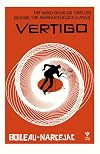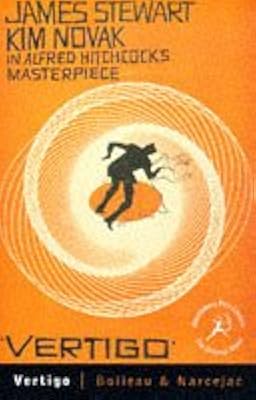
Vertigo
by Boileau-Narcejac, Pierre Boileau, Thomas Narcejac
On This Page
Description
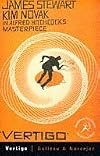
Fiction. Literature. Mystery. Thriller. The sinister, mind-bending roman noir that inspired the 1958 Alfred Hitchcock classic, starring James Stewart and Kim Novak It could have happened to any of us, but it happened to a man named Flavieres. His days as a detective were over, and everyone knew he had his reasons. But when an old friend appeared out of nowhere with concerns about his withdrawn and mysterious wife, Flavieres didn't have the heart to refuse. Soon, he would be scouring the show more streets of Paris in search of an answer-in search of a girl who belonged to no one, not even to herself. Intrigue would be replaced by obsession, and dreams replaced by nightmares. This is the story of a desperate man. A man who ended up compromising his own morality beyond all measure, while World War II raged outside his front door. A man tormented-and destroyed-by a dark, terrible secret. show lessTags
Recommendations














Member Reviews
I was intrigued to read the book which became a Hitchcock film. Especially because I read that Boileau and Nacejac wrote it with Hitchcock in mind, after he failed to secure the rights to their first novel. I like the film. The book is just different enough to make it better than the film. The setting of Paris at the start of WW2 adds to the melancholy of the anti-hero Flavières. I think his status as a young enough man not at war is more important than his titular vertigo. The second part of the book is significantly different, and more satisfying, than the film. The story is exquisitely turned, the characters sighingly believable.
An intriguing mystery, revolving around an obsessional neurotic's decent into psychosis. Flavières' fixation upon the otherworldly Madeleine is creepy from the outset, develops into unpleasantness, finally twisting into a controlling abusiveness. Well-worthy of the Hitchcock treatment, a psychological drama which left me with a bad taste in my mouth.
How very bizarre this book is. An overwrought, slightly hysterical crime melodrama - but one with a central idea so brilliant, so fantastically clever and elegantly simple that no wonder Hitchcock went crazy for it. It's rare to find a book which is so utterly improved upon by it's film adaptation. The hero as played by James Stewart is far more sympathetic and interestingly vulnerable than the slightly self pitying nutjob here. Similarly there's better pacing in terms of how the obsession begins to take form and then horribly explodes by the end of the narrative. Here it seems slightly rushed. Better still was Hitch's idea to reveal the twist at just past the halfway point. The pathos and horror of what's going on is far richer because show more of it. As with almost all of the things where the book differs from the film, the decisions Hitchcock made are just revealed to be more and more impressive. If you want a proof of his resolute genius - and that of the writers of the screenplay Coppel and Taylor - the ending is all you need. The book peters out in a bit of sensationalist silliness that would have befitted a Victorian melodrama. The film's ending is just *perfectly* judged - in terms of structure, narrative and with the climax of the character's emotional development. You can see what made Truffaut suggest it to Hitchcock, but it really is proof of who the genius really was. Interesting but deeply flawed. show less
Yep, this is that Vertigo, the one that Alfred Hitchcock made famous although you shouldn’t go into this hoping to find it similar to the movie. For starters, this was not based in San Francisco. The book was written in 1954 by French collaborators (a poor choice of words) Pierre Boileau and Pierre Ayraud under the pen name Boileau-Narcejac. Originally titled D'entre les morts, "Among the Dead" it is based in Paris during the years just before and shortly after the German occupation. It is a fascinating tale of suspense that is oh so French, complete with lots of lunches in Parisian cafés and walks along the Seine. And passion. We mustn't forget the passion. This is Paris, after all.
Former policeman Roger Flavières is hired by an show more old acquaintance to keep tabs on his wife whom he claims has been behaving strangely. She has apparently developed an unhealthy obsession with a grandmother that had committed suicide long ago. The acquaintance, Gévigne, says that his wife has begun copying the dress and mannerisms of the deceased granny and he is worried about her. Flavières reluctantly agrees to look into the matter but his reluctance vanishes quickly once he lays eyes on the Mme. Gévigne, and he rapidly falls head over heals in love with her.
It doesn't end well, but I'll let you discover that for yourself.
For a long time I had no idea where this story was going. Is it a crime story, a psychological drama, maybe even something a bit paranormal? I had no clue. I hadn't seen the movie in decades and couldn't remember how it ended but from all that I had heard, the endings might be totally different. (They still might. I have a copy of the movie on hold at the library.) The ending totally took me by surprise, which made up for a few slow spots in the third quarter that bordered on tedious.
Bottom line: This book has been on my tbr list for a few years and I am glad that I finally read it. Now I definitely want to read Celle qui n'était plus which director Henri-Georges Clouzot made into the magnificent movie, Diabolique.
My thanks to the folks at the Pulp Fiction group for introducing me to this and many other fine books and giving me the opportunity to discuss it with them. show less
Former policeman Roger Flavières is hired by an show more old acquaintance to keep tabs on his wife whom he claims has been behaving strangely. She has apparently developed an unhealthy obsession with a grandmother that had committed suicide long ago. The acquaintance, Gévigne, says that his wife has begun copying the dress and mannerisms of the deceased granny and he is worried about her. Flavières reluctantly agrees to look into the matter but his reluctance vanishes quickly once he lays eyes on the Mme. Gévigne, and he rapidly falls head over heals in love with her.
It doesn't end well, but I'll let you discover that for yourself.
For a long time I had no idea where this story was going. Is it a crime story, a psychological drama, maybe even something a bit paranormal? I had no clue. I hadn't seen the movie in decades and couldn't remember how it ended but from all that I had heard, the endings might be totally different. (They still might. I have a copy of the movie on hold at the library.) The ending totally took me by surprise, which made up for a few slow spots in the third quarter that bordered on tedious.
Bottom line: This book has been on my tbr list for a few years and I am glad that I finally read it. Now I definitely want to read Celle qui n'était plus which director Henri-Georges Clouzot made into the magnificent movie, Diabolique.
My thanks to the folks at the Pulp Fiction group for introducing me to this and many other fine books and giving me the opportunity to discuss it with them. show less
Being a huge Hitchock fan this book particularly intrigued, but even if you’ve never seen a single Hitchcock film in your life, VERTIGO is an engaging, fascinating, and frequently beautiful book. If you are also a fan of the film, then there is greater nuance here than the film, and plenty to conjecture about for the reader.
Set at the start of World War II, the central character of Flavières is troubled by many things, not just the need at one point to flee the war’s encroachment. He seems, on the face of it, a man who was destined to be obsessed with the wife of his friend. Her behaviour whilst mysterious, is mesmerising and her beauty in the eyes of Flavières incomparable. His obsession and the moral dilemmas presented to him by show more her husband’s insistence that he continue the friendship are understated, yet beautifully illustrated.
The reasons posited for her behaviour are unexpected and yet oddly believable, but nothing is ever that straight-forward and VERTIGO delivers some twists and turns and stings in the tail that make it end up sitting somewhere between a mystery and a morality play.
Beautifully translated with nary a bump to be detected in the language, VERTIGO is complicated, clever and another of those wonderful, one sitting reading experiences.
http://www.austcrimefiction.org/review/review-vertigo-pierre-boileau-and-thomas-... show less
Set at the start of World War II, the central character of Flavières is troubled by many things, not just the need at one point to flee the war’s encroachment. He seems, on the face of it, a man who was destined to be obsessed with the wife of his friend. Her behaviour whilst mysterious, is mesmerising and her beauty in the eyes of Flavières incomparable. His obsession and the moral dilemmas presented to him by show more her husband’s insistence that he continue the friendship are understated, yet beautifully illustrated.
The reasons posited for her behaviour are unexpected and yet oddly believable, but nothing is ever that straight-forward and VERTIGO delivers some twists and turns and stings in the tail that make it end up sitting somewhere between a mystery and a morality play.
Beautifully translated with nary a bump to be detected in the language, VERTIGO is complicated, clever and another of those wonderful, one sitting reading experiences.
http://www.austcrimefiction.org/review/review-vertigo-pierre-boileau-and-thomas-... show less
Yes, this is the book of the famous Hitchcock masterpiece. This is not a masterpiece but is nonetheless a superior psychological crime thriller. Although the basic plot idea is the same as the film there are many significant differences. The setting is Paris and the south of France rather than San Francisco. The book covers a longer time period and is set before and after WW2. The ending is different. The story focusses much more on the thoughts of the main character. A lot of alcohol is drunk! It's hard to say more without introducing spoilers.
Even if you've seen the film this book is worth reading for its own intrinsic value. However, it's fair to say the changes Hitchcock made, made for a better film. He certainly did not spoil this show more book! show less
Even if you've seen the film this book is worth reading for its own intrinsic value. However, it's fair to say the changes Hitchcock made, made for a better film. He certainly did not spoil this show more book! show less
This is certainly a mind-bending thriller, as the back cover proclaims. Paul Gévigne hires his old friend Roger Flavières to shadow his wife, Madeleine, whom Gévigne thinks is subject to trances and likely to commit suicide. Flavières ends up becoming obsessed with Madeleine, and dramatic events ensue that are familiar to those who have seen the film. This translation, by Geoffrey Sainsbury, does the job well and did not make me wonder what the original French was, as can sometimes happen to me with French-to-English translations. I did lose some patience with Flavières' anguish and carrying on, though.
Overall, this is a good way to experience the source material for one of Hitchcock's best-known films.
Overall, this is a good way to experience the source material for one of Hitchcock's best-known films.
Members
- Recently Added By
Lists

Read the book and saw the movie
1,170 works; 195 members

Books Read in 2020
4,379 works; 123 members

Books mentioned in Julian Symons’ Bloody Murder
438 works; 6 members

Favorite French Fiction
214 works; 104 members
Author Information

89 Works 1,807 Members

89+ Works 1,770 Members

85+ Works 1,717 Members
Some Editions
Series
Belongs to Publisher Series
Work Relationships
Is contained in
Common Knowledge
- Canonical title
- Vertigo
- Original title
- D'entre les morts
- Alternate titles
- The Living and the Dead; Vertigo; or, The Living and the Dead
- Original publication date
- 1956
- People/Characters
- Roger Flavières; Madelaine Gévigne; Paul Gévigne; Pauline Lagerlac; Renée Sourange; Almaryan
- Important places
- Paris, France; Cimetière de Passy, Paris, France; Saint-Nicholas, Pays de Calais, Hauts de France, France; Orleans, France; Marseille, Bouches-du-Rhône, Provence-Alpes-Côte d'Azur, France
- Important events
- World War II; Occupation of France
- Related movies
- Vertigo (1958 | IMDb); La présence des ombres (1995 | IMDb)
- First words
- "Look here!" said Gevigne. "I want you to keep an eye on my wife."
Voilà, dit Gévigne. Je voudrais que tu surveilles ma femme. - Last words
- (Click to show. Warning: May contain spoilers.)"I shall wait for you," he said.
(Click to show. Warning: May contain spoilers.)Je t'attendrai, murmura-t-il. - Original language
- French
- Disambiguation notice
- Vertigo (Original title: The Living and the Dead)
Classifications
- Genres
- Fiction and Literature, Mystery, General Fiction
- DDC/MDS
- 843.914 — Literature & rhetoric French Literature French fiction 1900- 20th Century 1945-1999
- LCC
- PQ2603 .O27 .D413 — Language and Literature French, Italian, Spanish and Portuguese literatures French literature Modern literature 1900-1960
- BISAC
Statistics
- Members
- 427
- Popularity
- 72,511
- Reviews
- 13
- Rating
- (3.76)
- Languages
- 17 — Dutch, English, Estonian, Finnish, French, German, Greek, Italian, Lithuanian, Farsi/Persian, Polish, Portuguese (Brazil), Portuguese (Portugal), Romanian, Spanish, Swedish, Turkish
- Media
- Paper, Audiobook, Ebook
- ISBNs
- 32
- ASINs
- 17