On This Page
Description
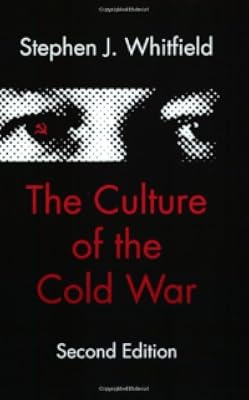
"Without the Cold War, what's the point of being an American?" As if in answer to this poignant question from John Updike's Rabbit at Rest, Stephen Whitfield examines the impact of the Cold War--and its dramatic ending--on American culture in an updated version of his highly acclaimed study. In a new epilogue to this second edition, he extends his analysis from the McCarthyism of the 1950s, including its effects on the American and European intelligensia, to the civil rights movement of the show more 1960s and beyond. Whitfield treats his subject matter with the eye of a historian, reminding the reader that the Cold War is now a thing of the past. His treatment underscores the importance of the Cold War to our national identity and forces the reader to ask, Where do we go from here? The question is especially crucial for the Cold War historian, Whitfield argues. His new epilogue is partly a guide for new historians to tackle the complexities of Cold War studies. show lessTags
Recommendations















Member Reviews
In The Culture of the Cold War, Second Edition, Stephen J. Whitfield argues, “The national fetish with anti-Communism pervaded American society, and nowhere is this more apparent than in the popular culture of the era. Few could escape or miss the message. Literature, movies, art, and the media – particularly the then-new form, television – consistently hammered the theme of an enemy within, working to subvert the American Way of Life” (pg. vii). He continues, “Unable to strike directly at the Russians, the most vigilant patriots went after the scalps of their countrymen instead. Since Stalin and his successors were out of reach, making life difficult for Americans who admired them was more practicable. Since NATO would not show more come to the rescue of Eastern Europe, at least some politically suspect writers could be kept from traveling to Western Europe” (pg. 9). Further, “The struggle against domestic Communism encouraged an interpenetration of the two enterprises of politics and culture, resulting in a philistine inspection of artistic works not for their content but for the politique des auteurs. Censors endorsed the boycott of films that they had not seen, vigilantes favored the removal from library shelves of books that they had not read” (pg. 10).
Whitfield writes, “Transposing the genuine evil that emanated from abroad to domestic politics, influential voices then magnified the danger that American Communism represented and made democratic norms seem like luxuries that the crisis could not permit. As liberal impulses became suspect, as sensitivities to constitutional safeguards were coarsened, the axis of American politics spun toward the primitive, the intolerant, the paranoid” (pg. 33). He continues, “The belief system that most middle-class Americans considered their birthright – the traditional commitment to competitive individualism in social life, to the liberal stress on rights in political life, and to private enterprise in economic life – was adapted to the crisis of the Cold War. An uncritical patriotism often shaped the interpretations of the past. Faith was strengthened in the institutions of authority as the best preservatives of national values, and the esteem for business achievements became perhaps the most common vindication of American life” (pg. 53-54). In this way, “Church membership and a highly favorable attitude toward religion became forms of affirming ‘the American way of life’ during the Cold War, especially since the Soviet Union and its allies officially subscribed to atheism” (pg. 83).
Discussing visual media, Whitfield writes, “The most striking characteristic of celluloid Communism, however, is not the Party’s contempt for liberals or its hypocrisy but its hardened criminality, its proclivity for the raw violence that also pervaded gangster pictures” (pg. 135). He continues, “Amplification of the Cold War consensus was especially apparent in television’s coverage of international relations. In the articulation of foreign policy, no one besides Eisenhower bestrode the video colossus more formidably than Secretary of State Dulles, who was given eighteen separate opportunities in less than seven years of office to report to viewers on the state of the planet” (pg. 156). Further, “Political censorship did not affect the theater. A metropolitan, generally liberal clientele supported Broadway, while off-Broadway appreciated whatever attention a right-wing picket line might provide” (pg. 180-181).
Whitfield concludes, “The culture of the Cold War decomposed when the moral distinction between East and West lost a bit of its sharpness, when American self-righteousness could be more readily punctured, when the activities of the two superpowers assumed greater symmetry” (pg. 205). show less
Whitfield writes, “Transposing the genuine evil that emanated from abroad to domestic politics, influential voices then magnified the danger that American Communism represented and made democratic norms seem like luxuries that the crisis could not permit. As liberal impulses became suspect, as sensitivities to constitutional safeguards were coarsened, the axis of American politics spun toward the primitive, the intolerant, the paranoid” (pg. 33). He continues, “The belief system that most middle-class Americans considered their birthright – the traditional commitment to competitive individualism in social life, to the liberal stress on rights in political life, and to private enterprise in economic life – was adapted to the crisis of the Cold War. An uncritical patriotism often shaped the interpretations of the past. Faith was strengthened in the institutions of authority as the best preservatives of national values, and the esteem for business achievements became perhaps the most common vindication of American life” (pg. 53-54). In this way, “Church membership and a highly favorable attitude toward religion became forms of affirming ‘the American way of life’ during the Cold War, especially since the Soviet Union and its allies officially subscribed to atheism” (pg. 83).
Discussing visual media, Whitfield writes, “The most striking characteristic of celluloid Communism, however, is not the Party’s contempt for liberals or its hypocrisy but its hardened criminality, its proclivity for the raw violence that also pervaded gangster pictures” (pg. 135). He continues, “Amplification of the Cold War consensus was especially apparent in television’s coverage of international relations. In the articulation of foreign policy, no one besides Eisenhower bestrode the video colossus more formidably than Secretary of State Dulles, who was given eighteen separate opportunities in less than seven years of office to report to viewers on the state of the planet” (pg. 156). Further, “Political censorship did not affect the theater. A metropolitan, generally liberal clientele supported Broadway, while off-Broadway appreciated whatever attention a right-wing picket line might provide” (pg. 180-181).
Whitfield concludes, “The culture of the Cold War decomposed when the moral distinction between East and West lost a bit of its sharpness, when American self-righteousness could be more readily punctured, when the activities of the two superpowers assumed greater symmetry” (pg. 205). show less
Ratings
Members
- Recently Added By
Lists

r/AskHistorians' Recommended Books
1,068 works; 19 members

The Cold War
54 works; 2 members
Author Information

14+ Works 394 Members
Stephen J. Whitfield is Professor of American Studies at Brandeis University, and author of seven other books.
Series

Common Knowledge
- Important events
- Cold War
- Publisher's editor
- Kutler, Stanley I.
Classifications
Statistics
- Members
- 149
- Popularity
- 220,682
- Reviews
- 1
- Rating
- (3.33)
- Languages
- English
- Media
- Paper, Ebook
- ISBNs
- 5
- ASINs
- 2