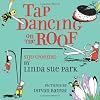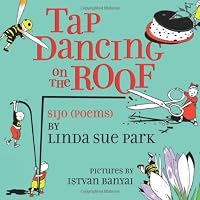
Tap Dancing on the Roof
by Linda Sue Park
On This Page
Description
Sijo is a traditional Korean form of poetry. Sijo is syllabic, like Japanese haiku, with three lines of 14 to 16 syllables each: the first two introduce the topic, the third and fourth lines develop it, and the fifth and sixth lines contain an unexpected humorous or ironic twist. This collection contains 26 sijo.Tags
Recommendations


Member Reviews
The last Linda Sue Park book I read, Long Walk to Water, made me weep. This one made me laugh! These poems are cute and clever, and I have never heard of Haiku's Korean cousin, Sijo. The quirky, brave and lighthearted tone of the poems makes me curious to read the real thing- Korean Sijo. They also remind me of the way the poet Kay Ryan always leaves a twist, or change of direction, at the end of her (bittersweet) poems. Well, these poems are just sweet, no bitterness. I especially love the image in "Long Division", which describes the number having a wall and ceiling until they get torn down by other numbers. The illustrations by Istvan Banyai match the fantasy and delight of the highly descriptive words employed. A great read.
Yay! ?áNow kids can learn that Eastern poetry is not just the counted syllables and nature themes of haiku. ?á Sijo (also shijo) is from Korea, and is also brief, but focused on stresses, with a format of three lines, the third of which contains a surprise of some sort. ?áIntroduction for kids, and appendices for parents, scholars, etc. give more information. ?á
Don't make the mistake that I did and think this is about the suffering of modern Koreans, all heavy and inspirational. ?áIt's a fun collection of miniature odes to the everyday joys and challenges of just about any childhood. ?á
From the note, here's an example of a tradtional sijo:
I like you, bamboo, for you are the truest of true friends.
When I was young, I made show more you into stilts and played on you.
Now you wait outside my window, until I need a walking stick.
?á ?á ?á ?á ?á ?á ?á ?á ?á ?á ?á ?á ?á ?á ?á ?á ?á ?á ?á ?á ?á ?á ?á ?áKim Kwang-uk (1580-1656) show less
Don't make the mistake that I did and think this is about the suffering of modern Koreans, all heavy and inspirational. ?áIt's a fun collection of miniature odes to the everyday joys and challenges of just about any childhood. ?á
From the note, here's an example of a tradtional sijo:
I like you, bamboo, for you are the truest of true friends.
When I was young, I made show more you into stilts and played on you.
Now you wait outside my window, until I need a walking stick.
?á ?á ?á ?á ?á ?á ?á ?á ?á ?á ?á ?á ?á ?á ?á ?á ?á ?á ?á ?á ?á ?á ?á ?áKim Kwang-uk (1580-1656) show less
This sweet, fun book of poems is great for any elementary library. The poems are sijo which is similar to haiku in the sense that it has syllabic structure, but often the poems have a twist at the end. The poems are all short and include cute illustrations of the poem, one per page. I think students would like this because the poems are short, the language is simple to read and understand, and the topics are relatable. So often students can be turned off of poetry because of the overly flowery language and content, but this book goes against that. From topics of walking the beach to eating breakfast to frogs, the poems are relatable to kids and I think kids would enjoy reading them. Also, this book is a nice model that not all poems show more need to rhyme. show less
Tap Dancing on the Roof includes a wide variety of poems, originally written as Korean poetry in the sijo style. The unique syllabic pattern draws readers in. The wide variety of topics leave something for everyone, and the unique illustrations leave readers curious and allows them to create their own interpretation of the poems. This Newbery Medal awarded collection has a place in every primary classroom, as students can take time to dive into the syllabic patterns and flow of the poems, look for the spots of humor or irony in the poems, as well as feel the heart and depth of some of the poems.
This is a fun, approachable collection of poetry. The verse is integrated visually with the whimsical illustrations, making each page unique and fun to both read and simply enjoy. The topics are targeted to elementary school kids. We see the cafeteria tray, long division, soccer games, and teeth brushing. The poems generally end with a twist or joke, as is typical for Sijo. The author's notes include tips for writing your own Sijo and an explanation for the form. This would be a great book for introducing structural form. It might be more fun for a student to write Sijo than, say, Haiku, because the tradition includes more everyday topics. It's also a good introduction to poetry because the verse is casual, funny, and the illustrations show more add so much to the total package. Good for middle elementary. show less
This book of poems written by Linda Sue Park is a collection of Sijo poems. Sijo poems are a type of poem originating from Korea. Sijo's have a fixed number of syllables with an unexpected twist or joke at the end. The illustrations to go along with these poems are drawn by Istvan Banyai. His illustrations often contained a literal drawing of the twist or joke at the end of each Sijo as the dominating presence for each his individual drawings. This shows Banyai's ability to imitate forms of writing through his illustrations. Banyai sticks to his usual style of glossy textures with neutral tones. Banyai also draws many young, familiar children as the characters for most of his illustrations, which is a consistency in many of his works. I show more had never heard of a Sijo poem until reading this book, and I truly love the form of this style of poetry. After reading this book, I'm encourage to write some Sijo of my own. My favorite Sijo in this book was one that starts by describing a hectic ocean and ends with the ocean being tired and napping the next day. The illustration for this poem shows a beautifully drawn, actively swirling ocean on the right page with a calm and gentle ocean on the left page. This kind of contrast made me ponder how and why conflict can be so important for any piece of art. show less
REVIEW:
A sijo is an ancient Korean form of poetry. It is written either in a three-line (fourteen to sixteen syllables per line) or six-line (seven to eight syllables per line) format. In addition, sijo's usually have a surprising, twisting line at the end. This book is written in both formats. The poems in this book are separate from one another, but share elements that come together, creating a minimal plot. For example, the first poem, titled "Breakfast" talks about waking up. The next few poems talk about school related themes, such as art class, and school lunch. This is followed by poems about fall (such as "October", which is about leaves blowing in the wind, and "November" which is about eating too much on Thanksgiving), winter show more (such as "Vanishing Act" which is about melting snowmen), spring (such as "From the Window", which is about birds), and summer (such as "Summer Storm" and "Tide Line"). The book ends with a child winding down from the day, including showering, brushing his teeth, and going to sleep. Upon reading the first couple of poems, I thought the poems were all separate. I enjoyed watching the simply story unfold as I continued reading. The poems can be looked at as separate, but they also work together.
I love this poetry book because it shows that poems can be fun, as well as shows that poetry doesn't have to have deep meaning! Most of these poems are about simple things, such as thunderstorms, and waking up in the morning. I also like how this kind of poetry, sijo, has a twist at the end of each poem. This makes the book interesting and engaging. Readers can discuss the meaning behind the last lines of each poem. How does the addition of that line change the feel or meaning of the poem?
MEDIA: The illustrations are digitally created. I love how simple the illustrations are, yet at the same time, they match the fun tone of the poems.
GENRE: Poetry
This book is comprised of a specific type of Korean poetry, a sijo (which is explained in the review).
USES:
(1) I have never heard of a sijo before, and I think it would be fun to introduce my students to a new form of poetry aside from the ones they already know. Students could practice writing their own.
(2) Considering that this book focuses on a form of Korean literature, it would be fun to explore other forms of Korean literature as a way to highlight and learn more about Korea.
AGE-APPROPRIATENESS: Upper elementary (4th, 5th) show less
A sijo is an ancient Korean form of poetry. It is written either in a three-line (fourteen to sixteen syllables per line) or six-line (seven to eight syllables per line) format. In addition, sijo's usually have a surprising, twisting line at the end. This book is written in both formats. The poems in this book are separate from one another, but share elements that come together, creating a minimal plot. For example, the first poem, titled "Breakfast" talks about waking up. The next few poems talk about school related themes, such as art class, and school lunch. This is followed by poems about fall (such as "October", which is about leaves blowing in the wind, and "November" which is about eating too much on Thanksgiving), winter show more (such as "Vanishing Act" which is about melting snowmen), spring (such as "From the Window", which is about birds), and summer (such as "Summer Storm" and "Tide Line"). The book ends with a child winding down from the day, including showering, brushing his teeth, and going to sleep. Upon reading the first couple of poems, I thought the poems were all separate. I enjoyed watching the simply story unfold as I continued reading. The poems can be looked at as separate, but they also work together.
I love this poetry book because it shows that poems can be fun, as well as shows that poetry doesn't have to have deep meaning! Most of these poems are about simple things, such as thunderstorms, and waking up in the morning. I also like how this kind of poetry, sijo, has a twist at the end of each poem. This makes the book interesting and engaging. Readers can discuss the meaning behind the last lines of each poem. How does the addition of that line change the feel or meaning of the poem?
MEDIA: The illustrations are digitally created. I love how simple the illustrations are, yet at the same time, they match the fun tone of the poems.
GENRE: Poetry
This book is comprised of a specific type of Korean poetry, a sijo (which is explained in the review).
USES:
(1) I have never heard of a sijo before, and I think it would be fun to introduce my students to a new form of poetry aside from the ones they already know. Students could practice writing their own.
(2) Considering that this book focuses on a form of Korean literature, it would be fun to explore other forms of Korean literature as a way to highlight and learn more about Korea.
AGE-APPROPRIATENESS: Upper elementary (4th, 5th) show less
Members
- Recently Added By
Author Information

62+ Works 23,454 Members
Linda Sue Park was born in Urbana, Illinois on March 25, 1960. She received a B.A. in English from Stanford University. After graduating, she worked as a public-relations writer for a major oil company for two years. She obtained advanced degrees in literature from Trinity College, Dublin in Ireland and from the University of London. Before show more becoming a full-time author, she held numerous jobs including working for an advertising agency, teaching English as a second language to college students, and working as a food journalist. Her first book, Seesaw Girl, was published in 1999. Her other books include The Kite Fighters, Tap Dancing on the Roof: Sijo (Poems), and A Single Shard, which won the 2002 Newbery Medal. She also wrote Storm Warning, which is the ninth book in the 39 Clues series. Her title A Long Walk to Water made the New York Times bestseller list. (Bowker Author Biography) show less
Some Editions
Awards and Honors
Awards
Distinctions
Common Knowledge
- Canonical title
- Tap Dancing on the Roof
Classifications
Statistics
- Members
- 261
- Popularity
- 123,633
- Reviews
- 29
- Rating
- (4.15)
- Languages
- English
- Media
- Paper, Ebook
- ISBNs
- 5
- UPCs
- 1
- ASINs
- 2