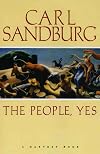
The People, Yes
by Carl Sandburg 
On This Page
Description
A long poem that makes brilliant use of the legends and myths, the tall tales and sayings of America. "If America has a folksinger today he is Carl Sandburg, a singer who comes out of the prairie soil... who can hand back to the people a creation that has scraps of their own insight, humor, and imagination" (Padraic Colum).Tags
Recommendations


























Member Reviews
Non tutti i mali vengono per nuocere. Lo sappiamo e per consolarci ce lo diciamo spesso. Se la vecchiaia è considerata un "male", non credo si possa negare che questa inevitabile condizione umana possa essere considerata un "nocumento", sostantivo del verbo "nuocere".
Infatti, secondo molti, si pensa che soltanto con la vecchiaia si possa conquistare la "saggezza". Una volta acquisita - non tutti ci riescono, anche se invecchiati - si pensa che, tutto sommato, la vita possa essere considerata un viaggio, un percorso, ed anche una corsa, tra pianure, montagne e colline, mari ed oceani. Si spera che si possa arrivare alla fine, sani di corpo e di mente, in cima ad un monte abbastanza alto, per rivedere quello che abbiamo lasciato dietro show more alle nostre spalle.
Un'aspirazione abbastanza legittima nella speranza di rivedere con l'occhio della mente i primi giorni di vita, quando il palcoscenico del mondo ci ha visti diventare attori della rappresentazione dello spettacolo che si chiama "vita". Soltanto in questo modo, scrutando il vasto orizzonte che ci appare davanti con scene ed episodi che ci hanno visto protagonisti, possiamo capire davvero cosa e come abbiamo vissuto i giorni che ci sono stati concessi di vivere.
Potremo renderci conto che il tempo è passato come scorre una pellicola nella macchina del proiettore della vita, fuggevole, transitoria, effimera. In gioventù si tende a pensare che la vita sia fatta per sempre. Man mano che gli anni passano, ci si accorge che non sono gli anni a passare, ma decenni. Come palle che rotolano, alternando tempi belli e brutti. E' cambiata anche la percezione del tempo. La catena dei ricordi si è allungata e la memoria li raccoglie proponendoli continuamente al tempo presente che sembra restringersi e stare per finire da un momento all'altro.
Il poeta americano Carl Sandburg (1878-1967) fu molto attento e consapevole di questi momenti della vita. Cercò di affrontare il problema in un suo libro intitolato, "The People, Yes", pubblicato nel 1936. Era il periodo della "grande depressione", il crollo di Wall Street, una grave crisi economica e finanziaria che sconvolse l'economia mondiale e che ebbe forti ripercussioni nel decennio successivo.
Nel poema, lungo trecento pagine, il poeta voleva dare un aiuto alla gente comune, incitandoli a reagire, rinnovarsi e ricostruire. Attraverso il recupero di storie, leggende e miti percorre le praterie del suo sterminato Paese di adozione. Figlio di poveri ed incolti emigranti svedesi, già a tredici anni incominciò a lavorare, diventando una delle voci più importanti del cosiddetto gruppo di Chicago.
Si fece promotore di un rinnovamento della poesia nel senso di una diretta ricerca delle manifestazioni più autentiche della nuova realtà americana e di un linguaggio affrancato dagli schemi stilistici tradizionali, spoglio e quotidiano. La sintesi del suo lungo poema va vista in pochi versi del poema quando racconta la storia di un re che voleva una iscrizione sotto il suo nome in maniera da sfidare il passare del tempo. Ecco i versi che ho tradotto in maniera libera:
"And the king wanted an inscription
good for a thousand years and after
that to the end of the world?"
"E il re voleva una iscrizione
che durasse per migliaia di anni e più
sino alla fine del mondo?"
“Yes, precisely so.”
“Something so true and awful that no
matter what happened it would stand?”
“Yes, exactly that.”
"Si, esattamente".
" Qualcosa che fosse vera e terribile che
affrontasse qualunque cosa potesse accadere?"
"Si esattamente."
“Something no matter who spit on it or
Laughed at it there it would stand
And nothing would change it?”
"Qualcosa su cui anche sputarci
o riderci su senza che
nulla potesse farla cambiare?"
“Yes, that was what the king ordered
his wise men to write.”
"Si, questo ordinò il re
ordinò ai suoi saggi di fare."
“And what did they write?”
“Five words: This too shall pass away.”
"E cosa scrissero?
"Cinque parole: Anche questo dovrà passare."
Cinque semplici parole in un inglese biblico. Potranno accompagnarci nelle difficoltà del cammino nella valle della nostra vita. show less
Infatti, secondo molti, si pensa che soltanto con la vecchiaia si possa conquistare la "saggezza". Una volta acquisita - non tutti ci riescono, anche se invecchiati - si pensa che, tutto sommato, la vita possa essere considerata un viaggio, un percorso, ed anche una corsa, tra pianure, montagne e colline, mari ed oceani. Si spera che si possa arrivare alla fine, sani di corpo e di mente, in cima ad un monte abbastanza alto, per rivedere quello che abbiamo lasciato dietro show more alle nostre spalle.
Un'aspirazione abbastanza legittima nella speranza di rivedere con l'occhio della mente i primi giorni di vita, quando il palcoscenico del mondo ci ha visti diventare attori della rappresentazione dello spettacolo che si chiama "vita". Soltanto in questo modo, scrutando il vasto orizzonte che ci appare davanti con scene ed episodi che ci hanno visto protagonisti, possiamo capire davvero cosa e come abbiamo vissuto i giorni che ci sono stati concessi di vivere.
Potremo renderci conto che il tempo è passato come scorre una pellicola nella macchina del proiettore della vita, fuggevole, transitoria, effimera. In gioventù si tende a pensare che la vita sia fatta per sempre. Man mano che gli anni passano, ci si accorge che non sono gli anni a passare, ma decenni. Come palle che rotolano, alternando tempi belli e brutti. E' cambiata anche la percezione del tempo. La catena dei ricordi si è allungata e la memoria li raccoglie proponendoli continuamente al tempo presente che sembra restringersi e stare per finire da un momento all'altro.
Il poeta americano Carl Sandburg (1878-1967) fu molto attento e consapevole di questi momenti della vita. Cercò di affrontare il problema in un suo libro intitolato, "The People, Yes", pubblicato nel 1936. Era il periodo della "grande depressione", il crollo di Wall Street, una grave crisi economica e finanziaria che sconvolse l'economia mondiale e che ebbe forti ripercussioni nel decennio successivo.
Nel poema, lungo trecento pagine, il poeta voleva dare un aiuto alla gente comune, incitandoli a reagire, rinnovarsi e ricostruire. Attraverso il recupero di storie, leggende e miti percorre le praterie del suo sterminato Paese di adozione. Figlio di poveri ed incolti emigranti svedesi, già a tredici anni incominciò a lavorare, diventando una delle voci più importanti del cosiddetto gruppo di Chicago.
Si fece promotore di un rinnovamento della poesia nel senso di una diretta ricerca delle manifestazioni più autentiche della nuova realtà americana e di un linguaggio affrancato dagli schemi stilistici tradizionali, spoglio e quotidiano. La sintesi del suo lungo poema va vista in pochi versi del poema quando racconta la storia di un re che voleva una iscrizione sotto il suo nome in maniera da sfidare il passare del tempo. Ecco i versi che ho tradotto in maniera libera:
"And the king wanted an inscription
good for a thousand years and after
that to the end of the world?"
"E il re voleva una iscrizione
che durasse per migliaia di anni e più
sino alla fine del mondo?"
“Yes, precisely so.”
“Something so true and awful that no
matter what happened it would stand?”
“Yes, exactly that.”
"Si, esattamente".
" Qualcosa che fosse vera e terribile che
affrontasse qualunque cosa potesse accadere?"
"Si esattamente."
“Something no matter who spit on it or
Laughed at it there it would stand
And nothing would change it?”
"Qualcosa su cui anche sputarci
o riderci su senza che
nulla potesse farla cambiare?"
“Yes, that was what the king ordered
his wise men to write.”
"Si, questo ordinò il re
ordinò ai suoi saggi di fare."
“And what did they write?”
“Five words: This too shall pass away.”
"E cosa scrissero?
"Cinque parole: Anche questo dovrà passare."
Cinque semplici parole in un inglese biblico. Potranno accompagnarci nelle difficoltà del cammino nella valle della nostra vita. show less
The only Carl Sandburg book I've read so far, and my favorite book of poems. These are poems of the earth and the sky and the people, yes, who live and work and love and fight and die between the two. Sandburg is an American original, as is this book. (Note - I have since read other books of his; this is still my favorite).
My 'waiting in line' book is a selection of Sandburg's works. Maybe if I ever get through that enough times to feel that I've mastered it, I'll borrow this again. Or maybe I'll just reread Whitman's Song of Myself, or read more of Whitman. Or reread Winesburg, Ohio. Or finish Spoon River Anthology. Not that they're interchangeable... but that there's only so much about people I can put up with.
dnf Nov. 2022
dnf Nov. 2022
Ratings
Members
- Recently Added By
Author Information

233+ Works 13,004 Members
The son of Swedish immigrants, Sandburg was born in Galesburg, Illinois. At age 13 he left school to roam the Midwest; he remained on the road for six years, working as a day laborer. Sandburg served in the Spanish-American War and then, from 1898 to 1902, attended Lombard College in Galesburg. After college, he went to Milwaukee, where he worked show more as a journalist; he also married Lillian Steichen there in 1908. During World War I, he served as a foreign correspondent in Stockholm; after the war he returned to Chicago and continued to write about America, especially the common people. Sandburg's first poems to gain wide recognition appeared in Poetry magazine in 1914. Two years later he published his Chicago Poems (1916), and Cornhuskers appeared in 1918. Meanwhile, Sandburg set out to become an authority on Abraham Lincoln (see Vol. 3). His exhaustive biography of the president, which took many years to complete, appeared as Abraham Lincoln: The Prairie Years (2 vols., 1926) and Abraham Lincoln: The War Years (4 vols., 1939), which won a Pulitzer Prize. Sandburg's poetry is untraditional in form. Drawing on Whitman as well as the imagists, its rhymeless and unmetered cadences reflect Midwestern speech, and its diction ranges from strong rhetoric to easygoing slang. Although he often wrote about the uncouth, the muscular, and the primitive, there was a pity and loving kindness that was a primary motive for his poetry. At Sandburg's death, Mark Van Doren, Archibald MacLeish, and President Lyndon Johnson delivered eulogies. In his tribute, President Johnson said that "Carl Sandburg was more than the voice of America, more than the poet of its strength and genius. He was America. . . . He gave us the truest and most enduring vision of our own greatness." The N.Y. Times described Sandburg as "poet, newspaper man, historian, wandering minstrel, collector of folk songs, spinner of tales for children, [whose] place in American letters is not easily categorized. But it is a niche that he has made uniquely his own." Sandburg was the labor laureate of the United States. Sandburg received the Pulitzer Prize for poetry in 1951 for his Complete Poems (1950). Among his many other awards were the gold medal for history and biography (1952) from the American Academy of Arts and Letters; the Poetry Society of America's gold medal (1953) for distinguished achievement; and the Boston Arts Festival Award (1955) in recognition of "continuous meritorious contribution to the art of American poetry." In 1959 he traveled under the auspices of the Department of State to the U.S. Trade Fair in Moscow, and to Stockholm, Paris, and London. In 1960 he received a citation from the U.S. Chamber of Commerce as a great living American for the "significant and lasting contribution which he has made to American literature." (Bowker Author Biography) show less
Carl Sandburg has a Legacy Library. Legacy libraries are the personal libraries of famous readers, entered by LibraryThing members from the Legacy Libraries group.
Work Relationships
Is contained in
Common Knowledge
- Canonical title
- The People, Yes
- Original publication date
- 1936
- First words
- From the four corners of the earth, from corners lashed in wind and bitten with rain and fire, from places where the winds begin and fogs are born with mist children, tall men from tall rocky slopes came and sleepy men from s... (show all)leepy valleys, their women tall, their women sleepy, with bundles and belongings, with little ones babbling, "Where to now? what next?"
- Last words
- (Click to show. Warning: May contain spoilers.)In the night, and overhead a shovel of stars for keeps, the people march: "Where to? what next?"
Classifications
Statistics
- Members
- 150
- Popularity
- 218,247
- Reviews
- 3
- Rating
- (4.33)
- Languages
- English, French, German
- Media
- Paper, Ebook
- ISBNs
- 4
- ASINs
- 10