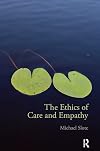
The Ethics of Care and Empathy
by Michael Slote
On This Page
Description
Eminent moral philosopher Michael Slote argues that care ethics presents an important challenge to other ethical traditions and that a philosophically developed care ethics should, and can, offer its own comprehensive view of the whole of morality. Taking inspiration from British moral sentimentalism and drawing on recent psychological literature on empathy, he shows that the use of that notion allows care ethics to develop its own sentimentalist account of respect, autonomy, social justice, show more and deontology. Furthermore, he argues that care ethics gives a more persuasive account of these top show lessTags
Recommendations





























Member Reviews
Care Ethics developed in the 1980s largely in response to Carol Gilligan's groundbreaking work on moral development in children "In a Different Voice." She found that there were two distinct moral attitudes which roughly conformed to sex/gender. In moral decision making young girls tended to emphasize context and connection and caring, while boys exhibited a universal "rule-based" justice perspective. While there has been much speculation on the so-called naturalness of this division (it is probably the case that the distinction has more to do with gendered socialization than with any natural fact about boys/girls), Gilligan's work was seminal insofar as it introduced Care as a viable moral attitude(and even a corrective) to the Justice show more perspective.
In the wake of her work, many feminists and moral philosophers worked on developing a more robust theory of Care Ethics. While many philosophers hoped that Care Ethics could supplement and augment Justice-based ethics, and worked to that end, Michael Slote argues instead that Care Ethics should (and more importantly CAN) stand alone.
He argues that the Justice perspective (which can roughly be mapped onto Kantianism/liberalism) ultimately fails as a theory because it insufficiently values love and interpersonal relationships. According to Slote this insufficiency is reason to discard the Justice perspective altogether.
There are many interesting and novel arguments in this very economical and readable book. I'll just note some of the key features of his thinking. First, Slote is a moral sentimentalist (like Hume), which means that he believes that feelings and emotions (not reason) play a major role in our moral thinking. Second, he thinks that we can (and should) develop a theory of moral action based on one particular emotion: empathy. Roughly an action can be determined to be morally good insofar as it demonstrates a motivation of empathetic care/concern for an another (he leaves open that his care could be extended to non-humans animals, and objects, even property).
Slote uses current psychological studies on the development of the capacity for empathy in children to develop an account of how we might inculcate and grow our capacity for empathy, and create a more empathic citizenry. I found it surprising that Slote is the first Care Ethicist to develop a rigorous theory of empathy, mostly because the concept seems so obviously crucial to any C.E. account. (How did others miss it??)
Many objections to care ethics stem from its inherent partiality, and seeming inability to address distant others. Slote concedes that it is a partialist account, but denies that we cannot develop empathic concern for distant groups (oppressed minorities, the poverty of the Third World, etc). He believes that care ethics can even function as a model for political (not just private) communities.
Some of his most interesting philosophical work centers on the claim that an empathy based care ethics can give more intuitive (and nuanced) answers to moral dilemmas than a utilitarian and the deontologist can. He spends several chapters demonstrating that a non-rational (sentimentalist) ethics can still produce many of the same answers a deontologist might, while not being (in essence) an emotionless robot.
I actually find myself sympathetic to a sentimentalist account, since I believe with Hume that reason is not motivational. Slote leaves a space for reason in his account, but it is not a very large space. I'm hesitant to agree with Slote that a vigilant criticality (required by other sentimentalists like Martha Nussbaum) is undesirable. He believes criticality attenuates feelings of love and empathy, and thus should be curbed. I understand the concern, but I worry that a sentimentalist account that isn't properly critical would be woefully at risk of reproducing and reinforcing the problems it purports to solve. show less
In the wake of her work, many feminists and moral philosophers worked on developing a more robust theory of Care Ethics. While many philosophers hoped that Care Ethics could supplement and augment Justice-based ethics, and worked to that end, Michael Slote argues instead that Care Ethics should (and more importantly CAN) stand alone.
He argues that the Justice perspective (which can roughly be mapped onto Kantianism/liberalism) ultimately fails as a theory because it insufficiently values love and interpersonal relationships. According to Slote this insufficiency is reason to discard the Justice perspective altogether.
There are many interesting and novel arguments in this very economical and readable book. I'll just note some of the key features of his thinking. First, Slote is a moral sentimentalist (like Hume), which means that he believes that feelings and emotions (not reason) play a major role in our moral thinking. Second, he thinks that we can (and should) develop a theory of moral action based on one particular emotion: empathy. Roughly an action can be determined to be morally good insofar as it demonstrates a motivation of empathetic care/concern for an another (he leaves open that his care could be extended to non-humans animals, and objects, even property).
Slote uses current psychological studies on the development of the capacity for empathy in children to develop an account of how we might inculcate and grow our capacity for empathy, and create a more empathic citizenry. I found it surprising that Slote is the first Care Ethicist to develop a rigorous theory of empathy, mostly because the concept seems so obviously crucial to any C.E. account. (How did others miss it??)
Many objections to care ethics stem from its inherent partiality, and seeming inability to address distant others. Slote concedes that it is a partialist account, but denies that we cannot develop empathic concern for distant groups (oppressed minorities, the poverty of the Third World, etc). He believes that care ethics can even function as a model for political (not just private) communities.
Some of his most interesting philosophical work centers on the claim that an empathy based care ethics can give more intuitive (and nuanced) answers to moral dilemmas than a utilitarian and the deontologist can. He spends several chapters demonstrating that a non-rational (sentimentalist) ethics can still produce many of the same answers a deontologist might, while not being (in essence) an emotionless robot.
I actually find myself sympathetic to a sentimentalist account, since I believe with Hume that reason is not motivational. Slote leaves a space for reason in his account, but it is not a very large space. I'm hesitant to agree with Slote that a vigilant criticality (required by other sentimentalists like Martha Nussbaum) is undesirable. He believes criticality attenuates feelings of love and empathy, and thus should be curbed. I understand the concern, but I worry that a sentimentalist account that isn't properly critical would be woefully at risk of reproducing and reinforcing the problems it purports to solve. show less
Ratings
Members
- Recently Added By
Author Information
22+ Works 447 Members
Michael Slote is UST Professor of Ethics at the University of Miami. A member of the Royal Irish Academy and former Tanner lecturer, his work has mainly been focused on ethics, political philosophy, moral psychology, and the philosophy of education.
Classifications
Statistics
- Members
- 40
- Popularity
- 729,379
- Reviews
- 1
- Rating
- (2.67)
- Languages
- English
- Media
- Paper, Ebook
- ISBNs
- 3