On This Page
Description
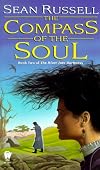
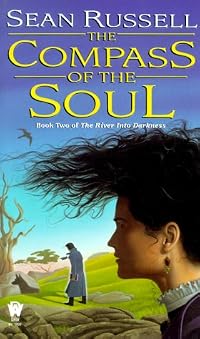
In his quest to destroy all magic in the world, the last great mage. Lord Eldrich, has sent Erasmus Flattery to find and eradicate Anna, the leader of the Tellerites, a group of fanatics desperate to preserve the magic -- including the key to immortality -- Eldrich wants to eliminate. Torn by his resentment of Eldrich's manipulations and his strange loyalty to Anna, Erasmus will undergo a magical and spiritual journey which will cause him to question all he believes to be true...and rock the show more foundations of his world! show lessTags
Recommendations






Member Reviews
This review is for both 'books' in this series
For a modern fantasy novel, The River into Darkness (Gonna call it RID for short) isn’t fluff. It successfully combines a good story with more substantial ruminations on morality, memory, fate, and the expressions of evil. This book wasn’t perfect, and not everyone will enjoy it, but its redeeming qualities far outweighed its failures. It has earned its place on my favorites shelf.
(For clarity, RID was broken down into two separate ‘books’, Beneath the show more Vaulted Hills and Compass of the Soul. Don’t be fooled, they are really just two volumes of the same book. The publisher, DAW, decided not to print a thousand page mass-market paperback encompassing both parts and instead split the book into two volumes. While RID was written after World Without End (same caveat in re the volumes), it is the chronological prequel.)
RID is set in a fantasy world akin to late 1700’s England. The plot starts out with courtly/aristocratic drama and international intrigue which is revealed to be a skirmish between two groups of magic wielders. Eldrich, the last proper mage, seeks to fulfill his group's wishes and destroy the last remnants of magic from the earth. His nemesis, the secret society of the Tellerites, are dedicated to preserving magic. Sounds pretty straightforward? Trust me, its not. The plot is too complicated and nuanced to be reduced to a paragraph or two (which is why all the book descriptions suck). We don’t even have a main character, there are like five.
I shouldn’t like this book as much as I do. The pacing is inconsistent, some of the characters are rather flat, and others are introduced mainly for their appearance in the next book (looking at you Averil Kent), some scenes are way too long, and others too short. Normally, these are dealbreakers for me, but they just work.
I read a review before reading this book, and someone said that the author spent most of the second volume trying to get you to like Eldrich. I saw that and said “Nah, that’s not something I’d fall for." Fast forward to the climactic scene at the very end. I realized that I was rooting for both Eldrich and the last Tellerite simultaneously. Not that I liked Eldrich at all, I still found him to be a despicable and disturbing character, but Russell was able to infuse RID with enough moral ambiguity to put me on the fence. I count that as a great success. I want to be persuaded like that when I read a book. Entertain me or make me feel conflicted, and this book did both.
Going back to the characters, the closest RID has to a conventional protagonist would be Erasmus Flattery, however, he’s not the main character. He is just along for the ride. He thinks of himself as the main character, and the others sometimes do too, but he’s not. There’s a scene in which Kent wonders what the Countess of Chilton likes about Erasmus. Kent is puzzled because Erasmus is ordinary and bland, lacking distinguishing features to win over the greatest beauty in the Kingdom. I feel like that was the author interjecting and saying that Erasmus is just the connecting character, not the main character. Lines of intrigue converge on Erasmus, but he’s not the subject of the intrigue.
With the exception of ‘Deacon’ (*coughs* Grand Inquisitor) Rose, I found the characters worthy of loving and hating. Russell did a good job of painting characters that felt real. They came off of the page and alive in my head.
About free will and decision making. Erasmus floats about like a falling leaf. The Countess of Chilton starts out the same way too. As the story progresses, she is presented with the illusion of choice. Essentially kidnapped, made to see visions, and scared out of her mind, she ‘makes a choice’ that she has to live with for the rest of the novel. She has to wrestle with the fact that she made the choice, even though it was under duress. The author plays with the moral ambiguity of a situation like that in a way that I found satisfying and worthy of the nuances.
I started this review with a quote about memory. One of Eldrich’s favorite things to do is to alter people’s memories. He routinely questions people and makes them forget, erasing himself from their minds, making them forget, his, to be frank, creepy, conduct. For the two artists in the book, Averil Kent the painter, and Marrianne Edden the novelist, memories are their most important possessions. It is what drives them on both their personal and professional levels, and Eldrich deems it fit to strip them of that. During those scenes I could feel their fear and rage on a deep level. Clarendon, on the other hand, has the ‘curse of memory’. He cannot forget. No detail is lost on him. He can remember things twenty years ago as clearly as if they were in front of him. His inability to forget makes him, in the core of his being, sad and miserable, irrational and distraught. His memory is so strong that even Eldrich cannot tamper with it. It truly was a curse for him.
Our antagonist (?) Anna Fielding, the last of the Tellerites, is another ambiguous character. At her center she is a frightened, harmed, and abused child. Messing with things she cannot understand in an attempt to follow her adopted family’s wishes and avenge their deaths. I couldn’t feel but pity, sympathy, and revulsion at her actions. Tragic, is the word I would use to describe her.
Anyway, I really enjoyed this book. Yeah, it was flawed. No, its not gonna be a Harry Potter or Lord of the Rings, but it was good. It’s gonna live in my head for a while.
Oh, my favorite quote of the book.
I’ll be regularly using that reply with my boss, coworkers, and friends. show less
Memory is fiction, a narrative we write and rewrite to explain an ever changing present, a story in which we are the hero, the victim, the wronged or the incomparable lover. And if memory is fiction, what then is history?
For a modern fantasy novel, The River into Darkness (Gonna call it RID for short) isn’t fluff. It successfully combines a good story with more substantial ruminations on morality, memory, fate, and the expressions of evil. This book wasn’t perfect, and not everyone will enjoy it, but its redeeming qualities far outweighed its failures. It has earned its place on my favorites shelf.
(For clarity, RID was broken down into two separate ‘books’, Beneath the show more Vaulted Hills and Compass of the Soul. Don’t be fooled, they are really just two volumes of the same book. The publisher, DAW, decided not to print a thousand page mass-market paperback encompassing both parts and instead split the book into two volumes. While RID was written after World Without End (same caveat in re the volumes), it is the chronological prequel.)
RID is set in a fantasy world akin to late 1700’s England. The plot starts out with courtly/aristocratic drama and international intrigue which is revealed to be a skirmish between two groups of magic wielders. Eldrich, the last proper mage, seeks to fulfill his group's wishes and destroy the last remnants of magic from the earth. His nemesis, the secret society of the Tellerites, are dedicated to preserving magic. Sounds pretty straightforward? Trust me, its not. The plot is too complicated and nuanced to be reduced to a paragraph or two (which is why all the book descriptions suck). We don’t even have a main character, there are like five.
I shouldn’t like this book as much as I do. The pacing is inconsistent, some of the characters are rather flat, and others are introduced mainly for their appearance in the next book (looking at you Averil Kent), some scenes are way too long, and others too short. Normally, these are dealbreakers for me, but they just work.
I read a review before reading this book, and someone said that the author spent most of the second volume trying to get you to like Eldrich. I saw that and said “Nah, that’s not something I’d fall for." Fast forward to the climactic scene at the very end. I realized that I was rooting for both Eldrich and the last Tellerite simultaneously. Not that I liked Eldrich at all, I still found him to be a despicable and disturbing character, but Russell was able to infuse RID with enough moral ambiguity to put me on the fence. I count that as a great success. I want to be persuaded like that when I read a book. Entertain me or make me feel conflicted, and this book did both.
Going back to the characters, the closest RID has to a conventional protagonist would be Erasmus Flattery, however, he’s not the main character. He is just along for the ride. He thinks of himself as the main character, and the others sometimes do too, but he’s not. There’s a scene in which Kent wonders what the Countess of Chilton likes about Erasmus. Kent is puzzled because Erasmus is ordinary and bland, lacking distinguishing features to win over the greatest beauty in the Kingdom. I feel like that was the author interjecting and saying that Erasmus is just the connecting character, not the main character. Lines of intrigue converge on Erasmus, but he’s not the subject of the intrigue.
With the exception of ‘Deacon’ (*coughs* Grand Inquisitor) Rose, I found the characters worthy of loving and hating. Russell did a good job of painting characters that felt real. They came off of the page and alive in my head.
About free will and decision making. Erasmus floats about like a falling leaf. The Countess of Chilton starts out the same way too. As the story progresses, she is presented with the illusion of choice. Essentially kidnapped, made to see visions, and scared out of her mind, she ‘makes a choice’ that she has to live with for the rest of the novel. She has to wrestle with the fact that she made the choice, even though it was under duress. The author plays with the moral ambiguity of a situation like that in a way that I found satisfying and worthy of the nuances.
I started this review with a quote about memory. One of Eldrich’s favorite things to do is to alter people’s memories. He routinely questions people and makes them forget, erasing himself from their minds, making them forget, his, to be frank, creepy, conduct. For the two artists in the book, Averil Kent the painter, and Marrianne Edden the novelist, memories are their most important possessions. It is what drives them on both their personal and professional levels, and Eldrich deems it fit to strip them of that. During those scenes I could feel their fear and rage on a deep level. Clarendon, on the other hand, has the ‘curse of memory’. He cannot forget. No detail is lost on him. He can remember things twenty years ago as clearly as if they were in front of him. His inability to forget makes him, in the core of his being, sad and miserable, irrational and distraught. His memory is so strong that even Eldrich cannot tamper with it. It truly was a curse for him.
Our antagonist (?) Anna Fielding, the last of the Tellerites, is another ambiguous character. At her center she is a frightened, harmed, and abused child. Messing with things she cannot understand in an attempt to follow her adopted family’s wishes and avenge their deaths. I couldn’t feel but pity, sympathy, and revulsion at her actions. Tragic, is the word I would use to describe her.
Anyway, I really enjoyed this book. Yeah, it was flawed. No, its not gonna be a Harry Potter or Lord of the Rings, but it was good. It’s gonna live in my head for a while.
Oh, my favorite quote of the book.
“Are you ready?”
“No. But I shall not become so with time”
I’ll be regularly using that reply with my boss, coworkers, and friends. show less
Very nice duology/two-volume novel. At the beginning a fair amount of political intrigue, but it never turned into a mannerist fantasy.. much as I liked the courtly scenes. Or anything else, really. There was enough detail and background to make it real.And the characters reacted like people. I particularly liked the way that they weren't bloodthirsty. Most of them. Erasmus' group went to some lengths to avoid killing or seriously endangering the priest, even though they knew he was untrustworthy and dangerous. They contrasted well with the mage.And the ambiguity. Even at the end I wasn't sure who the bad guy was, or even if there was one. Too much fantasy needs to get away from the conflict of Good and Evil.The names occasionally show more bothered me. Flattery? Eldritch?? show less
whew. This was SLOW! Just like McKillip has her own unique style, so does Russell it appears. It is definitely not for everyone and I am hesitant to read any more of his stuff. Basically, Eldrich [the mage] stops the last of the Tellerites [rogue mages who want the arts to continue] and uses tons of people to gain this end. A sad and melancholic story. Not nearly as enthralling as the Swan's War trilogy.
Not as good as the first book. Finished just because I wanted to complete the story but not as good as I remember it to have been.
Ratings
Members
- Recently Added By
Lists

Books Read in 2019
4,052 works; 110 members
Author Information

16 Works 4,064 Members
Some Editions
Series

Belongs to Publisher Series
DAW Book Collectors (1093)
Common Knowledge
- Canonical title
- The compass of the soul
- Original publication date
- 1998-08
- People/Characters
- Sutton Abelard (Lord Moncrief, King's Man); Percy Bryce; Elaural Lady Chilton (Countess of Chilton); Randall Spencer Clarendon; Sir John Dalrymple; Marianne Edden (show all 17); Eldrich; Anna Fielding; Erasmus Flattery; Halsey; Samual Hayes; Fenwick Kehler; Averil Kent; Brother Norbert; Deacon Rose; Lord Skye; Walky
- Epigraph
- A man may move either westward through life, following the light, or eastward toward the gathering darkness. It is a kind of orientation of temperament that is set in our earliest years; an emotional compass. One either pursu... (show all)es one's dreams or one's memories, and it is an exceptional man who, once his compass has been set, can alter it even a point or two. - HALDEN: ESSAYS
- Dedication
- For Peter Stampfel for rescuing my first book from the slush pile, and Betsy Wollheim for patience and insight.
- First words
- She was reborn from the earth, emerging from a dark womb of stone into the ancient light of a new morning.
- Quotations
- Is he near to death? Could that be possible? Has it come stalking even the long-lived Eldrich?
The words from the Book of Farrelle came to her:
And the river into darkness shall carry you, away from th... (show all)is desperate world and the memories of men.
"A priest who is pure of heart...Live long enough and even one's most cherished prejudices are shattered," the mage said.
Classifications
Statistics
- Members
- 186
- Popularity
- 175,422
- Reviews
- 4
- Rating
- (3.75)
- Languages
- English, German
- Media
- Paper, Ebook
- ISBNs
- 4
- ASINs
- 2