On This Page
Description
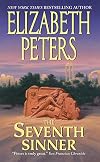
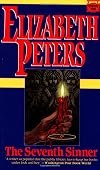
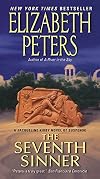
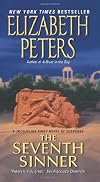
For vibrant, lovely Jean Suttman, the fellowship to study in Rome was the culmination of her dreams, until she undertook an innocent expedition to the ancient Temple of Mithra. From the moment she stepped into the pagan darkness and discovered the corpse of Albert, one of her fellow students, she was afraid. Not even the comforting presence of the perceptive and practical Jacqueline Kirby could erase the fear that was nourished by one small accident after another, "accidents" that came show more dreadfully close to killing her. Someone was stalking Jean, someone ruthless and determined. Before long she could see no chance of rescue from the ever-present terror, no hope of escape, nothing but death. show lessTags
Recommendations

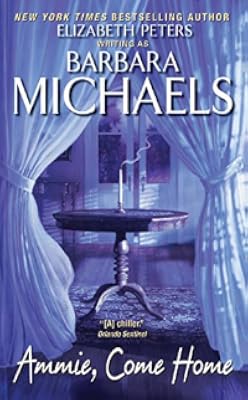
























Member Reviews
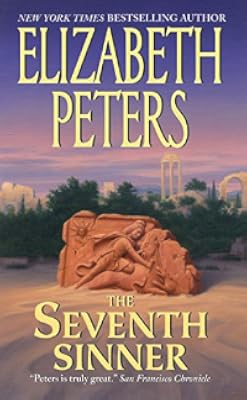
When I previewed this novel on a #FridayReads post, someone said that the cover reminded them of the Nancy Drew novels and someone else replied that they'd read the book and it felt like 'Nancy Drew for grown ups'. I think that that's an excellent description.
'The Seventh Sinner' was a light, fast read, set in an exotic location, populated with vibrant and sometimes slightly strange people tangled up in a mystery that's shot through with references to the history of ancient Rome and the early Christian Church. The mystery is fairly clever and kept me guessing throughout but what made the book for me was the spiky pragmatism of Jaqueline Kirby, an American librarian who strikes up an acquaintance with a group of young, post-doctoral show more historians, a generation younger than her and mostly American, who are doing research at the institute in Rome that Jacqueline is working at for the summer.
Although this is the first book in a four-book series featuring Jacqueline Kirby, the story is not told from her point of view. This storytelling style reminded me of the first Miss Marple book 'The Murder At The Vicarage' where we learnt about Miss Marple through the eyes of others without ever getting in her head. The impact of this in 'The Seventh Sinner' is that Jacqueline Kirby retains a mystique that makes her interesting and unpredictable. Having the story told by someone who is sometimes a little slow to understand what's happening around her but who is close enough to witness Jacqueline's calmness in the face of danger and her habit of changing how she presents herself to the world e.g. from demure, hair-in-a-bun glove-wearing proper Librarian to charismatic, flaming-haired, dress-split-to-long-legged-thigh party goer.
Jacqueline is observant, often blunt, always independent, sometimes deceitful and always unflappable. She's hard to like, impossible to ignore and difficult to predict. She also has a very wide range of knowledge of history, art and people that she uses to track down the person behind the killings.
I thought that the feeling of being in a privileged English-speaking enclave in a foreign city where you are neither tourist nor resident was captured well.
The plot is cunning, erudite and almost plausible. There's a large cast of characters, relatively little violence and a lot of conversation about history, archaeology and hagiography.
When the big reveal came, it was fun and caught me by surprise but didn't feel like cheating. I felt the final chapters after we knew who killed whom and why, showed a need to tidy up every detail that felt quite old-fashioned, even for the 1970s. I'm fairly sure that those pages wouldn't make it into a movie version.
I was a teenager when 'The Seventh Sinner' was published in 1972 and reading it now feels like time travel but to a time that seems stranger than I had remembered. It wasn't just the floral flamboyance of the men's clothes or the now-so-dated hairstyles. The social mores and attitudes towards gender and age are more different than I had remembered. This book made me aware of just how long it's been since I was a teenager.
The audiobook version of 'The Seventh Sinner' wasn't what I had expected either. Audible (who offer the book for free to members) show the release date as 2018 but Blackstone recorded it in 1997 and it's showing its age. Grace Conlin does an OK job as a narrator but it's not up to today's standards where I'm used to narrators providing their characters with distinct, instantly recognisable voices.
I had fun with the book. It kept me entertained on a long car ride and left me keen to finish it off when we got home. I'll be reading more in this series but next time I won't be using the audiobook version. show less
Fun! It's in many ways a classic whodunit - including the sleuth who knows more than she says and a surprise reveal at the end. But the depth of the characters - Jean and Jacqueline, and to a lesser extent the others of the Seven Sinners - is highly rewarding. I know we see Jacqueline again, I don't know if this was intended as the first of a series or as a standalone when it was written. She's portrayed here as a very complex persona(s), and I find her very interesting. She's also not the (very annoying, to me) know-it-all - she's uncertain and worried about knock-on effects of what she learns. The story drew me in and made me want to keep reading when I had to do other things. Ok, I'm hooked on Elizabeth Peters again, go find more show more (this series and others). show less
The late, great Elizabeth Peters introduced readers to numerous clever female sleuths, but flippant Jacqueline Kirby is one of my favorites. The Seventh Sinner is the first in a trilogy of books featuring the red-headed sarcastic heroine with both an enormous purse and an enormous heart.
An eccentric Lebanese Maronite student studying in Rome is killed, and the likeliest suspects are — well, not exactly his friends, but a group of seven Albert palled around with. One wag dubbed the group the Seven Sinners, and Jacqueline is determined to discover which one it is. A wonderful plot, a humorous protagonist and the Eternal City: What’s not to love?
An eccentric Lebanese Maronite student studying in Rome is killed, and the likeliest suspects are — well, not exactly his friends, but a group of seven Albert palled around with. One wag dubbed the group the Seven Sinners, and Jacqueline is determined to discover which one it is. A wonderful plot, a humorous protagonist and the Eternal City: What’s not to love?
This story introduces librarian Jacqueline Kirby when she is literally run into by Jean Suttman in the Institute Library in Rome one lovely May day. Jean is on fellowship to study there with a specialty in mosaics. Jacqueline is spending time in Europe after sending her children off to college.
As an apology, Jean offers to take Jacqueline out for a drink and introduces her to some friends. The friends are an eclectic group of students whose specialties range from art history to archaeology. They have named themselves the Seven Sinners. But there is an eighth hanger-on. Albert Gebara is a childhood acquaintance of one the group members but his repellent looks and personality make him a person the group tries to avoid.
The group and show more Jacqueline gather for a tour of some catacombs and Albert tags along. When Jean stumbles on Albert who has had his throat cut and is near death, the story becomes a mystery. Only Jean knows that he tried to write the number 7 as he lay dying. Jacqueline is not convinced, as the Roman police seem to be, the Albert committed suicide. After all he had burst in on a part the evening before accusing someone of theft.
When Jean begins to suffer from "accidents" including a fall down some dark stairs, being shoved into traffic, and almost drowning in the pool at Jacqueline's place, both Jacqueline and Jean begin to try to find out who murdered Albert and who thinks Jean knows something that will uncover the villain.
I loved the setting of Rome and the various personalities of the young scholars who make up the Seven Sinners. There was a lot of fun information about archaeological and historical Rome. I really liked Jacqueline who is bright, observant, and intriguing.
The mystery was nicely complex and Grace Conlin did a great job both with the voices and with the increasing tension in the story. This book was originally published in 1972 and sometimes that shows mostly in the fashions and in the fact the Jacqueline smokes. It was a fun story. show less
As an apology, Jean offers to take Jacqueline out for a drink and introduces her to some friends. The friends are an eclectic group of students whose specialties range from art history to archaeology. They have named themselves the Seven Sinners. But there is an eighth hanger-on. Albert Gebara is a childhood acquaintance of one the group members but his repellent looks and personality make him a person the group tries to avoid.
The group and show more Jacqueline gather for a tour of some catacombs and Albert tags along. When Jean stumbles on Albert who has had his throat cut and is near death, the story becomes a mystery. Only Jean knows that he tried to write the number 7 as he lay dying. Jacqueline is not convinced, as the Roman police seem to be, the Albert committed suicide. After all he had burst in on a part the evening before accusing someone of theft.
When Jean begins to suffer from "accidents" including a fall down some dark stairs, being shoved into traffic, and almost drowning in the pool at Jacqueline's place, both Jacqueline and Jean begin to try to find out who murdered Albert and who thinks Jean knows something that will uncover the villain.
I loved the setting of Rome and the various personalities of the young scholars who make up the Seven Sinners. There was a lot of fun information about archaeological and historical Rome. I really liked Jacqueline who is bright, observant, and intriguing.
The mystery was nicely complex and Grace Conlin did a great job both with the voices and with the increasing tension in the story. This book was originally published in 1972 and sometimes that shows mostly in the fashions and in the fact the Jacqueline smokes. It was a fun story. show less
OMG was this boring. A bunch of esoteric weirdos in Rome, purportedly friends, none act very friendly. A few attacks, a death and remarkably little emotion, menace, suspense or intrigue. I zoned out a lot during the narration and didn't really care. Nor did I about who did it, why or what happened to them afterward. The characters all ran together, the narrator put on voices at the end that she hadn't during the rest of the book and there is a whole lot of intellectual drivel to get through. I've read the last in this series and liked it a lot more. Can't say that I'll listen to the others even though they are free with my audible subscription.
For some bizarre reason, I have ignored the many books of Elizabeth Peters despite consistently favorable reader reviews. Stupid move, because I really enjoyed this one, written several years ago and reissued. I listened to it on my Audible player while traveling, and it was a very enjoyable 6 hours. Apparently, Peters has become known for her Amelia Peabody series, Amelia being known for an acerbic wit and getting herself into and out of difficulties. Jacqueline Kirby must be a forerunner of Peabody even though she is not the central figure, she resolves the mystery using all the skills of that most formidable professions, the librarian. She's also amusingly condescendingly toward the academic seven who are all more than a little show more naive. In fact, it's her familiarity with the academic community and its peccadilloes. Dr. Scoville, father of Andy, one of the students could have been the prototype for another famous fictional archaeologist from Indiana. He could be the prototype for that later developed and more famous fictional archeologist. He is brilliant, handsome, sexy, and world famous for his daring exploits in pursuit of archeological treasures. Sound familiar, movie fans?
The story is set in Rome and, while perhaps a little dated -- it was written in 1972 -- is very enjoyable nevertheless. It unfolds through the eyes of Jean Stuttman, one of seven -- a number that ostensibly has great significance to the murder - - art/archaeology students studying at Rome's famous Institute of Art and Archaeology. (Peters, trained as a classical archaeologist, has filled the book with all sorts of interesting details about Rome and its history and archaeology -- she also writes under the name Barbara Michaels.) While on a tour of some ancient rooms found underneath Rome, one of their members, Albert is brutally murdered. Jean discovers him barely alive and watches him scratch "VII" in the dirt (at the time Jean reports it only as the number seven. Its Roman numeral character becomes significant only later.) It's hard to write about this book, because Peters left so many clues pointing in all sorts of directions; it' not easy to avoid giving away the ending. Jacqueline becomes attached to the students by chance, and when she realizes that "accidents" that happen to Jean may be attempts to murder her, she surreptitiously begins to work with a police lieutenant to uncover the clever killer show less
The story is set in Rome and, while perhaps a little dated -- it was written in 1972 -- is very enjoyable nevertheless. It unfolds through the eyes of Jean Stuttman, one of seven -- a number that ostensibly has great significance to the murder - - art/archaeology students studying at Rome's famous Institute of Art and Archaeology. (Peters, trained as a classical archaeologist, has filled the book with all sorts of interesting details about Rome and its history and archaeology -- she also writes under the name Barbara Michaels.) While on a tour of some ancient rooms found underneath Rome, one of their members, Albert is brutally murdered. Jean discovers him barely alive and watches him scratch "VII" in the dirt (at the time Jean reports it only as the number seven. Its Roman numeral character becomes significant only later.) It's hard to write about this book, because Peters left so many clues pointing in all sorts of directions; it' not easy to avoid giving away the ending. Jacqueline becomes attached to the students by chance, and when she realizes that "accidents" that happen to Jean may be attempts to murder her, she surreptitiously begins to work with a police lieutenant to uncover the clever killer show less
I thought this would be much lighter and enjoyable than it was in reality.
This is the first Peters I've ever read, though I've owned some of her Amelia Peabody books for ages (maybe I should have grabbed one of those instead). From other reviews, this book seems out of the norm with the rest of her stuff.
The one saving grace was this book was mercifully short and quick to read. Every character was unlikabe and disagreeable, even the narrator Jean. And the ultimate whodunit resolution was deeply unsatisfying since it was based solely on a piece of information that the reader was never given.
This is the first Peters I've ever read, though I've owned some of her Amelia Peabody books for ages (maybe I should have grabbed one of those instead). From other reviews, this book seems out of the norm with the rest of her stuff.
The one saving grace was this book was mercifully short and quick to read. Every character was unlikabe and disagreeable, even the narrator Jean. And the ultimate whodunit resolution was deeply unsatisfying since it was based solely on a piece of information that the reader was never given.
Members
- Recently Added By
Lists

Books Read in 2022
5,226 works; 115 members
Author Information

60+ Works 58,698 Members
Some Editions
Series

Work Relationships
Common Knowledge
- Canonical title
- The Seventh Sinner
- Original title
- The Seventh Sinner
- Alternate titles*
- Das Geheimnis der Sieben; Meine sogenannte Jugend
- Original publication date
- 1972
- People/Characters
- Jacqueline Kirby; Jean Suttman; Michael Casey; Jose Jimenez; Ann Scoville; Andy Scoville
- Important places
- Rome, Italy
- First words
- Jean would never forget her first encounter with Jacqueline Kirby.
*Some information comes from Common Knowledge in other languages. Click "Edit" for more information.
Classifications
Statistics
- Members
- 793
- Popularity
- 35,169
- Reviews
- 24
- Rating
- (3.49)
- Languages
- English, German
- Media
- Paper, Audiobook, Ebook
- ISBNs
- 32
- ASINs
- 14