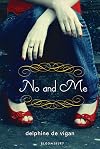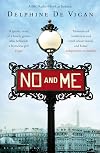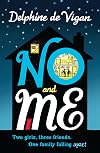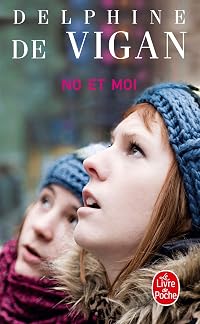
No and Me
by Delphine de Vigan
On This Page
Description
Precocious thirteen-year-old Lou meets a homeless eighteen-year-old girl on the streets of Paris and Lou's life is forever changed.Tags
Recommendations




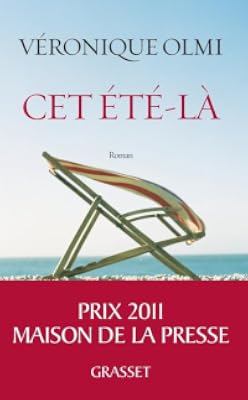
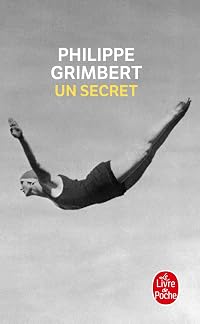


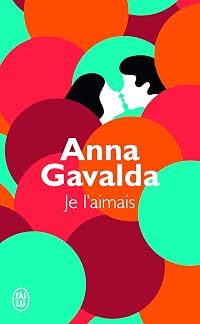




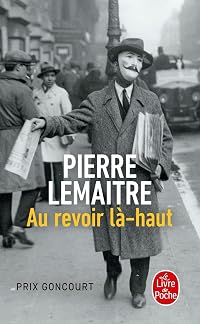





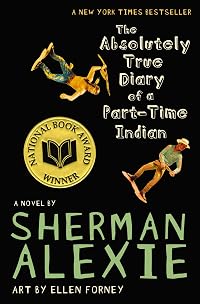

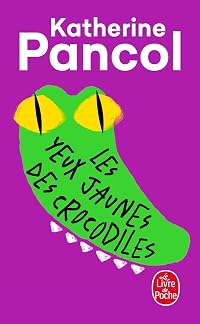

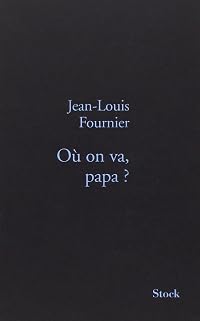
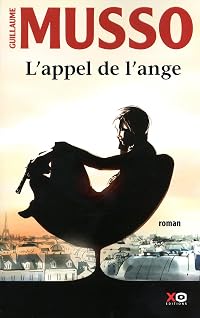









Member Recommendations
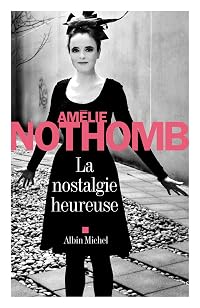
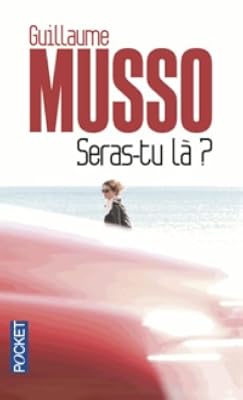
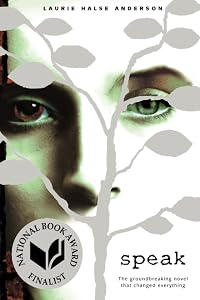
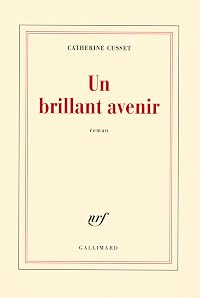
olyvia Dans le meme style que no et moi .


Member Reviews
In this very generous and compassionate novel, Vigan explores homelessness through the unlikely friendship of two teenage girls, No, broken living on the streets and Lou, living at home, both abandoned by their mothers, either physically or emotionally.
Lou, precocious and belonging to no social sphere, is able to reach out to No and bridge those unspoken barriers that exist in our many complicated social layers. With Lucas, also abandoned by this mother and living alone, they try to build their unique, safe haven despite grown-ups and rules. It is an experiment of sorts but one that has too many challenges - from the material, to the emotional and psychological, nothing is as linear as we would wish and little Lou has to come to this show more conclusion through experience rather than through books.
Touching and hopeful, this is a heart-warming coming of age story with difficult lessons.
I didn't love the translation - very British, I could easily read the French through the words. Maybe a good adaptation for a European audience, less so for an American one. show less
Lou, precocious and belonging to no social sphere, is able to reach out to No and bridge those unspoken barriers that exist in our many complicated social layers. With Lucas, also abandoned by this mother and living alone, they try to build their unique, safe haven despite grown-ups and rules. It is an experiment of sorts but one that has too many challenges - from the material, to the emotional and psychological, nothing is as linear as we would wish and little Lou has to come to this show more conclusion through experience rather than through books.
Touching and hopeful, this is a heart-warming coming of age story with difficult lessons.
I didn't love the translation - very British, I could easily read the French through the words. Maybe a good adaptation for a European audience, less so for an American one. show less
Going out on a limb early in 2011, I believe this will be one of my top reads this year. Thanks to Darryl (Kidzdoc) for sending this incredible book my way!
No and Me is poetically, stunningly, profoundly beautiful and incredibly structured. Originally written in French, it was translated into English.
Introverted, obsessive compulsive, precocious 13 year old Lou Bertignac possess an IQ of 160. Her mind races way ahead as she solves complex problems and tests, tracking variables and patterns until it seems her head will explode.
Ahead of her class, she rarely interacts, except marginally with one lone boy who sits in the back of the room. She and Lucas exchange furtive eye contact.
When she must give a dreaded oral presentation in a show more sociology class, she chooses homelessness as a subject.
Finding raggedy, dirty and street savvy 18 year old Nolween (No) in a railway station and interviewing her for her class project is a life-changing event for Lou. For the first time in her life, she discovers that not all problems have a predictable solution.
Soliciting the help of her classmate Lucas, they try to rescue No. With compassion, truth, honor and integrity, through No, Lou and Lucas, the author takes the reader on a realistic journey of the pervasive problems of homelessness and the complexity of this issue.
The author superbly compares the home life of Lou and Lucas with the homeless reality of No's struggles. This is written without sappiness and there is nothing trite about the depiction of the cold reality that sometimes good intentions and love are just not enough.
Highly Recommended show less
No and Me is poetically, stunningly, profoundly beautiful and incredibly structured. Originally written in French, it was translated into English.
Introverted, obsessive compulsive, precocious 13 year old Lou Bertignac possess an IQ of 160. Her mind races way ahead as she solves complex problems and tests, tracking variables and patterns until it seems her head will explode.
Ahead of her class, she rarely interacts, except marginally with one lone boy who sits in the back of the room. She and Lucas exchange furtive eye contact.
When she must give a dreaded oral presentation in a show more sociology class, she chooses homelessness as a subject.
Finding raggedy, dirty and street savvy 18 year old Nolween (No) in a railway station and interviewing her for her class project is a life-changing event for Lou. For the first time in her life, she discovers that not all problems have a predictable solution.
Soliciting the help of her classmate Lucas, they try to rescue No. With compassion, truth, honor and integrity, through No, Lou and Lucas, the author takes the reader on a realistic journey of the pervasive problems of homelessness and the complexity of this issue.
The author superbly compares the home life of Lou and Lucas with the homeless reality of No's struggles. This is written without sappiness and there is nothing trite about the depiction of the cold reality that sometimes good intentions and love are just not enough.
Highly Recommended show less
I've struggled for some time since I finished this book on Friday about how to formulate this review because it is, after all, 'only' a novel. But it felt like a lot more than that to me. It forces you to look at how you respond to this emotive social issue but avoids being sanctimonious by a well judged ending. I wouldn't have loved this book half as much if it had been all sunshine and light at the end and I think it would have been much less powerful.
Lou is an incredible choice for the novel's narrator. At 13, she sees everything with moving simplicity. No is homeless. She has a home with a spare room. If No had a home, things would be better for her. The solution is simple to her - No lives in the spare room. I loved everything show more about her: her awkwardness; her compassion; her fragility and her unique kind of genius. What isn't said by her is often painfully obvious to an adult reader by her observations and I adored her for her naivety. Most of all, though, I loved how she kept fighting and trying to understand No. I always find it upsetting when I hear people say, "Oh, it's their own fault" or "They could always just get a job.." etc about homeless people and it was touchingly refreshing that this book bypassed that in Lou, who is almost baffled by how No came to be where she is:
"At what point is it too late? From what moment? The first time I met her? Six months ago, two years ago, five years? Can you get out of a fix like that? How do you find yourself at the age of eighteen out on the streets with nothing and no one?"
Although this is mostly about No and Lou, their relationships with Lou's parents and Lucas lend brilliant support and Lou's glimpses of others' interactions are often revelations for the reader, if not always for Lou.
One more obvious point is that this is written by a French author and is set in Paris. I have read criticism of this book for making too many cultural references. I disagree. Paris is one of my favourite places to visit and every time I go I love it more so I would have been more than happy to lose myself in reminders of its streets - worry not, this isn't the case. Amazingly, the book manages to depict the atmosphere of the city without making it a key factor. Part of the point of the book for me was that it could be any city in any country.
My favourite quote sums up the book, Lou and the issues they address perfectly:
"We can send supersonic planes into and rockets into space, and identify a criminal from a hair or a tiny flake of skin, and grow a
tomato you can keep in the fridge for three weeks without it getting a wrinkle, and store millions of pieces of information on a tiny chip. Yet we're capable of letting people die in the street."
Overall: This is in one way a very easy read - the narration is that of a teenager and is written in that style. It is, however, difficult to read without feeling somewhat guilty about the comfortable chair you're reading it in or the steaming mug of coffee you're sipping or the biscuits you're chomping...and I couldn't recommend it enough for that very reason! show less
Lou is an incredible choice for the novel's narrator. At 13, she sees everything with moving simplicity. No is homeless. She has a home with a spare room. If No had a home, things would be better for her. The solution is simple to her - No lives in the spare room. I loved everything show more about her: her awkwardness; her compassion; her fragility and her unique kind of genius. What isn't said by her is often painfully obvious to an adult reader by her observations and I adored her for her naivety. Most of all, though, I loved how she kept fighting and trying to understand No. I always find it upsetting when I hear people say, "Oh, it's their own fault" or "They could always just get a job.." etc about homeless people and it was touchingly refreshing that this book bypassed that in Lou, who is almost baffled by how No came to be where she is:
"At what point is it too late? From what moment? The first time I met her? Six months ago, two years ago, five years? Can you get out of a fix like that? How do you find yourself at the age of eighteen out on the streets with nothing and no one?"
Although this is mostly about No and Lou, their relationships with Lou's parents and Lucas lend brilliant support and Lou's glimpses of others' interactions are often revelations for the reader, if not always for Lou.
One more obvious point is that this is written by a French author and is set in Paris. I have read criticism of this book for making too many cultural references. I disagree. Paris is one of my favourite places to visit and every time I go I love it more so I would have been more than happy to lose myself in reminders of its streets - worry not, this isn't the case. Amazingly, the book manages to depict the atmosphere of the city without making it a key factor. Part of the point of the book for me was that it could be any city in any country.
My favourite quote sums up the book, Lou and the issues they address perfectly:
"We can send supersonic planes into and rockets into space, and identify a criminal from a hair or a tiny flake of skin, and grow a
tomato you can keep in the fridge for three weeks without it getting a wrinkle, and store millions of pieces of information on a tiny chip. Yet we're capable of letting people die in the street."
Overall: This is in one way a very easy read - the narration is that of a teenager and is written in that style. It is, however, difficult to read without feeling somewhat guilty about the comfortable chair you're reading it in or the steaming mug of coffee you're sipping or the biscuits you're chomping...and I couldn't recommend it enough for that very reason! show less
”We can send supersonic planes and rockets into space, and identify a criminal from a hair or a tiny flake of skin, and grow a tomato we can keep in the fridge for three weeks without getting a wrinkle, and store millions of pieces of information on a tiny chip. Yet we're capable of letting people die on the streets.”
No and Me reminds me a bit of [b:Friday Brown|13643131|Friday Brown|Vikki Wakefield|https://d202m5krfqbpi5.cloudfront.net/books/1336642584s/13643131.jpg|19258408], Both portray the harsh realities of homelessness, of not belonging, but one, more than the other, is more powerful in its message, and that is No and Me.
This is how you write a coming of age novel.
This is how you portray a teen’s thoughts and insecurities. show more
This is how you handle the issue of having no home.
Lou, the main character, is an exceptionally intelligent girl. She looks at things in her own unique way, she’s a bit shy, and she is uncannily perceptive.
No, the girl with no home and a brutal past, is the polar opposite of Lou. She’s impatient, outspoken, intense, emotional; but in the end, lovable.
The friendship that blossomed between them was explored beautifully.
This isn’t a happy novel, I must add. There’s quite a saddening ending, and the issue itself gives the book an almost dark feel.
The prose is imperfect, but perfect for this novel. It does so much to characterize the character of Lou, to paint her personality and convey her thoughts.
Lou’s relationship with Lucas is a bit… confusing, I guess? There was no build-up to their romance. It wasn't at all insta-love, but one moment they’re friends, and the next… This isn't really a complaint, more of an observation, but I liked how the romance was not the center of the story.
No and Me has its weak moments in terms of pacing and such, but overall delves brilliantly into the topic without being overly preachy or trying too hard to be emotional. Essentially, it just shows things the way they are.
I’d recommend this for fans of [b:Friday Brown|13643131|Friday Brown|Vikki Wakefield|https://d202m5krfqbpi5.cloudfront.net/books/1336642584s/13643131.jpg|19258408] and for those who are looking for a more serious contemporary read. show less
No and Me reminds me a bit of [b:Friday Brown|13643131|Friday Brown|Vikki Wakefield|https://d202m5krfqbpi5.cloudfront.net/books/1336642584s/13643131.jpg|19258408], Both portray the harsh realities of homelessness, of not belonging, but one, more than the other, is more powerful in its message, and that is No and Me.
This is how you write a coming of age novel.
This is how you portray a teen’s thoughts and insecurities. show more
This is how you handle the issue of having no home.
Lou, the main character, is an exceptionally intelligent girl. She looks at things in her own unique way, she’s a bit shy, and she is uncannily perceptive.
No, the girl with no home and a brutal past, is the polar opposite of Lou. She’s impatient, outspoken, intense, emotional; but in the end, lovable.
The friendship that blossomed between them was explored beautifully.
This isn’t a happy novel, I must add. There’s quite a saddening ending, and the issue itself gives the book an almost dark feel.
”I let No go, carrying her plastic bag. She turns the corner. Nothing’s shining around her. Everything"s gray and dark.”
The prose is imperfect, but perfect for this novel. It does so much to characterize the character of Lou, to paint her personality and convey her thoughts.
Lou’s relationship with Lucas is a bit… confusing, I guess? There was no build-up to their romance. It wasn't at all insta-love, but one moment they’re friends, and the next… This isn't really a complaint, more of an observation, but I liked how the romance was not the center of the story.
No and Me has its weak moments in terms of pacing and such, but overall delves brilliantly into the topic without being overly preachy or trying too hard to be emotional. Essentially, it just shows things the way they are.
I’d recommend this for fans of [b:Friday Brown|13643131|Friday Brown|Vikki Wakefield|https://d202m5krfqbpi5.cloudfront.net/books/1336642584s/13643131.jpg|19258408] and for those who are looking for a more serious contemporary read. show less
Poignant and precise.
This book was beautifully written, concise and to the point. Although aimed at a Young Adult audience, I felt it could easily cross over into adult reading - even to the extent that many of our more verbose authors might learn to get to the heart of things in far fewer pages.
You would never suspect that this is a translation and the references to areas of Paris often took me by surprise.
Lou Bertingac is only 13, in a class of 15 year olds. She has an IQ of 160 but lacks many social skills and does not mix with her fellow students. Only Lucas, himself two years old for the class, pays her any attention.
So it is not surprising that she is completely freaked out at the prospect of giving a presentation in front of the show more class. Interestingly, she choses the subject of homeless women for her presentation. To this end she befriends No (Nolwenn), an eighteen year old homeless girl who roams the streets of Paris. No is slow to trust Lou, but eventually we learn the background to No's homelessness and see something of the day to day hardship she endures.
Lou's own home life is far from perfect but she wants to bring No to live with her, in warmth and comfort, which produces many problems in itself.
No and Me is written in an appealingly naiive style and we feel for Lou as she struggles with seemingly easy things like tying her own shoe laces, while, at the same time, she feels compelled to analyse the content of her family's daily meals.
Although this is a short, concise read, we are introduced to many fascinating concepts, particularly the effects of bereavement on Lou's family and her desire to give a home to a homeless person. Also the question of education for children of high IQs; would Lou have been happier in a class of thirteen year olds?
This was a book group read and I am looking forward to a fascinating discussion on the issues raised. show less
This book was beautifully written, concise and to the point. Although aimed at a Young Adult audience, I felt it could easily cross over into adult reading - even to the extent that many of our more verbose authors might learn to get to the heart of things in far fewer pages.
You would never suspect that this is a translation and the references to areas of Paris often took me by surprise.
Lou Bertingac is only 13, in a class of 15 year olds. She has an IQ of 160 but lacks many social skills and does not mix with her fellow students. Only Lucas, himself two years old for the class, pays her any attention.
So it is not surprising that she is completely freaked out at the prospect of giving a presentation in front of the show more class. Interestingly, she choses the subject of homeless women for her presentation. To this end she befriends No (Nolwenn), an eighteen year old homeless girl who roams the streets of Paris. No is slow to trust Lou, but eventually we learn the background to No's homelessness and see something of the day to day hardship she endures.
Lou's own home life is far from perfect but she wants to bring No to live with her, in warmth and comfort, which produces many problems in itself.
No and Me is written in an appealingly naiive style and we feel for Lou as she struggles with seemingly easy things like tying her own shoe laces, while, at the same time, she feels compelled to analyse the content of her family's daily meals.
Although this is a short, concise read, we are introduced to many fascinating concepts, particularly the effects of bereavement on Lou's family and her desire to give a home to a homeless person. Also the question of education for children of high IQs; would Lou have been happier in a class of thirteen year olds?
This was a book group read and I am looking forward to a fascinating discussion on the issues raised. show less
I'm discovering so many Y.A. novels that are the equal of "grown up" books. I've read some without realising the intended readership was teenagers (e.g.The Book Thief). Never found them to be 'dumbed-down' so the only difference that I have noticed is the age of the protagonists. The story of a slowly developing friendship between the narrator and a very special homeless girl No (shockingly not her real name), this YA novel pulls no emotional punches. Like Nick Hornby's How to be Good, No and Me asks what can I do on an individual and personal level, to help the homeless.
A slightly strange book, in the way that French films are often odd to English sensibilities. The narrator is a highly intelligent, rather isolated high school student in Paris. Her mother is very deeply depressed following the death in infancy several years ago of her younger daughter. Her father desperately tries to hold things together. Lou, the narrator, befriends a young homeless teeneger, No, partly so she can complete a school assignment on homelessness. As their friendship deepens, the family beome implicated too. Is this then a feel-good novel in which everyone lives happily ever after? You'll have to read it to find out. It's touching, enlightening, bittersweet.
Members
- Recently Added By
Published Reviews
ThingScore 75
The book starts slowly, the observations veering from the banal to the insightful. Ever since The Curious Incident of the Dog in the Night-time, a similar crossover novel from the young adult market, the naive observation of the grown-up world can seem contrived.
Yet the second half of this novel is a thing of poetic beauty. As No descends into alcoholic despair, all parties break trust with show more each other to do the right thing. You could meditate on some of Lou’s hard-won wisdom as she is forced to change. She starts out absolute and ends in nuance. It is, as any parent has said to a child on forcing him or her to tip the crab out of the bucket, more complicated than it looks at first. show less
Yet the second half of this novel is a thing of poetic beauty. As No descends into alcoholic despair, all parties break trust with show more each other to do the right thing. You could meditate on some of Lou’s hard-won wisdom as she is forced to change. She starts out absolute and ends in nuance. It is, as any parent has said to a child on forcing him or her to tip the crab out of the bucket, more complicated than it looks at first. show less
added by souloftherose
The book creaks a little at the start. But once the plot gets going, de Vigan’s account skirts the clichés of foundling literature with economy and grace.....
....Lou’s voice is both distinctive and direct, and the novel’s unshowy negotiation of a complex issue should give readers of all ages something to consider.
....Lou’s voice is both distinctive and direct, and the novel’s unshowy negotiation of a complex issue should give readers of all ages something to consider.
added by souloftherose
Well-structured, with moments of tenderness and truth about family and home, inadequate parents and neglected children, No and Me is honest (as revealing and insightful about Lou and home life as it is about No and homelessness) but also at least partially reassuring. Lou's "large-scale experiment against fate" might not go quite according to plan, but De Vigan shows that things really can show more change, albeit not always in the ways we've anticipated, and not always in ways we can control. show less
added by souloftherose
Lists

A High School Trip to France
57 works; 5 members

Books Read in 2011
684 works; 20 members

Books Read in 2015
3,299 works; 129 members

Childhood: Books for or about children in different cultures around the wor
345 works; 18 members

BBC World Book Club
265 works; 5 members
Author Information

22+ Works 3,167 Members
Some Editions
Awards and Honors
Awards
Distinctions
Notable Lists
Series
Belongs to Publisher Series
Reclams Universal-Bibliothek (19791)
Work Relationships
Has the adaptation
Common Knowledge
- Canonical title
- No and Me
- Original title
- No et moi
- Original publication date
- 2010-08-03
- People/Characters
- Lou Bertignac; No
- Important places*
- Paris, ïle-de-France, France
- Related movies
- No et moi (2010 | IMDb)
- Epigraph
- « - Je vous ai dit, je regardais la mer, j'étais cachée dans les rochers et je regardais la mer. »
J.M.G. Le Clézio, Lullaby
- I told you, I was looking at the sea, I was hidden in the rocks and I wa... (show all)s looking at the sea. J.M.G. Le Clezio, Lullaby - Dedication
- For Iona and Arthur
- First words
- 'Miss Bertignac, I don't see your name on the list of presentations.'
- Mademoiselle Bertignac, je ne vois pas votre nom sur la liste des exposés. - Last words
- (Click to show. Warning: May contain spoilers.)And then I understood that, of all the questions I ask myself, the one about which direction your tongue goes in isn't the most important.
(Click to show. Warning: May contain spoilers.)Alors j'ai compris que, parmi les questions que je me pose, le sens de la rotation de la langue n'est pas la plus importante. - Original language
- French
*Some information comes from Common Knowledge in other languages. Click "Edit" for more information.
Classifications
Statistics
- Members
- 997
- Popularity
- 26,204
- Reviews
- 36
- Rating
- (3.80)
- Languages
- 13 — Catalan, Czech, Danish, Dutch, English, Finnish, French, German, Italian, Norwegian (Bokmål), Portuguese, Spanish, Swedish
- Media
- Paper, Audiobook, Ebook
- ISBNs
- 53
- ASINs
- 14