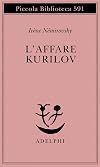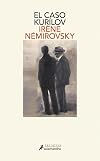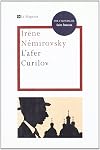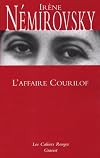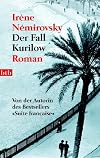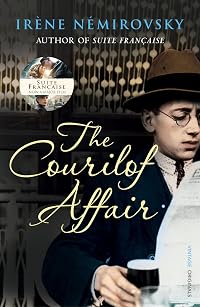
The Courilof Affair
by Irène Némirovsky
On This Page
Description
In 1903 Leon M - a devout terrorist - is given the responsibility of 'liquidating' Valerian Alexandrovitch Courilof, the notoriously brutal and cold-blooded Russian Minister of Education, by the Revolutionary Committee.The assassination, he is told, must take place in public and be in most grandiose manner possible in order to strike the imagination of the people. Posing as his newly appointed personal physician, Leon M takes up residence with Courilof in his summer house in the Iles and show more awaits instructions.But over the course of his stay he is made privy to the inner world of Courilof - his failing health, his troubled domestic situation and, most importantly, the tyrannical grip that the Czar himself holds over all his Ministers, forcing them to obey him or suffer the most deadly punishments. Set during a period of radical upheaval in European history, The Courilof Affair is an unsparing observation of human motives and the abuses of power, an elegy to lost world and an unflinchingly topical cautionary tale. show lessTags
Recommendations




















Member Reviews
This short novella follows Leon M., a born and bred revolutionary, who is ordered to assassinate Valerian Courilof, the brutal Minister of Education, in Imperial Russia in 1903. Leon M. is the narrator and, at the start, he relates the story of his life – performed a number of assignments for the party, came to power after the Revolution, then grew disenchanted as a member of the secret police, was forced out and spent the rest of his life in Nice. The majority of the book is a portrait of Courilof. The narrator is able to travel to Russia with false papers and gets a job as a doctor in Courilof’s household. In some ways the story is a bit predictable – the narrator becomes reluctant to murder Courilof after getting to know him show more – but it is well-done and Nemirovsky adds several layers to the narrator’s view of Courilof.
Courilof never becomes a sympathetic character, just one who is messily human and at times understandable. He’s dying from a horribly painful cancer and spends his time mired in petty politics. His relationship with his daughter is cool and though he obviously cares about his wife, she is a source of trouble for him as a former actress and “loose woman”. Courilof and the other ministers and aristocrats have contemptuous feelings for the emperor but their livelihood and social standing depends on him, so they are forced to suck up to him as well as other influential men. Nemirovsky provides distance through her narrative structure – the story initially is told in the 3rd person, then moves to Courilof’s diary – and the narrator’s character. He’s rather reluctant in the first place – the child of revolutionaries and raised by the party, this is not a life he chose and his indecision, which predates Courilof, is apparent. Leon M. narrates from the future so he already knows what will happen. This allows him to comment on Courilof’s actions, having been in charge, and gives the story a tone of world-weariness. For example, after the killing of several students, Courilof excuses it by saying he didn’t mean for it to happen. He is easily able to forget the pain that he ordered. Instead of anger or judgment, the narrator says that it’s just human nature and he did the same when he was in power. The other stories of Nemirovsky’s that I’ve read – The Ball, Fire in the Blood, and Snow in Autumn – all had this tension between past, present and future and it is this underlying mood of murkiness and sadness that made the story memorable. show less
Courilof never becomes a sympathetic character, just one who is messily human and at times understandable. He’s dying from a horribly painful cancer and spends his time mired in petty politics. His relationship with his daughter is cool and though he obviously cares about his wife, she is a source of trouble for him as a former actress and “loose woman”. Courilof and the other ministers and aristocrats have contemptuous feelings for the emperor but their livelihood and social standing depends on him, so they are forced to suck up to him as well as other influential men. Nemirovsky provides distance through her narrative structure – the story initially is told in the 3rd person, then moves to Courilof’s diary – and the narrator’s character. He’s rather reluctant in the first place – the child of revolutionaries and raised by the party, this is not a life he chose and his indecision, which predates Courilof, is apparent. Leon M. narrates from the future so he already knows what will happen. This allows him to comment on Courilof’s actions, having been in charge, and gives the story a tone of world-weariness. For example, after the killing of several students, Courilof excuses it by saying he didn’t mean for it to happen. He is easily able to forget the pain that he ordered. Instead of anger or judgment, the narrator says that it’s just human nature and he did the same when he was in power. The other stories of Nemirovsky’s that I’ve read – The Ball, Fire in the Blood, and Snow in Autumn – all had this tension between past, present and future and it is this underlying mood of murkiness and sadness that made the story memorable. show less
Someone recommended [b:Suite Française|43944|Suite Française|Irène Némirovsky|https://images.gr-assets.com/books/1320445773s/43944.jpg|3433584] to me, so I picked up ‘The Courilof Affair’ in the library because it’s by the same author and the blurb intrigued me. The book is narrated by Leon M, a former spy, assassin, revolutionary, and Cheka interrogator looking back on an important episode in his eventful life. Given that the reader knows from the start what will happen to Courilof, the compelling element concerned Leon’s thoughts and feelings about Russian aristocracy in general and Courilof in particular. While I often found these reflections profound, they made for a surprisingly dilatory effect in such a short novel. show more Leon’s retrospective rationalisations certainly offer a thoughtful commentary on political exigency and violence. I think this paragraph sums it up:
Actually, in a literal sense Leon did not kill Courilof, although he most definitely assisted in his assassination.
Perhaps the most striking thing about Leon, otherwise something of a cypher, is that he grew up a second generation revolutionary. There is a theme of inheritance and duty to do terrible things running through the narrative, which I liked. 'The Courilof Affair' is also rather atmospheric, albeit narrowly so. I wanted more of an insight into pre-revolutionary Russia than I got, as the narrative seemed more focused on something more fundamental about humanity. Overall, a well written historical novel that perhaps should have appealed to me more than it in fact did. show less
’Eliminate the unjust for the good of the majority.’ Why should we? And who is just? And how do people treat me? It is unbearable for a hunter to kill an animal he has looked after and fed. But all the same, as long as we are on this earth, we have to play the game. I killed Courilof. I sent men to their deaths who I realised, in a moment of lucidity, were like my brothers, like my very soul…
Actually, in a literal sense Leon did not kill Courilof, although he most definitely assisted in his assassination.
Perhaps the most striking thing about Leon, otherwise something of a cypher, is that he grew up a second generation revolutionary. There is a theme of inheritance and duty to do terrible things running through the narrative, which I liked. 'The Courilof Affair' is also rather atmospheric, albeit narrowly so. I wanted more of an insight into pre-revolutionary Russia than I got, as the narrative seemed more focused on something more fundamental about humanity. Overall, a well written historical novel that perhaps should have appealed to me more than it in fact did. show less
The plot of The Courilof Affair focuses on a hated, cold-blooded Russian education minister and a Bolshevik revolutionary sent on an asassination assignment. But while only in his early 20s, the would-be revolutionary has already lost much of his interest in the cause...
This is a thoughtful novel centered on the corrupting nature of power, and the ethics involved in exercising that power. Characters are described with a brutal honesty that can result in some very vivid (and unappealing!) imagery, but provides a strong sense of the characters involved.
A bit of a slow start, but well worth perservering.
This is a thoughtful novel centered on the corrupting nature of power, and the ethics involved in exercising that power. Characters are described with a brutal honesty that can result in some very vivid (and unappealing!) imagery, but provides a strong sense of the characters involved.
A bit of a slow start, but well worth perservering.
Another book about the Russians and their revolution, this one about a terrorist plotting the assassination of the Minister of Education, and beginning to wonder - what's even the point? Well written, well translated, and worth the day and a half I spent reading it.
The Russian Minister for Education, Courilof, is notorious for his cold-bloodedness and brutality and has been selected to be liquidated publicly to send a message to the masses that the revolution is coming. It's 1903 and Leon M is assigned to the task.
His initial job is to become part of Courilof's household so that he is not suspected, and after several months posing as a Swiss doctor treating the ailing Minster, he begins to understand and develop some sympathy for his target and see him as a fellow human. Courilof meanwhile has cancer and wishes ultimately to die on the job with the favour of the Czar rather than be assassinated. I won't spoil the plot with further details.
For a short novel, this had a slowburn start which rather show more got me bogged down, then once the young revolutionary was in place it picked up. The subject of terrorism versus tyranny is of course very relevant today and this raises many questions. show less
His initial job is to become part of Courilof's household so that he is not suspected, and after several months posing as a Swiss doctor treating the ailing Minster, he begins to understand and develop some sympathy for his target and see him as a fellow human. Courilof meanwhile has cancer and wishes ultimately to die on the job with the favour of the Czar rather than be assassinated. I won't spoil the plot with further details.
For a short novel, this had a slowburn start which rather show more got me bogged down, then once the young revolutionary was in place it picked up. The subject of terrorism versus tyranny is of course very relevant today and this raises many questions. show less
An example of good writing with depth and character development in a story where plot isn't that strong. I like it fine, but in so many ways this was a boring book with interesting elements.
En la terraza desierta de un cafe de Niza, conversan Iván Baránov, antiguo miembro de las fuerzas de seguridad del zar, y León M., un curtido revolucionario bolchevique. Si bien ambos estuvieron implicados en el caso Kurílov, León M. se niega a revelar su identidad y detallar su participación en los hechos. Sin embargo, tras su muerte se halla un texto mecanografiado en el que esboza su recorrido vital y confiesa los entresijos del caso. En 1903, León recibe el encargo de ejecutar a Valerian Alexándrovich Kurílov, ministro de Instrucción Pública del zar Nicolás II, un atentado que los líderes del Partido esperan convertir en un golpe definitivo al regimen imperial. Bajo identidad falsa, el joven León logra entrar al show more servicio del ministro, un hombre universalmente temido por su crueldad, pero que tiene los días contados debido a una grave enfermedad. Así que, a medida que el joven conspirador ahonda en el trato con su jefe, la realidad se llena de matices hasta volverse notablemente más compleja y poner a prueba el ardor revolucionario del protagonista. show less
May 19, 2025Spanish
Members
- Recently Added By
Author Information

74+ Works 16,970 Members
Some Editions
Series
Belongs to Publisher Series
Work Relationships
Common Knowledge
- Canonical title
- The Courilof Affair
- Original title
- L'affaire Courilof
- Alternate titles
- The Courilof Affair
- Original publication date
- 1933
- People/Characters
- Prime Minister Courilof
- Important places
- Russia
- Dedication*
- Para Michel
- First words
- In 1903, the Revolutionary Committee gave me the responsibility of liquidating Courilof.
- Quotations*
- La naturaleza humana es incomprensible. Ni siquiera puede afirmarse con certeza que un hombre sea bueno o malo, estúpido o inteligente. No existe hombre bueno que no cometa en su vida una maldad, ni malo que nunca experiment... (show all)e un impulso bondadoso, ni hombre inteligente que jamás haga estupideces, ni imbécil que en alguna ocasión no actúe con inteligencia. Por otra parte, eso confiere a la vida su carácter diverso, imprevisible...
- Last words*
- (Click to show. Warning: May contain spoilers.)Afortunadamente, para mí la función está a punto de acabar.
- Blurbers*
- "Irene Nemirovsky is a novelist of the very first order" - Evening Standard
- Original language*
- Francés
*Some information comes from Common Knowledge in other languages. Click "Edit" for more information.
Classifications
- Genres
- Fiction and Literature, General Fiction, Historical Fiction
- DDC/MDS
- 843.912 — Literature & rhetoric French Literature French fiction 1900- 20th Century 1900-1945
- LCC
- PQ2627 .E4 .A65 — Language and Literature French, Italian, Spanish and Portuguese literatures French literature Modern literature 1900-1960
- BISAC
Statistics
- Members
- 220
- Popularity
- 148,348
- Reviews
- 13
- Rating
- (3.69)
- Languages
- 9 — Catalan, Dutch, English, Finnish, French, German, Italian, Spanish, Swedish
- Media
- Paper, Ebook
- ISBNs
- 16
- ASINs
- 6