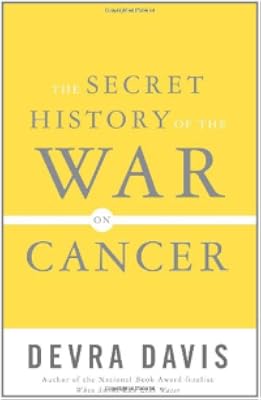
The Secret History of the War on Cancer
by Devra Davis
On This Page
Description
Relates the gripping story of a major public health effort diverted and distorted for private gain.Tags
Recommendations








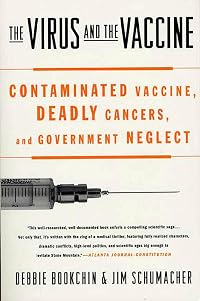

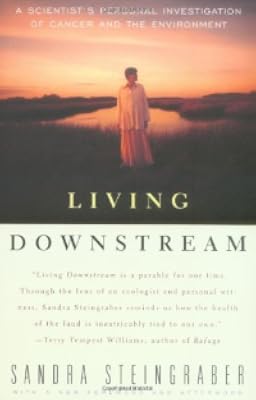



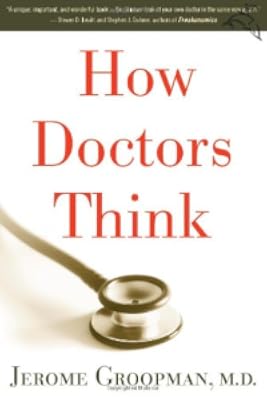
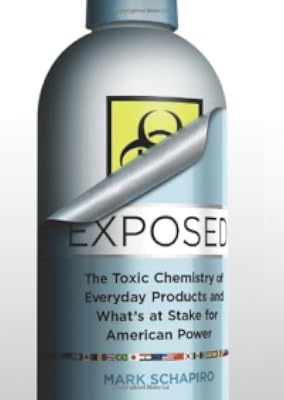
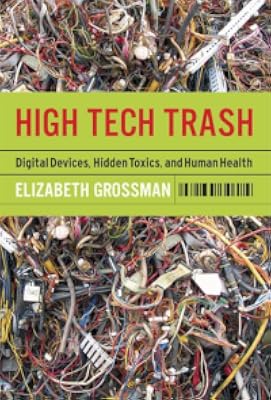

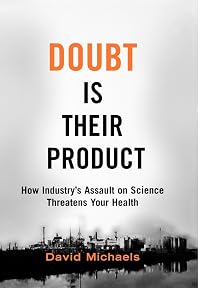

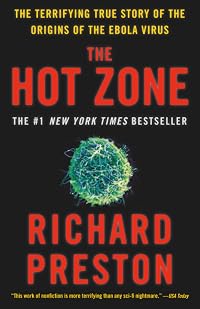
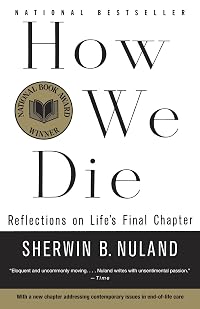












Member Recommendations

Member Reviews
I don't even know where to start; I can't review this book in the sense of "here's what was good and bad about it." For me, this book is too big and important for that.
Dr. Davis recounts in almost excruciating detail the painful facts about when scientists knew that cigarettes, benzene, and asbestos caused death and why and how that information was kept hidden for decades. At that point in the book I was thoroughly depressed (for one thing, how could all those company officials, scientists and doctors behave so cavalierly with other people's lives?), but at least relieved that we now know how dangerous those things are.
The book from that point on proceeds to explain how the exact same strategies of confusion, obsfucation, and hiding show more research as "trade secrets" along with some newer strategies of attacking scientific studies are leading to preventable deaths every single day. Her language and conclusions are very controlled, and she gives the benefit of the doubt in situations where I would want to give a jail sentence. This is a serious book, she is not a conspiracy theorist.
Much as I felt after reading Exposed, I feel again: Why do we choose to wait until proof in the form of thousands of injured and dead people piles up? Why do we choose to weigh the balance in favor of industry over health every single time? I have great faith in our ingenuity; if we currently have a dangerous product, like PVC (for one example), I know we can come up with an alternative if we just try. But we won't try if the manufacturers of PVC keep all the information about its dangers secret because we won't know we need to. Why don't we choose to shift the balance toward saving lives first?
When it seems like cancer is everywhere, why don't we know what causes it is a reasonable question. What Dr. Davis tells us in this book is that we may in fact know what causes a great many cancers, but that information is being kept hidden and with it our ability to prevent the disease. I'm glad, very very glad, that we have talented and brilliant people searching every day for better ways to cure cancer. But I'd still rather prevent it and I think we have enough talented and brilliant people to do both. But we can't have secrets and progress both. show less
Dr. Davis recounts in almost excruciating detail the painful facts about when scientists knew that cigarettes, benzene, and asbestos caused death and why and how that information was kept hidden for decades. At that point in the book I was thoroughly depressed (for one thing, how could all those company officials, scientists and doctors behave so cavalierly with other people's lives?), but at least relieved that we now know how dangerous those things are.
The book from that point on proceeds to explain how the exact same strategies of confusion, obsfucation, and hiding show more research as "trade secrets" along with some newer strategies of attacking scientific studies are leading to preventable deaths every single day. Her language and conclusions are very controlled, and she gives the benefit of the doubt in situations where I would want to give a jail sentence. This is a serious book, she is not a conspiracy theorist.
Much as I felt after reading Exposed, I feel again: Why do we choose to wait until proof in the form of thousands of injured and dead people piles up? Why do we choose to weigh the balance in favor of industry over health every single time? I have great faith in our ingenuity; if we currently have a dangerous product, like PVC (for one example), I know we can come up with an alternative if we just try. But we won't try if the manufacturers of PVC keep all the information about its dangers secret because we won't know we need to. Why don't we choose to shift the balance toward saving lives first?
When it seems like cancer is everywhere, why don't we know what causes it is a reasonable question. What Dr. Davis tells us in this book is that we may in fact know what causes a great many cancers, but that information is being kept hidden and with it our ability to prevent the disease. I'm glad, very very glad, that we have talented and brilliant people searching every day for better ways to cure cancer. But I'd still rather prevent it and I think we have enough talented and brilliant people to do both. But we can't have secrets and progress both. show less
It was interesting reading this book after having finished The Emperor of All Maladies by Siddhartha Mukherjee recently. Both books are fascinating, in depth, and have completely different looks at cancer. While both books are about a depressing topic - cancer - Mukherjee's book left me feeling upbeat and hopeful while Davis's book left me feeling angry and cheated.
The Secret History of the War on Cancer explains in great detail why cancer is so pervasive and why we are told that treatment will be our savior instead of prevention. By detailing some major cancer cover-ups from tobacco to asbestos to other workplace hazards, Davis makes it clear that industry will do nothing to lose any hint of profitability, even if it means causing show more cancer in thousands of humans. Since Big Tobacco came up with the genius idea of fomenting doubt to weasel out of admitting that their product was killing people, industry today has adopted the same tactics and insist that without major epidemiological studies, nobody can prove that anything is carcinogenic. Unfortunately, this leaves us humans as a giant science experiment, and sadly, thousands of people will get sick and die as a result.
I was glad this book was written by a scientist, as Davis is clearly aware of the pros and cons of medical research and epidemiological studies. While industry touts large scale epidemiological studies as the only way to prove if certain things lead to cancer, Davis rightly notes that research of this scope is always difficult, especially when possible carcinogens are so pervasive as to leave almost no control groups behind. When you talk about the combined effects of many possible hazards, the research becomes almost impossible. Industry banks on that, because they can use it to say that there is no proof that x, y, or z is harmful to human health.
This book left me wishing I lived on a rational planet where people used the precautionary principle, where human beings aren't used as lab rats in a gigantic experiment so that CEOs can take home multi-million dollar bonuses at our collective expense. show less
The Secret History of the War on Cancer explains in great detail why cancer is so pervasive and why we are told that treatment will be our savior instead of prevention. By detailing some major cancer cover-ups from tobacco to asbestos to other workplace hazards, Davis makes it clear that industry will do nothing to lose any hint of profitability, even if it means causing show more cancer in thousands of humans. Since Big Tobacco came up with the genius idea of fomenting doubt to weasel out of admitting that their product was killing people, industry today has adopted the same tactics and insist that without major epidemiological studies, nobody can prove that anything is carcinogenic. Unfortunately, this leaves us humans as a giant science experiment, and sadly, thousands of people will get sick and die as a result.
I was glad this book was written by a scientist, as Davis is clearly aware of the pros and cons of medical research and epidemiological studies. While industry touts large scale epidemiological studies as the only way to prove if certain things lead to cancer, Davis rightly notes that research of this scope is always difficult, especially when possible carcinogens are so pervasive as to leave almost no control groups behind. When you talk about the combined effects of many possible hazards, the research becomes almost impossible. Industry banks on that, because they can use it to say that there is no proof that x, y, or z is harmful to human health.
This book left me wishing I lived on a rational planet where people used the precautionary principle, where human beings aren't used as lab rats in a gigantic experiment so that CEOs can take home multi-million dollar bonuses at our collective expense. show less
A fascinating and frightening read. The authors experience, knowledge and passion convinces that we are building a world lined in carcinogenic chemicals and radiation. Her digressive philosophical musings on NDEs and the hearing ability of the comatose keeps the book from being dry.
Excellent narration.
Excellent narration.
A fascinating and frightening read. The authors experience, knowledge and passion convinces that we are building a world lined in carcinogenic chemicals and radiation. Her digressive philosophical musings on NDEs and the hearing ability of the comatose keeps the book from being dry.
Why is Devra Davis so angy? "The Secret History of the War on Cancer" is Davis's second book detailing her one-person crusade to convince the scientific establishment that cancer is caused by the environment. Like the first ("When Smoke Ran Like Water"), in this new work, Davis leaves a trail of anecdotes intended to be the breadcrumbs that lead us to the conclusion she wants to erect as inevitable. Unfortunately, the bread crumbs are placed too far apart to form a coherent trail. The logical framework that could hold them together is full of holes. Instead, Davis hopes that she can build her case by engendering the reader's moral outrage. This may work for those who already share her opinions. There is no shortage of people who are show more readily convinced by "evidence" that supports their own views. The skeptical among us need more. Facts and scientific method, for examples.
"The Secret History" reprises many of the arguments Davis has already laid out (as well as reprising her complaints about her career path), offers too little that is new, and ultimately fails to deliver on the promised "secret history." The secret, according to Davis, is that science will not admit that it's the environment that causes cancer. She doesn't seem to care or even acknowledge that perhaps science hasn't "admitted" this because it ain't necessarily so. Over the past 15 years, cancer research has made incredible strides in understanding the biology of cancer at the celluar and molecular levels. It has discovered biological, genetic, and environmental contributors to many forms of cancer, enabling us to intelligently search for treatments. Davis's single-minded attribution of nearly any form of cancer to some known or unknown set of environmental factors is purposefully obstructive, serving to hinder rather than advance understanding.
Throughout this book, Davis presents herself as an angry person, struggling to right some perceived injustices. Some of this is no doubt driven by the understandable grief that comes when friends and loved ones are attacked by a devastating disease. Less understandable is her need to continually work over the slights she feels she has suffered professionally. Her abandonment of the cool logic of science for the emotional and rhetorical heat we see in "The Secret History" may be a strong clue as to just why her career has taken this turn.
Davis presents herself as a crusader. Like many crusaders—Deborah Peel on patient privacy is another example—she is so emotionally attached to her conclusions that she fails to build any solid premises for them. She seems to believe, as other crusaders do, that the conclusion is completely self-evident if only others had eyes to see. What she fails to realize is that what seems obvious to her isn't so obvious to those who do not share her particular confirmation bias.
Devra Davis seems like an intelligent person and one who has certainly witnessed much as an insider to big science. But readers who expect her to dish from her behind-the-scenes perspective will be disappointed here. If you want to know the juicy details of how big money, politics, and strange scientific bedfellows influenced the nation's second-biggest war, you will have to wait. show less
"The Secret History" reprises many of the arguments Davis has already laid out (as well as reprising her complaints about her career path), offers too little that is new, and ultimately fails to deliver on the promised "secret history." The secret, according to Davis, is that science will not admit that it's the environment that causes cancer. She doesn't seem to care or even acknowledge that perhaps science hasn't "admitted" this because it ain't necessarily so. Over the past 15 years, cancer research has made incredible strides in understanding the biology of cancer at the celluar and molecular levels. It has discovered biological, genetic, and environmental contributors to many forms of cancer, enabling us to intelligently search for treatments. Davis's single-minded attribution of nearly any form of cancer to some known or unknown set of environmental factors is purposefully obstructive, serving to hinder rather than advance understanding.
Throughout this book, Davis presents herself as an angry person, struggling to right some perceived injustices. Some of this is no doubt driven by the understandable grief that comes when friends and loved ones are attacked by a devastating disease. Less understandable is her need to continually work over the slights she feels she has suffered professionally. Her abandonment of the cool logic of science for the emotional and rhetorical heat we see in "The Secret History" may be a strong clue as to just why her career has taken this turn.
Davis presents herself as a crusader. Like many crusaders—Deborah Peel on patient privacy is another example—she is so emotionally attached to her conclusions that she fails to build any solid premises for them. She seems to believe, as other crusaders do, that the conclusion is completely self-evident if only others had eyes to see. What she fails to realize is that what seems obvious to her isn't so obvious to those who do not share her particular confirmation bias.
Devra Davis seems like an intelligent person and one who has certainly witnessed much as an insider to big science. But readers who expect her to dish from her behind-the-scenes perspective will be disappointed here. If you want to know the juicy details of how big money, politics, and strange scientific bedfellows influenced the nation's second-biggest war, you will have to wait. show less
A fascinating and frightening read. The authors experience, knowledge and passion convinces that we are building a world lined in carcinogenic chemicals and radiation. Her digressive philosophical musings on NDEs and the hearing ability of the comatose keeps the book from being dry.
This is a shocking book that everyone should read, explaining why cancer is so prevalent today, and why the American Cancer Society is more concerned with curing cancer than with preventing it in the first place. It documents how chemical companies were able to keep cancer statistics hidden and unpublished, and did nothing to protect the health of their workers. One set of workers had a 90% incidence of bladder cancer if they worked for years with exposure to benzidine.
Other dangers documented include tetraethyl lead in gas, workers in coke ovens, benzene exposure, cigarettes of course, aspartame, cell phone use and brain tumors (Ted Kennedy maybe?), asbestos, toxic waste cover-ups, dioxin in baby shampoos, vinyl chloride in hairspray, show more polyvinyl chloride, saran wrap, etc etc. Excellent book, with scientific facts which tell their own story. Scary indeed. show less
Other dangers documented include tetraethyl lead in gas, workers in coke ovens, benzene exposure, cigarettes of course, aspartame, cell phone use and brain tumors (Ted Kennedy maybe?), asbestos, toxic waste cover-ups, dioxin in baby shampoos, vinyl chloride in hairspray, show more polyvinyl chloride, saran wrap, etc etc. Excellent book, with scientific facts which tell their own story. Scary indeed. show less
Members
- Recently Added By
Published Reviews
ThingScore 75
Nonetheless, for a well-documented, prosecutorial account of the dark side of cancer-control politics, Davis's work — lopsided and verbose as it is — merits attention. Younger readers, particularly, may be unaware of the corporate and political machinations that kept carcinogenic pollutants uncontrolled long after their dangers were understood.
added by jlelliott
Lists

Hachette Book Group
152 works; 6 members
Author Information

4 Works 507 Members
Awards and Honors
Awards
Distinctions
Classifications
- Genres
- Nonfiction, General Nonfiction, Science & Nature, Politics and Government, History, Health & Wellness
- DDC/MDS
- 616.994 — Applied science & technology Medicine & health Diseases, Allergies, Skin Conditions Infections, AIDS, Cancer Cancer Other Cancer
- LCC
- RC268.25 .D383 — Medicine Internal medicine Internal medicine Neoplasms. Tumors. Oncology
- BISAC
Statistics
- Members
- 235
- Popularity
- 137,414
- Reviews
- 9
- Rating
- (3.93)
- Languages
- English
- Media
- Paper, Audiobook, Ebook
- ISBNs
- 10
- ASINs
- 1