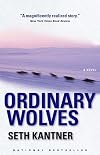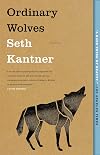
Ordinary Wolves
by Seth Kantner
On This Page
Description
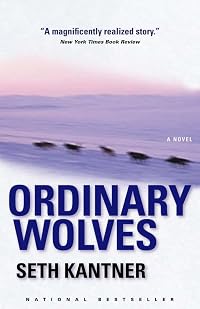
Eskimo and white culture collide in this national bestselling novel of life in the contemporary Alaskan wilderness. Ordinary Wolves depicts a life different from what any of us has known: Inhuman cold, the taste of rancid salmon shared with shivering sled dogs, hunkering in a sod igloo while blizzards moan overhead. But this is the only world Cutuk Hawcley has ever known. Born and raised in the Arctic, he has learned to provide for himself by hunting, fishing, and trading. And yet, though he show more idolizes the indigenous hunters who have taught him how to survive, when he travels to the nearby Inupiaq village, he is jeered and pummeled by the native children for being white. When Cutuk ventures into the society of his own people, two incompatible realities collide, perfectly capturing "the contrast between the wild world and our ravaging consumer culture". In a powerful coming of age story, a young man isolated by his past must choose between two worlds, both seemingly bent on rejecting him (Louise Erdrich). show lessTags
Recommendations











Member Reviews
Kantner writes in a voice and setting unique in this world of boilerplate novels, yet his character, Cutuk, elicits a recognition from us. Surely we have all moved through our teen years with a sense of uncertainty about who we are, a need to find where we belong and how to fit in. The village dialect Kantner uses jars me into a different way of looking at things.
Cutuk is 5 years old, when the book opens, setting the scene with descriptions of chipping ice from the bottom of the door, mice and shrews scurrying in the sod roof and around the blankets, watching the actions of others to learn how he should act, controlling his own behavior because his father “doesn’t like whiners”, missing his mother who flew off with a bush pilot. show more The self-imposed hardships of the bush life chosen by his father are accepted by Cutuk as the way things are, and he wants to become a proficient hunter like the visiting Eskimo elder. As the only white family in the region, the kids get beaten by the village children whenever they need to go to the store or post office. The hands-off parenting of his father follows the same pattern of the native families, who may yell at the kids to “stop that” but don’t follow through to see that they are obeyed, and the kids learn to be tough and find their own way to develop relationships. At least his brother and sister do. This novel is Cutuk’s journey to finding out how to relate to people, besides finding out how to live his life without becoming “mean” or an “Everything-Wanter”.
There is a lot of physical violence in this tale. In the dysfunctional society of the village, men beat up each other and their wives and kids, kids beat each other, everyone drinks whatever they can get their hands on, and young men commit suicide. As he grows up, Cutuk, like all the teens, is encouraged to go to the city and make his way. Here Kantner shows us how wide a gap there is between life in the Outback and life in the city, the culture shock of trying to figure out cars and highways, finding his way around in a place where no one stops long enough to be asked for help. He recognizes now that the prejudice he felt as a white minority is now reversed and that the natives with whom he feels connected are the ones at the bottom of the pecking order in the city.
Without TV or radio, Cutuk never learned all the slang and idioms that permeate modern conversations, misses the references to celebrities and to the gear that clutters modern life. He takes refuge with the bush pilot who flew his mother away and learns the importance of flying in his family history. The theme of flying crops up throughout the book, such as in the invasion of the wilderness by hunters shooting wolves or moose from their plane. As Cutuk learns what is important to him, and gains the self-confidence to make choices against the local norm of drinking and drugging, his learning to fly symbolizes his own freedom.
Why “ordinary wolves”? It’s how Cutuk explains his life in the Bush to a city girl, that he has a connection with them but “no Mowgli and Gray Brother stuff.” show less
Cutuk is 5 years old, when the book opens, setting the scene with descriptions of chipping ice from the bottom of the door, mice and shrews scurrying in the sod roof and around the blankets, watching the actions of others to learn how he should act, controlling his own behavior because his father “doesn’t like whiners”, missing his mother who flew off with a bush pilot. show more The self-imposed hardships of the bush life chosen by his father are accepted by Cutuk as the way things are, and he wants to become a proficient hunter like the visiting Eskimo elder. As the only white family in the region, the kids get beaten by the village children whenever they need to go to the store or post office. The hands-off parenting of his father follows the same pattern of the native families, who may yell at the kids to “stop that” but don’t follow through to see that they are obeyed, and the kids learn to be tough and find their own way to develop relationships. At least his brother and sister do. This novel is Cutuk’s journey to finding out how to relate to people, besides finding out how to live his life without becoming “mean” or an “Everything-Wanter”.
There is a lot of physical violence in this tale. In the dysfunctional society of the village, men beat up each other and their wives and kids, kids beat each other, everyone drinks whatever they can get their hands on, and young men commit suicide. As he grows up, Cutuk, like all the teens, is encouraged to go to the city and make his way. Here Kantner shows us how wide a gap there is between life in the Outback and life in the city, the culture shock of trying to figure out cars and highways, finding his way around in a place where no one stops long enough to be asked for help. He recognizes now that the prejudice he felt as a white minority is now reversed and that the natives with whom he feels connected are the ones at the bottom of the pecking order in the city.
Without TV or radio, Cutuk never learned all the slang and idioms that permeate modern conversations, misses the references to celebrities and to the gear that clutters modern life. He takes refuge with the bush pilot who flew his mother away and learns the importance of flying in his family history. The theme of flying crops up throughout the book, such as in the invasion of the wilderness by hunters shooting wolves or moose from their plane. As Cutuk learns what is important to him, and gains the self-confidence to make choices against the local norm of drinking and drugging, his learning to fly symbolizes his own freedom.
Why “ordinary wolves”? It’s how Cutuk explains his life in the Bush to a city girl, that he has a connection with them but “no Mowgli and Gray Brother stuff.” show less
If I rated this book purely based on my emotional connection to it, I'd give it three stars. This surprises me since I share much with Cutuk (the main character), including disgust with consumerism and the capitalistically motivated life led by most and a love-hate relationship with fellow humans. My theory is that, once again, I was left craving action, a happening, an occurrence, rather than just pondering over one's every day angst.
I was compelled to add a star, however, because the writing is poetic...fitting for this story of young boy growing up in an igloo in northern Alaska. Seth turns words into cameras, allowing readers to see everything he saw and experience both awe and disillusionment with him.
I was compelled to add a star, however, because the writing is poetic...fitting for this story of young boy growing up in an igloo in northern Alaska. Seth turns words into cameras, allowing readers to see everything he saw and experience both awe and disillusionment with him.
Life can be brutally harsh, especially in the far reaches of the Alaskan tundra. Seth Kantner does not sugarcoat the Alaskan way of life. Violence is a simple reality whether it be hunting animals to stay alive or getting into fights with bullies for being too different or "too white" in Inupiaq country. The violent subject matter often throws cold water on the warmth of Kantner's writing; for Ordinary Wolves despite the pain is also beautiful and lyrical. Emotions are physical entities: distrust squirted, embarrassment marched and memory pretended. Kantner writes in the language of keen observation and passion. I was seduced by the aromas of the land: coffee and campfire, the forest and snow.
Told in three parts, Ordinary Wolves takes show more readers from the wilderness landscape of Alaska to the city of Anchorage and back home again from the point of view of Cutuk. Despite being born and raised in Alaska, even at five years of age Cutuk has been aware of his differences: his yellow hair and pointed nose. Abe, his father from "away," has embarrassed him all of his life. Throughout Cutuk's childhood he feared his father was not manly enough. Despite living on the barren tundra Abe does not like to hunt; he is not rugged nor outwardly strong. Abe survives as an artist who builds furniture for extra income. Then there are the hints that Abe is not an observant father: the unfulfilled promise of a sleeping bag so that Cutuk doesn't have to sleep so close to his coming-of-age sister; or realizing his daughter needs glasses. As Cutuk grows older his sense of self expands to a new understanding about the world around him.
Ordinary Wolves is a coming of age story that explores themes of identity, heritage, and belonging. show less
Told in three parts, Ordinary Wolves takes show more readers from the wilderness landscape of Alaska to the city of Anchorage and back home again from the point of view of Cutuk. Despite being born and raised in Alaska, even at five years of age Cutuk has been aware of his differences: his yellow hair and pointed nose. Abe, his father from "away," has embarrassed him all of his life. Throughout Cutuk's childhood he feared his father was not manly enough. Despite living on the barren tundra Abe does not like to hunt; he is not rugged nor outwardly strong. Abe survives as an artist who builds furniture for extra income. Then there are the hints that Abe is not an observant father: the unfulfilled promise of a sleeping bag so that Cutuk doesn't have to sleep so close to his coming-of-age sister; or realizing his daughter needs glasses. As Cutuk grows older his sense of self expands to a new understanding about the world around him.
Ordinary Wolves is a coming of age story that explores themes of identity, heritage, and belonging. show less
I listened to this in audiobook format.
This novel is the coming-of-age story of a mixed race White-Inupiat boy in the Alaskan tundra. His family's primitive wilderness lifestyle, living off the land, is at odds with even the native Alaskan villages, and even moreso with Anchorage. Set in the 1970s, modernity is coming fast to the wildness as well. His crises of cultural identity, lifestyle desires, approach to hunting and wildlife and the environment, all take center stage as he finds first love, travels, and loses a friend. It's a really interesting look at a place and culture that I knew nothing about, but it was also depressing---the native lifestyle increasingly lost to drugs and alcoholism, the oil companies ravaging the land, the show more rich trophy hunters doing horrific things to beautiful animals. There were so many scenes of savagery to animals that is was difficult to get through in parts. Glad I read it but not sure I would recommend it to others. show less
This novel is the coming-of-age story of a mixed race White-Inupiat boy in the Alaskan tundra. His family's primitive wilderness lifestyle, living off the land, is at odds with even the native Alaskan villages, and even moreso with Anchorage. Set in the 1970s, modernity is coming fast to the wildness as well. His crises of cultural identity, lifestyle desires, approach to hunting and wildlife and the environment, all take center stage as he finds first love, travels, and loses a friend. It's a really interesting look at a place and culture that I knew nothing about, but it was also depressing---the native lifestyle increasingly lost to drugs and alcoholism, the oil companies ravaging the land, the show more rich trophy hunters doing horrific things to beautiful animals. There were so many scenes of savagery to animals that is was difficult to get through in parts. Glad I read it but not sure I would recommend it to others. show less
...there is identity theft here, which seems an unlikely term to use for a book review for Ordinary Wolves, but it's what I think of most when I ponder this novel. The cruise ship idealized dream of what living in the Alaskan interior is like finds itself mangled, disoriented, and yet still barely alive by the end of this journey. It is about a boy coming of age and discovering his identity has been stolen...by his race, by other's view of his race, by the encroachment of foreign culture and all the conveniences/inconveniences that come with it...by IT'S ideal. It is gut-wrenching, icy, and somewhere you know that this author writes the truth...even when you don't want your dream to end.
Do yourself a favor, don't read this book til show more after your Alaskan vacation.....as it will change your view forever. show less
Do yourself a favor, don't read this book til show more after your Alaskan vacation.....as it will change your view forever. show less
This was a great read. Cutak and his family are living as natives in Alaska, but they are White, from Chicago, and therefore they face ridicule and serious discrimination. Their father, an artist, has them living off the land in a sod dwelling, and their mother has long fled back to the States. Their way of living is very outdated compared to the Indigenous children they encounter in town on infrequent visits, and they are mocked, bullied and worse because of this and their being White. It was very interesting because when I began reading it felt like the story was set a century earlier than it was, and that realization illustrated the oddness of this family's lifestyle. When Cutak heads for the city he faces true culture shock and is show more very much adrift in modern society. He struggles to figure out where he "belongs". As a reader I feared for him, he is so naive and vulnerable.
The scenes involving hunting and the use of sled dogs were quite disturbing to me. I had always read/learned that the Indigenous peoples were very respectful of the animals who "sacrificed their lives" to feed them. Here it seems that modern methods of killing animals, including long range rifles, snowmobiles and helicopters, has made that "old-fashioned" way disappear. They kill for pelts, they kill violently and indiscriminately. The treatment of the sled dogs is horrific and disgusting. The rampant use of drugs and any possible version of alcohol is described and it is not pretty, as is the sexual violence towards women.
All that being said it was a moving story, well written and very thought provoking! show less
The scenes involving hunting and the use of sled dogs were quite disturbing to me. I had always read/learned that the Indigenous peoples were very respectful of the animals who "sacrificed their lives" to feed them. Here it seems that modern methods of killing animals, including long range rifles, snowmobiles and helicopters, has made that "old-fashioned" way disappear. They kill for pelts, they kill violently and indiscriminately. The treatment of the sled dogs is horrific and disgusting. The rampant use of drugs and any possible version of alcohol is described and it is not pretty, as is the sexual violence towards women.
All that being said it was a moving story, well written and very thought provoking! show less
One of my favorite reads of 2009. The writing was so evocative -- I could smell, taste, feel the igloo, the caribou, the snow, the air... it was a rare glimpse into a completely foreign way of life.
Members
- Recently Added By
Lists

Top Five Books of 2013
1,562 works; 721 members
Author Information
5+ Works 610 Members
Seth Kantner is a commercial fisherman, writer, and wildlife photographer. Born and raised in northern Alaska, he was schooled at home and on the land before attending the University of Alaska. His writings and photographs have appeared in Outside, Alaska Geographic, the New York Times, Prairie Schooner, and elsewhere. With his wife, Stacey, and show more daughter, China, he lives in northwest Alaska. Visit his website at www.sethkantner.com. show less
Awards and Honors
Work Relationships
Is abridged in
Common Knowledge
- Canonical title
- Ordinary Wolves
- Original title
- Ordinary Wolves
- Original publication date
- 2005
- People/Characters
- Cutuk Hawcly; Enuk Wolfglove ; Abe Hawcly; Jerry Hawcly; Iris Hawcly; Woodrow Washington (show all 9); January Thompson; Dawna Wolfglove; Stevie Wolfglove
- Important places
- Takunak village; Anchorage, Alaska, USA; USA; Alaska, USA
- Dedication
- To my mother, who was there
- First words
- On the drifted snow of a lake in the tundra a wolf lies dying. (Prologue)
In the Bad Mouse Year--two years after magazines claimed a white man hoofed on the moon--Enuk Wolfglove materialized one day in front of our house in the blowing snow and twilight of no-sun winter. - Quotations
- You an Everything-wanter now?
no Mowgli and Gray Brother stuff - Last words
- (Click to show. Warning: May contain spoilers.)Her guard hairs have fallen out from old age, left her white as a polar bear, and her yellow eyes stare on her offspring scattered below, the human and its companions retreating into the land.
- Publisher's editor
- Buchwald, Emilie
- Blurbers
- Kingsolver, Barbara; Jans, Nick; Reynolds, Susan Salter; Erdrich, Louise; Williams, Sarah T.; Brickman, Julie (show all 13); Kamine, Mark; Mosher, Howard Frank; Rea, Colin; Balch, Erin; Richardson, Sue; Ingram, Paul; Jude, Mary
Classifications
Statistics
- Members
- 449
- Popularity
- 68,453
- Reviews
- 17
- Rating
- (3.93)
- Languages
- English
- Media
- Paper, Ebook
- ISBNs
- 8
- ASINs
- 5