On This Page
Description
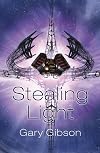
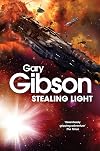
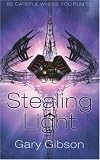
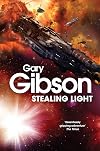
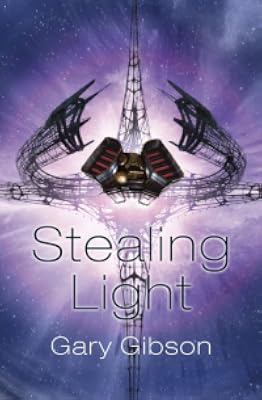
"In the twenty-fifth century, only the alien race known as the Shoal possess the secret of (FTL), faster-than-light travel, giving them absolute control over all trade and exploration throughout the entire galaxy. Mankind has operated within their influence for two centuries, establishing a dozen human colony worlds scattered along the conventional Shoaler trade routes." "Dakota Merrick, while serving as a military pilot, has witnessed atrocities for which this alien race is responsible. show more Piloting a civilian cargo ship, she is currently ferrying an exploration team to a star system containing a derelict starship. From its wreckage, her passengers hope to salvage a functioning FTL drive of mysteriously non-Shoal origin. But perhaps the Shoal are not yet ready to relinquish their monopoly over a technology they acquired through ancient genocide."--BOOK JACKET. show lessTags
Recommendations



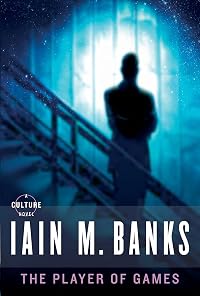
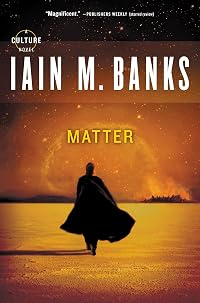
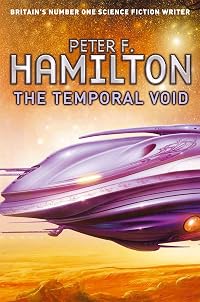


Member Reviews
Heinlein was a nutter.
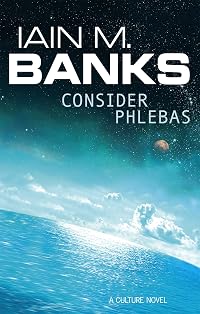
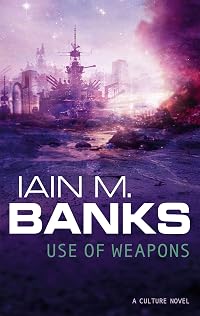
Iain Banks is the best.
That's what I learned from this book.
Trouble is, I already knew Heinlein was crazy and Banks single handedly saved hard SF from extinction.
The main problem I had with this book is that it kept making me think about other SF authors' works instead of Gibson's own. Let me explain...
There's a society based on an updated version of Spartan principles, which plays a central role in the story. It's not portrayed in an at all favourable light. This can't be seen as anything other than a response to [a:Heinlein Ra|5491826|Heinlein Ra|/assets/nophoto/nophoto-U-50x66-251a730d696018971ef4a443cdeaae05.jpg]'s [b:Starship Troopers|17214|Starship Troopers|Robert A. show more Heinlein|http://d.gr-assets.com/books/1348024291s/17214.jpg|2534973] where-in a society based on an updated version of Spartan principles is portrayed as some kind of ideal in all apparent seriousness.
There's a part where a character quotes T.S.Eliot at a critical moment...the same quote as gives [a:Iain M. Banks|5807106|Iain M. Banks|http://d.gr-assets.com/authors/1352410520p2/5807106.jpg]' first book its name. There are also aliens with stupid jokes for names...
Ever since the warped but wittily named Minds of Banks' Culture burst onto the scene, other authors of space opera have been copying the idea with no success, whether they be naming starships, robots or aliens...
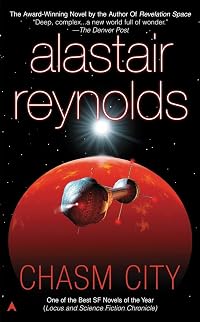
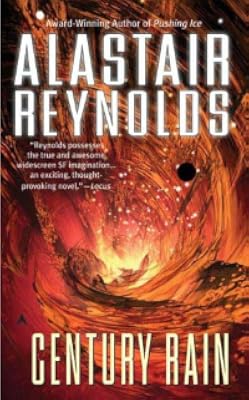
There are also obvious thematic links to [a:Alastair Reynolds|51204|Alastair Reynolds|http://d.gr-assets.com/authors/1244781695p2/51204.jpg] and the Alien films, or at least the first one.
So here's what all this amounts to; all books have antecedents, all authors have conscious or unconscious influences, but if, as a writer, you fail to mix up all your influences with enough of your own ideas or atmosphere, your readers will fail to credit you with the results.
If you write a direct counter-argument to another book, that book will distract readers who have read it - unless enough else is going on for it to only emerge afterward. If you make obvious reference, for no good reason, to another author, during a climactic scene, the reader of both writers will be distracted from the action at a critical moment.
One reason this is so distracting is that Gibson failed to engage my sympathies early - it must have been half way through a 600p book before I began to care about the main protagonist. Another is that too much is given away early - indeed in the back cover blurb, for that matter. Whilst there were late surprises, most of the general outline of what is going on is given away by clumsy foreshadowing.
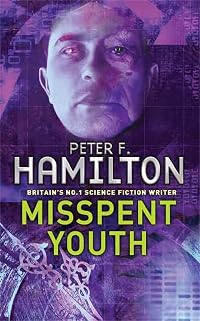
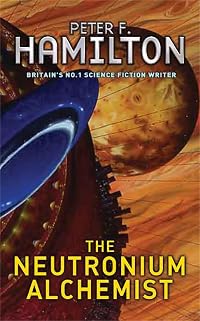
I have the feeling Gibson could get better if he pays attention to his weaknesses and works to improve but that hasn't really happened for [a:Peter F. Hamilton|25375|Peter F. Hamilton|http://d.gr-assets.com/authors/1235123752p2/25375.jpg], whose multi-tome space operas are not really as good as Gibson's - on the evidence of just this first volume, anyway.
The second half of this book is quite good, from a thriller perspective and I will grant Gibson this; whilst mind-computer interfacing plays an important role in this story, it isn't what it's about, which is a huge relief, because,"Look how cool my imagined gadgets are!" feels nigh ubiquitous and really boring nowadays, as an SF theme.
Instead, Gibson is talking politics and human nature - which has been an SF theme from the birth of the genre, really. But it's more interesting and vaster in scope than, "Wheee! Bio-electronics!" He's also saying something that is a direct counter to much of the aliens-vs.-humans SF of the Cold War era. Or he might be - because now that vol.1 is out the way, a less predictable situation has been set up and he's made me interested enough to tackle vol.2 - despite my nearly quiting at p200.
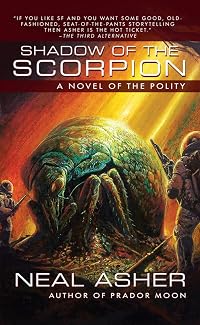
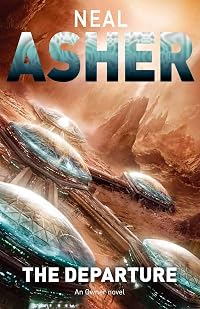
So if you stick with it, you might like this one - or if you aren't a jaded SF reader, you might too, or if you just don't care about that stuff and want a 'friller, maybe this is a reasonable choice - but you'd probably like [a:Neal Asher|56353|Neal Asher|http://d.gr-assets.com/authors/1207862001p2/56353.jpg] better in the lattermost case. show less
Iain Banks is the best.
That's what I learned from this book.
Trouble is, I already knew Heinlein was crazy and Banks single handedly saved hard SF from extinction.
The main problem I had with this book is that it kept making me think about other SF authors' works instead of Gibson's own. Let me explain...
There's a society based on an updated version of Spartan principles, which plays a central role in the story. It's not portrayed in an at all favourable light. This can't be seen as anything other than a response to [a:Heinlein Ra|5491826|Heinlein Ra|/assets/nophoto/nophoto-U-50x66-251a730d696018971ef4a443cdeaae05.jpg]'s [b:Starship Troopers|17214|Starship Troopers|Robert A. show more Heinlein|http://d.gr-assets.com/books/1348024291s/17214.jpg|2534973] where-in a society based on an updated version of Spartan principles is portrayed as some kind of ideal in all apparent seriousness.
There's a part where a character quotes T.S.Eliot at a critical moment...the same quote as gives [a:Iain M. Banks|5807106|Iain M. Banks|http://d.gr-assets.com/authors/1352410520p2/5807106.jpg]' first book its name. There are also aliens with stupid jokes for names...
Ever since the warped but wittily named Minds of Banks' Culture burst onto the scene, other authors of space opera have been copying the idea with no success, whether they be naming starships, robots or aliens...
There are also obvious thematic links to [a:Alastair Reynolds|51204|Alastair Reynolds|http://d.gr-assets.com/authors/1244781695p2/51204.jpg] and the Alien films, or at least the first one.
So here's what all this amounts to; all books have antecedents, all authors have conscious or unconscious influences, but if, as a writer, you fail to mix up all your influences with enough of your own ideas or atmosphere, your readers will fail to credit you with the results.
If you write a direct counter-argument to another book, that book will distract readers who have read it - unless enough else is going on for it to only emerge afterward. If you make obvious reference, for no good reason, to another author, during a climactic scene, the reader of both writers will be distracted from the action at a critical moment.
One reason this is so distracting is that Gibson failed to engage my sympathies early - it must have been half way through a 600p book before I began to care about the main protagonist. Another is that too much is given away early - indeed in the back cover blurb, for that matter. Whilst there were late surprises, most of the general outline of what is going on is given away by clumsy foreshadowing.
I have the feeling Gibson could get better if he pays attention to his weaknesses and works to improve but that hasn't really happened for [a:Peter F. Hamilton|25375|Peter F. Hamilton|http://d.gr-assets.com/authors/1235123752p2/25375.jpg], whose multi-tome space operas are not really as good as Gibson's - on the evidence of just this first volume, anyway.
The second half of this book is quite good, from a thriller perspective and I will grant Gibson this; whilst mind-computer interfacing plays an important role in this story, it isn't what it's about, which is a huge relief, because,"Look how cool my imagined gadgets are!" feels nigh ubiquitous and really boring nowadays, as an SF theme.
Instead, Gibson is talking politics and human nature - which has been an SF theme from the birth of the genre, really. But it's more interesting and vaster in scope than, "Wheee! Bio-electronics!" He's also saying something that is a direct counter to much of the aliens-vs.-humans SF of the Cold War era. Or he might be - because now that vol.1 is out the way, a less predictable situation has been set up and he's made me interested enough to tackle vol.2 - despite my nearly quiting at p200.
So if you stick with it, you might like this one - or if you aren't a jaded SF reader, you might too, or if you just don't care about that stuff and want a 'friller, maybe this is a reasonable choice - but you'd probably like [a:Neal Asher|56353|Neal Asher|http://d.gr-assets.com/authors/1207862001p2/56353.jpg] better in the lattermost case. show less
A cracking read. Absolutely no nonsense. No fat - such as pointless fight scenes thrown in every 2 chapters in an attempt to appeal to the biggest market - who know who you are!
Extremely clever the way the reader sympathises with Dakota despite the fact that 'Trader-in-faecal-matter-of-animals' was XXXXX (excised to avoid plot spoiling).
Glad to see Gary had got back to creepy religious stuff as in Angel Stations because he is just so good at that.
I'm already looking forward to the next book in the series.
Extremely clever the way the reader sympathises with Dakota despite the fact that 'Trader-in-faecal-matter-of-animals' was XXXXX (excised to avoid plot spoiling).
Glad to see Gary had got back to creepy religious stuff as in Angel Stations because he is just so good at that.
I'm already looking forward to the next book in the series.
Beholden to a star-faring alien race called The Shoal for all of it's interstellar transport, humanity finds itself divided and perpetually powerless in the galactic community of Gibson's story. When a derelict ship of unknown but ancient origin is discovered, opportunists race to exploit it's secrets for humanity's "Escape", but wrapped up in the same technology that makes transluminal travel possible is a dark secret that The Shoal is determined to preserve. The protagonist, Dakota Merrick, is a fiercely independent pilot, and works to uncover the truth while being coerced into helping an ambitious politician claim the prize. I enjoyed the final chapters of climax and plot revelation, although it seemed a long slow narrative road to show more get there, with frequent moments of déjà vu dialog. However, knowing this is the first part of a trilogy of stories, I am optimistic that the subsequent stories will open up onto a vaster canvas of settings and characters, and with any luck, explore the Shoal and other alien races more closely. show less
This was a pretty good beach-read sci-fi, but (at least the first volume) falls short of being a classic. Take [b:Ghost in the Shell|35870|Ghost In The Shell Volume 1 2nd Edition|Masamune Shirow|http://photo.goodreads.com/books/1168649319s/35870.jpg|829946]'s Motoko Kusanagi (or a female Case, for you [b:Neuromancer|22328|Neuromancer (Sprawl Trilogy, #1)|William Gibson|http://photo.goodreads.com/books/1266452942s/22328.jpg|909457] fans) and drop her in the midst of a fast-moving interstellar intrigue along the lines of David Brin's Uplift Saga or Vernor Vinge's brilliant [b:Fire Upon the Deep|77711|A Fire Upon The Deep (Zones of Thought)|Vernor Vinge|http://photo.goodreads.com/books/1170900383s/77711.jpg|1253374], add in a few choice show more elements from Herbert's Dune and Philip José Farmer's lost classic [b:The Unreasoning Mask|845599|The Unreasoning Mask|Philip José Farmer|http://photo.goodreads.com/books/1178848314s/845599.jpg|953784], and you pretty much have it.
Sadly, this was not quite as good as most of those pioneering precursors, so if you haven't yet read Vinge or Farmer, I'd have to recommend you start with the best and work back from there. Otherwise, if you want a fairly fun and occasionally interesting view on FTL fish and starfaring Libertarians, this is certainly worth a browse.
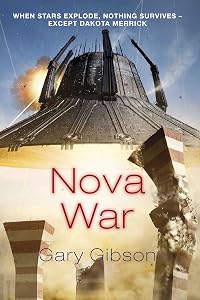
Update: the sequels make it worth it :-) [b:Nova War|6635349|Nova War|Gary Gibson|http://ecx.images-amazon.com/images/I/514RmNg15EL._SL75_.jpg|6829759] expanded the ideas, action, and characters in a number of interesting ways, and even though the concluding [b:Empire of Light|1036574|Empire of Light|David Czuchlewski|http://photo.goodreads.com/books/1180407597s/1036574.jpg|1022918] lost some of that momentum, it too added some clearly cool touches. Considered end-to-end, this is an outstanding sci-fi trilogy which brings together a lot of intriguing concepts, joined by occasionally awesome action sequences, and peopled by characters that actually grow over time. Nicely done. show less
Sadly, this was not quite as good as most of those pioneering precursors, so if you haven't yet read Vinge or Farmer, I'd have to recommend you start with the best and work back from there. Otherwise, if you want a fairly fun and occasionally interesting view on FTL fish and starfaring Libertarians, this is certainly worth a browse.
Update: the sequels make it worth it :-) [b:Nova War|6635349|Nova War|Gary Gibson|http://ecx.images-amazon.com/images/I/514RmNg15EL._SL75_.jpg|6829759] expanded the ideas, action, and characters in a number of interesting ways, and even though the concluding [b:Empire of Light|1036574|Empire of Light|David Czuchlewski|http://photo.goodreads.com/books/1180407597s/1036574.jpg|1022918] lost some of that momentum, it too added some clearly cool touches. Considered end-to-end, this is an outstanding sci-fi trilogy which brings together a lot of intriguing concepts, joined by occasionally awesome action sequences, and peopled by characters that actually grow over time. Nicely done. show less
A solid page turner of a space opera book.
It is a universe where all faster than light travel is kept in the appendages of one alien race. The main thrust of the book is humanity striving to gain this technology but most of the story is simply about a few people in impossible situations and a straight forward "find the macguffin" plot.
I enjoyed this a lot, some excellent ideas but not too cluttered and with a tightly controlled cast, unlike many a Space Opera. Very good.
It is a universe where all faster than light travel is kept in the appendages of one alien race. The main thrust of the book is humanity striving to gain this technology but most of the story is simply about a few people in impossible situations and a straight forward "find the macguffin" plot.
I enjoyed this a lot, some excellent ideas but not too cluttered and with a tightly controlled cast, unlike many a Space Opera. Very good.
It's a moderately hard sci-fi... not much time is spent developing relationships or on character development. In fact, so little time is spent on characterization that it is very difficult to tell most of the main male characters apart. (There is only one female character so nobody to get her mixed up with, but she isn't even very different from the males...)
There are some alien life-forms, but they aren't really explored very much, other than brief interjections when they are the stimulant to cause the humans to do something... when their interventions are needed to motivate a character, they appear, then they conveniently drop out of the story until next time they are needed.
I didn't like the story very much, nor the characters, and show more even the sci-fi part of it wasn't very engaging or original. And some parts seemed choppy, almost like the book was abridged - occasionally the transitions were sudden and unexpected. I won't be reading any more in this series, and it is unlikely I'd read more by this author... his writing just isn't distinct enough to choose over all the other books out there. show less
There are some alien life-forms, but they aren't really explored very much, other than brief interjections when they are the stimulant to cause the humans to do something... when their interventions are needed to motivate a character, they appear, then they conveniently drop out of the story until next time they are needed.
I didn't like the story very much, nor the characters, and show more even the sci-fi part of it wasn't very engaging or original. And some parts seemed choppy, almost like the book was abridged - occasionally the transitions were sudden and unexpected. I won't be reading any more in this series, and it is unlikely I'd read more by this author... his writing just isn't distinct enough to choose over all the other books out there. show less
Pulp level, terribly clumsy dialogue-introduced infodumps, no original ideas, Hamilton clone.
Members
- Recently Added By
Author Information

21+ Works 1,921 Members

Gary Gibson is a LibraryThing Author, an author who lists their personal library on LibraryThing.
Some Editions
Series

Common Knowledge
- Original title
- Stealing light
- Original publication date
- 2007
- People/Characters
- Dakota Merrick; Trader in Faecal Matter Of Animals
- First words
- It was like waking up and finding you'd just sleepwalked through the gates of hell.
- Last words
- (Click to show. Warning: May contain spoilers.)In time, other stars would join it, blossoming and burning briefly all across the face of the Milky Way, like a fiery portent of doom.
Classifications
Statistics
- Members
- 543
- Popularity
- 54,703
- Reviews
- 12
- Rating
- (3.47)
- Languages
- English, German
- Media
- Paper, Audiobook, Ebook
- ISBNs
- 12
- ASINs
- 2