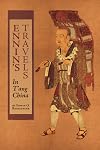
Ennin's Travels in T'ang China
by Edwin O. Reischauer
On This Page
Description
This book, a reconstruction of daily life and ways of thought in China during the ninth century, is based on an extensive travel diary of that time. The diarist Ennin was a Japanese Buddhist monk who went to China in AD 838 in search of new Buddhist texts and further enlightenment in his faith. While journeying through North China, and living in Ch'ang-an, he recorded in detail what he saw and experienced.Edwin O. Reischauer presents-often in Ennin's own words-a series of vignettes of show more various aspects of life in the Far East in medieval times: embassies and the conduct of international relations, the hazards of sea travel, Ennin's entanglements with the Chinese bureaucracy, life in the cities and the countryside, travel and economic conditions, commerce as carried on byKorean merchants, secular and religious festivals, Buddhism and its cults, rituals, and monastery life. The reader accompanies Ennin on a pilgrimage to the holy Mt. Wu-t'ai, and lives through China's greatest religious persecution, which Ennin personally experienced from beginning to end, before he returned to Japan in 847.The perfect companion for the reader of Ennin's Diary, Ennin's Travels serves as perhaps the most accurate and detailed account of the extraordinary civilization that flourished in China more than a thousand years ago. Unavailable for years, it is Angelico's pleasure to bring this important work, with a new foreword by Valerie Hansen, to the modern reader. show lessTags
Recommendations
















Member Reviews
This is the accompanying volume to a translation of the Diary of Ennin, a Japanese Buddhist monk who lived in China during one of the most tumultuous and fascinating periods of Chinese history--the 840s when Buddhism was at its apogee, only to succumb to the suppression launched by the arch-Taoist (and probably insane) Emperor Wuzong ('Martial Emperor') in 845 CE.
Reischauer's handling of the material is nearly flawless--a short introduction explaining the significance of the work and a summary of the work's contents, then a recounting of the diary with each chapter focusing on an aspect of Ennin's diary--departure from Japan, arrival in China, his travels from the coast to the ancient capital of Ch'ang-an, the beginning of the show more suppression starting with Wuzong's ascension to the throne, his defrocking and departure back to Japan. The missing element was a more thorough explanation of the teachings and practise of the Buddhism Ennin encountered as our knowledge of the esoteric practices of this time and location are woefully lean. On this subject Reischauer bids us turn to other sources (unnamed).
Because most of the official Chinese dynastic histories gloss over this period, Ennin's diary is critical to anyone wanting to understand Tang China during this decade. It's a mesmerizing and horrific tale of how a land so bound to Buddhism, where one couldn't travel from one town to another without encountering parties of monks or nuns or pilgrims on the road, where monasteries dotted almost every hill, and monks were welcome visitors (at most, but not all establishments)...at an emperor's decree defrocked hundreds of thousands of monks and nuns, tore down established monasteries, confiscated lands and wealth, melted down Buddhist statues, burned its sutras and paintings, and terrorized its citizens into denying their faith.
Absolutely anyone interested in Chinese history and the history of Buddhism must read this book and I am ashamed I hadn't deemed Ennin's diary (and this accompanying volume) important enough to read when I was a student. It had literally sat on my shelves for decades, unread, until now. Mea culpa! show less
Reischauer's handling of the material is nearly flawless--a short introduction explaining the significance of the work and a summary of the work's contents, then a recounting of the diary with each chapter focusing on an aspect of Ennin's diary--departure from Japan, arrival in China, his travels from the coast to the ancient capital of Ch'ang-an, the beginning of the show more suppression starting with Wuzong's ascension to the throne, his defrocking and departure back to Japan. The missing element was a more thorough explanation of the teachings and practise of the Buddhism Ennin encountered as our knowledge of the esoteric practices of this time and location are woefully lean. On this subject Reischauer bids us turn to other sources (unnamed).
Because most of the official Chinese dynastic histories gloss over this period, Ennin's diary is critical to anyone wanting to understand Tang China during this decade. It's a mesmerizing and horrific tale of how a land so bound to Buddhism, where one couldn't travel from one town to another without encountering parties of monks or nuns or pilgrims on the road, where monasteries dotted almost every hill, and monks were welcome visitors (at most, but not all establishments)...at an emperor's decree defrocked hundreds of thousands of monks and nuns, tore down established monasteries, confiscated lands and wealth, melted down Buddhist statues, burned its sutras and paintings, and terrorized its citizens into denying their faith.
Absolutely anyone interested in Chinese history and the history of Buddhism must read this book and I am ashamed I hadn't deemed Ennin's diary (and this accompanying volume) important enough to read when I was a student. It had literally sat on my shelves for decades, unread, until now. Mea culpa! show less
Members
- Recently Added By
Author Information

30+ Works 1,498 Members
Edwin O. Reischauer was born in Japan in 1910, the son of Protestant educational-missionary parents, founders of Japan's first school for the deaf. After being educated in Japanese and American schools, he received his B.A. from Oberlin College in 1931 and his M.A. from Harvard in 1932. Four years later he received a Ph.D. in Far Eastern Languages show more from Harvard. In 1938 he joined the faculty at Harvard, where he rose to the position of professor and acted for an extensive period as director of the Harvard-Yenching Institute. His academic career was interrupted by World War II, during which he served as an intelligence officer in the U.S. Army, and he held civilian posts first in the War Department and later in the Department of State. In 1961 he again took leave from Harvard to accept a position for which he had been hand-picked by President John F. Kennedy---ambassador to Japan. The Japanese accepted him as one of their own; one editorial writer welcomed him by writing that he was well informed about Japan, "having no equal among foreigners on that point." Another remarked how satisfying it would be to "write an editorial and know that the American Ambassador will actually be able to read it." Reischauer was a prolific writer and an energetic speaker who saw his role as introducing Japan to America. In his writings and in his activities in other media such as film, he was committed to reaching as broad an audience as possible. At Harvard he led in training the first generation of true American scholars of Japan. As U.S. ambassador to Japan, however, his role became reversed as he sought to educate Japanese about America and Americans. In the wake of the war in the Pacific, Reischauer hoped to show Americans and Japanese that the two countries could and should be close allies and friends. His assessment of Japan's history emphasized the nonrevolutionary character of its modern history and its outward-looking development. In his view Japanese war and aggression were aberrations in a long emerging liberal tradition. His positivist interpretation has been a leading influence in defining America's postwar vision of Japan. (Bowker Author Biography) show less
Awards and Honors
Awards
Common Knowledge
- Original publication date
- 1955
- Important places
- China
Classifications
Statistics
- Members
- 24
- Popularity
- 1,114,145
- Reviews
- 1
- Rating
- (5.00)
- Languages
- English
- Media
- Paper
- ISBNs
- 4
- ASINs
- 1