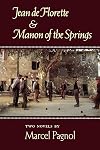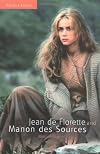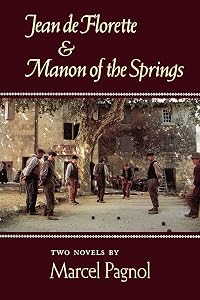
Jean de Florette & Manon of the Springs
by Marcel Pagnol
The Water of the Hills (L'eau des collines) (Collections and Selections — 1 & 2)
On This Page
Description
Jean de Florette: Set amidst the rugged hills of Provence, this epic saga follows the heroic efforts of Jean Cadoret, who inherits a farm from his mother, Florette, and leaves his city job behind, hoping to create a "new Eden" with his wife and daughter. But, unbeknownst to Jean, his greedy neighbor, C©sar Soubeyran, is plotting to steal the land out from under him with a wicked scheme that drives Jean to the brink of madness.Manon of the spring: In this sequel to Jean de Florette, ten show more years after her father's death, Manon has no idea that her neighbor cheated her out of her father's land. But when she discovers that Soubeyran was directly responsible for her father's death, Manon goes after him with a vengeance. show lessTags
Recommendations


























Member Reviews
I had a vague memory of seeing the films on TV many years ago and enjoying them, so when I saw this in a charity shop I gladly scooped it up. The translator has done an excellent job: told in a luminous, lyrical way, with a touch of fairytale or folklore, yet also with lots of sly humour rooted in the peasants' everyday life. The villains, the Papet and Ugolin, are depicted in such a way that we have compassion on them as well as Monsieur Jean and his family.
So far as I know there is no word count on these journal entries, yet even so space is too short to explain to you the beauty of this book.
It’s a double Greek tragedy. In the first part you have the tragedy of a world where you can beg the gods for what you need and not be satisfied. The earth, the sky, the Catholic’s pagan saints are all invoked; the mountain that splits the storm is the Holy Spirit.
But we know that living in this pre-industrial, half agrarian, half hunter-gatherer landscape are people and the second tragedy is the tragedy of a species that will betray its neighbour, betray its family and ultimately betray itself. You’ll notice that through the clear eyes of love Ugolin describes Manon as a goddess as she show more draws down to herself that which is the Lord’s.
All we guilty can hope for forgiveness if we truly repent. And God bless France and all who sail in her. show less
It’s a double Greek tragedy. In the first part you have the tragedy of a world where you can beg the gods for what you need and not be satisfied. The earth, the sky, the Catholic’s pagan saints are all invoked; the mountain that splits the storm is the Holy Spirit.
But we know that living in this pre-industrial, half agrarian, half hunter-gatherer landscape are people and the second tragedy is the tragedy of a species that will betray its neighbour, betray its family and ultimately betray itself. You’ll notice that through the clear eyes of love Ugolin describes Manon as a goddess as she show more draws down to herself that which is the Lord’s.
All we guilty can hope for forgiveness if we truly repent. And God bless France and all who sail in her. show less
This book is in two parts, but they really combine to make one book. Though it was written in the 1960s, it is based on an old French (Provençal) story and has a simple, old fashioned feel. Jean, a hunchback with a beautiful wife and beautiful daughter (Manon), move to a small hill village and incur the jealousy of a neighboring man, Ugolin, and his uncle Papet. Ugolin and Papet want access to a spring on Jean's land so that Ugolin can make his fortune growing carnations. They block the spring to hide it and watch Jean struggle to make a go of farming without a fresh water source, hoping to buy his farm once he fails. In the second part, Manon is grown and discover's Ugolin's treachery and plans her revenge.
It's a very simple story show more with few surprises. The characters are also simple and there to tell the story. I was honestly a little surprised that this is such a favorite for so many people. To me, it read like a children's tale (albeit a dark one) that could have been told in 50 pages. Very moralistic and everything comes around in the end to punish and reward the right people.
I know that for many of my fellow LTers this is a favorite. I wonder if that is heavily influenced by the movie, which I see was also very popular. I'm not a movie person, so I'm doubtful I'll watch it. show less
It's a very simple story show more with few surprises. The characters are also simple and there to tell the story. I was honestly a little surprised that this is such a favorite for so many people. To me, it read like a children's tale (albeit a dark one) that could have been told in 50 pages. Very moralistic and everything comes around in the end to punish and reward the right people.
I know that for many of my fellow LTers this is a favorite. I wonder if that is heavily influenced by the movie, which I see was also very popular. I'm not a movie person, so I'm doubtful I'll watch it. show less
A timeless classic set in the wild countryside of southern France. A plot laced with twists and turns, exposing the follies and foibles of the villagers who guard their land with vengeance, whose livelihood is at the mercy of Mother Nature where blood runs thicker than water. With the most befitting score.
Von seiner Mutter erbt der gebildete Städter Jean Cadot das Landgut Rosmarin in der Provence. Anstatt, wie von der Dorfgemeinschaft erwartet, die Erbschaft zu verkaufen, versucht er eine Kaninchenzucht zu etablieren. Damit kommt er den mächtigen Soubeyrans in die Quere, die ihre eigenen Pläne für dieses Landstück hatten.
Pagnols Roman, ursprünglich in zwei Büchern, deren Handlung rund 5 Jahre trennen, erschienen, spielt in dessen Heimat und beinhaltet eine große Geschichte die sämtliche Zutaten eines Meisterwerks: Liebevoll skizzierte Charaktere, berauschende Naturbeschreibungen, detailreiche, fachmännisch verwebte Handlungsstränge und einen spannungsgeladenen, fesselnden Plot voll von großen Gefühlen und Lebensweisheit. show more "Die Wasser der Hügel" stellt sich als klassischer Heimatroman dar, der zum Träumen einlädt. Beim Lesen wird man in die Provence der 1920er entführt und kann förmlich den Lavendel riechen und sich in die bäuerliche Dorfgesellschaft einfühlen. show less
Pagnols Roman, ursprünglich in zwei Büchern, deren Handlung rund 5 Jahre trennen, erschienen, spielt in dessen Heimat und beinhaltet eine große Geschichte die sämtliche Zutaten eines Meisterwerks: Liebevoll skizzierte Charaktere, berauschende Naturbeschreibungen, detailreiche, fachmännisch verwebte Handlungsstränge und einen spannungsgeladenen, fesselnden Plot voll von großen Gefühlen und Lebensweisheit. show more "Die Wasser der Hügel" stellt sich als klassischer Heimatroman dar, der zum Träumen einlädt. Beim Lesen wird man in die Provence der 1920er entführt und kann förmlich den Lavendel riechen und sich in die bäuerliche Dorfgesellschaft einfühlen. show less
Jan 7, 2021German
Ratings
Members
- Recently Added By
Lists

French Books
102 works; 15 members

Books featuring grandfathers
23 works; 4 members
Books featuring grandfathers
24 works; 3 members

french letters
18 works; 1 member
Author Information

175+ Works 5,843 Members
Marcel Pagnol was born on February 28, 1895. He was a French novelist, playwright, and filmmaker. In 1946, he became the first filmmaker elected to the Académie Française. Pagnol died in Paris on April 18, 1974. (Bowker Author Biography)
Some Editions
Awards and Honors
Awards
Series

Belongs to Publisher Series
dtv (484)
Work Relationships
Contains
Has the adaptation
Has as a student's study guide
Common Knowledge
- Canonical title*
- Die Wasser der Hügel
- Original title
- L'eau des collines; Band 1: Jean de Florette; Band 2: Manon des sources
- Alternate titles
- The Water of the Hills
- Original publication date
- 1964
- People/Characters
- César Soubeyran (Le Papet); Ugolin Soubeyran; Jean Cadoret; Aimée Cadoret; Manon Cadoret; Bernard Olivier
- Important places
- Provence, France; France
- Related movies
- Jean de Florette (1986 | IMDb)
- First words
- Les Bastides Blanches was a village of a hundred and fifty inhabitants, perched on the prow of one of the last foothills of the Massif de l'Etoile, about ten kilometers from Aubagne.
- Last words*
- (Click to show. Warning: May contain spoilers.)Adessias, meine Pitchounète
Dein Großvater Cèsar Soubeyran - Original language*
- Französisch
- Disambiguation notice
- The correct author for this book is Marcel Pagnol
*Some information comes from Common Knowledge in other languages. Click "Edit" for more information.
Classifications
Statistics
- Members
- 529
- Popularity
- 56,276
- Reviews
- 5
- Rating
- (4.27)
- Languages
- 8 — Czech, Danish, English, French, German, Italian, Norwegian (Bokmål), Norwegian
- Media
- Paper, Audiobook, Ebook
- ISBNs
- 25
- ASINs
- 10