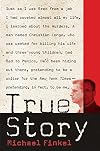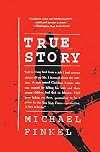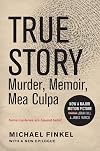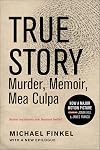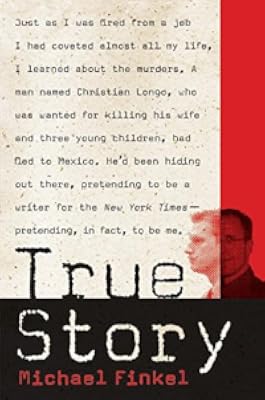
True Story: Murder, Memoir, Mea Culpa
by Michael Finkel
On This Page
Description
The improbable but true story of a man accused of murdering his entire family and the journalist he impersonated while on the run In 2001, Mike Finkel was on top of the world: young, talented, and recently promoted to a plum job at the New York Times Magazine. Then he made an irremediable slip: Under extraordinary pressure to keep producing blockbuster stories, he fabricated parts of an article. Caught and excommunicated from the Times, he retreated to his home in Montana, swearing off any show more contact with the media. When the phone rang, though, he couldn't resist. At the other end was a reporter from the San Francisco Chronicle, whom Finkel congratulated on being the first in what was sure to be a long and bloodthirsty line of media watchdogs. The reporter was puzzled. In Waldport, Oregon, Christian Longo had killed his young wife and three children and dumped their bodies into the bay. With a stolen credit card, he fled south, making his way to Cancun, where he lived for several weeks under an assumed identity: Michael Finkel, journalist for the New York Times. True Story is the tale of a bizarre and convoluted collision between fact and fiction, and a meditation on the slippery nature of truth. When Finkel contacts Longo in jail, the two men begin a close and complex relationship. Over the course of a year, they exchange long letters and weekly phone calls, playing out a cat-and-mouse game in which it's never quite clear if the pursuer is Finkel or Longo-or both. Finkel's dogged pursuit of the true story pays off only at the end, in the gripping trial scenes in which Longo, after a lifetime of deception, finally tells the whole truth. Or so he says. show lessTags
Recommendations






Member Reviews
I despised this book. I was hooked from the beginning, and knew he'd done the deeds, but I hated that Michael Finkel had made me care about the story of this sonofabitch. Being able to, at least somewhat, get into the mind of a killer the way Finkel did is a fascinating thing. Who doesn't want to understand what pushes people over the edge like that? To not only strangle his wife, who he claimed to have adored, but their three children as well. The crime was horrible and Longo's personality is even more so. Yet, he presents such a sympathetic character. Again, I hated this book, but I think I'm glad I read it. I think.
Michael Finkel was a respected and up and coming staff writer for the New York Times when he violated one of the major rules of journalism: He made something up. While reporting on a story about child warriors in Africa, he created a "composite" character as the focal point of the story. When the malfeasance was discovered, he was fired "for passing off as true a story that was, instead, a deceptive blend of fact and fiction."
He was out west licking his wounds, humiliated and wondering what to do next when he was contacted by a reporter. He thought he was being contacted about his firing, but the reporter wanted to know what he thought about Chris Longo. He learned that a man named Chris Longo had just been arrested in Mexico, where he show more had fled after murdering his wife and three young children. While in Mexico, Longo had adopted the identity of and passed himself off as New York Times writer Michael Finkel. Intrigued by this connection, Finkel contacted Longo, and began a correspondence with him, and a friendship of sorts developed. Over the next several years, Finkel interviewed Longo on a number of occasions, and when Longo was tried for the murders, Finkel followed the trial. This book resulted.
It consists of alternating chapters describing his relationship with Longo (as well as the story of how he, Finkel, came to falsify his reporting) and the story of Longo's life and how he came to murder his wife and children.
I mostly enjoyed this, but in undercurrents I occasionally got the feeling that Finkel doesn't really believe that what he did was really so bad that he deserved to be fired. Of course, he was fairly young, and also somewhat arrogant, with a dream job, and maybe a little bit power-mad. To me, he occasionally seems to try to justify himself, with quotes like this:
"I'd cheated on the quotes, but I had captured the correct story. My article was true in spirit--it was a higher truth than that bound by mere facts and figures--and I was able to delude myself that this was all that mattered."
And again, "I knew what I had done was against the rules. I hid my actions from my editor of the Times, though I believed I could wheedle my way out of it in the unlikely chance I was caught."
So while he admits that he knew he was doing wrong, he nevertheless deluded himself into thinking it was really not that bad, and if he got caught he could wheedle his way out of it. So I'm not really sure we can believe he has learned his lesson, and that we can trust that in the future his reporting will always be faithfully true, including this book. So I found myself sometimes taking what he writes with a grain of salt. Maybe it's a case of the man doth protest too much: the opening line of the book is: "This is a true story." And the last line is: "He won't be pleased, he said, unless everything in this book is absolutely, unassailable true."
2 1/2 stars. show less
He was out west licking his wounds, humiliated and wondering what to do next when he was contacted by a reporter. He thought he was being contacted about his firing, but the reporter wanted to know what he thought about Chris Longo. He learned that a man named Chris Longo had just been arrested in Mexico, where he show more had fled after murdering his wife and three young children. While in Mexico, Longo had adopted the identity of and passed himself off as New York Times writer Michael Finkel. Intrigued by this connection, Finkel contacted Longo, and began a correspondence with him, and a friendship of sorts developed. Over the next several years, Finkel interviewed Longo on a number of occasions, and when Longo was tried for the murders, Finkel followed the trial. This book resulted.
It consists of alternating chapters describing his relationship with Longo (as well as the story of how he, Finkel, came to falsify his reporting) and the story of Longo's life and how he came to murder his wife and children.
I mostly enjoyed this, but in undercurrents I occasionally got the feeling that Finkel doesn't really believe that what he did was really so bad that he deserved to be fired. Of course, he was fairly young, and also somewhat arrogant, with a dream job, and maybe a little bit power-mad. To me, he occasionally seems to try to justify himself, with quotes like this:
"I'd cheated on the quotes, but I had captured the correct story. My article was true in spirit--it was a higher truth than that bound by mere facts and figures--and I was able to delude myself that this was all that mattered."
And again, "I knew what I had done was against the rules. I hid my actions from my editor of the Times, though I believed I could wheedle my way out of it in the unlikely chance I was caught."
So while he admits that he knew he was doing wrong, he nevertheless deluded himself into thinking it was really not that bad, and if he got caught he could wheedle his way out of it. So I'm not really sure we can believe he has learned his lesson, and that we can trust that in the future his reporting will always be faithfully true, including this book. So I found myself sometimes taking what he writes with a grain of salt. Maybe it's a case of the man doth protest too much: the opening line of the book is: "This is a true story." And the last line is: "He won't be pleased, he said, unless everything in this book is absolutely, unassailable true."
2 1/2 stars. show less
Michael Finkel was a New York Times Journalist who was fired after it was revealed he falsified details in a story.
Christian Longo was a man accused of having murdered his entire family.
What brought these two men together was the name Michael Finkel. While on the run from the law in Mexico, Longo impersonated Finkel, a journalist whose stories he had read and admired.
Finkel is hiding away at his home, disgraced after the truth about his chocolate trade story came out. When he receives a phone call from another reporter about Longo using Finkel's name, Finkel himself sees it as an opportunity to write another great story, this time one that is completely truthful. But as he gets sucked in by Longo's charms, Finkel begins to realize just show more how blurred the line between truth and lies can be.
This is an absolutely fascinating read. It is a murder mystery, as readers learn about the case along with Finkel. It is a psychological study of two men brought together by lies and the desire for redemption. It is a look at the relationship between journalist and subject, and where that relationship can shift and change into something resembling friendship-and the struggle to understand feeling kinship for a man who may have committed a horrible deed. And in the end, it is an examination of what it truly means to tell the truth and to tell a lie, to others and to yourself. show less
Christian Longo was a man accused of having murdered his entire family.
What brought these two men together was the name Michael Finkel. While on the run from the law in Mexico, Longo impersonated Finkel, a journalist whose stories he had read and admired.
Finkel is hiding away at his home, disgraced after the truth about his chocolate trade story came out. When he receives a phone call from another reporter about Longo using Finkel's name, Finkel himself sees it as an opportunity to write another great story, this time one that is completely truthful. But as he gets sucked in by Longo's charms, Finkel begins to realize just show more how blurred the line between truth and lies can be.
This is an absolutely fascinating read. It is a murder mystery, as readers learn about the case along with Finkel. It is a psychological study of two men brought together by lies and the desire for redemption. It is a look at the relationship between journalist and subject, and where that relationship can shift and change into something resembling friendship-and the struggle to understand feeling kinship for a man who may have committed a horrible deed. And in the end, it is an examination of what it truly means to tell the truth and to tell a lie, to others and to yourself. show less
There are no words to describe True Story that will do it justice, but I will do my best to find some that come close. I have read close to 100 different true crime accounts and novels in my life so far, on top of the countless other nonfiction pieces, but I feel a way that I have never felt before after completing this beautiful memoir.
True Story by Michael Finkel tells the story of Christian Michael Longo, a man believed to have murdered his entire family and then fled the country to Mexico. Finkel has recently been fired from The New York Times Magazine for falsifying a boy he claimed to have interviewed for a story. Longo has created an identity of Finkel while living down in Mexico for a few weeks and Finkel is informed of this via show more telephone by a reporter at the Oregonian.
From here Finkel begins talking with Longo via telephone and mail in an attempt to learn more about the man who impersonated him after allegedly killing his family. Through the correspondence of Longo we learn how endearing and trustworthy he is and, despite his potential killing of his own children, we begin to enjoy and trust him. Without a doubt the man is intelligent, but we start to see a pattern with his behavior about halfway through the book. Finkel is a master at bringing you along for the ride and having you experience the very emotions we can assume that he did while talking with Longo.
While True Story is amazingly well-written and Finkel is a wonderful narrator, I started to distrust him. It wasn’t because of his flop with the Times either, it’s because I have seen this relationship between writer and subject before. Fans of the podcast series Serial may remember the relationship between Sarah Koenig and Adnan Syed throughout the investigation of his alleged murder of the girl Hae Min Lee. While you are hearing the facts from Koenig you may begin to wonder if she is, in fact, pleading for Adnan’s innocence herself. While she does not come out and say it fully, she has an underlying tone of trying to convince her audience that the man she spent so long talking with and, presumably, trusting is telling the truth.
Finkel uses the exact same method while writing True Story, and as a reader I can’t help but feel betrayed. Around Chapter 26 is when I stopped trusting Finkel because the way he was writing became very pleading, but I think that is the beauty of his writing and reporting. Finkel writes exactly what he is feeling and what he is learning about Longo as soon as he learns or feels it. By doing so it makes the reader feel as if they are learning and feeling these things instead of Finkel and he, much like the readers, was fooled into trusting someone he had every reason not to. So Finkel is not, himself, deceiving us but Longo is in the same way that he deceived Finkel for over a year.
This deception and abuse of trust is what made me feel so connected to the book. I felt every lie and deceit, when Finkel begged Longo forgiveness it felt as if I were begging Longo for forgiveness. And, in the end, when Finkel begins to distrust and grow apart from Longo, I began to do the same. The reason it took me two days instead of one to finish this book is simply because I had to force myself to put it down, I felt that connected to the story.
True Story has not received nearly enough attention for its beauty and magnificence. I encourage you to pick up or download a copy as soon as possible. I have to say this is one of the best nonfiction pieces I’ve ever read and is up there with Helter Skelter for my favorite true crime book! Do yourself a favor and read it soon.
(If you like reviews like this then check out my website www.michreadsbooks.wordpress.com) show less
True Story by Michael Finkel tells the story of Christian Michael Longo, a man believed to have murdered his entire family and then fled the country to Mexico. Finkel has recently been fired from The New York Times Magazine for falsifying a boy he claimed to have interviewed for a story. Longo has created an identity of Finkel while living down in Mexico for a few weeks and Finkel is informed of this via show more telephone by a reporter at the Oregonian.
From here Finkel begins talking with Longo via telephone and mail in an attempt to learn more about the man who impersonated him after allegedly killing his family. Through the correspondence of Longo we learn how endearing and trustworthy he is and, despite his potential killing of his own children, we begin to enjoy and trust him. Without a doubt the man is intelligent, but we start to see a pattern with his behavior about halfway through the book. Finkel is a master at bringing you along for the ride and having you experience the very emotions we can assume that he did while talking with Longo.
While True Story is amazingly well-written and Finkel is a wonderful narrator, I started to distrust him. It wasn’t because of his flop with the Times either, it’s because I have seen this relationship between writer and subject before. Fans of the podcast series Serial may remember the relationship between Sarah Koenig and Adnan Syed throughout the investigation of his alleged murder of the girl Hae Min Lee. While you are hearing the facts from Koenig you may begin to wonder if she is, in fact, pleading for Adnan’s innocence herself. While she does not come out and say it fully, she has an underlying tone of trying to convince her audience that the man she spent so long talking with and, presumably, trusting is telling the truth.
Finkel uses the exact same method while writing True Story, and as a reader I can’t help but feel betrayed. Around Chapter 26 is when I stopped trusting Finkel because the way he was writing became very pleading, but I think that is the beauty of his writing and reporting. Finkel writes exactly what he is feeling and what he is learning about Longo as soon as he learns or feels it. By doing so it makes the reader feel as if they are learning and feeling these things instead of Finkel and he, much like the readers, was fooled into trusting someone he had every reason not to. So Finkel is not, himself, deceiving us but Longo is in the same way that he deceived Finkel for over a year.
This deception and abuse of trust is what made me feel so connected to the book. I felt every lie and deceit, when Finkel begged Longo forgiveness it felt as if I were begging Longo for forgiveness. And, in the end, when Finkel begins to distrust and grow apart from Longo, I began to do the same. The reason it took me two days instead of one to finish this book is simply because I had to force myself to put it down, I felt that connected to the story.
True Story has not received nearly enough attention for its beauty and magnificence. I encourage you to pick up or download a copy as soon as possible. I have to say this is one of the best nonfiction pieces I’ve ever read and is up there with Helter Skelter for my favorite true crime book! Do yourself a favor and read it soon.
(If you like reviews like this then check out my website www.michreadsbooks.wordpress.com) show less
Interesting and absorbing while reading it. Otherwise, not so much. This book is proof that fact is often stranger than fiction. Nothing else explains why A) Longo chose Finkel as his assumed identity just as Finkel is pilloried for his bad journalistic judgment and B) Finkel would invest so much time and head space to a man that was a consummate liar and con man (leaving out the part that he is also a psychopath).
A disgraced journalist gets a new shot on life after he finds out that an accused murderer has been posing as him in Mexico.
I actually was glad to hear Finkel get some redemption. Maybe I'm in the minority. He had a pretty big lapse in judgment, but he didn't go off the deep end like Christian Longo did. Holy shit! What a wack job.
I actually was glad to hear Finkel get some redemption. Maybe I'm in the minority. He had a pretty big lapse in judgment, but he didn't go off the deep end like Christian Longo did. Holy shit! What a wack job.
This is a very odd and disturbing true crime book. I guess they all are, but it isn’t often that one finds the author to be almost as disturbing as the subject. I should say up front that I am not usually a fan of true crime, but I read this book because of its Oregon connections.
The author, Michael Finkel, has written for Atlantic Monthly, National Geographic Adventure, Rolling Stone, Esquire, Sports Illustrated, and the New York Times Magazine. As the book opens, he has just been fired by the Times over inaccuracies in a story about child slavery and chocolate production in Africa. Awaiting the publication of the Editor’s note announcing his firing, he receives a call from a reporter for the Portland Oregonian. However, the call show more is not about the firing. It seems that a suspected murderer, accused of killing his wife and three small children in Oregon, has been picked up in Mexico, impersonating one Michael Finkel of the New York Times Magazine. The suspect, Christian Michael Longo, had been placed on the FBI’s Ten Most Wanted Fugitives list, and had been profiled on the television show America’s Most Wanted.
For whatever reason, Finkel wrote to Longo at the Lincoln County Jail, asking for an interview. And, for whatever reason, Longo replied. The book describes the relationship that developed between the two men as they exchanged long letters and weekly phone calls in the year between Longo’s arrest and his trial. Finkel alternates between chapters describing the latest letters and calls from Longo, and chapters describing his own history. Each man starts out justifying his situation and actions. As the layers are peeled, each man repeatedly becomes something different from what he had first appeared to be.
Longo is a Jehovah’s Witness. Articles in Portland newspapers at the time of the trial gave prominence to the isolation of Longo’s family after he had been “disfellowshipped” in their home state of Michigan. Finkel gives this issue less prominence as a factor leading to the murders.
Finkel writes well, but both stories are simultaneously fascinating and repulsive. At the end, we are left with two compulsive liars, each with an overwhelming need to impress other people, and each with multiple versions of his life story.
Archives of the Longo case in The Oregonian
New York Times magazine on Michael Finkel and the article that got him fired. show less
The author, Michael Finkel, has written for Atlantic Monthly, National Geographic Adventure, Rolling Stone, Esquire, Sports Illustrated, and the New York Times Magazine. As the book opens, he has just been fired by the Times over inaccuracies in a story about child slavery and chocolate production in Africa. Awaiting the publication of the Editor’s note announcing his firing, he receives a call from a reporter for the Portland Oregonian. However, the call show more is not about the firing. It seems that a suspected murderer, accused of killing his wife and three small children in Oregon, has been picked up in Mexico, impersonating one Michael Finkel of the New York Times Magazine. The suspect, Christian Michael Longo, had been placed on the FBI’s Ten Most Wanted Fugitives list, and had been profiled on the television show America’s Most Wanted.
For whatever reason, Finkel wrote to Longo at the Lincoln County Jail, asking for an interview. And, for whatever reason, Longo replied. The book describes the relationship that developed between the two men as they exchanged long letters and weekly phone calls in the year between Longo’s arrest and his trial. Finkel alternates between chapters describing the latest letters and calls from Longo, and chapters describing his own history. Each man starts out justifying his situation and actions. As the layers are peeled, each man repeatedly becomes something different from what he had first appeared to be.
Longo is a Jehovah’s Witness. Articles in Portland newspapers at the time of the trial gave prominence to the isolation of Longo’s family after he had been “disfellowshipped” in their home state of Michigan. Finkel gives this issue less prominence as a factor leading to the murders.
Finkel writes well, but both stories are simultaneously fascinating and repulsive. At the end, we are left with two compulsive liars, each with an overwhelming need to impress other people, and each with multiple versions of his life story.
Archives of the Longo case in The Oregonian
New York Times magazine on Michael Finkel and the article that got him fired. show less
Members
- Recently Added By
Published Reviews
added by doomjesse
Lists

Best Autobiographies and Memoirs
370 works; 66 members

Set in the Pacific Northwest
136 works; 7 members
Author Information

14+ Works 4,455 Members
Michael Finkel is a contributing editor to Skiing, Bicycling, Snowboard Life, and P.O.V. His work has also appeared in The New York Times Magazine, The Atlantic Monthly, Sports Illustrated, Outside, Audubon, and Men's Journal. He lives in Bozeman, Montana.
Awards and Honors
Awards
Notable Lists
Common Knowledge
- Canonical title*
- True story : le meurtrier et le journaliste
- Original title
- True Story: Murder, Memoir, Mea Culpa
- Related movies
- True Story (IMDb)
*Some information comes from Common Knowledge in other languages. Click "Edit" for more information.
Classifications
- Genres
- Nonfiction, Biography & Memoir, General Nonfiction
- DDC/MDS
- 070.92 — Computer science, information & general works News media, journalism & publishing Documentary media, educational media, news media; journalism; publishing Biography And History Biographies
- LCC
- PN4874 .F445 .A3 — Language and Literature Literature (General) Literature (General) Journalism. The periodical press, etc. By region or country
- BISAC
Statistics
- Members
- 348
- Popularity
- 90,666
- Reviews
- 15
- Rating
- (3.69)
- Languages
- English, French, Italian, Portuguese
- Media
- Paper, Audiobook, Ebook
- ISBNs
- 24
- ASINs
- 7