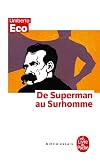
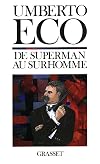
De superman au surhomme
by Umberto Eco
On This Page
Description
"Je crois que l'on peut affirmer que la pretendue "surhumanite" de Nietzsche a pour origine et modele doctrinal non pas Zarathoustra, mais le comte de Monte-Cristo." C'est a partir de cette affirmation de Granusci qu'Umberto Eco a eu envie d'aller enqueter du cote des "surhommes" des romans populaires, de Rocambole a Monte-Cristo, d'Arsene Lupin a James Bond, de Tarzan a Superman, sans oublier Rodolphe de Gerolstein. Pourquoi et comment lit-on les romans-feuilletons ? Quels mecanismes show more entrent en jeu dans leur structure narrative ? Comment fonctionne l'ideologie de la consolation ? le heros console le lecteur moyen de ne pas etre un surhomme. Une analyse magistrale des oeuvres d'Eugene Sue et de Dumas redonne ses lettres de noblesse a un genre souvent qualifie de "sous-litterature." Quant aux essais sur James Bond et Superman, ils nous apprennent qu'en definitive "lire facile" ne signifie pas pour autant "lire idiot." On pourra enfin pleurer, s'emouvoir et trembler sans se sentir vaguement coupable d'abrutissement. show lessTags
Recommendations












Member Reviews
Duke mburrur mbinjeriun e romanit në seri, Gramsci lëshonte dukshëm një shigjetë kundër mbinjeriut të Niçes. Në kohët e sotme, në një klimë më të shtendosur rileximi niçean, na duhet të jemi më të kujdesshëm.
La voglia di leggere questo libro m'è venuta proprio dalla discussione su questo sito sui "libri idolatrati". Gli spunti di riflessione sono molti anche in questa raccolta di saggi di Eco. Scritti negli anni 70, i saggi in questione muovono da un'idea di Gramsci secondo cui "molta sedicente superumanità nicciana ha solo come origine e modello dottrinale non Zarathustra ma Il conte di Montecristo di Dumas". Ideologicamente orientata l'analisi di Eco è comunque interessante e prefigura il destrino della letteratura cd. popolare degli anni successivi vale a dire quelli attuali. Sostiene Eco che "un intreccio ben congegnato suscita le emozioni che si era prefisso quale effetto." Paragonando Edipo a Ringo ed a Ombre Rosse si analizzano i show more romanzi cd. popolari che sono tali non perchè sono comprensibili al popolo ma perchè "come Aristotele sapeva connettendo i problemi della Poetica con quelli della Retorica, in ultima istanza il costruttore di intrecci deve sapere ciò che il suo pubblico si attende". L'odierna letterattura "di massa". Da leggere, davvero utile. show less
Jun 24, 2009Italian
Ratings
Members
- Recently Added By
Author Information

504+ Works 115,274 Members
Umberto Eco was born in Alessandria, Italy on January 5, 1932. He received a doctorate of philosophy from the University of Turin in 1954. His first book, Il Problema Estetico in San Tommaso, was an extension of his doctoral thesis on St. Thomas Aquinas and was published in 1956. His first novel, The Name of the Rose, was published in 1980 and won show more the Premio Strega and the Premio Anghiar awards in 1981. In 1986, it was adapted into a movie starring Sean Connery. His other works include Foucault's Pendulum, The Island of the Day Before, Baudolino, The Prague Cemetery, and Numero Zero. He also wrote children's books and more than 20 nonfiction books including Serendipities: Language and Lunacy. He taught philosophy and then semiotics at the University of Bologna. He also wrote weekly columns on popular culture and politics for L'Espresso. He died from cancer on February 19, 2016 at the age of 84. (Bowker Author Biography) show less
Series
Belongs to Publisher Series
Tascabili [Bompiani] (117)
Common Knowledge
- Canonical title*
- Il superuomo di massa
- Original title
- Il superuomo di massa; Il superuomo di massa : retorica e ideologia nel romanzo popolare
- Original publication date
- 1976; 1978
- First words
- Introdução -- Este livro recolhe uma série de estudos escritos em diferentes ocasiões e é dominado por uma única ideia fixa.
- Last words
- (Click to show. Warning: May contain spoilers.)Quando um ato de comunicação desencadeia um fenômeno de costume, as verificações definitivas deverão ser feitas não no âmbito do livro, mas da sociedade que o lê.
- Original language*
- Italiano
*Some information comes from Common Knowledge in other languages. Click "Edit" for more information.
Classifications
- Genres
- Literature Studies and Criticism, Fiction and Literature, Philosophy
- DDC/MDS
- 809.3 — Literature & rhetoric Literature, rhetoric & criticism History, description, critical appraisal of more than two literatures Fiction
- LCC
- PN3491 .E27 — Language and Literature Literature (General) Literature (General) Prose. Prose fiction History
- BISAC
Statistics
- Members
- 134
- Popularity
- 243,854
- Reviews
- 2
- Rating
- (3.36)
- Languages
- 7 — English, French, Italian, Polish, Portuguese, Spanish, Turkish
- Media
- Paper, Ebook
- ISBNs
- 22
- ASINs
- 6