On This Page
Description
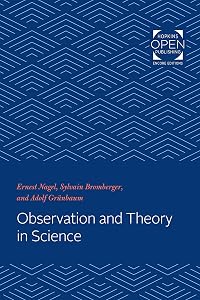
Originally published in 1971. The three contributions collected in this volume deal with different aspects of a single theme—the logical status of scientific theories in their relation to observation. These lectures, authored by different thinkers, treat this theme in connection with some controversies in the philosophy of science. A nonspecialist who reads these lectures should realize that the theme itself is a perennial one with an ancient lineage. It has concerned philosophers from the show more earliest era of philosophy on down through the centuries. A central philosophical issue at stake in the lectures is the question of whether scientific theories are testable in terms of our observations such that we can know whether some theories are true and others false. Although differing in their emphases, all three contributors seek a more plausible and nonskeptical philosophical account of the status of scientific theories in relation to observation. show lessTags
Members
- Recently Added By
Author Information

16+ Works 2,133 Members
Born in Czechoslovakia, Ernest Nagel emigrated to the United States and became a naturalized American citizen. In 1923 he graduated from the City College of New York, where he had studied under Morris Cohen, with whom he later collaborated to coauthor the highly successful textbook, An Introduction to Logic and Scientific Method (1934). Pursuing show more graduate studies at Columbia University, he received his Ph.D. in 1930. After a year of teaching at the City College of New York, he joined the faculty of Columbia University, where in 1955 he was named John Dewey Professor of Philosophy. In 1966 he joined the faculty of Rockefeller University. Nagel was one of the leaders in the movement of logical empiricism, conjoining Viennese positivism with indigenous American naturalism and pragmatism. In 1936 he published in the Journal of Philosophy the article "Impressions and Appraisals of Analytic Philosophy," one of the earliest sympathetic accounts of the works of Ludwig Wittgenstein, Moritz Schlick, and Rudolf Carnap intended for an American audience. Nagel was esteemed for his lucid exposition of the most recondite matters in logic, mathematics, and natural science, published in essays and book reviews for professional journals, scientific periodicals, and literary reviews. Two of his books, now out of print, consisted of collections of his articles, Sovereign Reason and Other Studies in the Philosophy of Science (1954) and Logic Without Metaphysics and Other Essays in the Philosophy of Science (1957). He also wrote a monograph, Principles of the Theory of Probability (1939) which appeared in the International Encyclopedia of Unified Science. In his major book-length work, The Structure of Science, Nagel directed his attention to the logic of scientific explanations. (Bowker Author Biography) show less
Series

Classifications
- Genres
- Nonfiction, Science & Nature, Philosophy
- DDC/MDS
- 501 — Natural sciences & mathematics Science Philosophy and theory
- LCC
- Q175 .N198 — Science Science (General) General
- BISAC
Statistics
- Members
- 8
- Popularity
- 2,511,437
- Languages
- English
- Media
- Paper, Ebook
- ISBNs
- 3
- ASINs
- 1