On This Page
Description
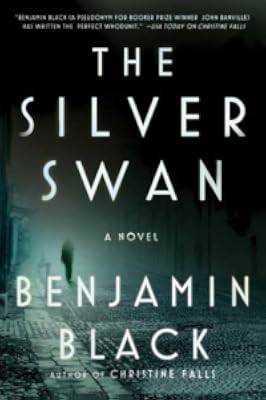
Two years have passed since the events of the bestselling Christine Falls, and much has changed for Quirke, the irascible, formerly hard-drinking Dublin pathologist. His beloved Sarah is dead, the Judge lies in a convent hospital paralyzed by a devastating stroke, and Phoebe, Quirke's long-denied daughter, has grown increasingly withdrawn and isolated. With much to regret from his last inquisitive foray, Quirke ought to know better than to let his curiosity get the best of him. Yet when an show more almost-forgotten acquaintance comes to him about his beautiful young wife's apparent suicide, Quirke's "old itch to cut into the quick of things, to delve into the dark of what was hidden" is roused again. As he begins to probe further into the shadowy circumstances of Deirdre Hunt's death, he discovers many things that might better have remained hidden, as well as grave danger to those he loves. Haunting, masterfully written, and utterly mesmerizing in its nuance, The Silver Swan fully lives up to the promise of Christine Falls and firmly establishes Benjamin Black (a. k. a. John Banville) among the greatest of crime writers. show lessTags
Recommendations
























Member Recommendations

Member Reviews
John Banville is one of my favorite modern authors, and I was tremendously excited when I learned he'd written noir mysteries under the pen name of Benjamin Black. The first of these [b:Christine Falls|199600|Christine Falls (Quirke #1)|Benjamin Black|https://d.gr-assets.com/books/1425006248s/199600.jpg|1135062] grabbed me from page one, and never let go. For that reason I was a bit worried when I started this one; it was so bleak and depressing at the outset that it put me off, and I nearly set it aside. By a couple chapters in, however, I was hooked, although it does remain pretty grim.
If you aren't familiar with the series, the books focus on Dublin in the 1950s, which provides a neat substitute for the more familiar Los Angeles of show more Chandler or Ellroy. The main character is Quirke (does he have a first name? Presumably, but no one ever uses it), a Dublin pathologist who falls into solving a crime in the first book. At the start of this one, some time has passed since the end of Christine Falls, and a number of circumstances have changed. These have left Quirke, his friends, and his family, in a rather different state than that in which we'd last seen them. Despite many changes, Quirke finds himself again driven, reluctantly but uncontrollably, to get at the truth behind the death of a young woman, even while concealing the fact that it was murder from the courts and the police.
The structure of the book is unusual, in that the chapters alternate between a present that begins shortly after the victim's body is discovered, and a past that follows the life of the victim through the events leading to her death. As always in Banville, the language is beautiful, and masterfully wielded, to the point that I find myself stopping now and again to re-read a sentence, just to hear it once more.
I'll certainly continue to read whatever Banville writes. show less
If you aren't familiar with the series, the books focus on Dublin in the 1950s, which provides a neat substitute for the more familiar Los Angeles of show more Chandler or Ellroy. The main character is Quirke (does he have a first name? Presumably, but no one ever uses it), a Dublin pathologist who falls into solving a crime in the first book. At the start of this one, some time has passed since the end of Christine Falls, and a number of circumstances have changed. These have left Quirke, his friends, and his family, in a rather different state than that in which we'd last seen them. Despite many changes, Quirke finds himself again driven, reluctantly but uncontrollably, to get at the truth behind the death of a young woman, even while concealing the fact that it was murder from the courts and the police.
The structure of the book is unusual, in that the chapters alternate between a present that begins shortly after the victim's body is discovered, and a past that follows the life of the victim through the events leading to her death. As always in Banville, the language is beautiful, and masterfully wielded, to the point that I find myself stopping now and again to re-read a sentence, just to hear it once more.
I'll certainly continue to read whatever Banville writes. show less
The deliciously dark and murky world of 1950s Dublin returns in this second installment of the Quirke series. A young woman is found washed up on the rocks. Her grief-stricken husband begs Quirke not to cut her open. Naturally, Quirke ignores this request, but what he finds in the course of his post-mortem suggests that she did not drown. She was dead before she went into the water.
I am in love with Black's narrative style. Is it a little over the top? Definitely! But in a good way. He brings the dark, dank, dreary world of his protagonist to life.
I am in love with Black's narrative style. Is it a little over the top? Definitely! But in a good way. He brings the dark, dank, dreary world of his protagonist to life.
I thought I would try another of John Banville’s pseudonymous mystery series, because sometimes authors get better at mysteries as a series progresses. Then again, sometimes they don’t.
The main protagonist of this series is Quirke (no first name ever given), who is the head pathologist at the Hospital of the Holy Family in Dublin. It is the 1950s, but two years later than the first book in the series, Christine Falls. Quirke is intrigued after an old friend asks him not to do an autopsy on his young wife, seemingly a victim of suicide by drowning. Of course Quirke has to look into it, and finds the wife didn’t die of drowning at all. He feels a sense of responsibility for the dead, and tries to find out what actually happened to show more Deirdre Hunt. Even though his investigations get him into trouble, “something in him yearned after the darkness….”
Quirke’s inquiry into Deirdre’s death is told in alternating chapters with Deirdre’s own story provided by flashbacks, and occasional chapters from the point of view of Phoebe, Quirke’s 23-year-old daughter.
Quirke sees Phoebe once a week, but doesn’t understand why she seems angry at him, or at best, distant; he never even considers asking her, or indeed, communicating with her about anything much at all.
All of the women in the book, including Phoebe, are damaged, lonely, and suffering from low self-esteem, and most opt to engage in sexual abasement to add color to their lives.
As with the previous book, the mystery seems only an excuse to expose the bleakness, loneliness, and/or rampant evil in the lives of the characters. Perhaps because of this, some of the plot elements aren’t as tightly coherent as they should be. But they are definitely as dark and dreary as anyone could imagine.
Quirke is an alcoholic now dry for six months, and when he isn’t thinking about how he can’t stand being alone, can’t sleep, and basically, can’t stand his life, he either dwells on dead bodies dissected on the table, or experiences “the dry drinker’s whining, impotent, self-lacerating rage.” In a passage that encapsulates both Quirke’s life and the tone of the entire book, Black writes of Quirke:
"He looked both ways along the canal. There was not a soul to be seen. He thought of the long, ashen day ahead of him. He tried to make himself move, to walk, to get away, but in vain; his body would not obey him. He stood there, paralyzed. he did not know where to go. He did not know what to do.”
Evaluation: To descriptors like despondency, hopelessness, bitterness, unhappiness, cynicism, resentment, rampant sexual abuse, and gloominess, one could also add: occasional admirable literary flights of phrasing. show less
The main protagonist of this series is Quirke (no first name ever given), who is the head pathologist at the Hospital of the Holy Family in Dublin. It is the 1950s, but two years later than the first book in the series, Christine Falls. Quirke is intrigued after an old friend asks him not to do an autopsy on his young wife, seemingly a victim of suicide by drowning. Of course Quirke has to look into it, and finds the wife didn’t die of drowning at all. He feels a sense of responsibility for the dead, and tries to find out what actually happened to show more Deirdre Hunt. Even though his investigations get him into trouble, “something in him yearned after the darkness….”
Quirke’s inquiry into Deirdre’s death is told in alternating chapters with Deirdre’s own story provided by flashbacks, and occasional chapters from the point of view of Phoebe, Quirke’s 23-year-old daughter.
Quirke sees Phoebe once a week, but doesn’t understand why she seems angry at him, or at best, distant; he never even considers asking her, or indeed, communicating with her about anything much at all.
All of the women in the book, including Phoebe, are damaged, lonely, and suffering from low self-esteem, and most opt to engage in sexual abasement to add color to their lives.
As with the previous book, the mystery seems only an excuse to expose the bleakness, loneliness, and/or rampant evil in the lives of the characters. Perhaps because of this, some of the plot elements aren’t as tightly coherent as they should be. But they are definitely as dark and dreary as anyone could imagine.
Quirke is an alcoholic now dry for six months, and when he isn’t thinking about how he can’t stand being alone, can’t sleep, and basically, can’t stand his life, he either dwells on dead bodies dissected on the table, or experiences “the dry drinker’s whining, impotent, self-lacerating rage.” In a passage that encapsulates both Quirke’s life and the tone of the entire book, Black writes of Quirke:
"He looked both ways along the canal. There was not a soul to be seen. He thought of the long, ashen day ahead of him. He tried to make himself move, to walk, to get away, but in vain; his body would not obey him. He stood there, paralyzed. he did not know where to go. He did not know what to do.”
Evaluation: To descriptors like despondency, hopelessness, bitterness, unhappiness, cynicism, resentment, rampant sexual abuse, and gloominess, one could also add: occasional admirable literary flights of phrasing. show less
Well written and dark. The characters are all varying degrees of broken in some way, and I suppose this is a natural result of the life in post WWII Ireland as much as a literary device.
Quirke is the protagonist, but not a particularly endearing one. He has involved himself in a scandal as in the first Quirke novel, Christine Falls. As the story progresses, we meet a number of unsavory characters that lie at the heart of the mystery. Most are sad, lonely, troubled people who seem to derive the only real pleasure in their lives by causing misery to others.
This is not a book that you will enjoy because of the personalities or the beauty of the setting. What is enjoyable is the writing, and the intellect of the author. The story is show more crafted with a somber artfulness which I appreciated. Mood is so important to this story and Banville/Black portrays it masterfully. It is more art than entertainment, but that is meant as a compliment. show less
Quirke is the protagonist, but not a particularly endearing one. He has involved himself in a scandal as in the first Quirke novel, Christine Falls. As the story progresses, we meet a number of unsavory characters that lie at the heart of the mystery. Most are sad, lonely, troubled people who seem to derive the only real pleasure in their lives by causing misery to others.
This is not a book that you will enjoy because of the personalities or the beauty of the setting. What is enjoyable is the writing, and the intellect of the author. The story is show more crafted with a somber artfulness which I appreciated. Mood is so important to this story and Banville/Black portrays it masterfully. It is more art than entertainment, but that is meant as a compliment. show less
This is the rare noir mystery that features a sleuth who gets it wrong. This is the second in the Quirke series and it is even more moody and depressing than is the first. And yet, like most of the people who know Quirke, I kinda like the guy. I have more problems with Phoebe. She is a self-pitying spiteful little thing who shows little or now ability to judge character. Of course Quirke loves her. She's his daughter.
Quirke is a pathologist with a drinking problem. An old acquaintance comes to him and asks him to preform a post-mortem on his dead wife. Instantly Quirke wonders why and proceeds to answer that question. Strangely, for a mystery novel, the sleuth comes to the wrong conclusion and it is left for the police detective to get show more the right murderer. The real strength of this book is the writing. As with the first Quirke novel, it is beautiful and lyrical. I am not sure I like any of the people in this story, but the writing sure is beautiful. show less
Quirke is a pathologist with a drinking problem. An old acquaintance comes to him and asks him to preform a post-mortem on his dead wife. Instantly Quirke wonders why and proceeds to answer that question. Strangely, for a mystery novel, the sleuth comes to the wrong conclusion and it is left for the police detective to get show more the right murderer. The real strength of this book is the writing. As with the first Quirke novel, it is beautiful and lyrical. I am not sure I like any of the people in this story, but the writing sure is beautiful. show less
The Silver Swan. Benjamin Black. 2008. This is the second book in the Quirke series. It follows Christine Falls which I really enjoyed. Quirke is a Dublin pathologist who has stopped drinking and is trying to continue to build a relationship with his newly discovered daughter. When a barely remembered acquaintance begs him to hide the suicide of his wife, against his better judgment, Quirke agrees. He discovers a scheme of sex, drugs and backmai. Quirke is just as intriguing as he was in the first novel, but I did not like the plot as much. The characters were unsavory and and sneaky, but I looke forward to reading more is this series.
The two years that have passed since the end of “Christine Falls” have altered Quirke’s world. His newly acknowledged daughter is uncertain how much she wants him in his life. No longer a drinking man, his habits have changed, but events seem to conspire to force him to resume old habits. This is 1950s Dublin where outcomes depend on who you know and the best connections are made in the pub over a pint of Guiness.
Quirke is a medical examiner at a large hospital and the plot gets rolling when an old school friend, grief-stricken over the drowning of his wife, approaches him with a favor. He asks Quirke not to do an autopsy on his wife, because he can’t bear the idea of seeing her cut up. But, in the course of a routine show more examination, Quirke discovers needle marks and his suspicions are aroused.
The victim, Deidre Hunt, much younger than her husband, has some odd connections, including a partnership with a con artist in a beauty parlor and a relationship with an Indian healer. Within a short time, Phoebe, Quirke’s confused and gullible daughter, becomes entangled with the same con artist and Quirke has even more reason to get to the bottom of this mystery. Their stand-offish relationships eventually puts Phoebe in peril and forces Quirke to see her in a different light.
Benjamin Black is the pseudonym of the award-winning John Banville, and his writing under this nom-de-plume is an enjoyable contrast to his more literary efforts. Dublin is still a small town, atmospheric, narrow-minded and firmly in the clutches of church and tradition. Men look after women, make decisions for them and treat a woman who thinks and acts for herself as an aberration. Black keeps the plot moving steadily, with sophisticated writing and an engaging and moody style that suits the time and setting perfectly.
In the tradition of “Christine Falls” this book could have been titled “Deirdre Hunt”. Layer by layer her life is exposed and the seemingly contradictory pieces of information slip into place. Black is a gifted mystery writer, understands the genre and has now followed his earlier success with a worthy offspring. This was an Early Reviewer copy from Library Thing and I look forward to another linked mystery after this one, again set several years later. This is a winning formula. show less
Quirke is a medical examiner at a large hospital and the plot gets rolling when an old school friend, grief-stricken over the drowning of his wife, approaches him with a favor. He asks Quirke not to do an autopsy on his wife, because he can’t bear the idea of seeing her cut up. But, in the course of a routine show more examination, Quirke discovers needle marks and his suspicions are aroused.
The victim, Deidre Hunt, much younger than her husband, has some odd connections, including a partnership with a con artist in a beauty parlor and a relationship with an Indian healer. Within a short time, Phoebe, Quirke’s confused and gullible daughter, becomes entangled with the same con artist and Quirke has even more reason to get to the bottom of this mystery. Their stand-offish relationships eventually puts Phoebe in peril and forces Quirke to see her in a different light.
Benjamin Black is the pseudonym of the award-winning John Banville, and his writing under this nom-de-plume is an enjoyable contrast to his more literary efforts. Dublin is still a small town, atmospheric, narrow-minded and firmly in the clutches of church and tradition. Men look after women, make decisions for them and treat a woman who thinks and acts for herself as an aberration. Black keeps the plot moving steadily, with sophisticated writing and an engaging and moody style that suits the time and setting perfectly.
In the tradition of “Christine Falls” this book could have been titled “Deirdre Hunt”. Layer by layer her life is exposed and the seemingly contradictory pieces of information slip into place. Black is a gifted mystery writer, understands the genre and has now followed his earlier success with a worthy offspring. This was an Early Reviewer copy from Library Thing and I look forward to another linked mystery after this one, again set several years later. This is a winning formula. show less
 This review was written for LibraryThing Early Reviewers.
Members
- Recently Added By
Published Reviews
ThingScore 83
The 1950s Dublin setting - all Guinness drays, blackbird song and biscuit-factory smells - is rendered as sensuously as it would be in any novel by Banville, a writer having fun of the highest standard.
added by christiguc
"Make no mistake, Black is a grand writer with a seductive style, and the dark, repressive world he makes of postwar Dublin — when there’s no shortage of religious brothers to run the workhouses or nuns to operate the convent hospitals — goes a long way to explain why everyone in this morally claustrophobic world is so sex-mad. But the conventions of crime fiction provide structural show more security for any exploratory attack on the subject of evil (or sin, as Black’s characters are more apt to define it), and failing to take full advantage of that freedom is like traveling all the way to Ireland and neglecting to visit either a church or a pub." show less
added by christiguc
The Silver Swan is a defter and more complex book than its predecessor, which occasionally found plot development smothered under the weight of Banville / Black's always ravishing prose.
added by christiguc
Lists

British Mystery
469 works; 14 members

EU Fiction: 1950-2022
223 works; 70 members

Books Read in 2015
3,299 works; 129 members

Animals in the Title
498 works; 11 members
Author Information

17 Works 7,590 Members
Some Editions
Awards and Honors
Awards
Distinctions
Series

Belongs to Publisher Series
L'eclèctica (151)
Work Relationships
Is contained in
Has the adaptation
Common Knowledge
- Canonical title
- The Silver Swan
- Original title
- The Silver Swan
- Original publication date
- 2008-03-04; Doctor Copernicus; Kepler; The Newton Letter
- People/Characters
- Quirke; Phoebe Griffin; Detective Inspector Hackett; Billy Hunt; Deirdre Hunt aka Laura Swan; Leslie White (show all 8); Dr. Hakeem Kreutz; Mal Griffin
- Important places
- Dublin, Ireland
- First words
- Quirke did not recognize the name.
- Last words
- (Click to show. Warning: May contain spoilers.)He did not know what to do.
- Original language*
- Anglès
*Some information comes from Common Knowledge in other languages. Click "Edit" for more information.
Classifications
Statistics
- Members
- 1,190
- Popularity
- 21,081
- Reviews
- 66
- Rating
- (3.49)
- Languages
- 12 — Catalan, Czech, Danish, Dutch, English, French, German, Greek, Hebrew, Italian, Lithuanian, Spanish
- Media
- Paper, Audiobook, Ebook
- ISBNs
- 48
- ASINs
- 17
